 English
  Français
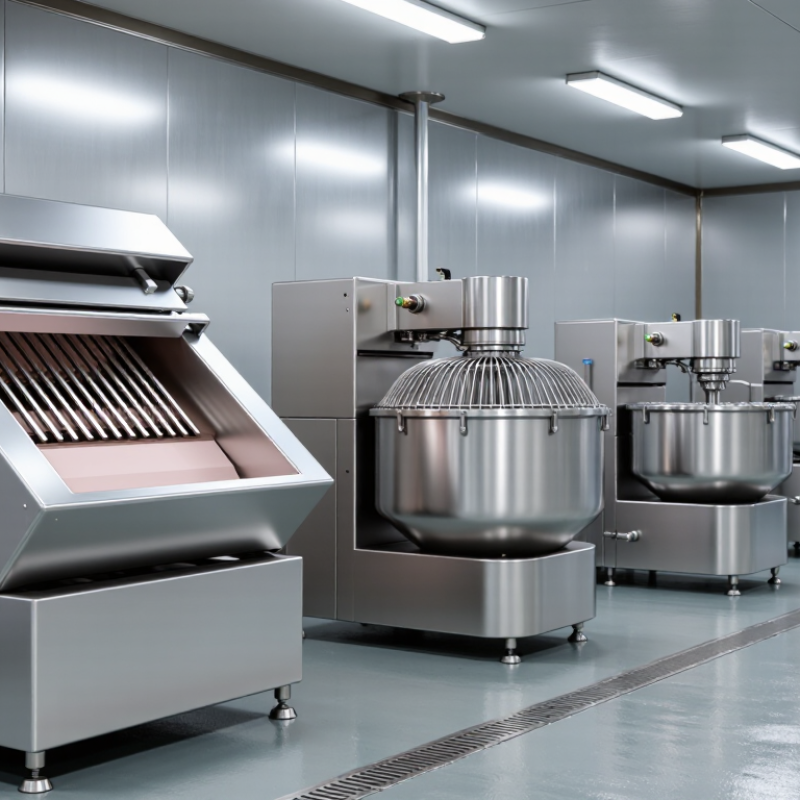
2026 Best Meat Mixer for Global Buyers?
A meat mixer combines minced meat, fat, water, seasonings, and functional ingredients into a consistent batch. Its purpose sounds simple. The details are not. Mixing affects texture, portion accuracy, cooking performance, and final yield. In 2024, the FAO Food Outlook estimated global meat production at about 367 million tonnes. That scale increases pressure on processors to reduce variation and material loss.
For global buyers, a suitable mixer should match the product, batch size, and sanitation system. Paddle mixers often handle delicate products with less smearing, while ribbon designs can support heavier blends. Vacuum mixing may improve density and reduce trapped air, but it also increases equipment cost and maintenance demands. The OECD-FAO Agricultural Outlook 2024–2033 expects continued growth in global meat demand, especially in middle-income markets. More volume does not automatically mean better equipment.
Look closely at working capacity, discharge design, shaft sealing, washdown access, and control accuracy. Stainless steel alone is not proof of hygienic design. The European Hygienic Engineering and Design Group emphasizes cleanability, drainability, and minimized contamination risks in food equipment. Ask for product trials using your actual meat temperature and formulation. Laboratory claims can disappoint on a busy production floor. I would also check spare-part availability, operator training, and local service response before approving a purchase. That step is often missed. A cheaper mixer may become expensive when downtime, uneven batches, and difficult cleaning are counted.