
2026 Top HDD Drill Types for Global Buyers
Choosing the right Drill Hdd equipment starts with the ground, not the catalog. A compact rig may suit a narrow urban street, while a larger system can handle longer bores and heavier pullback demands. The difference shows up on site: in the locator’s readings, the drill string’s response, and the crew’s ability to keep the bore on line. Small details matter.
This guide compares leading HDD drill types for global buyers, including walkover rigs, wireline systems, and larger maxi rigs. It examines practical factors such as bore length, thrust and pullback, mobility, tooling compatibility, and service support. Soil conditions can change quickly, so specifications alone rarely tell the whole story. A machine that performs well in one region may need different tooling or operating choices elsewhere. That is an easy point to underestimate.
Dr. Samuel Ariaratnam is a recognized trenchless technology scholar, but a direct quotation from him should be checked against a reliable published source before use. Insert a verified, topic-specific quotation here rather than presenting unverified words as his: “[Verified quotation about matching HDD equipment to project conditions.]” Buyers can then compare each drill type against actual project requirements, not marketing claims alone. No single rig is best for every job. The right choice depends on the bore, the ground, the crew, and the support available after delivery.
What Horizontal Directional Drilling Is and How It Works
Horizontal directional drilling (HDD) installs underground pipe or conduit with limited surface excavation. A rig launches a steerable drill head along a planned, curved path. A locator tracks its depth and position, while the operator makes small steering corrections. The first bore is narrow. Crews then attach a reamer and pull it back through the hole to enlarge the route. Finally, the product pipe is connected behind the reamer and pulled into place. Drilling fluid helps carry cuttings out and supports the bore. Ground conditions matter.
HDD can pass beneath roads, waterways, and developed areas, but it is not impact-free. Unexpected cobbles, changing soil, or inaccurate utility records can complicate a bore. Planning should include a geotechnical review, utility locating, and a realistic pullback assessment. The scale of underground infrastructure helps explain the method’s relevance: the U.S. Environmental Protection Agency’s 2023 Drinking Water Infrastructure Needs Survey and Assessment estimates $625 billion in drinking-water infrastructure needs over 20 years. That figure is not an HDD market estimate; it reflects a broader need for underground investment. The Federal Highway Administration’s guidance on HDD likewise emphasizes planning, drilling-fluid control, and monitoring. In practice, even a well-designed route can need adjustment. That deserves more attention than a brochure usually gives it.
How HDD Drill Types Are Classified by Size and Capability
2026 Top HDD Drill Types for Global Buyers
HDD rigs are commonly grouped by size and working capability, not by one universal standard. Small rigs suit short service connections and restricted sites, where a compact footprint and easier transport matter. Their lower thrust and pullback capacity can limit bore length, pipe size, and performance in difficult ground. Details matter.
Mid-size rigs offer a practical balance for utility work. Buyers can compare thrust, pullback force, rotary torque, and fluid-pump capacity against planned bore lengths and product pipe dimensions. A rig with strong torque may still be poorly matched to a job if its fluid system cannot carry cuttings effectively. Check the full specification.
Large rigs are built for longer crossings, larger-diameter installations, and demanding ground conditions. They generally need more room for setup, support equipment, and spoil handling. Soil changes. Rock, cobbles, groundwater, and mixed layers can alter production rates and tooling needs, even when a machine appears adequately sized on paper.
Size labels alone can mislead. Compare rated capacities, but also review how the rig performs with the intended rods, reamer, and drilling fluid system. Ask suppliers for documented operating data, then validate assumptions with a site investigation and experienced HDD personnel. Planning is rarely perfect; leaving capacity for changing ground is often wiser than choosing a rig at its limit.
Key HDD Drill Types Available to Global Buyers in 2026
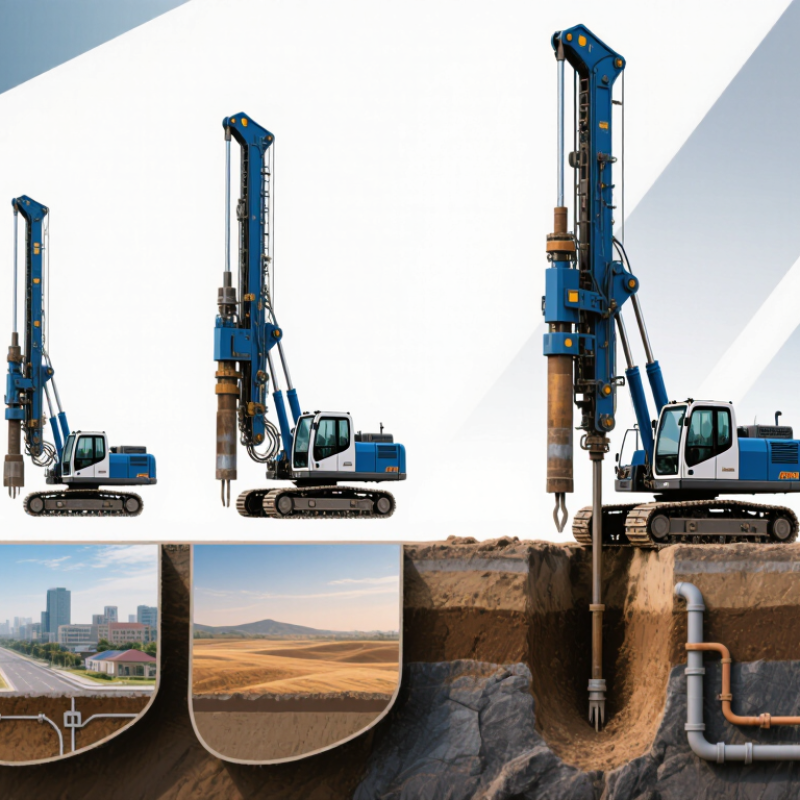
Global buyers in 2026 can choose HDD rigs by project scale, ground conditions, and required drilling distance. Mini rigs suit short utility crossings in confined spaces, such as narrow streets or landscaped sites. They are easier to transport, but their capacity may limit larger pipe installations. Mid-size rigs cover many municipal and commercial jobs. Maxi rigs provide greater thrust and pullback for long crossings or larger-diameter pipelines. There is no neat cutoff between these categories; capacity varies by machine design.
Ground conditions also shape the choice. Standard drill heads are commonly used in softer soils, while harder or mixed formations may call for rock tooling and more robust fluid systems. Guidance equipment matters, too. Walkover systems are practical for many shallow crossings, while wireline guidance can help on deeper or longer bores. Each has limits. Local interference, depth, and crew experience can affect readings.
Before selecting a rig, buyers should compare thrust, pullback, torque, rod length, transport needs, and service support. Ask for performance data tied to similar ground conditions, not just headline capacity. A machine that looks powerful on paper may still be poorly matched to a tight urban site. I would leave room for uncertainty: soil can change within one crossing, and planning assumptions are not always right.
2026 Top HDD Drill Types for Global Buyers - Key HDD Drill Types Available to Global Buyers in 2026
| HDD Rig Type | Indicative Thrust / Pullback Range | Typical Applications | Common Ground Conditions | Buyer Considerations |
|---|---|---|---|---|
| Mini HDD rig | Generally up to 20,000 lbf (about 89 kN) | Short utility crossings, service connections, irrigation lines, and small-diameter water, gas, or communications conduits | Soil and other formations that can be drilled with suitable bits and fluid support; capability depends on the selected tooling | Compact transport and a small working footprint can suit urban or residential work. Check access, bore length, product-pipe size, and local noise or emissions requirements. |
| Mid-size HDD rig | Typically about 20,000–100,000 lbf (about 89–445 kN) | Longer utility installations, road and rail crossings, and medium-diameter pipelines or conduit bundles | Many soil conditions; mixed ground may require changes to the drill head, reamer, or drilling-fluid plan | Compare thrust and pullback ratings with the planned bore, product pipe, reaming steps, and site conditions. Also assess transport dimensions and fluid-management needs. |
| Maxi HDD rig | Typically above 100,000 lbf (above 445 kN) | Long-distance crossings and large-diameter water, energy, and infrastructure pipelines | Project-dependent; appropriate tooling and a ground-specific drilling plan are essential, especially for long or complex bores | Requires substantial site preparation, transport planning, and drilling-fluid handling. Confirm the complete system capacity, including tooling and pipe-handling equipment. |
| Rock-capable HDD configuration | Available across different rig sizes; capacity depends on the rig and tooling package | Crossings where competent rock or hard formations are expected | Hard, abrasive, or fractured rock, subject to geological assessment | May use a suitable rock drill head or downhole motor and compatible tooling. Verify torque, circulation requirements, wear-part availability, and the planned method for changing tooling. |
| Compact / restricted-access HDD rig | Varies by model; commonly selected for lower-capacity work | Installations in confined sites, landscaped areas, or locations with limited equipment access | Depends on the rig’s drilling capacity and the selected tooling; compact size alone does not indicate ground capability | Check machine dimensions, setup clearance, anchoring method, achievable bore length, and whether the rig can handle the required product pipe. |
Note: Capacity bands are indicative industry groupings, not universal standards. Rig classifications, rated forces, and suitable bore sizes vary by manufacturer, configuration, geology, drilling method, and project conditions.
How to Match an HDD Drill Type to Project Requirements
2026 Top HDD Drill Types for Global Buyers
How to Match an HDD Drill Type to Project Requirements
Choosing an HDD drill type starts with the ground, not the machine’s headline capacity. Compact walkover rigs suit short utility crossings and restricted sites, where a narrow footprint matters. Mid-size rigs can handle longer bores and larger product pipes, provided access and setup space are adequate. For long, large-diameter crossings, maxi rigs may be appropriate, but their transport, anchoring, and fluid-handling needs can complicate a job. Rocky or mixed ground may also require specialized cutting tools; a larger rig alone does not solve unsuitable tooling.
Compare the planned bore length and diameter with soil investigation results, pullback needs, entry and exit space, and available drilling-fluid management. Check local service support and operator experience, too. These details affect downtime and bore quality. A specification sheet can look convincing, yet real ground conditions often differ from early assumptions. Leave room to revise the tooling or sequence after reviewing site data.
Tips: Confirm utilities and access before selecting equipment. Ask suppliers for comparable project records, not just maximum ratings. If ground data is limited, treat the selection as provisional and reassess before mobilization.
Factors to Compare When Choosing an HDD Drill in 2026
2026 Top HDD Drill Types for Global Buyers
Factors to Compare When Choosing an HDD Drill in 2026
Choosing an HDD drill starts with the ground, not the brochure. Match machine size to bore length, diameter, soil, and pipe material. Rocky ground may demand higher torque and a robust mud system; tight urban sites often favor compact frames and quick setup. Compare thrust and pullback ratings, but check operating weight and transport dimensions too. A powerful rig that cannot reach the site is no bargain.
CGA’s 2024 DIRT Report recorded 196,977 underground utility damages in the United States during 2023. That figure makes locating support, steering accuracy, and crew visibility practical buying criteria—not extras. Compare locating-system compatibility, data logging, and access to maintenance training. NASTT’s HDD good-practice guidance also emphasizes planning the bore path and managing drilling fluid. Ask how the rig handles changing ground, not just ideal test conditions. Real sites are messier.
English
Français 