2026 Top EV BMS System Types for Global Buyers
The 2026 Top EV BMS System Types for Global Buyers reflects a changing electric-vehicle market. According to the International Energy Agency’s Global EV Outlook 2025, global electric-car sales exceeded 17 million in 2024. Electric cars represented more than one-fifth of new-car sales worldwide. That scale increases pressure on battery safety, thermal control, charging accuracy, and long-term reliability.
BloombergNEF reported that average lithium-ion battery-pack prices fell to approximately $115 per kilowatt-hour in 2024. Lower prices help adoption, but they also intensify expectations for efficient battery management. A modern Ev Bms System must monitor cell voltage, temperature, current, insulation, state of charge, and state of health. It also needs dependable communication with the vehicle control unit. Centralized, modular, distributed, and wireless architectures each offer different trade-offs in wiring, serviceability, redundancy, and cybersecurity.
Battery scientist Jeff Dahn has stated, “The battery is the most important component of an electric vehicle.” His point remains practical. A polished vehicle design cannot compensate for weak battery supervision. Global buyers should compare sensing accuracy, balancing performance, thermal response, software update capability, and regional certification support. The cheapest system is rarely the safest choice.
Some market forecasts appear too confident. They often combine passenger cars, commercial vehicles, and stationary storage. That weakens direct comparison. This outline therefore examines system types through measurable engineering needs, supplier evidence, and real operating conditions. A cold morning, a steep highway, and a fast charger can expose differences that product brochures hide.
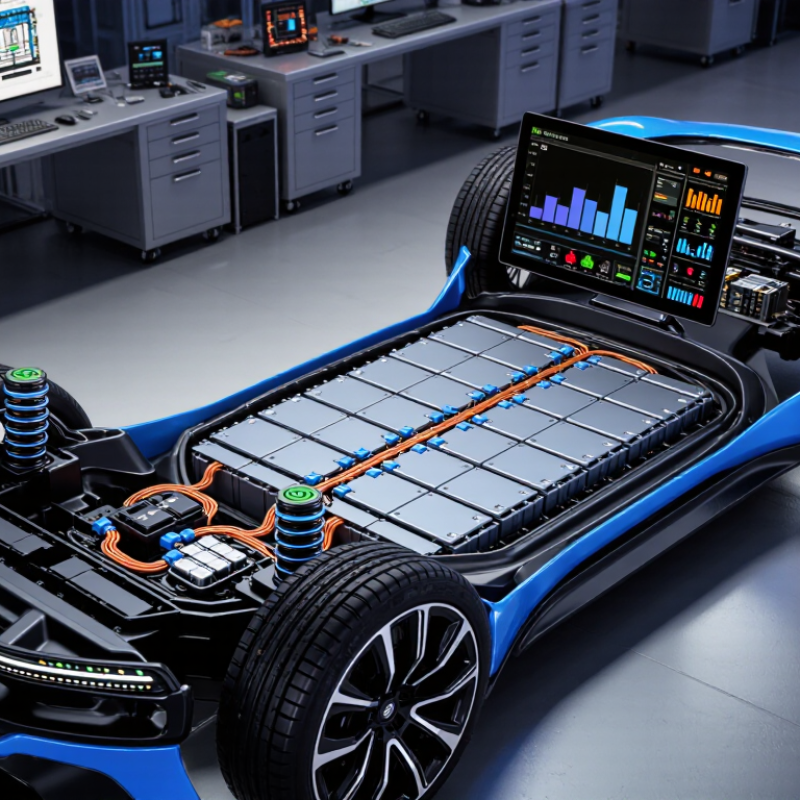
EV BMS Fundamentals: 400–800 V Packs, 12–16 Cells per Monitoring IC
Electric vehicles now demand precise battery monitoring. The IEA’s Global EV Outlook 2024 reported nearly 14 million electric car sales in 2023, representing about 18% of new-car sales. That growth makes dependable battery management less optional. A BMS measures cell voltage, temperature, current, and insulation status. Small errors accumulate.
Most modern passenger EV packs operate around 400–800 V. A 400 V pack contains roughly 108 series cells at 3.7 V nominal. An 800 V pack approaches 216 cells. Many monitoring ICs handle 12–16 cells. Depending on pack voltage and grouping, this requires approximately seven to eighteen ICs per pack. Cell balancing and synchronized sampling then become practical design priorities. Not every pack follows this pattern.
BloombergNEF’s 2024 Battery Price Survey placed average lithium-ion pack prices at 115 dollars per kWh, down 20% year on year. Cost pressure encourages compact monitoring layouts, but safety cannot be reduced to chip count. Engineers should verify isolation, creepage distance, thermal gradients, and fault response under real load cycles. A clean schematic can still fail in winter. The 12–16-cell guideline is useful, not absolute. Cell chemistry, topology, serviceability, and regional certification requirements can change the final architecture.
Centralized BMS: Cost-Efficient Control for Packs Below 400 V
For global EV buyers, centralized battery management systems remain practical for packs below 400 V. A single control unit monitors cell voltage, temperature, current, and insulation status. Shorter signal paths simplify calibration and reduce component costs. In a compact passenger vehicle, one enclosure may sit beside the battery junction box. This arrangement keeps wiring visible and service access straightforward. It is not automatically the best choice. Pack geometry and cooling demands still decide suitability.
During operation, the controller estimates state of charge and state of health from live measurements. It can command contactors, limit charging, and trigger protective shutdowns when values exceed configured thresholds. Passive balancing is common when cost and moderate capacity are priorities. Engineers should verify balancing speed with real cycle data, not only laboratory spreadsheets. A 96-cell pack, for example, may show small voltage differences after fast charging. Those differences can grow under cold conditions.
The main trade-off is concentrated responsibility. A controller fault can affect the entire pack, so buyers should request fault-injection tests, watchdog behavior, and clear recovery procedures. Harness routing also deserves inspection; long parallel wires may increase noise sensitivity and assembly errors. Field testing sometimes exposes failures that prototypes miss. Connectors may lack strain relief after vibration testing. Buyers should compare sensor coverage, firmware controls, diagnostic records, and tested operating margins. Regional technicians also need accessible connectors and clear service documentation.
Modular BMS: Scalable Architecture for 400–800 V EV Platforms
2026 Top EV BMS System Types for Global Buyers
Modular BMS: Scalable Architecture for 400–800 V EV Platforms
Electric vehicle demand is accelerating. The IEA Global EV Outlook 2024 reported nearly 14 million electric cars sold in 2023, representing about 18% of global car sales. This growth increases pressure on battery management systems to support different pack sizes, cell chemistries, and voltage levels.
A modular BMS divides monitoring, balancing, and control functions across replaceable electronic units. Engineers can add modules for larger packs without redesigning the complete system. This suits 400–800 V platforms, where pack segmentation helps manage high voltage safely and efficiently. A practical layout may place monitoring boards near cell groups, while a central controller handles diagnostics and communication.
The details matter. Shorter sensing paths can reduce measurement noise. Local temperature sensors can identify uneven heating near busbars and cooling channels. Modular service access may also reduce repair time, though connector reliability becomes more critical. One weak connection can affect an entire section.
According to the U.S. Department of Energy, battery cost and performance remain central factors in EV adoption. A scalable BMS helps protect that investment through accurate state-of-charge and state-of-health estimation. However, software calibration is not universal. Different chemistries respond differently under cold starts and fast charging.
The trade-off is real. More modules can improve flexibility, but they also create more communication points. Buyers should examine fault isolation, cybersecurity controls, thermal testing, and compliance with functional safety practices such as ISO 26262. Field data still matters more than a polished specification sheet.
2026 Top EV BMS System Types for Global Buyers
Modular BMS: Scalable Architecture for 400–800 V EV Platforms
The chart shows the number of 18-series-cell BMS modules required for common EV battery voltage platforms. The calculation uses a representative 3.7 V nominal lithium-ion cell voltage: 18 cells × 3.7 V ≈ 66.6 V per module. Actual pack voltage varies with cell chemistry, state of charge, operating limits, and system design.
Distributed BMS: Serviceable Monitoring Across 100+ Cell Modules
For global EV buyers, distributed BMS architecture offers practical control across battery packs with more than 100 cell modules. Each local monitoring unit measures voltage, temperature, and balancing status near its assigned cells. Shorter sensing paths can reduce wiring complexity and improve signal stability.
Serviceability is the main advantage. A technician can isolate one module group instead of removing the entire battery pack. During inspection, the system can identify abnormal voltage drift, loose connections, or rising temperatures. Clear module-level data also supports safer maintenance decisions and faster fault tracing. That saves workshop time.
A reliable distributed BMS needs accurate synchronization between local units and the central controller. Communication errors must trigger visible warnings and safe operating limits. Buyers should review sampling speed, fault records, connector protection, and replacement procedures before purchasing. Field testing matters more than attractive specifications.
No architecture is perfect. More local electronics create more diagnostic points and possible failure points. Poor software coordination can still produce confusing alerts. Installation quality also affects long-term performance. Buyers should request service manuals, test reports, and realistic warranty terms. A system that technicians can understand often delivers greater value than one with impressive but difficult features.
Wireless BMS: Reducing Harnesses While Meeting ISO 26262 ASIL-D Requirements
As global EV sales exceeded 17 million in 2024, according to the IEA Global EV Outlook 2025, battery monitoring must scale without adding complex harnesses. Wireless BMS removes many communication cables between cell modules and the central controller. This can reduce connector failures, assembly steps, and routing constraints. Yet wireless BMS is not automatically safer. That assumption deserves correction.
For ISO 26262 ASIL-D, the radio link needs a complete safety architecture, not optimistic software. Engineers should monitor message counters, CRC values, timing limits, and lost-packet events. Independent voltage and temperature checks can support fault detection. A safe state must remain available when communication stops. Hardware metrics, diagnostic coverage, cybersecurity controls, and traceable validation evidence also matter. The IEA reports that battery electric vehicles require higher electronic integration, making disciplined BMS design increasingly important. In real vehicle testing, metal enclosures, cell imbalance, and thermal noise can weaken wireless performance. Laboratory success is not road evidence.
Tips: Define the safety goal before selecting the radio protocol. Test packet loss beside a fast charger and under severe thermal cycling. Keep a fallback path for critical measurements. Review the safety case with independent assessors. Small details decide ASIL-D credibility. The design may still need limited wiring, and that is not failure; it may be the more honest engineering choice.
 English
 Français