2026 Top Laser Cutting Machines Which One Is Best?
Choosing a Laser Cutting Machine in 2026 requires more than comparing wattage, price, or cutting speed. The real decision begins with material mix, production volume, tolerances, energy use, and operator experience.
Industry forecasts show strong momentum. Grand View Research valued the global laser cutting machine market at approximately USD 7 billion in 2023 and expects continued growth through 2030. MarketsandMarkets also projects expansion, driven by automotive, aerospace, electronics, and metal fabrication demand. These figures are estimates, not guarantees. Different research firms use different definitions and forecasting methods.
Dr. Volker Herfurth, a respected laser manufacturing specialist, has emphasized a practical principle: “The laser is only as good as the process around it.” That observation still matters. A powerful fiber source cannot compensate for poor nesting software, unstable material handling, or weak after-sales support.
This guide examines the leading 2026 models from a factory-floor perspective. It considers cutting quality on thin stainless steel, thick carbon steel, aluminum, and reflective metals. It also reviews automation, assist-gas efficiency, maintenance access, safety systems, and total ownership cost.
There is no universal winner.
A compact machine may outperform a larger system in a job shop with limited floor space. A high-powered platform may reduce cycle time, yet increase electrical demand and maintenance complexity. Some manufacturers advertise impressive speeds under ideal conditions. Real production is less tidy.
The best Laser Cutting Machine is the one that delivers repeatable results, predictable operating costs, and measurable value for your specific workflow. This comparison aims to make that choice clearer, while acknowledging that specifications alone never tell the whole story.
What Is a Laser Cutting Machine and How Does It Work?
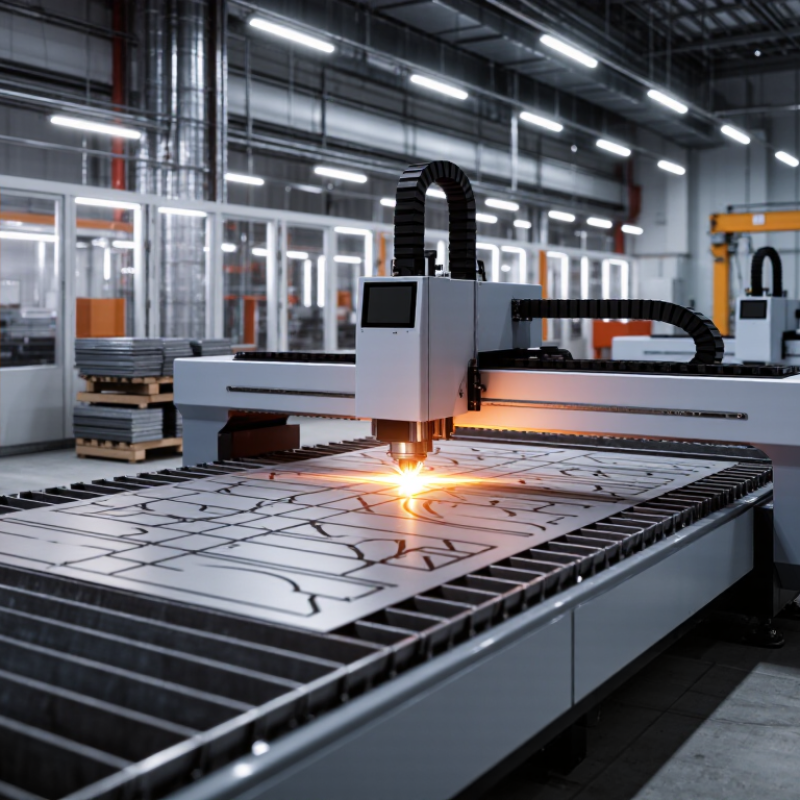
A laser cutting machine uses a focused beam of light to remove material with controlled heat. It can cut metal, wood, acrylic, fabric, and other approved materials, depending on its power and design. The beam usually comes from a laser source, travels through mirrors or fiber delivery, and passes through a focusing lens. At the cutting head, the lens concentrates light into a tiny, intense point.
The machine follows digital instructions from a computer-controlled system. The cutting head moves along programmed paths while an assist gas removes molten material from the cut. Oxygen, nitrogen, or compressed air may be selected for different results. A narrow cut, called a kerf, allows detailed shapes and efficient material use. Experienced operators still check focus height, sheet flatness, speed, and power before production. Small changes can leave rough edges or heat marks.
The process looks precise.
In practice, it is less tidy. Dust, reflective surfaces, worn lenses, and incorrect settings can reduce accuracy. I have found that a test cut often reveals problems that software cannot predict. Material thickness also changes the required settings. A reliable operator records successful parameters, inspects the first pieces, and adjusts carefully. Ventilation, guarding, interlocks, and approved operating procedures remain essential because the beam and fumes can create serious hazards. Choosing a machine in 2026 should involve its motion accuracy, service support, safety design, and suitability for the materials actually used.
2026 Top Laser Cutting Machines: Which One Is Best?
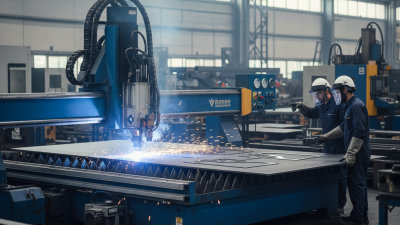
A laser cutting machine focuses a high-energy beam onto a material. The beam melts, burns, or vaporizes a narrow path, while assist gas removes the molten material. The cutting head follows a digital design to produce the required shape.
How to choose: Fiber lasers are generally preferred for fast metal cutting, CO₂ lasers are versatile for non-metals and some metals, diode lasers suit lower-power engraving and thin materials, and Nd:YAG lasers are used for specialized precision applications. Wavelength is only one factor; power, material, thickness, cutting speed, operating cost, and safety requirements also matter.
Which Types of Laser Cutting Machines Are Available in 2026?
In 2026, laser cutting machines are available in several practical categories. Fiber laser cutters work well with steel, stainless steel, aluminum, and other reflective metals. They deliver narrow kerfs and fast production on thin and medium sheets. In a busy workshop, a 3 kW fiber system can cut detailed brackets while maintaining consistent edges. However, thicker material may require higher power and slower settings.
CO2 laser cutters remain useful for wood, acrylic, cardboard, leather, and selected nonmetallic materials. Their larger working beds suit signage, furniture parts, and interior components. Diode laser machines usually offer lower costs and compact designs. They are suitable for light engraving and thin materials, but their cutting depth can be limited. UV laser cutters create fine marks on glass, plastics, coated metals, and delicate electronic parts. Heat-sensitive surfaces often benefit from this shorter-wavelength process.
Ultrafast laser machines use extremely short pulses for precision work with minimal heat damage. They serve medical components, microelectronics, and intricate industrial parts. Hybrid machines combine cutting methods, although their added flexibility can increase maintenance demands. I have seen operators choose a machine by headline power alone, then struggle with fumes, lens cleaning, or unstable material feeding. That approach is incomplete. Material tests, extraction capacity, software control, operator training, and documented safety compliance deserve equal attention. Even experienced teams sometimes underestimate setup time. Personally, I would request sample cuts before approving any purchase.
What Key Features Should Buyers Compare Before Choosing?
Choosing among 2026 laser cutting machines requires more than comparing advertised wattage. Buyers should match power with their usual materials and thicknesses. A high-power system may cut steel quickly, but it can waste energy on thin sheets. Bed size also matters when processing large panels or repeated parts. In practical shop trials, cutting accuracy, edge quality, and stable speed often matter more than peak performance.
Compare the laser source, motion system, autofocus response, and software controls carefully. A rigid frame can reduce vibration around small holes and sharp corners. Check whether the machine supports suitable assist gases and offers clear pressure controls. Fume extraction is essential for a cleaner workspace and safer operation. Ask about maintenance access, replacement parts, training, and technical support. These details affect production reliability. They are easy to overlook.
Tips: Test your own material before purchasing. Request sample cuts with your preferred thickness, pattern, and tolerance. Measure the finished edges, kerf width, and hole accuracy. Review the machine’s total operating cost, including electricity, gases, lenses, filters, and downtime. Do not trust speed claims alone. A fast first cut may hide slower setup or frequent adjustments. No checklist is perfect. I would also leave room for honest uncertainty, because real workshop conditions rarely match a demonstration floor.
Which Materials and Applications Suit Each Machine Type?
Choosing a laser cutting machine starts with the material, not the machine’s advertised power. Fiber lasers are highly effective for stainless steel, carbon steel, aluminum, brass, and copper. They suit sheet-metal fabrication, electrical enclosures, brackets, and detailed industrial parts. Their narrow beam can produce clean edges and fast production cycles. However, reflective metals require careful setup, correct assist gas, and suitable safety controls.
CO2 lasers remain practical for acrylic, plywood, MDF, cardboard, leather, rubber, and many coated materials. They fit signage, packaging prototypes, furniture components, and decorative panels. A 100-watt system may handle thicker wood than a small diode unit, but smoke extraction becomes essential. Some plastics release hazardous fumes when heated. Material testing is not optional.
Diode lasers work well for engraving and light cutting on wood, paper, leather, and certain dark acrylics. They are useful for small workshops, craft products, labels, and personalized panels. Their lower power limits production speed and thickness. Thin material works best.
In my experience, the most expensive option is not automatically the best choice. A fiber system can be wasteful for occasional plywood projects. A diode machine may frustrate a metal fabricator. I would test a real sample, measure edge quality, inspect the kerf, and confirm ventilation needs before purchasing. Cutting results can change with moisture, coating, lens condition, and operator settings. Small details matter.
2026 Top Laser Cutting Machines: Which One Is Best for Your Materials and Applications?
| Machine Type | Best Overall Use | Typical Laser Source and Power | Suitable Materials | Typical Cutting Capability | Ideal Applications | Main Advantages and Limitations |
|---|---|---|---|---|---|---|
| Flatbed Fiber Laser Cutter | Fast, high-volume metal sheet production | Continuous-wave fiber laser, approximately 1–20 kW | Mild steel, stainless steel, aluminum, brass, copper, galvanized steel, titanium | Approximately 0.5–40 mm for steel, depending on laser power, assist gas, material grade, and cut-quality requirements | Sheet-metal fabrication, enclosures, electrical cabinets, automotive parts, agricultural equipment, structural components | Excellent speed and efficiency on reflective metals; usually not suitable for wood, acrylic, PVC, or many organic materials |
| Fiber Laser Tube and Profile Cutter | Cutting and processing round, square, rectangular, and open metal profiles | Continuous-wave fiber laser, approximately 1–6 kW | Carbon steel tube, stainless-steel tube, aluminum profiles, brass, copper, and other conductive metal sections | Commonly processes tubes and profiles from small diameters up to roughly 400 mm, depending on machine design and chuck capacity | Frames, handrails, furniture, bicycle components, lighting structures, automotive tubing, construction profiles | Combines cutting, piercing, slotting, and part separation; requires correct tube support, alignment, and deformation control |
| CO₂ Laser Cutter | Versatile cutting of nonmetals and selected thin metals | Gas laser, commonly approximately 40–600 W for general fabrication | Acrylic, wood, plywood, MDF, paper, cardboard, leather, fabric, rubber, foam, glass engraving surfaces, and some coated metals | Often cuts nonmetal sheets from thin films up to approximately 20–30 mm, depending strongly on material and power | Sign making, packaging prototypes, architectural models, interior décor, craft products, textiles, displays, and engraving | Strong absorption by many organic materials; generally less energy-efficient than fiber lasers and unsuitable for PVC because of hazardous chlorine-containing fumes |
| CO₂ Metal-Compatible Cutter | Specialized processing of thin coated or nonferrous metal surfaces | CO₂ laser, typically approximately 100–500 W, with appropriate optics and process gases | Thin stainless steel, coated metals, anodized aluminum, foils, and nonmetal materials | Usually limited to thin metal sections and applications where surface quality or mixed-material processing is more important than maximum metal throughput | Decorative panels, coated metal marking, thin-gauge fabrication, signage, and mixed material production | Can process certain mixed workloads; generally slower and less economical for thick or highly reflective metals than a fiber laser |
| UV Laser Precision Cutter | Low-heat cutting and fine processing of delicate materials | Ultraviolet solid-state laser, commonly approximately 3–30 W | Thin plastics, films, printed circuit materials, ceramics, glass, sapphire, laminates, paper, and sensitive electronic substrates | Typically designed for thin sheets, films, and small precision parts rather than thick structural materials | Electronics, flexible circuits, medical components, microfluidic parts, precision labels, ceramic substrates, and fine detail work | Very small heat-affected zone and clean edges; lower cutting productivity and higher equipment cost than general-purpose systems |
| Ultrafast Laser Micro-Cutting System | High-precision micromachining with minimal thermal damage | Picosecond or femtosecond laser, commonly approximately 5–100 W average power | Metals, glass, ceramics, polymers, semiconductors, composites, and transparent materials | Best suited to thin materials, micro-holes, narrow kerfs, and intricate features rather than thick-sheet production | Medical devices, semiconductor components, watch parts, micro-screens, precision filters, scientific components, and aerospace instrumentation | Exceptional accuracy and minimal recast or heat damage; high initial cost and comparatively low material-removal rate |
| Diode Laser Cutter and Engraver | Entry-level engraving and light-duty cutting | Visible or near-infrared diode laser, commonly approximately 5–40 W optical output | Wood, cardboard, paper, leather, dark acrylic, selected plastics, and coated surfaces | Usually cuts thin nonmetal materials, often a few millimeters per pass depending on material, focus, and optical power | Prototyping, personalized products, classroom projects, small workshops, craft production, and engraving | Compact and comparatively affordable; limited cutting depth, slower production, and poor performance on clear materials and bare metals |
| Hybrid Metal and Nonmetal Laser System | Shops that need both metal sheet cutting and nonmetal processing | Usually combines a fiber laser for metals with a CO₂ or other laser source for nonmetals | Metal sheets plus acrylic, wood, plastics, leather, paper, cardboard, and selected composites | Capability depends on the individual laser sources; generally optimized for medium-duty work rather than maximum specialization | Custom fabrication, signage, displays, prototyping, small-batch manufacturing, and mixed-material job shops | Reduces the need for separate machines; higher system complexity, maintenance requirements, and potential compromise in specialized performance |
Selection guide: Choose a flatbed fiber laser for high-volume metal sheets, a tube fiber laser for profiles, a CO₂ system for wood and acrylic, a UV or ultrafast laser for delicate precision parts, and a diode system for light-duty engraving. Actual performance depends on laser power, material grade, thickness, assist gas, nozzle design, optics, motion accuracy, and required edge quality.
How Do the Best 2026 Laser Cutters Compare in Performance and Cost?
Choosing the best 2026 laser cutter depends on total cost, not headline wattage. A high-power fiber system can cut thin and medium sheet metal quickly, with lower energy waste than older gas-laser designs. The U.S. Department of Energy reports wall-plug efficiency near 25–40% for fiber lasers, compared with roughly 8–15% for CO₂ systems. That difference becomes visible on long production shifts.
Cost still needs careful inspection. MarketsandMarkets estimates the laser cutting machine market could grow from about USD 6.4 billion in 2024 to USD 10.4 billion by 2030, reflecting rising automation demand. However, purchase price alone gives a distorted comparison. Buyers should calculate assist-gas use, lens replacement, filtration, software licenses, downtime, and operator training. A cheaper machine may require more maintenance. That hurts small workshops.
Independent testing should measure cut speed, edge roughness, kerf width, piercing time, and repeatability on the buyer’s actual materials. Stainless steel, aluminum, and mild steel behave differently. A practical trial with 1–3 mm sheet often reveals more than a showroom demonstration. Reports from the International Energy Agency also emphasize industrial efficiency and electrification, but energy savings vary with workload and settings. My cautious view is simple: the fastest cutter is not always the best value. A balanced machine with stable calibration, accessible service, and predictable operating costs may perform better over five years. Industry forecasts are useful, but they cannot replace production-floor evidence.
Related Posts
-
Unveiling the Common Challenges Faced by Manufacturers in Adopting the Best Laser CNC Technology
-
Top CNC Plasma Table Buyers Guide for Global Sourcing?
-
2026 Best CNC Plasma Cutting Machines for Precision and Efficiency?
-

Ultimate Checklist for Choosing the Perfect Industrial Plasma Cutter for Your Business Needs
-
Top 10 Benefits of Using CNC Plasma Cutting Machines?
-

Exploring the Versatile Features of CNC Plasma Tables and How to Choose the Right One for Your Needs
English
Français