2026 Top Sewer Jetter Machines Which One Is Best?
Choosing the best Sewer Jetter Machine in 2026 depends less on a flashy rating and more on the drains you clean. A homeowner clearing a short outdoor line needs different equipment from a contractor handling long, grease-coated commercial pipes. Flow rate, working pressure, hose length, nozzle options, and machine portability all affect real performance. Numbers matter, but they need context. A high-pressure rating alone cannot tell you whether a unit suits your pipe size or daily workload.
This guide compares leading machine types and models using practical buying criteria, including cleaning capability, setup, maintenance, and operating cost. Look for clear manufacturer specifications, suitable safety features, and parts that are reasonably easy to obtain. Match pressure and flow to the job, and follow the equipment maker’s instructions; incorrect use can damage pipes or create hazards. For example, a compact electric unit may be easier to move through a narrow yard, while a trailer-mounted system can support heavier professional work. Small details count. The right choice is rarely the biggest machine. It is the one that reliably handles your typical jobs without adding unnecessary cost or complexity. Model availability and specifications can change, so verify current details before buying. And one honest caveat: no comparison can predict every drain’s condition. A stubborn blockage may still need a different approach.
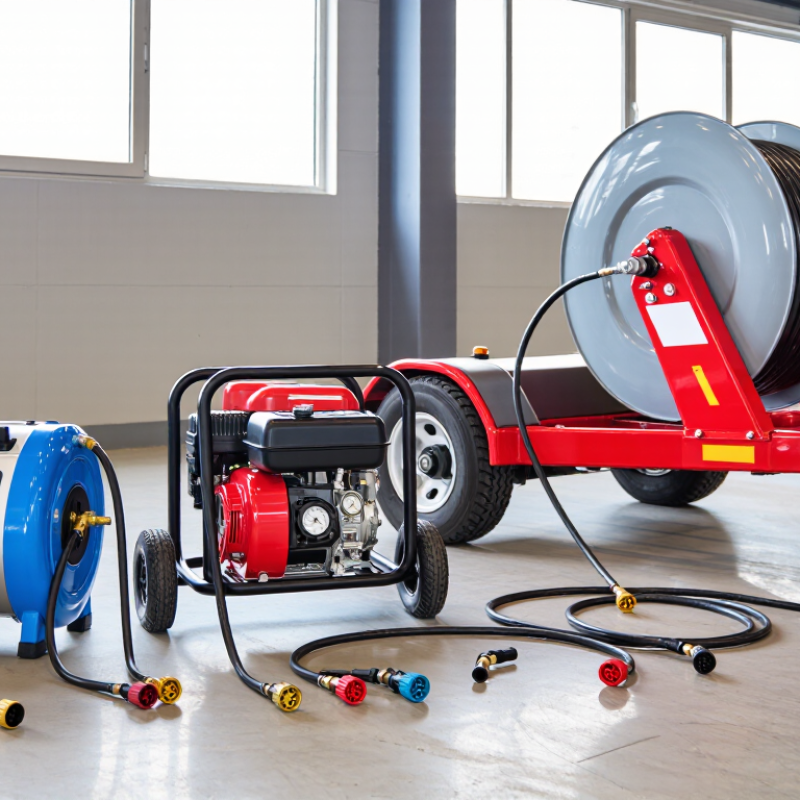
What a Sewer Jetter Machine Is and How It Works
A sewer jetter machine clears drain lines by sending pressurized water through a flexible hose and specialized nozzle. Unlike a cable machine, which breaks or retrieves an obstruction, a jetter uses water to scour pipe walls and move loosened debris downstream. Its main parts are a water pump, supply tank or water connection, high-pressure hose, and nozzle. Water travels through the hose, then exits through small nozzle openings. Rear-facing jets help pull the hose forward and flush material back toward the access point. That distinction matters.
An operator feeds the hose into the line while controlling water flow and watching for changes in resistance. Grease, sediment, and some soft obstructions may yield to the water stream, but results depend on pipe condition, nozzle choice, and water flow—not pressure alone. A small residential line may need a different setup from a larger main. Before use, inspect the hose and fittings, confirm a suitable access point, and wear protective equipment.
Damaged or fragile pipes deserve extra caution.
Not magic.
A stubborn blockage can remain, and forcing the hose may cause damage. That’s why an experienced operator checks the line and adjusts the approach rather than relying on maximum pressure.
Types of Sewer Jetter Machines Available in 2026
Sewer jetter machines in 2026 generally fall into portable electric, gas-powered, trailer-mounted, truck-mounted, and skid-mounted types. Portable electric units suit indoor maintenance and smaller drains. They are easier to move through buildings, though hose length and available power can limit their reach. Gas-powered cart units offer more mobility outdoors. They can work well for property maintenance, but operators should consider ventilation, noise, and fuel handling.
Trailer-mounted jetters carry larger water tanks and are useful for frequent outdoor jobs. Truck-mounted systems provide substantial capacity for municipal or commercial crews, while skid-mounted models can be fitted into service vehicles or equipment spaces. Some machines also offer hot-water capability, which may help with certain greasy deposits; it does not replace proper nozzle selection or inspection.
A little setup matters. Check rated flow, pressure, hose length, tank capacity, and the pipe sizes the equipment is designed to serve. Pressure alone can be misleading: two machines with similar ratings may perform differently because their flow rates and nozzles differ. The categories are not always neat, either—some compact units bridge the gap between portable and vehicle-mounted equipment. Match the machine to the work, and follow its operating guidance.
Key Features for Comparing Sewer Jetter Machines
Comparing sewer jetter machines in 2026 means looking at flow rate and pressure together, not pressure alone.
PSI describes the force at the nozzle, while gallons per minute help move loosened debris through the pipe. A high-pressure unit with limited flow may open a blockage but leave material behind. Check hose length and diameter against your usual access points. A 100-foot hose sounds convenient. In a narrow yard, it can be awkward to handle.
Power source matters, too. Gas engines suit sites without nearby outlets, but they need ventilation and regular maintenance. Electric models may be quieter, though cord reach can limit movement.
Compare tank capacity, machine weight, wheel design, and how easily operators can inspect filters and connections. Nozzle compatibility is worth checking before purchase; a machine is less useful if its fittings do not match the work.
There is no perfect scorecard. I would still give hose handling more attention than I often see in equipment comparisons.
A short test run, where practical, can reveal vibration, control feel, and setup time that specifications leave out.
Top Sewer Jetter Machines of 2026 Compared
For 2026, the best sewer jetter depends on the pipe, debris, and worksite—not the highest advertised pressure. Compact electric units suit indoor drains and short runs. Trailer-mounted machines offer greater water capacity for longer, tougher jobs. Flow matters: pressure breaks deposits, while water volume helps carry loosened material downstream. Check hose length, nozzle options, filtration, and freeze protection before comparing specifications.
The U.S. EPA’s 2022 Clean Watersheds Needs Survey estimated $630 billion in wastewater and stormwater infrastructure needs over 20 years. That figure does not measure jetter demand, but it shows the scale of aging systems that maintenance crews face. The EPA’s 2004 Report to Congress estimated 23,000 to 75,000 sanitary sewer overflows annually. That estimate is dated, so it should not be treated as a current count.
A practical comparison starts with the work itself. For recurring grease in small lines, prioritize maneuverability and a hose that feeds smoothly around bends. For larger mains, assess sustained flow, tank capacity, and setup time. Test the machine on a representative line, if possible. Watch how quickly it clears deposits, and whether the hose kinks near a cleanout. Maximum pressure alone can mislead. So can a neat spec sheet.
How to Choose the Best Machine for Your Needs
Choosing a sewer jetter starts with the drains you actually service. A compact unit may suit indoor lines and short runs, while longer outdoor mains can require more hose and water flow. Match the machine to the pipe diameter, typical blockage, and available water supply. Pressure matters, but flow helps carry loosened debris back toward the access point. Not pressure alone.
Check the working pressure and flow rate together, then confirm they fit the hose and nozzle specifications. A small nozzle change can affect cleaning performance. Hose length matters, too: extra length reaches farther but can reduce practical control. Consider the machine’s weight, wheel design, and storage space if you move it between jobs. Small details matter. Ask how long the unit can run before cooling or maintenance is needed, and whether replacement parts are easy to obtain. Follow operating instructions, wear suitable protective equipment, and keep people clear of the hose path. There is no perfect setup for every drain; choosing only by the highest pressure can be a costly mistake. I would also leave room for judgment: pipe condition and access can change what works, even on familiar jobs.
2026 Top Sewer Jetter Machines: Which One Is Best? — How to Choose the Best Machine for Your Needs
| Machine Type | Typical Pressure and Flow | Main Advantages | Trade-Offs | Best Suited For | Choosing Cue |
|---|---|---|---|---|---|
| Compact Electric Jetter | Often around 1,000–2,000 psi and 1–2.5 gpm; specifications vary by model. | Lightweight, relatively quiet, and convenient for indoor work where a suitable electrical supply is available. | Lower water volume can mean slower cleaning on long or heavily obstructed lines; depends on electrical access. | Routine residential drain cleaning and smaller service jobs. | Choose for portability and indoor convenience rather than maximum cleaning capacity. |
| Portable Gas-Powered Jetter | Common configurations are roughly 2,000–4,000 psi and 2–5 gpm. | More independent of building power and generally offers greater output than compact electric units. | Produces engine noise and exhaust; requires fuel, ventilation, and regular engine maintenance. | Residential service work and contractors needing a portable outdoor unit. | Check the complete pressure-and-flow rating, not pressure alone. |
| Cart-Mounted Jetter | Often configured around 2,000–4,000 psi and 3–8 gpm, depending on pump and engine. | Wheels and a larger frame can make it easier to move between job areas while supporting higher output. | Bulkier than compact units and may be difficult to carry over stairs or rough access routes. | Frequent service calls where equipment must be moved across a site. | Compare overall weight, wheel design, hose capacity, and access to the work area. |
| Trailer-Mounted Jetter | Many configurations fall around 3,000–4,000 psi and 5–15 gpm; larger systems may differ. | Can support higher flow, longer hose runs, and extended work; some units include an onboard water tank. | Requires a suitable tow vehicle, parking space, and room to position the trailer near the work. | Commercial drain maintenance, municipal work, and recurring jobs on larger lines. | Confirm towing capacity, tank capacity, hose length, and the pump’s continuous-duty rating. |
| Truck-Mounted Jetter | System ratings vary widely; commercial setups may provide several thousand psi with substantially higher flow than compact units. | High capacity and onboard equipment can support demanding, high-volume, or large-scale maintenance work. | Higher purchase and operating costs, greater vehicle requirements, and limited access in tight locations. | Municipal fleets and contractors handling frequent, large-scale sewer cleaning. | Best considered when utilization and job size justify a dedicated vehicle and its operating costs. |
Note: Pressure and flow figures are broad examples of commonly available configurations, not guaranteed specifications for every machine. Actual performance depends on the pump, engine or motor, nozzle, hose, and operating setup. Match the machine to pipe condition and access, follow the manufacturer’s operating instructions, and use appropriate protective equipment.
English
Français