 English
 Français

7 Best Wafer Type Butterfly Valve Manufacturers?
Choosing the right wafer type butterfly valve manufacturer can affect plant safety, service life, and maintenance costs. This guide examines seven established manufacturers through practical purchasing criteria, not marketing language alone. Their products may appear similar, yet details often decide performance.
The review considers body materials, disc design, seat compounds, pressure ratings, actuation options, and published testing practices. It also examines certifications, technical documentation, delivery capability, warranty terms, and after-sales support. These factors matter in water treatment, HVAC systems, chemical processing, food production, and general industrial piping. A valve that works well in clean water may perform poorly with abrasive slurry or aggressive chemicals.
Field experience shows that installation space is equally important. A narrow wafer body can fit between flanges, but poor alignment may damage the seat. Operators should verify pipe standards, temperature limits, media compatibility, and torque requirements before ordering. Small details matter.
No shortlist is perfect. Manufacturer data can be incomplete, and regional service quality may vary. Some companies excel in large projects but offer limited support for smaller buyers. Others provide strong documentation but fewer customization options. This article therefore presents a balanced comparison, while recognizing that the “best” choice depends on operating conditions, budget, risk tolerance, and local technical support. Readers should confirm current specifications directly with each manufacturer before making a final decision. Performance claims deserve verification.
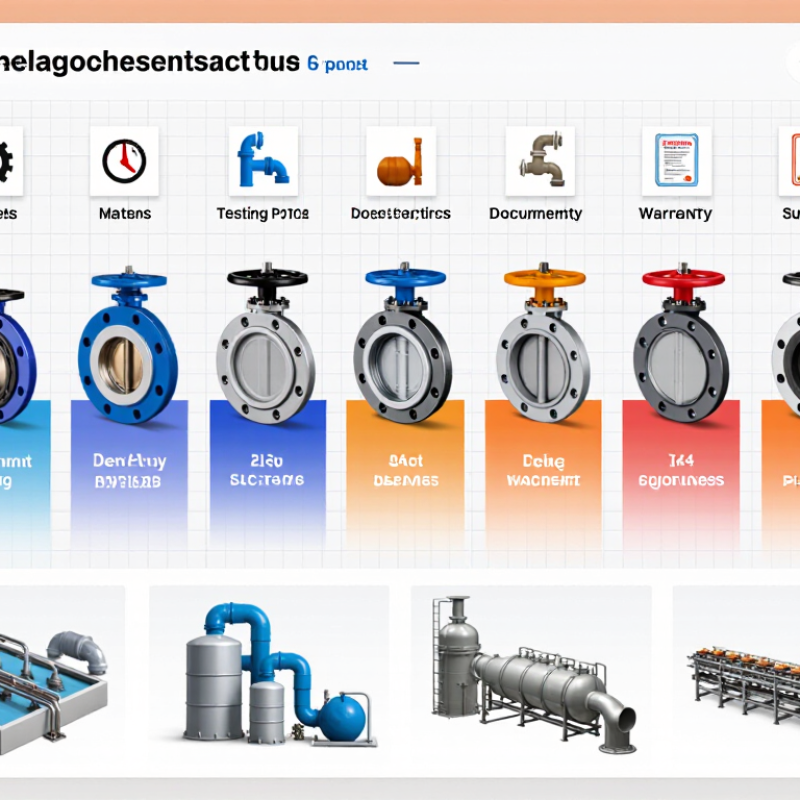
Wafer Type Butterfly Valves: Design, Functions, and Common Applications
A wafer type butterfly valve uses a thin body sandwiched between pipe flanges. A central disc rotates around a stem, opening or closing the passage with a quarter turn. Its compact design reduces weight, face-to-face length, and installation space. Compact and practical. The disc, stem, seat, and body must match the fluid, pressure, temperature, and pipe material. In field inspections, misaligned flanges often cause more trouble than the valve itself. This detail is easy to underestimate.
When the stem turns, the disc moves from parallel to perpendicular with the flow. The resilient seat can provide reliable shutoff in water, air, and many low-corrosion services. For abrasive, hot, or chemically aggressive media, seat selection needs documented compatibility data. A valve that works well on clean water may fail early in slurry service. The difference matters. Manual handles suit smaller lines, while gear operators or actuators support larger valves and remote control. Operators should verify torque, cycle frequency, and fail-safe requirements before specifying automation.
Common applications include water treatment, HVAC piping, fire protection systems, irrigation, and general process lines. They are often chosen where space and quick isolation matter. However, wafer connections depend on proper flange alignment and suitable gaskets. They may not provide the same removal flexibility as lug-style designs. During commissioning, technicians should check disc clearance, bolt tightening, and leakage under operating pressure. Records matter. In cramped valve rooms, a few millimeters of clearance can determine whether maintenance is possible.
| No. | Valve Design or Selection Area | Typical Configuration | Main Function | Common Materials | Typical Media | Common Applications | Key Selection Considerations |
|---|---|---|---|---|---|---|---|
| 1 | Wafer Body Design | Short face-to-face length Bolt-through installation | Clamps between two pipe flanges and provides compact shutoff or flow-control service. | Ductile iron, carbon steel, stainless steel, or aluminum bronze, depending on service requirements. | Water, air, HVAC fluids, and selected industrial liquids. | Water distribution, cooling systems, HVAC networks, and general process piping. | Check flange compatibility, available installation space, pipe alignment, and required pressure rating. |
| 2 | Disc and Shaft Assembly | Concentric Eccentric options | Rotates approximately 90 degrees to open, throttle, or isolate the pipeline. | Stainless steel, ductile iron, nickel-plated ductile iron, or corrosion-resistant alloys. | Clean water, treated water, air, gases, and compatible chemicals. | Isolation lines, pump systems, water treatment, compressed-air systems, and process plants. | Disc material, shaft design, operating torque, corrosion resistance, and allowable pressure drop should match the medium. |
| 3 | Resilient-Seated Type | Soft liner Bubble-tight shutoff | Uses an elastomer seat to create a tight seal around the disc during closure. | EPDM, NBR, FKM, or other elastomers selected for temperature and chemical compatibility. | Water, wastewater, air, and selected low-temperature process fluids. | Potable-water systems, sewage treatment, fire-protection piping, and HVAC service. | Verify seat compatibility with temperature, pressure, disinfectants, oils, hydrocarbons, and process chemicals. |
| 4 | High-Performance Type | Offset shaft Metal-supported seat | Reduces rubbing between the disc and seat and supports more demanding pressure or temperature service. | Carbon steel or stainless-steel body, stainless-steel disc, and metal or reinforced sealing components. | Hot water, steam-related services, hydrocarbons, gases, and industrial process fluids when properly specified. | Refining, chemical processing, power generation, industrial utilities, and thermal systems. | Review temperature limits, seat construction, emissions requirements, pressure class, and fire-safe requirements where applicable. |
| 5 | Actuation Options | Lever Gear operator Pneumatic Electric | Controls valve position manually or through an automated control system. | Valve materials vary by service; actuators commonly use aluminum, cast iron, steel, and engineered polymer components. | Water, air, gas, and process fluids compatible with the selected valve and seat. | Manual isolation, remote control, automatic sequencing, flow regulation, and emergency shutdown systems. | Consider torque, cycle frequency, fail position, power supply, control signal, environmental protection, and actuator duty rating. |
| 6 | Pressure and Size Range | Commonly DN50–DN1200 Class-dependent ratings | Provides scalable pipeline isolation and control across small, medium, and large pipe diameters. | Material selection depends on pressure, temperature, corrosion exposure, and mechanical loading. | Municipal water, wastewater, cooling water, air, gases, and industrial liquids. | Waterworks, district energy, building services, irrigation, and large industrial pipelines. | Confirm nominal diameter, pressure class, operating temperature, flange standard, flow velocity, and required shutoff direction. |
| 7 | Standards and Testing | API 609 EN 593 ISO 5211 EN 12266-1 | Defines dimensional, performance, actuator-interface, and pressure-test requirements for applicable valve designs. | Test and material requirements depend on the governing standard, service category, and project specification. | Industrial fluids, water, air, gases, and other media approved by the valve specification. | Infrastructure projects, industrial plants, utilities, building services, and packaged equipment. | Request certificates, pressure-test records, material documentation, coating details, and applicable compliance declarations. |