7 Tips for Choosing a CNC Plasma Cutting Machine
Choosing a Cnc Plasma Cutting Machine is not simply a matter of comparing torch prices. It affects cut quality, production speed, safety, consumable costs, and operator confidence. The decision becomes clearer when the machine is tested against real workpieces, not attractive brochure images.
Grand View Research reported that the global plasma cutting machine market was valued at more than USD 1 billion in 2023 and is expected to grow steadily through 2030. MarketsandMarkets also identifies automation, CNC integration, and demand for faster metal fabrication as major market drivers. These figures show strong demand, but they do not guarantee that every machine suits your workshop. A compact 45-amp system may cut a clean 6-millimeter steel bracket, yet struggle with repeated 20-millimeter plate production.
Jim Colt, a recognized plasma-cutting educator and former Hypertherm applications specialist, has stated, “A plasma cutter is a system, not just a torch.” That principle deserves attention. The power source, cutting table, software, air quality, grounding, and consumables must work together. Small details matter.
This guide examines seven practical selection points, including amperage, duty cycle, table accuracy, cutting speed, software compatibility, maintenance support, and total ownership cost. Some recommendations may need adjustment. Workshops differ. A machine that performs beautifully in a training room can disappoint beside a dusty fabrication table. Measure your materials, inspect sample cuts, question optimistic specifications, and leave room for operator experience. The best Cnc Plasma Cutting Machine is the one that remains reliable after the excitement of installation fades.
Match Material and Thickness to 45–125 A Plasma Power
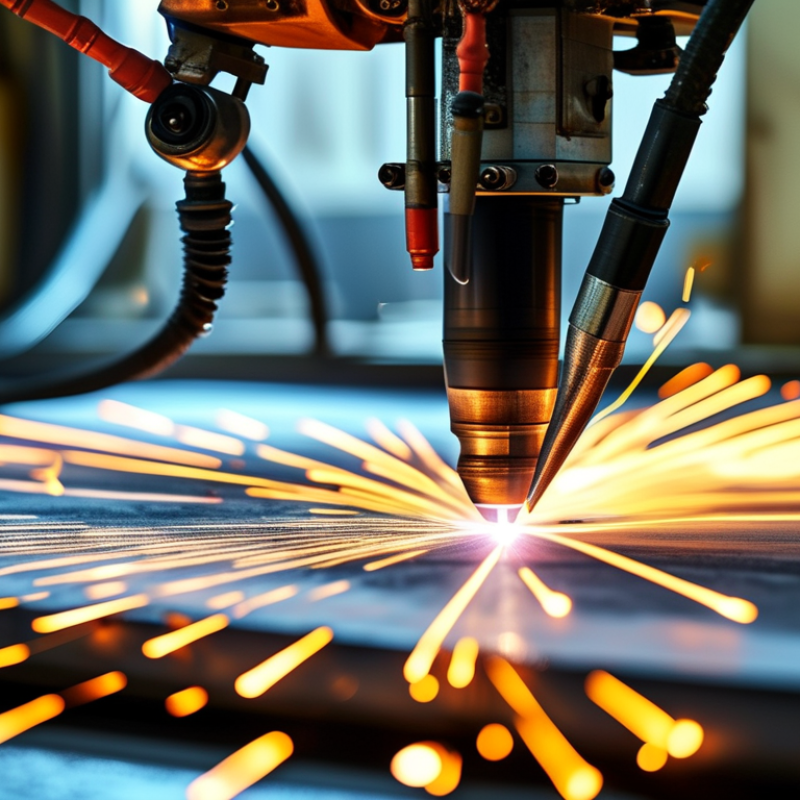
Choosing a CNC plasma cutting machine starts with the metal you actually process. A 45–125 A range covers many workshop needs, but higher amperage is not always better. Match the output to material type and thickness. A 45 A machine can cut thin steel cleanly, while thicker plate may need 80, 105, or 125 A.
Check the manufacturer’s rated cut thickness, not only its maximum severance claim. Severance cuts are slower and rougher. Duty cycle also matters during long production runs. A machine rated at 125 A may reduce output after several continuous cuts. Verify whether the amperage can be adjusted precisely. Fine control helps prevent excess heat on thin sheet.
Run cuts on your own steel, aluminum, or stainless material. Watch the kerf, dross, and edge angle. A quick showroom test can mislead you. I have seen a powerful torch produce poor edges when air pressure was unstable. Confirm clean, dry compressed air and sufficient flow. Inspect the CNC table’s grounding, torch height control, and motion accuracy. These details often affect results more than advertised power.
Consider consumable life and electrical requirements before buying. Higher-current cutting usually uses more power and may require a stronger circuit. Keep spare electrodes and nozzles available. A 125 A setup can be productive, but it may be wasteful for occasional thin-sheet work. Your best choice should leave some capacity for future jobs without forcing every cut through excessive amperage.
Compare ISO 9013 Cut Quality Classes and ±0.5 mm Tolerance
7 Tips for Choosing a CNC Plasma Cutting Machine
ISO 9013 helps compare thermal-cutting quality through defined classes, not marketing claims. A lower class number generally indicates better control of roughness, perpendicularity, and edge deviation. Ask suppliers which ISO 9013 class their test cuts achieve, and request the material thickness used. A result on thin mild steel may not represent performance on 20 mm plate.
Do not confuse ±0.5 mm tolerance with ISO 9013 quality. The tolerance describes dimensional accuracy, while ISO 9013 evaluates the cut edge itself. A machine may position within ±0.5 mm, yet leave heavy dross or a slanted edge. Measure the coupon. Use calipers for dimensions and inspect the edge under consistent lighting. For critical parts, a coordinate measuring machine provides stronger evidence.
Check the cutting table, torch height control, software compensation, and consumable condition. These details affect repeatability more than speed alone. In shop trials, I compare several test pieces at different feed rates. Real results vary. My early comparisons focused too much on advertised tolerance. That was a mistake. Heat distortion, plate flatness, and operator settings also influence the final result. Request raw test data, record the settings, and repeat the trial after ordinary production use. A reliable machine should maintain acceptable ISO 9013 quality without demanding perfect conditions every time.
Evaluate CNC Speed, Kerf Width, and 1–50 mm Cutting Capacity
7 Tips for Choosing a CNC Plasma Cutting Machine
Choosing a CNC plasma cutting machine starts with real production needs, not impressive specifications. Measure your usual plate thickness, from thin sheet to the heaviest material near 50 mm. Check whether the stated 1–50 mm capacity is rated for mild steel, stainless steel, or aluminum. Cutting capacity changes across materials. Ask for test cuts using your own metal. This reveals edge quality more honestly than a catalogue chart.
Compare CNC speed at your target thickness, not only the maximum travel speed. A machine may move quickly across empty space but cut slowly through 20 mm steel. Review pierce time, acceleration, and repeated-cut performance. Examine kerf width carefully. A wider kerf removes more metal and can reduce hole accuracy. Confirm whether the control system compensates for kerf automatically. Small holes often expose poor settings first.
Inspect the torch height control and its response to warped plates. Check the table’s working area, fume extraction, and software compatibility. Ask how consumable wear affects cut quality and operating cost. I once trusted a high-speed setting and produced rough edges on several parts. The result looked acceptable from a distance, but the holes needed extra finishing. That mistake taught me to compare speed, kerf, and tolerance together. Leave a safety margin below the advertised maximum thickness. Real workshops rarely cut ideal material every day.
CNC Plasma Cutting Machine Selection: Speed, Kerf Width, and Cutting Capacity
Representative mild-steel reference values show how cutting speed generally decreases as material thickness increases, while kerf width tends to expand. When evaluating a CNC plasma cutting machine, compare its rated speed, cut quality, and practical capacity across the required 1–50 mm thickness range.
These values are practical reference ranges rather than universal specifications. Actual results vary with plasma current, material grade, torch height, gas pressure, consumables, and CNC motion settings.
Check Duty Cycle, Consumables, Air Quality, and Operating Costs
7 Tips for Choosing a CNC Plasma Cutting Machine
Duty cycle shows how long a machine can cut before cooling becomes necessary. A high-rated duty cycle suits production work and reduces unexpected pauses. Check the rating at your intended amperage, not only the maximum setting. A unit rated for 60% duty at 100 amps may perform differently at 40 amps. That detail matters.
Consumable life directly affects cutting costs. Inspect the price and availability of electrodes, nozzles, shields, and retaining caps. Keep spare parts nearby. Air quality is equally important. Moisture and oil can damage the torch and create rough edges. Use a properly sized compressor, an air dryer, and suitable filtration. Dry air protects expensive components.
Calculate operating costs before comparing purchase prices. Include electricity, compressed air, consumables, maintenance, software, and operator training. Track consumable use during test cuts on mild steel. This gives a more realistic estimate. I once underestimated setup time; the hourly cost looked attractive until production slowed. Do not ignore extraction and workspace requirements. Metal dust needs controlled removal and regular cleaning. Ask for verified cut charts, service documentation, and a live demonstration using your material thickness. A short test can reveal more than a polished specification sheet. Even experienced operators can overlook air pressure changes. Leave room for that uncertainty.
7 Tips for Choosing a CNC Plasma Cutting Machine - Check Duty Cycle, Consumables, Air Quality, and Operating Costs
| Tip | Decision Area | Practical Data to Check | Why It Matters | Questions to Ask Before Buying |
|---|---|---|---|---|
| 1 | Match the Rated Cutting Capacity |
Recommended range Choose a power source whose rated production thickness is at least 20% above the material thickness normally processed. Typical air-plasma systems are commonly used for mild steel from approximately 6 mm to 25 mm, depending on amperage and cut-speed requirements. |
A machine that is operated continuously at its maximum thickness may produce slower cuts, more dross, wider kerfs, and shorter consumable life. |
What is the rated production thickness, not only the maximum severance thickness? What cut quality and travel speed are specified for the thicknesses used in daily production? |
| 2 | Check the Duty Cycle |
Useful benchmark For regular production, look for a duty cycle of about 60% or higher at the intended amperage and ambient temperature. A 60% duty cycle in a 10-minute period means approximately 6 minutes of cutting followed by 4 minutes of cooling. |
Duty cycle indicates how long the power source can operate before thermal protection may interrupt cutting. Higher duty cycle is valuable for long tool paths and repeated jobs. |
At what amperage and temperature is the duty cycle measured? Is the rating based on a 10-minute cycle? Does the machine provide thermal protection and a visible overload indicator? |
| 3 | Evaluate CNC Motion and Accuracy |
Recommended features Consider a rigid table, rack-and-pinion or ball-screw drive, servo or stepper motors, automatic torch height control, and repeatability suitable for the required tolerances. For general fabrication, a positioning repeatability around ±0.1 mm to ±0.3 mm may be suitable, but the complete process also depends on material, kerf, backlash, and setup. |
Smooth motion and reliable torch-height control help maintain a consistent arc length, reduce bevel variation, and improve dimensional accuracy. |
What is the tested positioning accuracy and repeatability? Does the system include automatic initial height sensing and arc-voltage height control? How are backlash, vibration, and table leveling controlled? |
| 4 | Inspect Consumables and Torch Design |
Consumable checklist Confirm the availability and expected service life of electrodes, nozzles, swirl rings, shields, retaining caps, and torch leads. Consumable life varies widely; clean starts, correct amperage, proper standoff, and stable air pressure are more important than a single advertised hour figure. |
Consumables are wear items. Incorrect pierce height, excessive pilot-arc use, moisture, or cutting beyond rated capacity can increase replacement frequency and reduce cut quality. |
Are replacement parts standardized and readily available? Is there a clear inspection schedule for electrode pit depth and nozzle orifice wear? Can the torch use different amperage ranges or machine torch configurations? |
| 5 | Verify Compressed-Air Quality |
Typical operating target Use clean, dry, oil-free compressed air at the pressure and flow specified by the power source. Many air-plasma systems operate around 5.5 to 6.5 bar and approximately 120 to 220 L/min, depending on model and cutting current. A refrigerated dryer, particulate filter, coalescing filter, and correctly sized drain system are often required. |
Water, oil, and particles can destabilize the plasma arc, damage the torch, create inconsistent kerfs, and shorten electrode and nozzle life. |
What inlet pressure and air flow are required at maximum current? Is the compressor capacity sufficient during continuous cutting? Where are the filters, regulator, dryer, and automatic drains installed? |
| 6 | Calculate Total Operating Cost |
Cost categories Estimate electricity, compressed air, consumables, protective materials, maintenance, fume extraction, labor, and scrap. A practical comparison should use cost per finished part or cost per meter of cut rather than power rating alone. |
A lower purchase price may be offset by higher downtime, shorter consumable life, poor cut quality, greater scrap, or expensive proprietary replacement parts. |
What is the average consumable cost per operating hour? What maintenance intervals and replacement parts are expected over one year? Can the supplier provide sample cut-cost calculations for the intended materials and thicknesses? |
| 7 | Confirm Safety, Software, and Support |
Essential provisions Look for emergency-stop controls, proper grounding, guarding, fume extraction or water-table compatibility, torch collision protection, nesting software, post-processor compatibility, operator training, and documented service support. |
Plasma cutting produces intense light, heat, fumes, noise, sparks, and electromagnetic interference. Reliable controls and support reduce safety risks, setup errors, and production interruptions. |
Does the machine include guarding, emergency stops, and a documented safety procedure? Is fume extraction sized for the table area and cutting process? Which file formats and CAM or nesting workflows are supported? What response time and spare-parts support are available? |
Prioritize THC, CAD/CAM Compatibility, Safety, and Service Support
7 Tips for Choosing a CNC Plasma Cutting Machine
A reliable CNC plasma cutter begins with torch height control (THC). THC keeps the torch at a stable distance as plates warp during cutting. That improves arc stability, edge quality, and consumable life. ISO 9013:2017 identifies thermal-cutting quality through measurable kerf and edge characteristics. Ask suppliers for test samples, not only catalog tolerances. Thin sheet can expose weak height control quickly.
Very quickly.
CAD/CAM compatibility matters just as much. Confirm support for your preferred DXF, DWG, or nesting workflow before purchase. The 2024 Manufacturing Industry Outlook reports that many manufacturers are increasing digital-process investment, but integration remains a practical challenge. A machine that needs repeated file conversion may create hidden labor costs. Review post-processors, pierce settings, lead-ins, and automatic nesting with an operator. I once underestimated file preparation time; that was an expensive assumption. Check whether software updates require paid support or specialist training.
Safety and service support deserve equal attention. OSHA machine-safety guidance emphasizes guarding, emergency controls, electrical protection, and documented procedures. Request details for fume extraction, grounding, fire prevention, and operator access. The International Labour Organization continues to report millions of work-related deaths annually, showing why safety cannot remain a checkbox. Service response time should be written into the quotation. Ask about spare torch parts, remote diagnostics, technician coverage, and training records. A lower purchase price may become costly when one failed sensor stops production.
Related Posts
-
Revolutionizing Global Manufacturing with the Best CNC Plasma Cutting Machine from China
-
2026 Best CNC Plasma Cutting Machines for Precision and Efficiency?
-
How to Optimize Your Plasma Cutting Machine for Maximum Efficiency and Precision
-

Exploring Cnc Plasma Options: Maximizing Efficiency and Cost-Effectiveness in Global Sourcing
-

7 Reasons Why Cnc Plasma Cutters Are Essential for Modern Manufacturing Success
-
Unlocking Precision and Efficiency with Best Cnc Cutting Table Technical Specifications and Setup Guide
English
Français