
What Is ABC Cable and What Is It Used For?

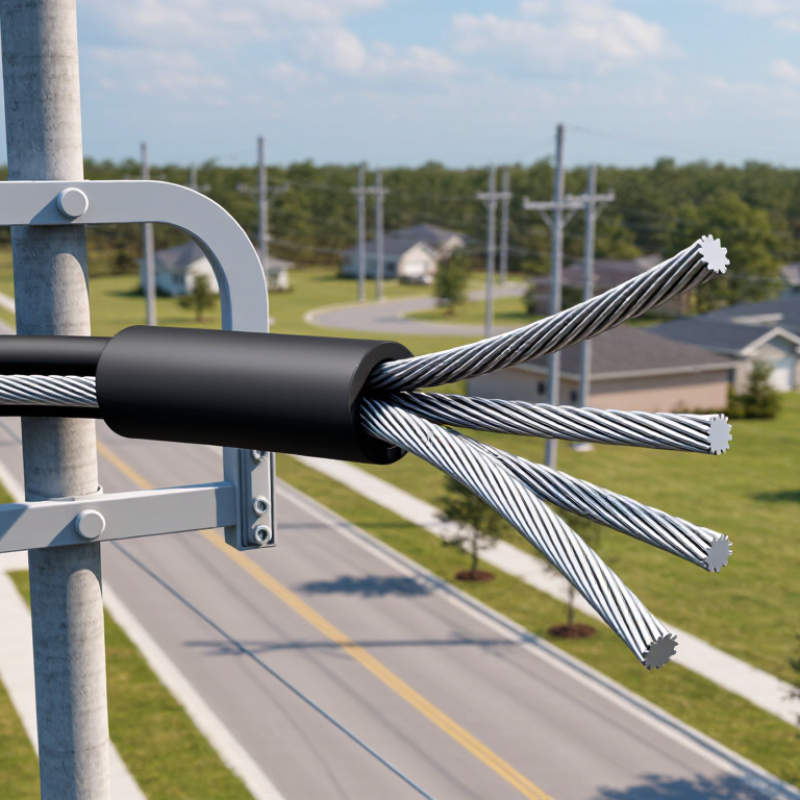
    Abc Cable, short for aerial bundled cable, is a type of insulated overhead power cable. It groups several conductors into a compact bundle, rather than suspending separate bare wires across poles. The conductors are commonly made of aluminum, and insulation materials vary by design. Some systems use a supporting messenger wire; others use a conductor designed to carry mechanical load. Details matter.

    Utilities use ABC cable in overhead distribution networks, including streets, residential areas, and rural routes. The bundled shape can make installations more compact and help reduce faults caused by accidental contact between conductors. Insulation also offers an added barrier against brief contact with branches or nearby objects. It does not make the line harmless, however. The cable remains energized equipment and requires proper clearances, installation, and maintenance.

    ABC cable is not the same as underground cable, and it does not eliminate every outage or safety risk. Its performance depends on the cable construction, support system, weather exposure, and workmanship. A utility engineer may specify a particular configuration based on voltage, span length, expected load, and local conditions. Those choices are not interchangeable. When comparing products, check the manufacturer’s technical data and the applicable utility requirements. Even the name can be used loosely in product listings, so confirm whether the cable is self-supporting and which conductors are insulated. That distinction matters. This overview introduces what ABC cable is and where it is commonly used, while recognizing that actual designs vary.
    What Is ABC Cable and What Is It Used For?

    What ABC Cable Is: 0.6/1 kV Overhead Low-Voltage Distribution

    What Is ABC Cable and What Is It Used For?

    ABC cable, or aerial bundled cable, carries low-voltage electricity overhead. Its 0.6/1 kV rating generally means 0.6 kV between a conductor and earth, and 1 kV between conductors. Insulated conductors are bundled together, often with a supporting messenger. The exact construction varies by system. The term sounds simple, but the cable’s components matter.

    Utility crews use ABC cable on poles to distribute power along streets and rural routes, including connections to service points. Insulation helps reduce accidental contact between conductors and nearby objects. The bundled layout can also limit some weather-related faults compared with widely spaced bare wires. It does not eliminate risk. Span length, support hardware, connectors, and local conditions all affect safe, reliable operation.

    Tips: Check the voltage rating and cable configuration against the project requirements. Inspect fittings and insulation for damage before installation. Details matter. Have qualified personnel assess clearances, loading, and connection methods; a suitable cable can still perform poorly when its supports or fittings are mismatched.

    ABC Cable Construction: Aluminum Cores, XLPE Insulation, and Messenger Wires

    ABC cable, or aerial bundled cable, groups insulated conductors for overhead power distribution. Its construction is designed to carry electrical current while keeping the conductors organized along a route. The exact arrangement varies by system and service requirements.

    The cores are commonly made from aluminum, which offers useful conductivity at a relatively low weight. That reduces the load placed on poles compared with heavier conductor options, though the cable still needs correct support and tension. Each core is typically covered with cross-linked polyethylene, or XLPE. This insulation resists heat and weather exposure, but it does not make careless handling safe. Small cuts or abrasion can become serious defects.

    That matters.

    A messenger wire runs alongside the insulated cores and provides mechanical support. In some designs, it also serves as a neutral conductor; in others, its role differs. The cable’s clamps and fittings must match its construction, since the messenger carries substantial tension over spans. Not every ABC cable is built alike. It is easy to focus on the aluminum and overlook the supporting hardware, but field performance depends on both. Checking the cable specification before installation is a practical step, especially where span length, wind, or local conditions vary.

    Typical ABC Conductor Sizes: 16–150 mm² in Common Utility Designs

    Aerial bundled cable (ABC) combines insulated conductors into a compact overhead assembly, often supported by a messenger wire. In common utility designs, conductor cross-sectional areas range from about 16 to 150 mm². The figure usually describes each phase conductor, not the whole bundle, but specifications should be checked. Details matter.

    Smaller sizes, such as 16 or 25 mm², may serve short service connections or lighter loads. Mid-range options around 35–70 mm² are used in some distribution layouts. Larger sizes, including 95, 120, or 150 mm², may suit heavier feeder loads or longer routes. These are examples, not a sizing rule. A cable’s usable capacity depends on conductor material, insulation, ambient temperature, installation conditions, and the utility’s design criteria.

    A larger cross-section can reduce electrical resistance and voltage drop, but it also adds weight and cost. Engineers consider expected demand, route length, support spacing, and fault-current requirements before selecting a size. A chart alone can be misleading. For example, a line crossing a hot, exposed span may perform differently from a similar line in cooler conditions. Check the project specification and applicable utility standards; the same nominal size does not guarantee identical performance across cable constructions.

    Where ABC Cable Is Used: 230/400 V Networks, Rural Feeds, and Service Drops

    ABC cable, often called aerial bundled cable (ABC), groups insulated conductors for overhead low-voltage distribution. On a standard three-phase 230/400 V network, 230 V typically serves phase-to-neutral connections, while 400 V serves phase-to-phase loads. The bundle is used along village roads, across rural spans, and on service drops from poles to buildings. Compared with bare-wire layouts, insulation can reduce accidental contact risk. It does not make energized lines safe to touch.

    Rural feeders may run past fields, lanes, and scattered homes. ABC can be routed around trees and connected using fittings designed for the cable system. The International Energy Agency’s Tracking SDG 7: The Energy Progress Report 2024 estimates that 666 million people lacked electricity access in 2023. This figure highlights the need for practical distribution extensions, though it does not measure ABC use specifically. Wind, branch growth, and incorrect tensioning can still cause faults. Not maintenance-free. I might be tempted to assume bundled cable needs little inspection; that would be a mistake.

    Tips: Confirm voltage and cable configuration before specifying a service drop. Check clearances, supports, and compatible connection hardware. Keep inspection records.

    What Is ABC Cable and What Is It Used For? - Where ABC Cable Is Used: 230/400 V Networks, Rural Feeds, and Service Drops

    Application Typical setting How ABC cable is used Practical considerations
    230/400 V low-voltage distribution Overhead public distribution networks supplying homes and small businesses Insulated phase conductors are assembled into a compact overhead bundle to carry low-voltage electricity from a distribution transformer along a street or route. 230/400 V is a common nominal three-phase, four-wire system in many regions. Actual network voltage and installation requirements depend on local standards.
    Rural distribution feeds Villages, farms, and properties spread across rural areas Used for overhead low-voltage extensions where connecting customers by underground cable may be impractical or costly. Route length, expected demand, voltage drop, mechanical loading, and clearances must be considered when designing the line.
    Service drops The final overhead connection between a distribution line and a building’s service point Suitable ABC configurations can carry power from the network toward a customer connection, subject to the local utility’s accepted design. Connection details, support hardware, conductor sizing, and the point of attachment are specified by local rules and the utility.
    Residential street extensions New housing areas or additions to existing overhead networks Provides a bundled overhead option for extending low-voltage distribution along roads and between support structures. Insulation can reduce the likelihood of some accidental conductor contacts, but the line remains electrically hazardous and must not be touched.
    Areas with limited installation access Routes where overhead construction is more feasible than trenching Allows conductors to be installed above ground using suitable poles, fittings, and tensioning methods. Designers must account for wind, temperature, span length, vegetation, clearances, and inspection or maintenance access.

    Note: ABC means aerial bundled cable. It is an overhead cable arrangement, and its conductor construction and permitted uses vary by voltage level, local standards, and network-operator requirements.

    ABC Cable Operating Limits: XLPE Insulation Rated for 90°C Continuous Use

    ABC cable, or aerial bundled cable, carries low-voltage electricity on overhead distribution lines. Its insulated conductors are bundled together, often around a supporting messenger. This layout helps keep live conductors separated from branches and nearby structures. On a hot afternoon, however, insulation temperature is only part of the operating picture.

    For XLPE-insulated conductors, IEC 60502-1 specifies a maximum conductor temperature of 90°C during normal continuous operation. It also gives a short-circuit limit of 250°C for up to five seconds, subject to the cable’s design and applicable conditions. That distinction matters. The 90°C figure describes the conductor, not the surrounding air or a guaranteed safe temperature under every installation condition. Sun exposure, current load, wind, conductor size, and connections all affect actual operating temperatures.

    In the field, a loose or corroded connection can create a hot spot even when the average load looks acceptable. Engineers therefore check load calculations, ambient conditions, clearances, and termination quality against the cable manufacturer’s rated data and local design requirements. A rating is a boundary, not a target. Heat is cumulative. Regular inspection can reveal damaged insulation or overheated joints, though inspection alone cannot replace correct sizing and installation.