7 Best Aluminium Casement Doors and Windows for Buyers

    Choosing Aluminium casement door & windows is not just a matter of appearance. Buyers need to compare weather seals, hardware, glazing, frame depth, and installation quality. A slim frame can bring more daylight into a room, while a poorly adjusted sash may whistle in a strong wind. Small details matter.

    Window-performance researcher and author John Carmody’s work offers a useful principle: assess the complete window system, not the frame alone. That is especially relevant when comparing aluminium casement doors and windows, because glass, gaskets, hinges, locking points, and fitting all affect everyday performance. This is a paraphrase of the principle behind his work, not a direct quotation.

    This guide reviews seven options through practical buyer considerations. We look at thermal performance, security features, finish choices, opening style, maintenance, and value. A coastal home may need a different finish from a sheltered city apartment. A wide opening may suit a patio, but it also needs careful attention to hinges and clearances. There is no single best choice for every building.

    Some product claims can be difficult to compare. Ratings, test conditions, and installation details are not always presented in the same way. So, treat headline figures as a starting point, not a guarantee. Check the specification, ask who will install the unit, and confirm what the warranty covers. A careful comparison can help buyers find doors and windows that feel solid, close smoothly, and suit the room they are meant to serve.
    7 Best Aluminium Casement Doors and Windows for Buyers

    Understanding Aluminium Casement Doors and Windows

    Understanding Aluminium Casement Doors and Windows

    Aluminium casement windows pivot on side hinges, opening outward like a small door. This design gives a clear opening and directs breezes indoors. When closed, the sash presses against weather seals; careful fitting matters. Aluminium is strong and slim, but it conducts heat readily. A thermal break separates the inner and outer metal sections, helping limit heat transfer. It does not remove it entirely.

    The U.S. Department of Energy estimates that heat gain and loss through windows account for 25–30% of residential heating and cooling energy use. That figure covers windows generally, not aluminium casements alone. For a meaningful comparison, check the National Fenestration Rating Council label: a lower U-factor indicates less heat transfer, while the useful solar heat-gain coefficient depends on climate and orientation. I would not choose by frame material alone; glass, seals, installation, and local weather all affect comfort.

    Tips: Ask for tested performance ratings for the exact size and glass package. Check that the hinges open freely and the locking points pull the sash evenly against its seals. On a windy day, feel around the frame for drafts. Small fitting gaps can undo a good specification.

    7 Best Aluminium Casement Doors and Windows for Buyers

    Understanding Aluminium Casement Doors and Windows

    How to read this chart: Aluminium conducts heat more readily than materials such as timber or glass. Casement-window thermal performance depends on the complete assembly—including thermal breaks, glazing, seals, and installation—not frame material alone.

    Indicative bulk-material thermal conductivity in W/(m·K); values vary by composition and conditions. The logarithmic scale makes the wide range easier to compare. These figures are not whole-window U-values. Typical reference values are based on standard engineering material-property tables.

    Key Features Buyers Should Compare

    Choosing aluminium casement doors and windows is less about appearance than verified performance. Start with the whole-unit U-factor, not a glass-only claim; lower values indicate better insulation. The U.S. Department of Energy reports that windows account for about 25–30% of residential heating and cooling energy use. Thermal breaks, insulated glazing, and well-fitted seals therefore deserve close attention. Check the rating.

    Compare solar heat gain coefficient (SHGC) with your climate and window orientation. West-facing glass, for example, may admit intense afternoon sun. The National Fenestration Rating Council (NFRC) provides certified U-factor and SHGC ratings for comparing products. Confirm that the figures cover the complete operable unit, including its frame and sash. A rating without context can mislead.

    Look closely at corner joints, drainage paths, gasket compression, and hardware operation. Ask for air and water test data, plus installation details; even a well-rated window can underperform if fitted poorly. One trade-off: narrow frames increase glass area, but may need careful engineering in wide openings. Don’t assume thicker profiles always perform better. Request test documentation, and check what the warranty excludes.

    Seven Aluminium Casement Door and Window Styles

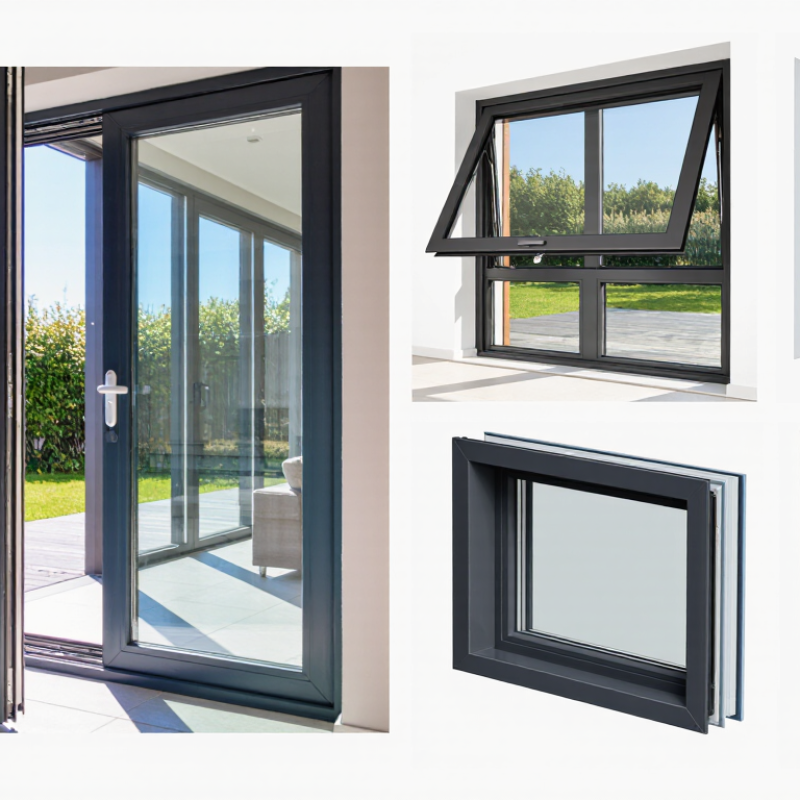
    Aluminium casement designs vary more than their slim frames suggest. A side-hung casement window opens outward from one edge, giving a clear view and useful ventilation. A top-hung awning window sheds light rain while allowing a small opening. French casement windows use two meeting sashes, leaving an unobstructed opening when both swing wide. A fixed-light and casement combination pairs a broad, sealed pane with a smaller opening section. Small rooms benefit. Check the handle position and opening path before choosing; furniture or a narrow walkway can make a lovely window awkward.

    Door styles bring different trade-offs. A single casement door suits a compact patio entrance, while French casement doors create a wide paired opening for gardens or balconies. Folding casement doors use several hinged panels to open a larger span, but need room to stack at the side. That matters. I would compare threshold height, weather seals, drainage details, and hardware as carefully as appearance. Ask how the frame will be fixed to the wall, too; a good product can still perform poorly if installation leaves gaps. No layout is perfect. Wind exposure, daily use, and the home’s existing openings should guide the final choice.

    Choosing the Right Style for Your Home and Climate

    Choosing the right aluminium casement doors and windows starts with your local climate. In warm, sunny areas, consider glass that limits solar heat and glare. In colder regions, insulated frames and double glazing can help reduce heat loss. Aluminium frames with thermal breaks improve insulation, though performance also depends on the glass, seals, and installation. Coastal homes need durable finishes and regular cleaning to manage salt exposure. A sleek frame is appealing, but it should not outweigh comfort or upkeep.

    Tips: Check how wind-driven rain reaches your home. Ask about tested air and water resistance. Measure nearby walls, paths, and furniture before choosing outward-opening casements. Small details matter.

    Casement windows can direct breezes into a room when positioned thoughtfully. Their wide openings also make ventilation easy to adjust. For doors, check that the open panel will not block a walkway or catch strong gusts. A large glazed area brings in daylight, but may need shading in exposed rooms. There is no perfect option for every home. It is easy to focus on frame colour and overlook the direction of the sun; that choice may need a second look. Read product specifications, compare warranties, and confirm that the installer understands your climate and opening requirements.

    Specifications to Check Before Buying

    For aluminium casement doors and windows, compare whole-unit performance, not just frame thickness. The U.S. Department of Energy’s Energy Saver guidance estimates that windows account for about 25–30% of residential heating and cooling energy use. That makes U-factor and solar heat gain coefficient (SHGC) worth checking. The National Fenestration Rating Council (NFRC) label helps compare these ratings across products. A lower U-factor generally means better insulation, while the right SHGC depends on climate, orientation, and shading.

    Check the tested air and water resistance, structural performance, and applicable NAFS classification for the intended opening size. Ask for test documentation, not a verbal assurance. For aluminium frames, confirm whether a thermal break separates interior and exterior metal; otherwise, the inside frame may feel cold or collect condensation. Review glazing thickness, locking points, hinge capacity, and drainage paths too. Looks can mislead. A large casement sash puts real weight on its hinges, and installation quality can still undermine strong product ratings.

    Tips: Measure the rough opening and ask for the rated size range. Compare glass options for your climate, then check that the quote specifies the exact configuration tested. One detail is easy to miss: confirm that screens, hardware, and opening direction suit daily use.

    7 Best Aluminium Casement Doors and Windows for Buyers - Specifications to Check Before Buying

    Compare these common casement configurations. Dimensions and performance vary by design, glass, hardware, and local wind conditions; confirm values for the complete, tested unit before ordering.

    Configuration Typical application Frame and opening checks Glazing and thermal checks Hardware and weather checks
    1. Standard single casement window Bedrooms, kitchens, and other rooms needing ventilation through a side-hinged sash. Check frame depth, sash dimensions, hinge side, opening clearance, and certified resistance to design wind pressure. Confirm glass thickness and safety-glass requirements for the location. Request the whole-window U-factor or equivalent local thermal rating. Check multipoint locking, handle reach, perimeter seals, drainage paths, and air- and water-leakage test results.
    2. Paired casement window Wider openings where two operable sashes provide ventilation from both sides. Check overall opening width, meeting-stile design, sash support, mullion strength, and the required wind-load rating. Compare double- or triple-glazing options, spacer type, and the tested thermal performance of the complete assembly. Verify that both sashes lock securely and that the central meeting joint has continuous weather seals.
    3. Thermally broken casement window Heated or cooled spaces where reducing heat transfer through the aluminium frame is a priority. Ask whether the frame and sash use a continuous thermal break; check frame depth, break material, and structural test data. Request whole-window U-factor and solar heat gain or equivalent regional ratings for the selected glass and frame combination. Check seals around the sash and frame, condensation guidance, and water-penetration test results for the finished unit.
    4. Fixed-and-casement combination window Large glazed areas combining a non-opening centre or side panel with an operable casement section. Confirm panel widths, mullion reinforcement, glazing support, installation anchorage, and structural limits for the full assembly. Compare glass make-up across fixed and operable panels; verify safety glazing where required and request assembly-level thermal data. Check that operable sections remain accessible for cleaning and that joints between fixed and opening panels are weather-sealed.
    5. French casement window A broad window opening with two side-hinged sashes and no fixed centre post when both sashes are open. Check sash size and weight limits, meeting-stile arrangement, hinge capacity, and the clear opening required for access or ventilation. Confirm glass specification, safety requirements, and whole-unit thermal performance for the selected glazing configuration. Inspect the central locking system, shoot bolts where specified, compression seals, and secure locking of the inactive sash.
    6. Single-leaf aluminium casement door Patio, garden, or balcony access through a side-hinged glazed door. Check door-leaf dimensions and weight limits, threshold height, opening direction, frame anchorage, and applicable safety-glazing rules. Specify safety glass where required by code or location; compare whole-door thermal performance, not glass-only figures. Check hinge and locking capacity, threshold drainage, compression seals, accessibility needs, and air- and water-resistance evidence.
    7. Double-leaf French casement door Wide exterior openings where two hinged leaves create a larger clear passage when opened together. Confirm each leaf’s size and weight limits, inactive-leaf securing method, threshold detail, and structural rating for the complete frame. Check safety-glass requirements for both leaves and request thermal ratings for the specified door, frame, and glazing combination. Verify multipoint locking, shoot bolts or equivalent inactive-leaf hardware, weather seals at the centre joint, and water-management details.

    Buyer reminder: Ask for test reports covering the exact size and configuration being purchased, including air leakage, water penetration, structural pressure, and thermal performance where applicable. Confirm local code requirements, installation details, warranty coverage, and maintenance instructions.

    Article Source: