
10 Best ASA Sheets Suppliers for Global Buyers

    Asa Sheets are chosen for more than color and price. Their weather resistance, surface finish, thickness consistency, and compatibility with a project all matter. A sheet that looks smooth under warehouse lights may perform differently after months of sun, rain, and temperature changes. Small details count.

    This guide compares 10 Asa Sheets suppliers for global buyers, with attention to product range, manufacturing capability, quality documentation, customization, lead times, and communication. Buyers should request current technical data sheets and samples, then check whether the stated specifications match the delivered material. Ask about UV performance, color stability, sheet tolerances, packaging, and how quality issues are handled. Clear answers are useful. Vague claims deserve a closer look.

    Supplier selection also depends on the application. Roofing, signage, vehicle components, and exterior panels can require different sheet properties. A low quoted price may not reflect freight, minimum order quantities, or the cost of inconsistent batches. Compare the full offer, not one number. And verify the details.

    A trustworthy expert quotation requires a verifiable source. No article or interview source was provided, so naming an Asa Sheets expert or presenting a sentence as something they said would risk inventing evidence. This comparison therefore focuses on practical checks buyers can confirm directly with suppliers. Before placing an order, confirm specifications and sample performance in writing. Often, that is the difference between a confident purchase and an expensive guess.
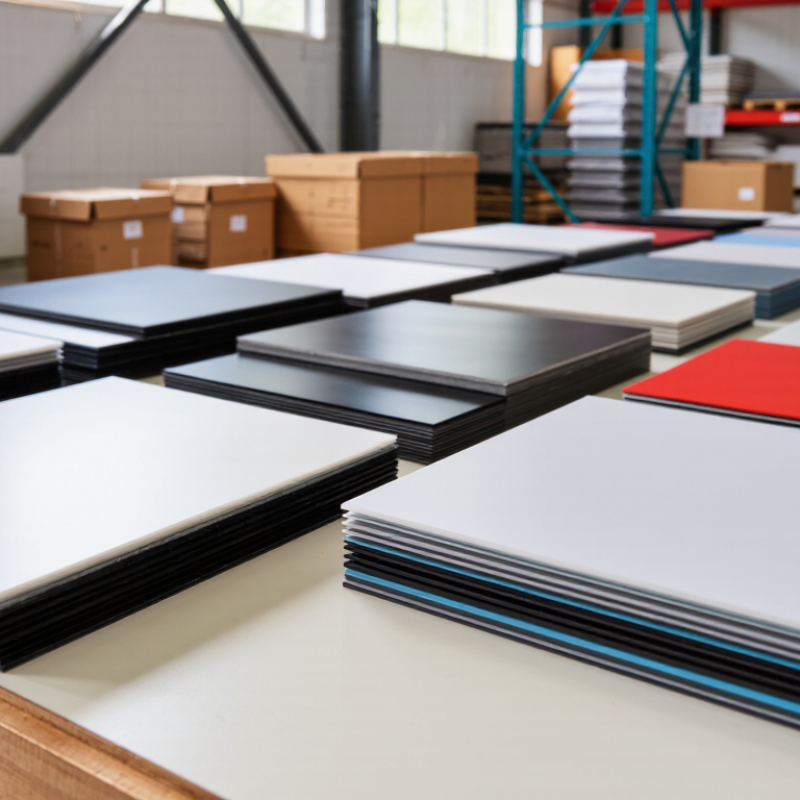
    10 Best ASA Sheets Suppliers for Global Buyers

    ASA Sheet Basics: 1.07 g/cm³ Density and 40–50 MPa Tensile Strength

    ASA (acrylonitrile styrene acrylate) combines outdoor weather resistance with practical processing characteristics. Typical commercial grades have a density near 1.07 g/cm³ and tensile strength of roughly 40–50 MPa. These are useful comparison points, not guarantees: formulation, sheet thickness, and test conditions can shift results. Density helps estimate weight; a one-square-metre sheet, 3 mm thick, weighs about 3.21 kg at 1.07 g/cm³. Small differences matter.

    For supplier comparisons, request test data tied to recognized methods. ISO 1183-1 specifies methods for measuring plastics density, while ISO 527-1 covers tensile-property testing. Ask whether reported strength reflects the finished sheet or raw resin, and check specimen direction and conditioning. PlasticsEurope’s Plastics—the Facts 2024 reports 413.8 million tonnes of global plastics production in 2023, underscoring the scale of a market where consistent specifications matter. Still, a catalog value is not a promise. Review recent test reports and confirm that samples match the stated grade before comparing quotations.

    ASA Sheet Basics: Density and Tensile Strength

    ASA sheet density is approximately 1.07 g/cm³. Typical tensile strength is 40–50 MPa; actual values vary with formulation, manufacturing process, and test method.

    Key Applications: Exterior Cladding, Roofing, Signage, and Automotive Trim

    ASA sheets are used in exterior cladding because their weather-resistant surface can help retain color and appearance outdoors. For building panels, buyers should check sheet thickness, surface finish, and compatibility with the chosen fixing system. A sample exposed to local sunlight and rain can reveal issues that a specification sheet may not show.

    On roofs, ASA-faced sheets can provide a durable, colored surface, but performance depends on the full panel construction and installation. Sign makers often value consistent color and a smooth face for clear graphics. Automotive trim calls for careful attention to forming behavior, surface quality, and resistance to everyday abrasion. Details matter. A sheet that works well for signage may not suit a curved trim part without trials.

    Tips: Ask suppliers for technical data, tolerances, and test methods relevant to your application. Confirm how sheets are packed for long-distance shipping, and inspect samples before placing a large order. Compare more than price: inconsistent thickness or finish can complicate fabrication. One practical caveat: test results cannot fully predict every climate or production line, so document your own trial conditions.

    10 Best ASA Sheets Suppliers for Global Buyers - Key Applications: Exterior Cladding, Roofing, Signage, and Automotive Trim

    Supplier capability comparison for sourcing ASA sheet products. Profiles describe supplier types and capabilities to evaluate; they are not named or ranked companies.

    Profile Supplier Capability Typical Product or Service Relevant Applications Buyer Checks
    01 ASA capstock sheet specialist Sheet with a weather-resistant ASA surface layer over a thermoplastic substrate Exterior cladding, fascia, outdoor panels Ask for layer construction, UV-weathering test data, color consistency, and forming limits.
    02 Co-extruded sheet manufacturer Multilayer sheet produced by co-extrusion, with material layers selected for the intended use Cladding panels, roofing components, outdoor profiles Confirm layer thickness tolerances, adhesion between layers, and suitability for the proposed forming process.
    03 Flat-sheet supplier for façade fabrication Flat or lightly textured ASA-faced sheets supplied for cutting and fabrication Exterior cladding, soffits, architectural panels Check sheet flatness, available dimensions, surface finish, and fabrication guidance.
    04 Profiled-sheet and panel supplier Formed or profiled sheets designed for a specified panel geometry Roofing, wall cladding, canopies Verify profile drawings, fastening details, thermal movement allowances, and installation requirements.
    05 Roofing-focused sheet converter ASA-surfaced roofing sheets or components made to project specifications Roof coverings, roof-edge details, agricultural or utility buildings Request information on impact performance, drainage design, weather exposure, and compatible support spacing.
    06 Signage-grade sheet supplier Sheets selected for surface appearance, printability, or sign fabrication Outdoor signs, display panels, wayfinding Confirm printing or bonding compatibility, surface preparation needs, color options, and outdoor-use data.
    07 Automotive trim material supplier ASA sheet or sheet stock intended for forming into exterior trim components Automotive exterior trim, protective moldings, vehicle body details Request application-specific qualification data, forming-window information, and test results required by the vehicle program.
    08 Custom-color and surface-finish supplier ASA sheet offered in specified colors, gloss levels, or textures Cladding, signage, roofing details, trim components Agree on color tolerances, gloss measurement method, texture samples, and batch-to-batch controls.
    09 Cut-to-size sheet processor Standard sheet stock cut or machined to customer dimensions Sign panels, façade parts, trim blanks, project-specific components Clarify dimensional tolerances, edge quality, protective packaging, and allowable processing methods.
    10 Export-oriented materials distributor Procurement and shipment coordination for sheet products from one or more manufacturers Multi-market cladding, roofing, signage, and trim projects Check traceability, product documentation, sample availability, lead-time commitments, and export packaging.

    Note: ASA sheet construction, performance, dimensions, and available finishes vary by product and supplier. Confirm the technical data sheet, test method, intended-use suitability, and applicable local requirements before purchase.

    How to Assess 10 Suppliers: ASTM D638 Tensile Data and ASTM G154 UV Testing

    Comparing ten ASA sheet suppliers starts with comparable evidence, not polished claims. Request ASTM D638 tensile data for the exact grade and sheet thickness under consideration. Check tensile strength, elongation at break, specimen type, conditioning, and test speed. Values without units or test conditions are difficult to verify. Numbers need context. A supplier should explain whether the reported results represent typical production data or a specific laboratory sample.

    For outdoor applications, review ASTM G154 reports alongside the tensile data. Ask which fluorescent lamp, exposure cycle, irradiance, temperature, and condensation settings were used, and how long specimens were exposed. These details matter because changing the cycle can change the outcome. Compare color, gloss, cracking, and retained mechanical properties only when the methods match. That comparison is not perfect. G154 describes exposure conditions; it does not establish one universal acceptance threshold for every ASA sheet. Request dated reports, sample identification, and clarification on whether testing was conducted independently. Then check whether the supplier can link the tested material to routine production batches. A missing detail is not proof of poor quality, but it deserves a careful follow-up.

    Global Sourcing Benchmarks: MOQ, Lead Times, Certifications, and Export Coverage

    For ASA sheets, a supplier comparison should separate published claims from confirmed production capacity. Ask for the minimum order quantity by thickness, color, and finish; a low MOQ may apply only to stock sheets, not custom runs. Request lead times in calendar days, with sample approval, production, and port handling shown separately. Small details matter. A written quotation should also state sheet dimensions, thickness tolerance, packaging, and how damaged goods are handled.

    Public data helps explain why export promises need scrutiny, but it does not establish a universal ASA lead time. UNCTAD’s Review of Maritime Transport 2024 reports that maritime trade grew 2.4% in 2023, while disruptions can still affect routes and schedules. The World Bank’s 2023 Logistics Performance Index assesses logistics across 139 economies. Use these reports as context, then ask suppliers for recent shipment records to your destination region. Get it in writing.

    Check certifications against the actual product and facility, not a generic company brochure. Request current certificates, their scope, issuing body, and expiry date; verify whether they cover the sheet grade being quoted. For export coverage, ask which ports the supplier regularly serves, which trade terms are available, and who prepares export documents. A sample shipment can reveal packing weakness or color variation before a larger order. Yet samples do not guarantee batch consistency, so ask for inspection criteria and retained-batch procedures. A comparison table helps, though real-world exceptions still happen.

    Supplier Comparison: Sheet Thickness, Resin Grade, Warranty, and Cost per m²

    A useful comparison of ASA sheet suppliers starts with thickness, not the headline price. A 1.5 mm sheet and a 2 mm sheet may look similar in a small sample, yet differ in stiffness, weight, and suitability for the finished part. Ask whether thickness is nominal or measured, and request tolerance data. Check resin grade too: the ASA content and UV-stabilizer specification can affect color retention outdoors. A datasheet helps, but it does not replace a sample exposed to the intended conditions. Small details matter.

    Warranty terms deserve the same scrutiny as material specifications. Confirm what counts as fading, cracking, or delamination, and whether claims require installation records or laboratory testing. Then compare cost per square metre using the same thickness, sheet size, color, and delivery terms. Include cutting loss; a low unit price can become less attractive when narrow offcuts cannot be reused. Ask for a written quotation with currency, freight, and minimum-order quantities stated clearly. Still, supplier data can be incomplete. I would flag any unclear resin description before ranking offers, even if that slows the comparison.

    Article Source: