
China Best Brass Terminal Connector Manufacturer?
Choosing a China-based Brass Terminal Connector manufacturer requires more than comparing unit prices. The International Energy Agency’s Global EV Outlook 2024 reports nearly 14 million electric cars sold worldwide in 2023, representing about 18% of new car sales. This growth signals rising demand for dependable electrical connections, though it does not predict demand for any single connector type. The USGS Mineral Commodity Summaries 2024 also describes copper’s important role in electrical applications. That context matters because brass connectors rely on copper alloys, but alloy composition still determines real-world performance.
For buyers, the useful questions are specific. Does the supplier state the brass grade and provide material certificates? Can it document dimensional tolerances, plating thickness, and contact resistance? Ask for batch traceability and sample test results, including crimp or pull testing where relevant. Small details matter. A bright finish alone proves little about conductivity or durability.
A manufacturer’s quality system, production capacity, and response to corrective actions deserve equal attention. Request current certificates and verify their scope; certification is not a substitute for product-level evidence. Compare samples under your actual wire size, load, and operating conditions. Not a guarantee. Even strong test data may not match every installation. China offers a broad supplier base, but supplier claims should be checked against records, test methods, and repeatable results before a purchase decision.
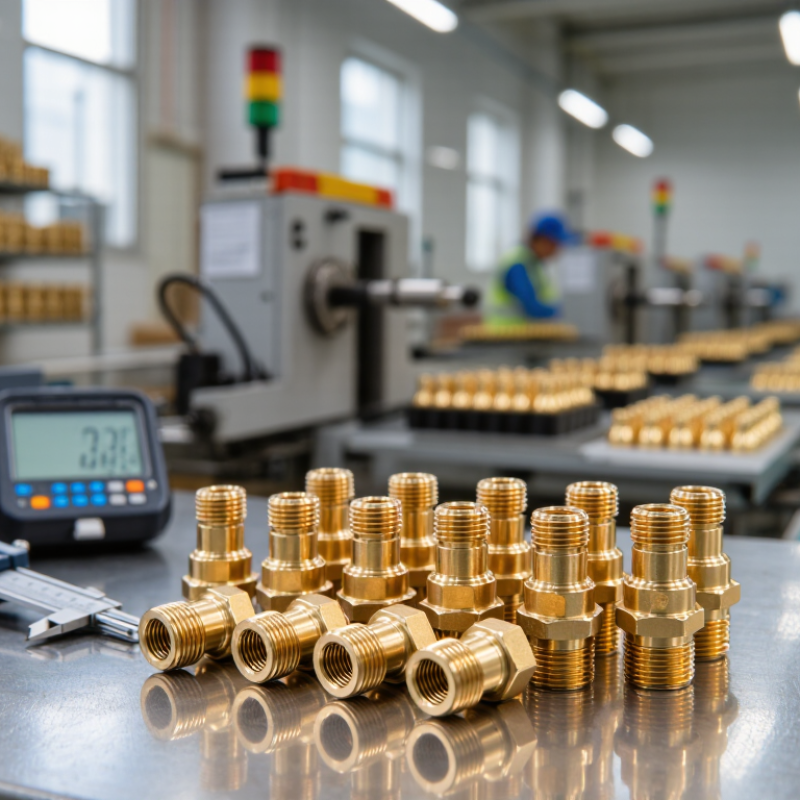
What Is a Brass Terminal Connector?
A brass terminal connector is a conductive fitting that joins a wire to a device, circuit, or another conductor. It is commonly made from copper-zinc alloy, valued for its conductivity, strength, and machinability. You may see a small screw clamp, crimp barrel, or threaded stud on the connector. Each design holds the wire differently. The right choice depends on the wire size, installation space, and expected electrical load.
Brass offers a practical balance of electrical and mechanical properties, but it is not automatically suitable for every environment. Moisture, vibration, heat, and contact with other metals can affect long-term performance. A connector that looks solid may still loosen if it is poorly sized or installed. Check the specified wire range, fastening method, and rated current before selection. For example, a terminal for a thin control wire may not safely handle a larger power cable. Small details matter. Surface finish and plating can also influence corrosion resistance and contact quality. Specifications vary, so verify them with the supplier rather than relying on appearance alone.
Tips: Match the connector to the conductor and application. Strip only the required insulation length, and tighten screws to the stated torque when available. Recheck the connection after assembly; I’ve seen a neat-looking joint that still needed adjustment.
What Is a Brass Terminal Connector?
A brass terminal connector is an electrical connection component made from a copper-zinc alloy. Brass is valued for its conductivity, strength, and machinability. The chart compares approximate electrical conductivity at 20°C, expressed as a percentage of the International Annealed Copper Standard (IACS).
Values are approximate; conductivity varies with alloy composition, purity, and temper. Brass values shown represent a typical range midpoint.
How Brass Terminal Connectors Are Designed and Manufactured
Designing a brass terminal connector starts with its job: carrying current, securing a wire, or both. Engineers confirm conductor size, expected load, operating temperature, and installation space before setting dimensions. Small details matter. Thread depth, entry chamfers, and clamping-face width affect assembly and contact quality. Brass alloy selection balances conductivity, strength, corrosion behavior, and machinability. No single grade suits every environment. That trade-off deserves attention.
Production may use precision turning, stamping, or forming, depending on connector geometry and order volume. On a machined part, a controlled tool path creates the bore, threads, and flat contact surfaces. Operators remove burrs, then inspect critical dimensions with gauges or optical equipment. Where specified, surface plating can improve corrosion resistance or solderability, but it must match the application. Not every connector needs plating. Overprocessing adds cost.
Quality checks should include thread fit, visual finish, and electrical resistance. Sample assemblies can reveal loose clamping or uneven contact. Torque and pull tests may also be appropriate, especially when vibration or frequent servicing is expected. Measurements should be recorded against the drawing, not judged by appearance alone. A clean-looking connector can still fail. Design reviews are imperfect, too: a bench test may not reproduce years of heat, moisture, and handling. Field feedback helps refine tolerances and inspection plans.
Which Materials and Features Affect Connector Performance?
Brass terminal connector performance depends on alloy, contact design, and surface finish. The Copper Development Association’s C26000 alloy data lists electrical conductivity at about 28% IACS. That is well below pure copper, but brass offers useful strength and formability for clamps and threaded terminals. Alloy choice matters. A connector carrying current through a small contact area may heat up if pressure is low or surfaces are poorly matched.
Plating and geometry shape long-term reliability. Tin plating can help limit oxidation, while a spring feature helps maintain contact pressure through vibration and repeated use. These benefits depend on execution; plating cannot fix a loose joint. IEC 60512 test methods cover contact resistance and temperature rise, useful checks when comparing designs. In practice, test the assembled connector under its intended current and wire size. A catalog value alone can miss installation effects.
Tips: Check alloy, plating, wire range, and torque together. Look for contact-resistance and temperature-rise test results, not just a current rating. Small details matter. And a slightly uncomfortable point: lower material cost may increase heating or maintenance later. Measure, do not guess.
How to Evaluate a Brass Terminal Connector Manufacturer in China
China Best Brass Terminal Connector Manufacturer?
How to Evaluate a Brass Terminal Connector Manufacturer in China
A reliable evaluation starts with the part, not the sales brochure. Ask for the brass alloy grade, dimensional tolerances, plating details, and inspection records. Then compare these against your drawing and operating conditions. A connector for a vibrating assembly may need different testing from one used in a stationary control cabinet. Details matter.
Request samples from a normal production run, not only hand-finished prototypes. Check thread fit, burrs, surface finish, and plating coverage under good light. Ask how the manufacturer tests electrical resistance and clamping strength. Useful records should identify test methods, sample quantities, and acceptance limits. Vague claims are not enough. Confirm that batch numbers link finished parts to material and inspection records.
Production consistency deserves close attention. Ask how changes to tooling, material, or plating are documented, and how rejected parts are handled. A factory visit or independent quality audit can help verify the process, but neither guarantees every batch will be perfect. I would not treat one excellent sample as proof; that is an easy mistake. Review packaging too: loose terminals can rub together and arrive scratched. Clear answers, practical evidence, and steady communication usually tell more than polished promises.
Where Are Brass Terminal Connectors Used?
China Best Brass Terminal Connector Manufacturer?
Where Are Brass Terminal Connectors Used?
Brass terminal connectors appear wherever wires need a stable, serviceable electrical connection. In buildings, they are used in distribution boards, lighting circuits, HVAC controls, and appliances. Brass conducts electricity well, resists corrosion, and can be machined into compact terminals. The exact alloy and plating still matter; “brass” alone does not guarantee reliable performance.
That scale helps explain why dependable terminals matter in fixed electrical systems, from a crowded switch cabinet to a ceiling light junction. They are also common in vehicles, including battery, sensor, and wiring-harness connections. OICA reported 93.5 million motor vehicles produced worldwide in 2023, illustrating the size of this application area.
Not every connection needs brass, though. Heat, vibration, current, and moisture can change the right material choice, and a connector that looks suitable may still loosen over time. The detail is easy to miss.
English
Français 