Best Damper Actuator Types and Their Applications?
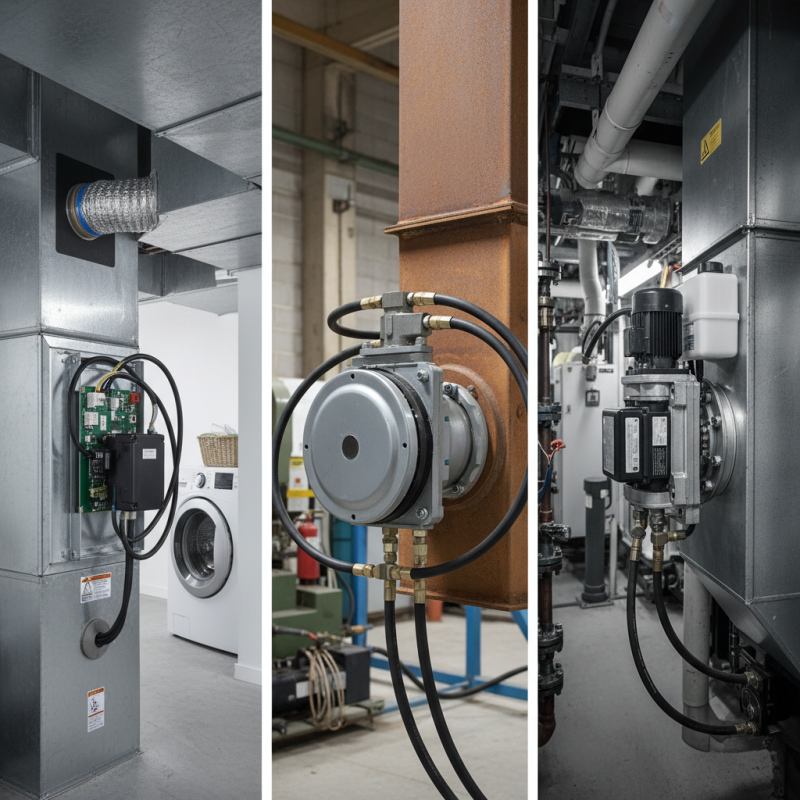
In modern HVAC systems, the role of the Damper Actuator is crucial. These devices control airflow in ventilation systems, ensuring efficiency and comfort. Various types of damper actuators exist, each suited for specific applications. They can be electric, pneumatic, or hydraulic.
Electric damper actuators are popular in residential settings. They offer precise control but may lack response in extreme conditions. Pneumatic options are often used in industrial applications. However, they may require more maintenance and can be less efficient. Hydraulic actuators are powerful but may face challenges with space constraints.
Understanding the best damper actuator type depends on the application requirements. An actuator must be selected carefully for optimal performance. This process often involves trial and error. Each choice comes with its benefits and drawbacks. Exploring these options helps ensure that the right balance is achieved.
Overview of Damper Actuators and Their Importance
Damper actuators play a critical role in various engineering applications, particularly in HVAC systems. They regulate airflow and maintain temperature control in buildings. According to a report from the Research Institute, the global demand for damper actuators is expected to increase by 5% annually until 2026. This rising trend emphasizes their importance in energy efficiency and comfort.
The accuracy and responsiveness of damper actuators can significantly influence system performance. Inadequate actuator selection may lead to poor ventilation. A study indicated that improperly calibrated actuators could waste up to 30% of energy in HVAC systems. This shows the need for careful consideration when choosing actuator types. The failure to do so not only increases operational costs, but also affects indoor air quality.
Many industries rely on various types of damper actuators. Electric actuators dominate the market with a 60% share, primarily due to their precision and ease of integration. However, pneumatic actuators offer advantages in extreme conditions. Understanding these nuances is vital for engineers. Ignoring specifics may lead to suboptimal system design. Ultimately, the choice of actuator should align with the system's operational demands and environmental conditions.
Types of Damper Actuators: Electric, Pneumatic, and Hydraulic
Damper actuators play a crucial role in controlling airflow in various systems. They can be categorized into three main types: electric, pneumatic, and hydraulic. Each type has its own unique applications and characteristics. Electric actuators are widely used for their precision. They provide reliable control over dampers in HVAC systems. However, they can be costly and may require extensive wiring.
Pneumatic actuators rely on compressed air to operate. These are often preferred in larger industrial settings. They are generally easier to install compared to electric actuators. Nevertheless, they may face challenges in achieving precise control, leading to fluctuations. Regular maintenance is key for their efficient performance, but not all facilities prioritize this.
Hydraulic actuators, on the other hand, utilize fluid power. They excel in heavy-duty applications, like in power plants. These actuators can handle high loads with ease. However, potential fluid leaks can pose risks and require careful monitoring. Thus, choosing the right type often involves trade-offs, emphasizing the need for thoughtful consideration and planning.
Comparative Analysis of Damper Actuator Types
Damper actuators are vital in HVAC systems, controlling airflow effectively. They come in various types, each suited for different applications. Electric actuators are popular for their precision. They offer quick response times and can be easily integrated with automated systems.
Pneumatic actuators use air pressure for operation. They are reliable and can handle harsher environments. However, they may require regular maintenance. On the other hand, hydraulic actuators provide strong force. They are ideal for larger systems but can be more complex to install and manage. Sometimes, they might leak, leading to inefficiencies.
In comparing these types, electric actuators are often favored for standard settings. Still, pneumatic and hydraulic options shine in specific scenarios. Understanding these differences is crucial. It can lead to improved system performance. Each type has its strengths and weaknesses. Evaluating the specific needs of your application can help make the best choice.
Applications of Damper Actuators in Different Industries
Damper actuators play a crucial role in various industries. In HVAC systems, these devices control airflow with precision. They ensure optimal temperature and humidity levels. A recent market report highlights that the HVAC industry is projected to grow at a rate of 4.6% annually through 2028. This growth emphasizes the importance of efficient damper actuators.
In the power generation sector, damper actuators manage air and gas flow. They contribute to the combustion process and improve efficiency. According to industry research, proper airflow regulation can enhance energy output by up to 15%. However, operators sometimes face challenges with actuator responsiveness, leading to inefficiencies.
The manufacturing industry also relies on damper actuators for ventilation. They help maintain air quality and worker safety. In fact, statistics show that effective ventilation can reduce airborne contaminants by 50%. Still, many facilities struggle with actuator maintenance, risking air quality and production output. Addressing these issues is vital for long-term performance.
Applications of Damper Actuators in Different Industries
Factors Influencing the Selection of Damper Actuator Types
When selecting a damper actuator, several factors come into play. The most significant factor is the application itself. Different environments demand unique solutions. For instance, harsh conditions might necessitate a rugged design. Meanwhile, more controlled settings may prioritize precision and responsiveness.
Another crucial aspect is the actuator's size and torque requirements. This heavily influences performance. An actuator that is too small may struggle to meet operational demands. Conversely, an oversized actuator could lead to inefficiencies and increased costs. It's essential to find a balance that meets the specific operational parameters without overshooting.
Lastly, consider the communication and control methods used. Modern systems often rely on smart technology, enabling integration with existing control systems. Compatibility can greatly affect performance and ease of use. Neglecting this might lead to future challenges. It's a layered decision-making process that demands thorough analysis.
 English
  Français