7 Best Drone BMS for UAV Sprayer Buyers in 2026?
A UAV sprayer asks more of its battery system than steady flight alone. The battery management system must monitor cells while motors, pumps, and spray controls draw power. During a pass over a field, pump demand can change quickly. Voltage may dip, heat may build, and a weak cell can limit the whole pack. Small details matter.
This guide to the 7 Best Drone BMS for UAV Sprayer Buyers in 2026 examines the features that deserve close attention. A practical Drone Bms For Uav Sprayer should offer dependable cell monitoring, suitable current handling, clear fault alerts, and compatibility with the battery chemistry and pack configuration. Buyers should also check charging limits, temperature sensing, communication protocols, and physical fit. A connector mismatch can turn an otherwise suitable design into a costly delay.
Specifications tell only part of the story. Review product documentation, protection thresholds, warranty terms, and support availability before comparing options. Where possible, confirm that ratings reflect real operating conditions, not just brief peak loads. Some product pages leave important questions unanswered. That is worth noticing. No single BMS will suit every sprayer, battery pack, or workload. The strongest choice is the one that matches the aircraft’s electrical requirements and can be maintained reliably through repeated field use. This shortlist provides a starting point, not a substitute for checking the manufacturer’s latest technical data.
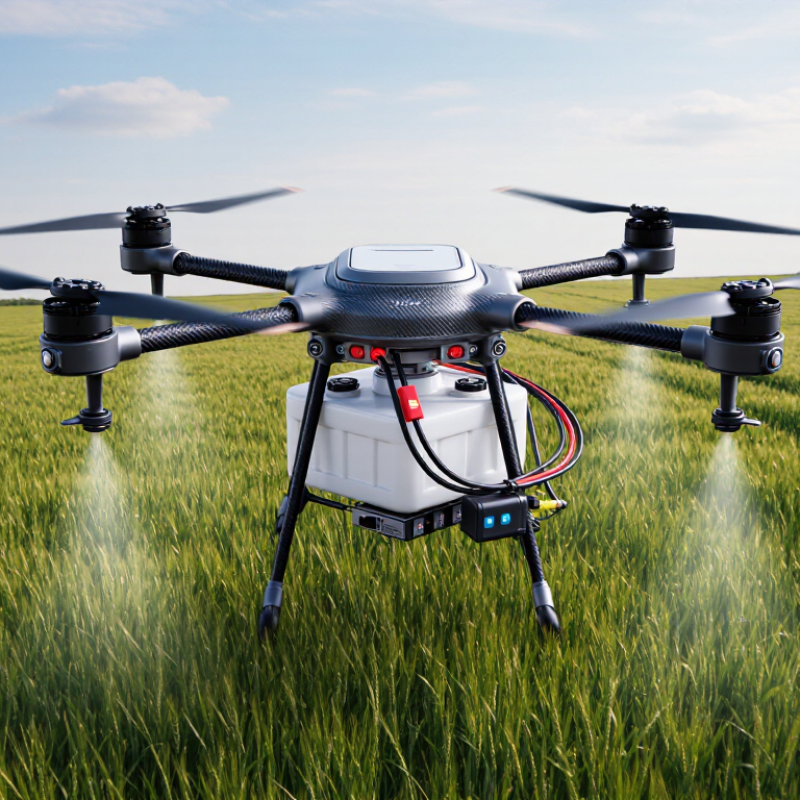
What a Drone Battery Management System Does in UAV Sprayers
A drone battery management system (BMS) monitors the battery pack while a UAV sprayer is working. It tracks cell voltage, current, and temperature, then estimates remaining charge. Under a full spray load, those readings help the operator judge whether the aircraft can finish a pass and return with reserve. Small differences matter. If one cell group sags sooner, the BMS may flag an imbalance before the pack reaches its cutoff. It can also limit charging or discharge when readings move outside configured safe ranges.
In the field, a BMS is useful only when its measurements and alerts are understood. A sudden drop in estimated capacity may reflect aging, cold weather, or heavy pump demand, not one simple fault. Check pack condition and warning history, and compare flight time with actual payload and route. Do not treat a percentage display as a promise. Not a guarantee. A display can look reassuring right before conditions change. For sprayer buyers, useful systems provide clear cell-level data, temperature visibility, fault records, and communication with the aircraft’s power controls. Yet a BMS cannot correct damaged cells or poor maintenance. That part is still on the operator. Regular inspection and cautious reserve planning remain important, even with detailed monitoring.
Key Criteria for Evaluating Drone BMS Options in 2026
A drone battery management system should match the pack’s chemistry, cell count, and operating current—not just its advertised capacity. Check continuous and peak discharge ratings against motor demand, pump startup, and other onboard loads. A mismatch may cause voltage sag during a full-tank climb. Small details matter.
For a sprayer, useful telemetry includes cell voltage, pack temperature, current, and remaining charge. Confirm that readings reach the flight controller or ground display in a format the aircraft can interpret. Test alerts during controlled bench runs, then verify them with the pump cycling. A percentage alone can be misleading under changing loads.
Inspect the enclosure, connectors, and wiring for moisture protection, vibration resistance, and practical access. Ask how the system handles overcurrent, undervoltage, and temperature limits, and whether fault records can be reviewed after a flight. Compare protection behavior with the battery and charger specifications; do not assume every pack needs identical settings. No single rating settles the choice. I would still weigh field serviceability heavily, even though it is easy to overlook when comparing specification sheets. A neat data table cannot show how quickly a technician can find a loose connection after a rough landing.
7 Best Drone BMS Criteria for UAV Sprayer Buyers in 2026
Suggested evaluation priorities for comparing battery management systems used in agricultural spraying drones.
Scores are a suggested screening framework, not measured market data. Confirm battery voltage, continuous and peak current, protection functions, telemetry needs, environmental conditions, and weight limits against the specific UAV and spray mission.
A Side-by-Side Look at Seven Drone BMS Choices
A useful comparison separates seven BMS approaches: voltage alarms, current-and-temperature monitoring, cell-level balancing, wireless telemetry, redundant sensing, modular units, and flight-controller-integrated systems. Voltage alarms are simple, but reveal little about individual cells. Cell-level monitoring can flag a weak cell before takeoff. Telemetry adds live readings, though radio dropouts can leave gaps. Redundancy offers backup measurements, at the cost of extra wiring and weight.
Small details matter.
For sprayer work, compare continuous current ratings, temperature limits, balancing behavior, data logging, and connector compatibility. A pump starting under load can expose weaknesses that a hover test misses. Check readings against a calibrated meter, too; a clean dashboard is not proof of accuracy. The International Energy Agency’s Global EV Outlook 2024 reported a 14% fall in average battery-pack prices in 2023. That figure concerns electric vehicles, not UAV packs, so it signals cost pressure rather than a drone-specific forecast. Ask suppliers for cell-level logs and test results under realistic load. I would still want a field trial: specifications alone can miss vibration, heat, or awkward service access.
How to Match a BMS to Your UAV Sprayer and Battery Setup
Choosing a BMS for a UAV sprayer starts with the battery, not the aircraft’s advertised flight time. Confirm the pack’s chemistry, cell count, voltage range, and maximum charge voltage. Then check the cells’ permitted continuous and brief discharge currents. The BMS must protect within those limits while handling the combined demand from propulsion, pump, and spray controls. Bursts matter. A pump starting during a climb can create a different load from steady cruising.
Headline current ratings can mislead. Compare them with measured system demand, including startup peaks, rather than adding component labels blindly. Check that the BMS supports the pack’s charging current, cell balancing, temperature sensing, and useful fault reporting. A voltage or temperature reading is only helpful if someone can act on it. Match the charger to the pack and BMS specifications; do not assume the protection board makes an incompatible charger safe.
Fit also matters. Allow room for wiring and airflow, secure the pack against vibration, and protect connectors from spray exposure. Do not seal a warm battery into a tight enclosure without checking its thermal limits. Bench-test the complete setup under representative load, then review logs after early flights. The first estimate may be wrong. Recheck it.
 English
 Français