
Which HDPE Floaters Are Best for Buyers in 2026?

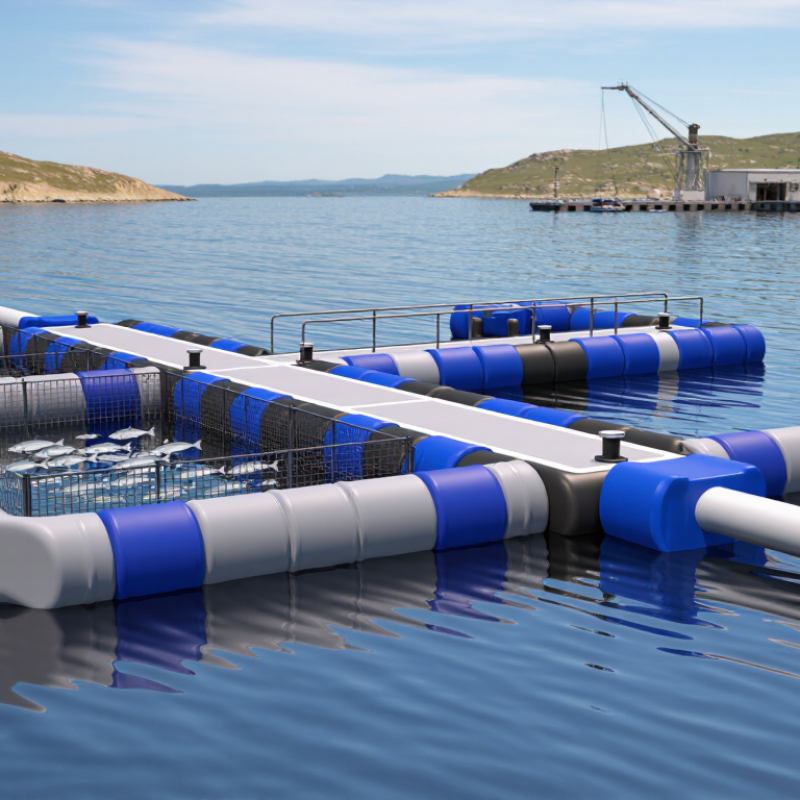
    Choosing Hdpe Floaters in 2026 is not just a matter of comparing prices. Buyers need to match float design, material quality, and load capacity to the site. A sheltered fish farm, a tidal marina, and a floating pipeline place very different demands on buoyancy and connections. Small details matter: wall thickness, sealed chambers, UV resistance, and the way modules join. One weak joint can compromise an otherwise sturdy platform.

    The market has a clear operational context. The FAO’s The State of World Fisheries and Aquaculture 2024 reports 94.4 million tonnes of farmed aquatic animals produced globally in 2022. That scale helps explain why dependable floating infrastructure matters, though it does not prove which product is best. Buyers should compare verified specifications, material traceability, warranty terms, and documented performance in similar water conditions. Ask for load ratings and inspection guidance, not just attractive brochures. Look closely.

    There is no universal winner. Some buyers may value modular replacement; others need greater stability, easier transport, or lower maintenance. A low upfront price can look persuasive, yet lifetime cost depends on repairs, downtime, and service access. It is worth admitting that product claims are not always easy to compare across suppliers. This guide evaluates the practical trade-offs and the evidence buyers should request before selecting Hdpe Floaters for 2026.
    Which HDPE Floaters Are Best for Buyers in 2026?

    What HDPE Floaters Are: PE Density 0.941–0.965 g/cm³ vs Seawater at ~1.025

    HDPE floaters are buoyant because polyethylene is less dense than seawater. Typical HDPE density ranges from 0.941 to 0.965 g/cm³, while seawater is about 1.025 g/cm³. In simple terms, each litre of solid HDPE displaces heavier water than its own mass. The theoretical difference is roughly 60–84 grams per litre. That matters. Actual performance depends on the floater’s shape, wall thickness, sealed volume, and load.

    A hollow unit can support far more weight than its plastic shell alone suggests, because trapped air adds displacement without much mass. But density is not a complete buying specification. Check rated buoyancy, working load, dimensions, and how the unit performs when partly submerged. Salinity and temperature also shift seawater density slightly. A small difference can affect reserve buoyancy across a large installation. I used to treat density as a quick pass-or-fail figure; that was too simplistic.

    Tips: Compare net buoyancy, not just material density. Ask for test data under stated loading conditions, and leave a practical safety margin. Inspect seams and attachment points, too. A neat specification sheet cannot show every weak spot. That is worth remembering.

    Which HDPE Floaters Are Best for Buyers in 2026?

    HDPE Density (0.941–0.965 g/cm³) vs. Seawater (~1.025 g/cm³)

    HDPE’s stated density range is below the approximate density of seawater, indicating buoyancy potential. Actual floater performance also depends on its design, wall thickness, load, and operating conditions. Seawater density varies with temperature, salinity, and pressure.

    How to Rate Buoyancy: Displacement, Payload, and Safety Margin

    For HDPE floaters, buoyancy starts with displacement: the water pushed aside by the submerged body. One cubic metre displaces roughly 1,000 kilograms of fresh water, slightly more in seawater. But that figure is total lift, not usable payload. The floater’s own weight, fittings, and connected structure all consume capacity.

    Check the rated displacement against the actual load, including people, equipment, and uneven weight distribution. A platform may sit level in a spreadsheet and tilt when a motor or storage box shifts to one side. Keep a clear safety margin. There is no single margin for every installation; wave action, changing loads, and exposure matter. A dock on sheltered water has different demands from a working platform in choppy conditions.

    Look at how deeply the floater sits under its intended load, not just its maximum rating. More freeboard helps keep the deck higher and leaves reserve buoyancy if conditions change. Ask for dimensions, material thickness, and test conditions behind published figures. A capacity number without context is hard to judge. Field checks are useful, though imperfect: measure freeboard at several points after loading, then reassess when the load changes. We tend to trust neat calculations too much. The water is less tidy.

    Which Resin and UV Specs Matter: ASTM D3350 and 2.0–3.0% Carbon Black

    For HDPE floaters, ASTM D3350 is a useful resin-screening tool, not a finished-product guarantee. Its cell classification describes properties such as density, melt index, and resistance to slow crack growth. Ask for the complete classification and a lot-specific certificate, rather than accepting “HDPE” as the whole specification. A resin suited to pipe may still behave differently in a hollow, impact-prone floater.

    UV protection deserves equal attention. Black polyethylene commonly uses 2.0–3.0% carbon black, but the percentage alone proves little. Poor dispersion can leave weak spots, even when the loading looks right on paper. Request carbon-black content and dispersion test results, plus evidence that the material is suitable for outdoor exposure. Check the finished floater too: wall thickness, welds, and molded-in stress can affect service life. Small details matter.

    A practical purchase specification should connect resin data to real use: sunlight intensity, water temperature, abrasion, and expected impact. ASTM D3350 does not replace float testing or establish how long a product will last outdoors. I would be cautious about any supplier promising a precise lifespan from resin grade alone. That claim sounds tidy; the field is not. Compare samples after exposure and impact testing, and keep batch records so a disappointing result can be traced back to its material.

    Which HDPE Floaters Are Best for Buyers in 2026? — Which Resin and UV Specs Matter: ASTM D3350 and 2.0–3.0% Carbon Black

    Buying Dimension Useful Specification or Evidence Why It Matters for Floaters What Buyers Should Verify
    Base resin Virgin HDPE resin with a documented grade and technical data sheet. The required density, melt flow rate, and mechanical properties depend on the molding or extrusion process and floater design. Resin consistency affects processing, part strength, impact performance, and the ability to maintain a reliable wall section. Request the resin grade, lot traceability, and relevant property data. Compare values using the same test methods and conditions.
    ASTM D3350 classification ASTM D3350 classifies polyethylene materials used for pipes and fittings through a cell classification system. Ask for the complete material designation and the applicable standard edition when a supplier claims compliance. It provides a structured way to compare specified material properties, but it is not a complete performance standard for a finished floater. Check which properties the stated classification covers. Do not treat an ASTM D3350 designation alone as proof of floater buoyancy, impact resistance, or service life.
    Carbon black for black HDPE A 2.0–3.0% carbon-black content by mass is a commonly specified range for black polyethylene. Confirm the exact requirement against the resin specification, applicable ASTM D3350 edition, and product requirements. Properly incorporated carbon black helps protect polyethylene from ultraviolet radiation. Content alone does not establish uniform dispersion or finished-part durability. Request a carbon-black content test report, commonly using ASTM D1603, and confirm that the report identifies the tested material and production lot.
    Carbon-black dispersion Ask for documented dispersion results using an agreed method, such as ASTM D5596 where applicable to the material and test sample. Poor dispersion can leave areas less effectively protected and may affect material consistency. Review the test method, acceptance criteria, sample preparation, and results. Do not infer good dispersion from a carbon-black percentage alone.
    UV stabilization For black material, verify the carbon-black specification and dispersion. For non-black colors, request details of the UV-stabilization package and supporting weathering-test data. UV exposure can contribute to loss of strength and embrittlement over time. The required protection depends on climate, exposure, color, and expected service conditions. Ask what exposure conditions and test method support any UV-life claim. Treat accelerated weathering results as comparative evidence, not a direct guarantee of years in service.
    Finished-part wall and molding quality Require drawings or measured samples showing wall thickness, dimensions, weld or seam details, and manufacturing tolerances. Material certification cannot compensate for thin spots, voids, poor fusion, or inconsistent molding in the finished floater. Specify inspection locations and tolerances. Request production quality records and agree on sampling and acceptance procedures.
    Buoyancy and load capacity Request a declared net buoyancy or load rating for the complete floater, with its dimensions, weight, and test or calculation basis. Buoyancy depends on displaced volume, the floater’s own mass, water conditions, and the intended loading—not on resin classification alone. Check the rated load, reserve buoyancy assumptions, freshwater or seawater basis, and whether connectors or attached hardware are included.
    Impact and service environment Request relevant impact or mechanical test data and confirm the expected temperature range, handling conditions, and exposure to waves, abrasion, and chemicals. Floaters may experience collision, repeated movement, and temperature changes that are not represented by a resin designation alone. Match test conditions to the intended use. Ask how the finished product is inspected for cracks, leakage, and damage after testing.
    Leak resistance and compartment design For hollow floaters, request a leak-test procedure and details of closures, seams, and compartment construction. Water ingress can reduce effective buoyancy even when the polymer material itself meets its stated classification. Confirm the test pressure or method, test duration, acceptance criteria, and whether every unit or a production sample is tested.
    Documentation and lot control Maintain resin certificates, production-lot identification, test reports, drawings, and inspection records for supplied products. Traceable records help buyers confirm that tested material and delivered floaters correspond to the agreed specification. Make documentation, change notification, and the right to inspect part of the purchase specification.

    Buyer note: ASTM D3350 addresses polyethylene material classification for pipe and fitting applications; it does not by itself certify a finished floater. Confirm the current standard edition, applicable test methods, and acceptance limits with the supplier and testing laboratory.

    How Shell Design Affects Durability: Wall Thickness, Welds, and Impact Tests

    For HDPE floaters, shell durability depends on more than the stated wall thickness. Check thickness at several points, especially around corners, ribs, and connection areas. Uneven sections can flex under load even when the average measurement looks adequate. More plastic is not automatically better. A well-shaped shell distributes pressure without unnecessary weight.

    Inspect welded seams closely. Look for a continuous, even weld with no visible gaps, burnt areas, or sharp changes in bead width. These details can indicate inconsistent joining, though appearance alone cannot confirm weld strength. Ask suppliers how they control welding temperature and pressure, and whether production checks are recorded. Small details matter. A neat seam is reassuring, but it is not proof by itself.

    Impact-test results are most useful when the test conditions are clearly stated. Ask about the impact energy, test temperature, sample location, and whether the floater was tested empty or loaded. Cold conditions can make plastic respond differently, so a room-temperature result may not reflect winter handling. Request photographs or a test report tied to the same shell design. I would avoid comparing figures from different methods; that comparison can look precise while saying very little. A practical review should pair the report with a close inspection of the shell and welds.

    How to Compare Suppliers: Rated Load, Quality Controls, Warranty, and Total Cost

    Choosing HDPE floaters in 2026 means looking beyond the quoted price. Ask suppliers for rated load under clearly stated conditions, including water depth, spacing, and expected movement. A static load figure alone may not reflect waves, foot traffic, or attached equipment. Small details matter. Check whether the rating applies to one floater or a complete connected system.

    Quality controls should be documented, not described only in sales language. Request material specifications, batch traceability, wall-thickness checks, and records of seam or weld inspections. Ask how the floaters are tested for buoyancy and UV exposure. It is easy to overvalue a polished datasheet; photos of production checks and sample inspection records can make comparisons more practical. Still, paperwork cannot replace checking a sample for consistent dimensions and finish.

    Read warranty terms closely. Confirm coverage periods, exclusions for installation or overloading, and how damaged units are assessed. Then calculate total cost: freight, connectors, installation, maintenance, and likely replacement needs. A lower unit price can lose its appeal when shipping bulky parts across long distances. I would ask each supplier to price the same configuration, in writing. Perfect comparisons are rare, but a shared checklist helps expose gaps before ordering.

    Article Source: