Best Switching Power Supply Options for Your Needs?
In today's fast-paced electronics market, choosing the right Switching Power Supply (SPS) is crucial. The industry has grown significantly, with a report from Research and Markets indicating an expected increase of over 7% CAGR through 2025. This growth underscores the demand for reliable and efficient power supply options. Many electronic devices rely heavily on SPS for optimal performance.
Switching Power Supplies deliver superior efficiency compared to their linear counterparts. Their compact size and light weight make them versatile for various applications. However, buyers often overlook critical factors like load requirements and thermal management. Neglecting these aspects can lead to inefficiencies or even device malfunctions.
Furthermore, while SPs are more popular, they are not without flaws. Noise interference can pose a challenge in sensitive applications. Thus, careful consideration is essential when selecting a power supply. Reflecting on these pitfalls may help users make informed decisions.
Understanding Switching Power Supplies: Basics and Functionality
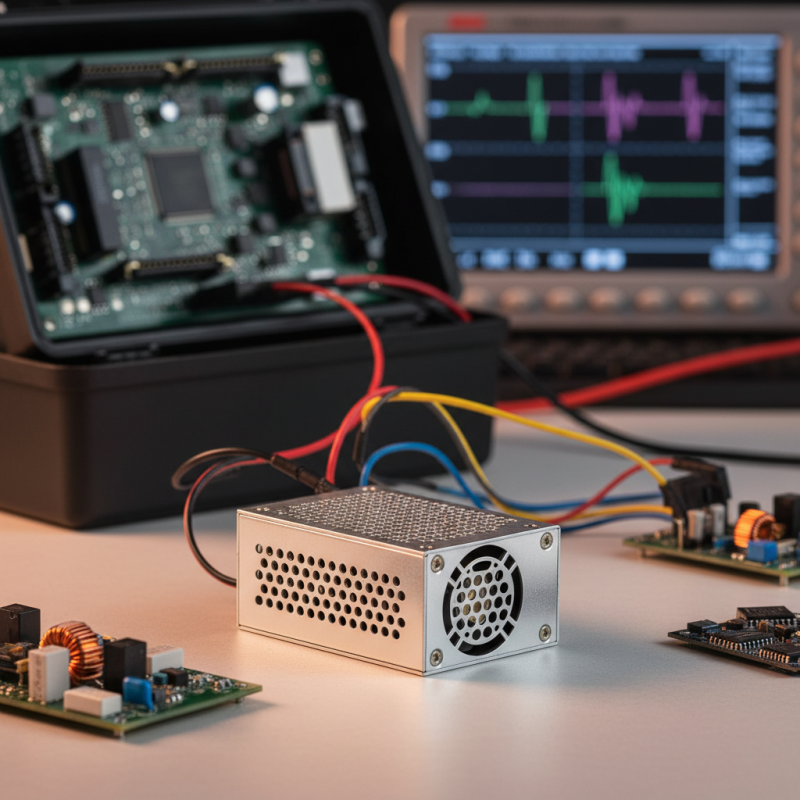
Switching power supplies are essential components in modern electronics. They efficiently convert electrical power from one voltage level to another. Understanding their basics helps users make informed choices. A switching power supply works by rapidly switching on and off, creating pulses. These pulses are transformed to deliver the required voltage.
One important aspect is efficiency. These supplies can achieve over 90% efficiency, which reduces energy waste. However, the process generates heat. Heat management is crucial to prevent failures. Many users overlook this, leading to potential issues down the line. Additionally, noise can be a concern. Some supplies generate electromagnetic interference, affecting nearby devices.
Installation matters too. A poorly designed setup can lead to complications, even with a good power supply. Users must ensure adequate spacing for airflow. Don't ignore the importance of proper grounding. It's easy to assume everything will work without proper precautions. Ultimately, effective use of switching power supplies involves careful planning and consideration.
Best Switching Power Supply Options for Your Needs
| Power Output (W) | Efficiency (%) | Input Voltage (V) | Output Voltage (V) | Form Factor | Features |
| 500 | 85 | 110-240 | 12 | ATX | Short circuit protection |
| 750 | 87 | 110-240 | 12 | ATX | Over voltage protection |
| 1000 | 88 | 110-240 | 12 | ATX | Fan control |
| 1200 | 90 | 110-240 | 12 | ATX | Modular |
| 1500 | 92 | 110-240 | 12 | ATX | Active PFC |
Types of Switching Power Supplies: Choosing the Right One for Your Needs
Choosing the right type of switching power supply can be challenging. There are various options available, each designed for specific applications. Linear power supplies deliver a constant voltage and are stable. However, they are bulky and inefficient. Switching power supplies are lighter, compact, and more efficient. They convert electrical power with minimal waste and can adapt to various voltages.
According to industry studies, approximately 70% of power supplies utilized in electronic devices today are switching types. They account for significant energy savings, reducing electricity costs. These supplies often feature features like over-voltage protection and power factor correction, enhancing safety and efficiency. However, they may introduce noise, affecting sensitive equipment. It is crucial to assess whether the efficiency and size justify their usage in your application.
Consider the specific requirements of your project. High-frequency switching designs can be appealing but may require additional filtering components. True, efficient power supply designs advance rapidly, yet some can be overly complicated. Whether you need a compact design or extensive power capacity, reflect on these aspects. Understanding both the advantages and drawbacks ensures selecting the optimal solution for your needs.
Key Factors to Consider When Selecting a Power Supply Unit
When selecting a power supply unit (PSU), understanding your needs is crucial. Efficiency stands at the forefront. According to the 80 PLUS certification data, a unit with higher efficiency can save on electricity costs and reduce heat generation. The difference between an 80 PLUS Bronze and Platinum unit can lead to significant savings over time.
Another vital factor is wattage. A PSU should comfortably exceed the total wattage of your components. Underestimating can lead to system instability. The rule of thumb is to aim for a PSU that offers at least 20% overhead. This allows for future upgrades and ensures protection against power surges.
Additionally, consider the form factor. ATX is most common, but compact builds may need SFX or other types. Size can affect cooling efficiency and airflow. A larger PSU often provides more cooling options, but it may not fit in smaller cases. Balancing size with cooling needs can be a challenge, requiring thoughtful reflection on your build. Thus, evaluating these key factors is essential for making an informed choice.
Power Supply Efficiency by Type
This chart illustrates the efficiency of different types of power supplies. Switching power supplies are the most efficient, making them a popular choice for various applications.
Top Brands and Models for Quality Switching Power Supplies
When choosing a switching power supply, quality is paramount. You’ll find several brands that stand out in the industry. They offer a wide range of models suited for different needs. Options vary from high wattage supplies for demanding systems to smaller units designed for compact electronics. Each model often comes with various features, like energy efficiency ratings and voltage outputs.
Some power supplies excel in reliability. They are built to withstand heavy loads and continuous use. Others might be more affordable but could have performance issues. It's crucial to read reviews and understand common failures. Some users report noise issues with cheaper models. You might want to avoid these if silence is required.
Choosing a quality unit can involve some trial and error. Perhaps the first few options don’t meet your expectations. Learning from those experiences helps refine your choices. Pay attention to aspects like thermal performance and connector types. These details can significantly impact your overall satisfaction.
Common Applications of Switching Power Supplies in Different Industries
Switching power supplies are crucial in various industries. They efficiently convert electrical energy from one voltage level to another. One common application is in consumer electronics. Devices like laptops and smartphones rely on these power supplies for optimal performance. The ability to handle fluctuating load conditions makes them superior to linear power supplies.
Another significant application is in industrial automation. Machinery often requires different voltage levels for operation. Switching power supplies can provide this flexibility. They deliver stable power and contribute to energy savings. These benefits are essential in enhancing productivity.
In telecommunications, reliability is key. Switching power supplies ensure consistent energy delivery. This is vital for uninterrupted service. However, not all designs are flawless. Potential electromagnetic interference can arise, needing careful design consideration. Keeping a balance between efficiency and safety is crucial in every industry.
 English
  Français