
7 Best RCC Pole Making Machines for Sale in 2026?
Choosing an Rcc Pole Making Machine in 2026 involves more than comparing prices. The right equipment must match your pole designs, production targets, available floor space, and workforce skills. A machine built for steady, high-volume production may be excessive for a small yard. Fit matters.
This guide introduces seven machines available for buyers to consider, while focusing on practical specifications rather than sales claims. Compare the pole diameter and length each model supports, its molding method, drive system, and expected production cycle. Ask suppliers for current technical sheets and written details about installation, spare parts, and warranty coverage. These details can vary by configuration and market.
Pay close attention to the parts that shape daily results. A reliable mold setup helps maintain consistent dimensions, while appropriate vibration and curing practices influence concrete quality. Check how easily workers can load reinforcement cages, release finished poles, and clean the equipment between runs. Small delays add up.
No single model suits every producer. Published output figures may depend on concrete mix, operator experience, and working conditions, so verify them with a supplier before budgeting. The list is a starting point, not a substitute for inspection or a production trial. Real-world performance deserves a closer look. Use the comparisons to identify suitable options, prepare specific questions, and assess whether each machine fits your operation in 2026.
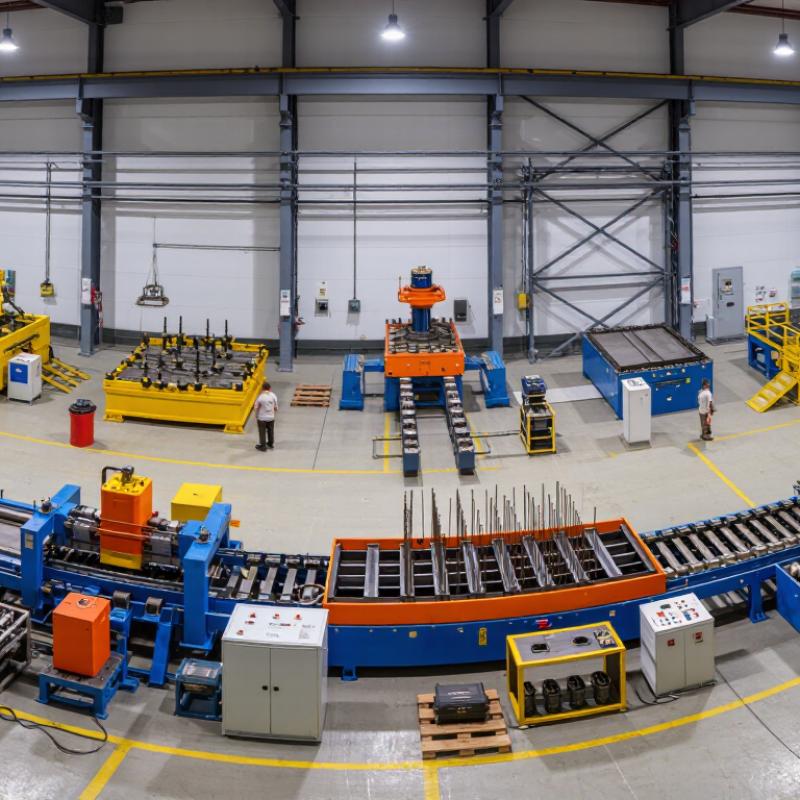
RCC Pole Production: Centrifugal Spinning, Moulding, and Curing Stages
RCC pole production depends on three linked stages: moulding, centrifugal spinning, and curing. Each stage affects pole strength, dimensions, and surface quality.
During moulding, workers position the steel reinforcement cage inside a clean, aligned mould. Concrete must fill the space evenly, with no large voids around the cage. Check the mould’s joints and end closures before spinning. Small details matter. A slight alignment error can create uneven wall thickness or complicate demoulding.
The spinning machine rotates the closed mould at a controlled speed and sequence. Centrifugal force moves concrete outward, helping form a dense outer wall while excess water and air migrate inward. Operators should follow a tested mix design and record rotation time, speed, and batch details. Faster is not automatically better. The right settings depend on pole dimensions, concrete consistency, and equipment capacity.
Curing follows spinning and should maintain suitable moisture and temperature until the concrete reaches the required handling strength. Rushing demoulding can cause cracks; excessive waiting can slow production.
When comparing RCC pole making machines for sale in 2026, examine mould fit, rotation control, safety guards, and curing arrangements—not just rated output. Actual production rates may differ from catalogue figures, so request a trial using your own mix and pole design.
Seven Machines Compared by Pole Length, Load Class, and kW Rating
For a 2026 RCC pole line, compare machines by usable mould length, pole load class, and installed motor power—not headline capacity alone. These seven configurations are practical screening points, not guaranteed specifications:
may use 15–22 kW
22–30 kW
30–37 kW
roughly 37–45 kW
45–55 kW
45–65 kW
about 55–75 kW
Actual power depends on the spinning system, drive design, and concrete mix.
Load class describes the finished pole’s design performance, not the machine’s lifting capacity. Confirm the intended pole drawings, reinforcement cage, mould diameter, and production cycle with the supplier.
Watch the details. A motor rating alone says little about consistent compaction or energy use. Ask for a test run using a representative mould, and check bearing access, vibration controls, and safe handling points. Long poles need adequate floor space and lifting equipment. These checks can expose a poor fit before installation, though site conditions still matter.
Concrete Quality Benchmarks: M40 Grade and Cube-Strength Testing
M40 means a characteristic compressive strength of 40 MPa at 28 days, measured on standard concrete cubes. IS 456:2000 uses this grade classification, but 40 MPa is not a promise that every cube will reach exactly that value. It is a statistical benchmark. That distinction matters.
For RCC pole production, take representative samples from the actual mixer discharge, not from a specially prepared test batch. Fill and compact the cube molds consistently, then record batch time, water addition, curing conditions, and specimen identification. EN 12390-3 describes the compressive-strength test procedure for hardened concrete cubes. A calibrated compression machine, clean bearing faces, and steady loading help reduce avoidable variation. Small details count.
Compare results across batches, not just one strong cube. A high reading can hide uneven mixing, excess water, or inconsistent vibration around reinforcement. Cube results also do not directly prove every finished pole has uniform strength; they indicate the concrete’s performance under controlled sampling and curing. Keep the records beside production checks, and investigate repeated low or widely scattered results before changing the mix. One practical limitation: site curing rarely matches laboratory conditions perfectly. That gap deserves attention.
Factory Capacity Metrics: Poles per Shift, Cycle Time, and Mould Inventory
A machine’s advertised output means little without a clear shift schedule. Estimate poles per shift by dividing usable production minutes by the full cycle time, then allowing for setup, handling, and routine stoppages. For example, a 12-minute cycle does not guarantee five poles per hour if workers need extra time to position reinforcement cages or move fresh poles. Measure actual cycles on the factory floor. Small delays add up.
Cycle time should cover filling, vibration, compaction, and safe mould release—not just the machine’s fastest operating phase. Ask suppliers for figures based on pole dimensions, concrete mix, and curing arrangements similar to yours. Compare those figures with trial runs, and record both average output and interruptions. A polished estimate can still miss a difficult demoulding step. That matters.
Mould inventory can limit capacity even when the machine is available. If each mould remains occupied during curing, calculate how many are needed to keep the production line supplied across every shift. Include time for cleaning and inspection; damaged edges can affect pole finish. Count the moulds. Then check storage space, lifting access, and replacement lead times. These details are easy to underestimate. A practical comparison weighs dependable daily output against the cost of extra moulds, labour, and floor space. When supplier data is incomplete, mark assumptions clearly and verify them before ordering.
7 Best RCC Pole Making Machines for Sale in 2026?
Factory Capacity Metrics: Poles per Shift, Cycle Time, and Mould Inventory
Planning comparison only, not verified specifications for specific machines. Estimated output assumes an 8-hour shift and typical operating allowances; actual capacity varies with pole dimensions, concrete mix, curing workflow, staffing, and setup. Mould inventory is an indicative planning range.
2026 Buyer Checks: ISO 9001, Energy Use, Warranty, and Spare-Parts Cost
7 Best RCC Pole Making Machines for Sale in 2026?
2026 Buyer Checks: ISO 9001, Energy Use, Warranty, and Spare-Parts Cost
When comparing RCC pole making machines, treat ISO 9001 as a starting check, not proof of machine quality. It covers a quality management system, not the finished pole’s strength or production rate. Ask to see a current certificate and confirm its scope includes the manufacturing site. Paperwork matters. Also request recent test records and inspect a sample pole for consistent dimensions, smooth surfaces, and visible cracks.
Compare energy use under similar production conditions. A motor’s rated power alone does not show the cost per pole. Ask for measured electricity use per production cycle, including vibration and related equipment where applicable. Check what pole size, concrete mix, and output rate the test used. Small details change the comparison. If possible, observe a full cycle and note idle time; a quick demonstration may not reflect a normal shift.
Read the warranty line by line. Confirm its duration, response time, installation requirements, and whether wear parts are excluded. Ask for an itemized price list for bearings, molds, vibration components, and other frequently replaced parts. Ask for proof of stock and typical delivery times. A low purchase price can become less attractive when a small part stops production. I would still leave room for uncertainty: actual repair costs depend on use, maintenance, and local service access.
English
Français 