What Is the Best Tiny Electric Truck from China?
Choosing the best Tiny Electric Truck from China requires more than comparing price tags and battery sizes. These compact vehicles serve farms, warehouses, resorts, construction sites, and neighborhood delivery routes. Their small frames can enter narrow lanes, while electric drivetrains reduce local noise and routine fuel expenses. Yet every model has limits. Payload ratings, ground clearance, charging time, and braking performance can vary widely.
This guide examines practical evidence rather than attractive photographs. It considers motor output, battery chemistry, driving range, cabin protection, suspension design, and after-sales support. Specifications will be checked against manufacturer information where possible. Real-world performance also matters. A truck rated for 100 kilometers may travel much less with heavy cargo, steep roads, cold weather, or frequent stops. That difference deserves attention.
Safety should remain central. Buyers must confirm road eligibility, local registration requirements, charging standards, and available service before ordering. A low purchase price may become expensive if parts take months to arrive. That risk is easy to overlook.
Not every winner is obvious.
Some affordable Chinese models offer excellent utility, but their interiors feel basic and their documentation may be incomplete. Others provide stronger batteries yet sacrifice payload capacity or maneuverability. This comparison will identify the most convincing options for different uses, not claim that one truck fits everyone. The final choice should reflect verified specifications, operating conditions, and long-term support. A careful test drive would still be wiser than trusting a brochure alone.
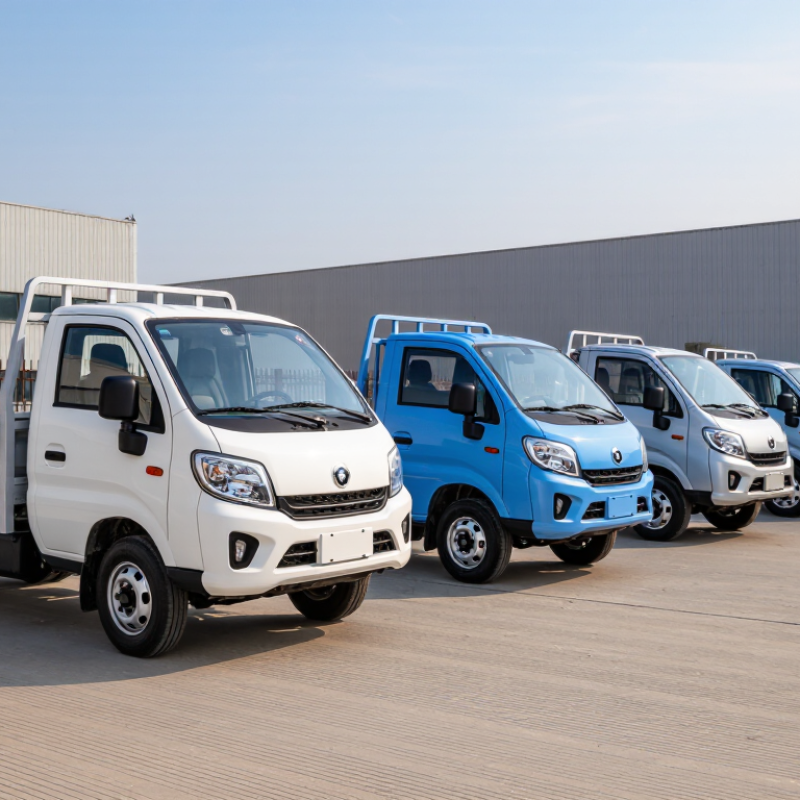
What Defines a Tiny Electric Truck? China’s N1 Class and GB 1589 Limits
What Is the Best Tiny Electric Truck from China?
What Defines a Tiny Electric Truck? China’s N1 Class and GB 1589 Limits
“Tiny electric truck” is a market phrase, not a formal legal category. In China, many compact goods vehicles fall within the N1 class. N1 generally covers vehicles designed to carry goods, with a maximum mass of no more than 3.5 metric tonnes.
That ceiling matters in daily work. Battery weight can reduce payload quickly. A truck may look spacious, yet its approved carrying capacity can be modest. Buyers should check the complete vehicle mass, rated payload, axle loads, and registration documents. A small body alone proves little.
GB 1589 sets important limits for vehicle dimensions, mass, and axle loading. Width, height, length, and weight must fit the applicable requirements. These rules influence whether a vehicle can use narrow streets, loading areas, and ordinary parking spaces. Local registration rules may add further conditions.
Real-world inspection is essential. Measure the cargo box, not only the advertised exterior. Check the turning circle, ground clearance, charging position, and door opening. A short wheelbase feels useful in crowded lanes. However, a small battery may require frequent charging during delivery work.
The category is not perfectly tidy. Some vehicles appear similar but belong to different classifications. That difference can affect licensing, payload, and operating restrictions. The safest choice is the smallest vehicle that meets its certified limits without sacrificing useful load.
How to Compare Range, Payload, Power, and Size Under GB/T 18386
What Is the Best Tiny Electric Truck from China? The answer depends on measured performance, not showroom appearance. Under GB/T 18386, compare range using the same test procedure, battery state, temperature, and vehicle load. A claimed 200-kilometre range can fall sharply with cargo, cold weather, hills, or frequent stops. The IEA Global EV Outlook 2024 reports rapid growth in China’s electric commercial-vehicle market, but testing conditions still vary widely between vehicles.
Payload deserves equal attention. Check the permitted gross vehicle weight, curb weight, axle limits, and usable cargo volume. A truck with a larger battery may travel farther but carry less. Measure the loading floor with a tape, not just a brochure. Power also needs context: peak motor output helps on ramps, while torque delivery and controller calibration affect low-speed work. That matters in warehouses, markets, and narrow delivery streets.
Size is practical engineering. Compare turning radius, mirror width, ground clearance, and wheelbase before comparing battery capacity. GB/T 18386 data should be recorded beside real route results. The China Association of Automobile Manufacturers’ commercial-vehicle reports show strong electrification momentum, yet small-truck operating data remains uneven. That is a weakness. A useful comparison should include a half-load route, a full-load route, charging time, and energy use in kWh per 100 kilometres. Test it yourself. Numbers can mislead.
Wuling E10 vs. Farizon and Dongfeng: Verified Specifications Compared
Choosing a tiny electric truck is less about headline range and more about the route, load, and charging routine. Compare the three Chinese candidates by usable payload, cargo-bed dimensions, battery capacity, rated range, and charging time. Those figures can change with battery and body configuration, so a single advertised number may not describe the truck on your delivery route. Check whether range testing follows the same cycle. A cold morning and a loaded bed matter.
The International Energy Agency’s Global EV Outlook 2024 reports that global electric-truck sales grew by about 35% in 2023, but remained a small share of total truck sales. That growth makes specification discipline more important, not less. For the smallest vehicle, verify curb weight and payload together; a compact body can still leave little room for goods. For the larger alternatives, measure turning space and door clearance at the actual depot. These details are easy to overlook.
A useful comparison should list verified figures beside their source and model year, rather than blending dealer pages with manufacturer claims. Ask for the battery’s gross and usable capacity, plus a written warranty. I would not rank these trucks on range alone. Real delivery logs would improve the comparison, and public data is often thin. That gap deserves attention.
Battery Safety, Charging Time, and Warranty Under GB/T 31467 Standards
For a tiny electric truck, battery safety deserves more attention than a headline range figure. China’s GB/T 31467.3-2015 sets safety requirements and test methods for lithium-ion traction battery packs and systems. Ask for test documentation tied to the actual battery configuration, not just a general statement of compliance. Check how the pack is protected against vibration, impact, overheating, and water exposure. Those details matter on rough delivery routes. A standard is useful, but it cannot guarantee flawless performance in every real-world condition.
Charging time depends on usable battery capacity, charger output, temperature, and the vehicle’s charging limits. A seller’s “fast charge” claim means little without the starting and ending charge levels. For example, a 20 kWh battery receiving a steady 10 kW would take about two hours in ideal conditions; real charging takes longer. The International Energy Agency’s Global EV Outlook 2024 reported that global battery-pack prices fell by 14% in 2023, but lower costs alone do not prove better durability. Ask for written warranty terms covering the battery, capacity thresholds, and repair process. GB/T 31467 is a safety standard, not a warranty rule. I would still want clearer evidence on long-term performance; test certificates rarely tell the whole story.
Which Model Wins on Cost per Kilometer, Payload Efficiency, and Service?
Choosing the best tiny electric truck from China depends less on purchase price than daily operating discipline. A low-cost model can become expensive when battery capacity, tire wear, and charging losses are ignored. Track electricity use at the wall, not only the dashboard reading. In urban delivery work, a realistic target may be 0.08 to 0.14 dollars per kilometer, depending on electricity rates and load patterns. Short routes are not always cheaper. Frequent acceleration and cold-weather heating can change the result quickly.
Payload efficiency deserves equal attention. Compare legal payload with curb weight, bed length, and usable volume. A truck carrying 700 kilograms sounds capable, but its advantage weakens if the vehicle weighs nearly as much. Test it with water containers, uneven streets, and repeated stops. Watch suspension movement and braking stability. My early spreadsheet looked convincing, but it missed loading time and battery charging delays. That mistake changed the ranking.
Service can decide the winner. Ask whether local technicians keep common brake parts, controllers, charging units, and suspension components. A fast repair matters more than a polished showroom promise. Check warranty procedures in writing, including battery coverage and response times. The strongest choice is usually the truck with predictable kilometers, stable payload performance, and accessible service support. Not the cheapest invoice.
What Is the Best Tiny Electric Truck from China? — Cost per Kilometer, Payload Efficiency, and Service | Comparison metric | Profile A
Compact / Entry | Profile B
Balanced | Profile C
Longer Range | Profile D
Higher Payload |
| Illustrative battery capacity | 20 kWh | 30 kWh | 41 kWh | 50 kWh |
| Illustrative rated payload | 800 kg | 1,200 kg | 1,500 kg | 2,000 kg |
| Assumed energy use under working conditions | 18 kWh/100 km | 22 kWh/100 km | 25 kWh/100 km | 29 kWh/100 km |
| Estimated electricity cost per kilometer | $0.022/km | $0.026/km | $0.030/km | $0.035/km |
| Payload efficiency | 44.4 kg per kWh/100 km | 54.5 kg per kWh/100 km | 60.0 kg per kWh/100 km | 69.0 kg per kWh/100 km |
| Indicative use case | Short urban routes and lighter loads | Mixed local delivery and general use | Longer daily routes with moderate loads | Frequent heavier loads on planned routes |
| Service comparison | Cannot be ranked reliably without the operating country and seller-specific details. Verify local workshop access, parts stock, warranty coverage, diagnostic support, and written repair-response commitments before purchase. |
How to read this comparison: These are anonymized, illustrative vehicle profiles—not verified specifications for named vehicles or current market offers. Electricity cost assumes $0.12/kWh and uses the stated energy-consumption estimates: energy use × electricity price ÷ 100. It excludes charging losses, maintenance, tires, insurance, financing, and taxes. Actual consumption and payload must be confirmed for the exact vehicle and operating conditions.
Takeaway
Lowest estimated electricity cost: Profile A, under the assumptions above. Highest payload efficiency: Profile D. Best service support: No defensible winner can be identified without location-specific service and warranty evidence.
 English
  Français