
2026 Best Water Radiators for Global Buyers?
Choosing Water Radiators in 2026 means comparing more than price and appearance. Global buyers must match radiator output to room size, insulation, and the heating system’s water temperature. A slim steel panel may suit a compact apartment, while a cast-iron radiator can bring steady warmth to a larger room. Details matter. Check dimensions, connection positions, rated output, finish, and warranty terms before ordering. Shipping weight matters, too. A radiator that looks ideal online may be awkward to install or costly to transport.
Hydronic-heating engineer John Siegenthaler, P.E., is known for his technical work on system design. His published guidance can be fairly summarized this way: “Radiator performance depends on the whole hydronic system, not the panel alone.” This is a paraphrase, not a verbatim quotation. It points to a common buying mistake: comparing heat-output figures without checking their test conditions. Supply-water temperature, flow rate, and room conditions can change real-world performance. This guide considers those factors alongside materials, controls, durability, and regional availability. It also recognizes that no single model is best for every home. Some comparisons remain imperfect because manufacturers do not always publish data in directly comparable formats. Buyers should verify specifications with suppliers. A careful shortlist is more useful than a universal ranking.
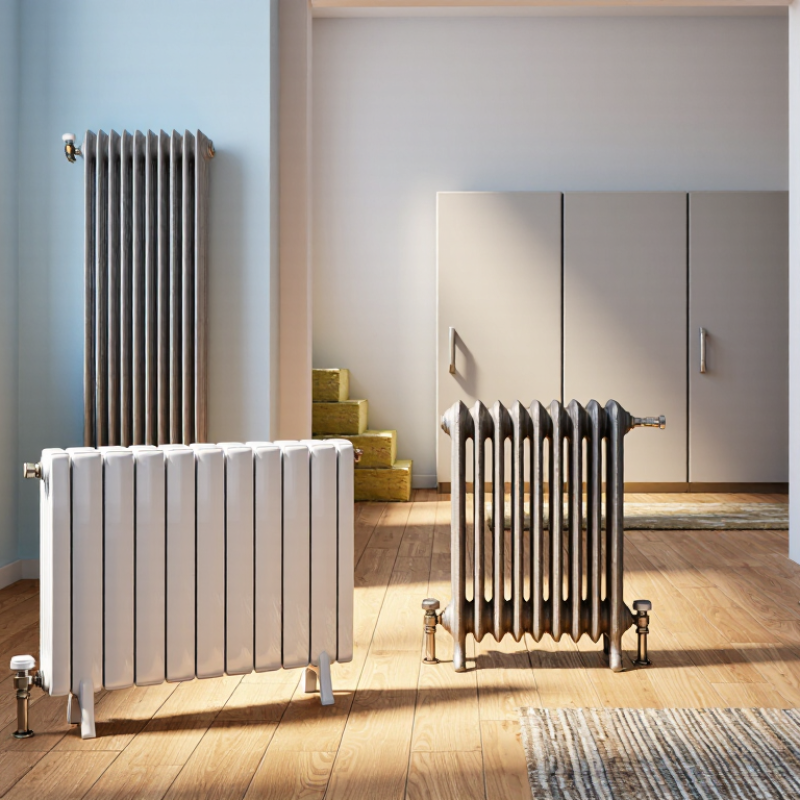
Water Radiators in 2026: Types, Materials, and Global Applications
In 2026, water radiators remain a practical hydronic heating option for homes, offices, and public buildings. Panel designs suit compact rooms and modern pipework, while column models can complement older interiors. Towel rail units add drying space but may not replace a room’s full heat requirement. Small details matter.
Steel radiators are widely used because they balance cost and heat output. Aluminum units respond quickly and are lighter, though system water compatibility should be checked. Cast iron holds heat longer, but its weight and slower response can complicate some retrofits. Material choice is not a beauty contest; water chemistry, operating temperature, and maintenance access matter. Not always.
Global buyers should match radiator output to room heat loss and the system’s actual water temperature, not just its dimensions. Cold climates may need higher output or larger panels; well-insulated buildings often need less. In humid coastal settings, corrosion resistance and finish quality deserve close attention. For renovations, confirm connection spacing, wall strength, valve position, and available pipe pressure before purchase. A frequent planning error is focusing too much on appearance; it is easy to overlook.
EN 442 Output Ratings: The 75/65/20°C Test and ΔT50
EN 442 ratings describe standardized laboratory output, not guaranteed output in every home. For 75/65/20°C, water enters at 75°C, leaves at 65°C, and room air is held at 20°C. The average water temperature is 70°C. That creates a 50°C difference from the room: ΔT50. A useful reference point.
A radiator rated at 1,000 W at ΔT50 will usually deliver less in a lower-temperature system. A heat-pump circuit may run near 45/35°C, for example. Actual output depends on the radiator’s tested exponent, often listed as n. It can be estimated with Q = Q50 × (ΔT/50)^n. Check the product data rather than assuming a fixed percentage. Small differences matter.
For a fair comparison, confirm that quoted outputs use EN 442 conditions and the same ΔT basis. Then check the room’s heat loss, available wall space, pipe connections, and operating temperatures. A compact panel may fit neatly beneath a window, yet still fall short in a room that loses heat quickly. I would not size from the catalogue number alone. Manufacturer data and a room-by-room heat-loss calculation provide a more dependable basis. Ratings are useful only when their test conditions match the intended system.
| Rating detail | EN 442 reference or calculation | What it means | What buyers should check |
|---|---|---|---|
| Standard rating condition | Flow water: 75°C Return water: 65°C Room air: 20°C | A commonly used EN 442 reference condition for declaring radiator heat output. | Compare declared outputs only when they use the same temperature conditions. |
| Temperature difference, ΔT | ΔT = (flow temperature + return temperature) ÷ 2 − room temperature (75 + 65) ÷ 2 − 20 = 50 K | The mean water temperature is 70°C, which is 50 K above the 20°C room temperature. A temperature difference of 50 K is commonly written as ΔT50. | ΔT is a temperature difference; its numerical value is the same in kelvins and degrees Celsius. |
| Declared heat output | Watts (W) at the stated test condition | The output rating applies to the tested radiator configuration and stated operating conditions. | Check the complete model, dimensions, connection arrangement and output conditions—not just the radiator type. |
| Lower-temperature operation | Example condition: 55°C flow / 45°C return / 20°C room ΔT = (55 + 45) ÷ 2 − 20 = 30 K | This condition gives ΔT30, so the radiator’s output will generally be lower than its ΔT50 output. | For heat pumps or other low-temperature systems, request the output at the actual design temperatures. |
| Converting output between ΔT values | Q₂ = Q₁ × (ΔT₂ ÷ ΔT₁)n | Q is heat output; n is the radiator’s model-specific exponent. The exponent should come from the relevant product data or test information. | Do not assume one universal exponent for every radiator. Use the manufacturer’s published conversion data for the exact model. |
| System design and room sizing | Compare required room heat loss with radiator output at the system’s design temperatures. | A radiator’s nominal ΔT50 output alone does not establish whether it will heat a particular room adequately. | Allow for the building’s heat loss, local design conditions, pipework and control strategy. |
| Rating interpretation | EN 442 output ratings are test-condition-specific. | Actual installed output can differ when water temperatures, room conditions or installation details differ from the rating conditions. | For purchasing comparisons, request clear EN 442 documentation and output figures for the intended operating temperatures. |
Radiator Sizing: Match Rated Output to Room Heat Loss
2026 Best Water Radiators for Global Buyers?
Radiator Sizing: Match Rated Output to Room Heat Loss
A radiator’s catalogue output is not the same as a room’s heating requirement. Calculate heat loss room by room, including wall, window, floor, and ceiling losses, plus ventilation. CIBSE Guide A sets out methods for estimating these loads. A small bedroom with two exposed walls can need more heat than a larger, well-insulated room. Small details matter. A common shortcut is sizing by floor area alone; it is quick, but can leave a window-side chair feeling cold.
Compare the room’s calculated heat loss with radiator output at your actual water temperatures. EN 442-2 rates radiators under standard test conditions, commonly reported at a 50°C temperature difference between mean water and room air. Lower-temperature systems may deliver less output, so use the radiator’s correction data rather than relying on the headline rating. Check the schedule. The International Energy Agency’s 2023 Buildings report says buildings account for about 30% of global final energy use. That makes accurate sizing worthwhile, though no calculation is perfect: installation details and draughts can still shift real-world performance.
2026 Best Water Radiators for Global Buyers? Radiator Sizing: Match Rated Output to Room Heat Loss
Representative room-sizing examples: compare estimated room heat loss with radiator rated output.
These illustrative values show the sizing method, not measured results for specific rooms. Select a radiator whose output meets or slightly exceeds the room’s calculated heat loss. Rated outputs are commonly stated at EN 442 conditions (ΔT50); lower-temperature heating systems can deliver less output, so check the manufacturer’s correction data.
Steel, Aluminum, and Cast Iron: Comparing Output, Weight, and Durability
2026 Best Water Radiators for Global Buyers?
Steel, Aluminum, and Cast Iron: Comparing Output, Weight, and Durability
Choosing a water radiator in 2026 depends on room size, system temperature, and installation limits. Steel models often offer practical heat output in compact panel designs. They warm up fairly quickly and suit many modern heating systems. Aluminum transfers heat efficiently and is lighter, which can simplify handling and wall mounting. Actual output still depends on radiator size and water temperature, not material alone.
Cast iron is heavy, but its mass can retain warmth after the heating cycle ends. It usually responds more slowly, so it may feel less suited to rooms that need rapid temperature changes. Steel and aluminum can also serve reliably for years when the heating system is properly maintained. Water quality and material compatibility matter. A small mistake here can shorten service life, and durability is not guaranteed by construction material alone. Weight matters.
Tips: Compare certified heat-output figures at your system’s actual operating temperatures. Check wall strength before choosing a heavy cast-iron unit. Ask an installer to assess water quality and pipe compatibility; I would not choose by appearance alone.
Global Buying Checks: EN 442 Compliance, Pressure Rating, and Compatibility
For global buyers, EN 442 is a useful starting point, not a promise of identical room performance. It standardizes radiator heat-output testing, so compare stated wattage under the same temperature conditions. A catalogue figure can look generous. Check the test conditions and correction data before sizing a room, especially when the system uses lower water temperatures. Keep the test report with the quotation; product descriptions may leave out useful details.
Pressure needs equal care. Confirm the radiator’s maximum working pressure and test pressure, then compare them with the building’s design pressure and local installation requirements. A factory test value is not the normal operating pressure. Ask for written specifications covering connection size, thread type, and water-quality guidance. Then check pipe centres, valve positions, and wall clearance against the existing system. A radiator may meet the pressure requirement and still fail to fit. For mixed-metal systems, verify material compatibility and water-treatment recommendations. It is easy to focus on heat output and overlook a valve offset; I would check that measurement twice.
English
Français 