10 Best Wood Drying Equipment for Global Buyers?
Choosing the right Wood Drying Equipment is a practical decision, not a simple product comparison. Timber species, board thickness, starting moisture, climate, and production volume all influence the result. A small furniture workshop may need a compact dehumidification kiln, while a large mill may require a continuous steam or vacuum system.
William T. Simpson, a respected wood-drying researcher at the USDA Forest Products Laboratory, wrote, “Drying is one of the most important processes in the manufacture of wood products.” His observation remains relevant for global buyers. Poor drying can create end checks, honeycombing, staining, warping, and costly reprocessing. Reliable equipment must offer stable temperature control, accurate moisture monitoring, safe airflow, and clear operating data.
This guide reviews ten leading Wood Drying Equipment options for international purchasing teams. It considers capacity, energy consumption, automation, installation demands, maintenance access, and after-sales support. Certification and local electrical requirements also deserve attention. They are easy to overlook.
No ranking is perfect. A machine that performs well in a dry climate may struggle in a humid region. A low purchase price may also hide higher energy or service costs. Buyers should compare measured performance, not attractive brochures alone. Where possible, request test records using similar wood species and thicknesses. Inspect the chamber, sensors, fans, insulation, and control interface before signing a contract. Small details matter. In real production, consistency usually matters more than impressive specifications.
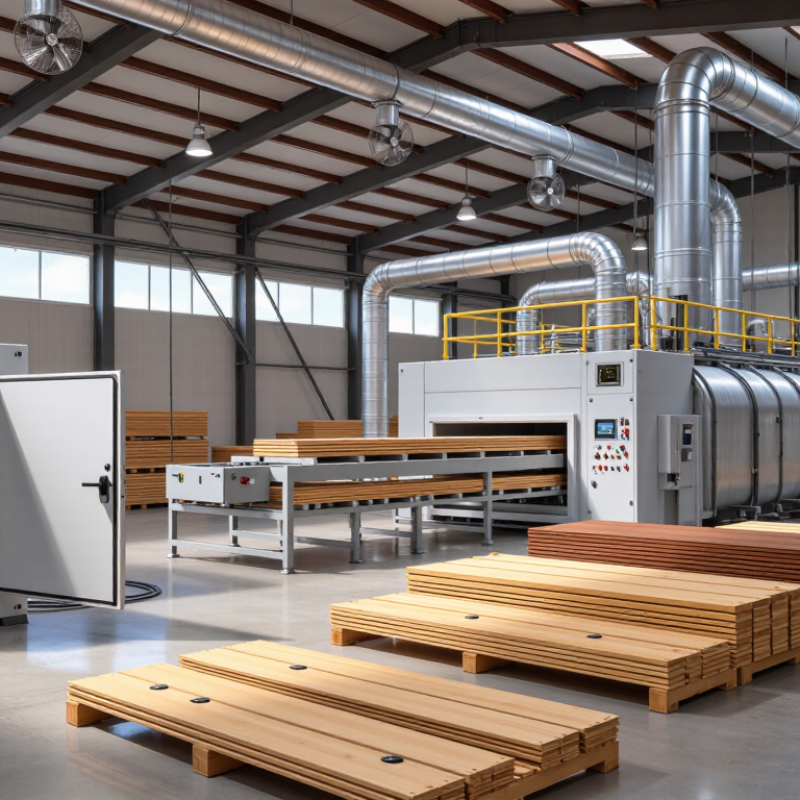
How Wood Drying Equipment Controls Moisture Content and Drying Rate
Wood drying equipment controls moisture content by balancing heat, airflow, and humidity around the boards. Kilns and dehumidification systems remove water at a measured pace, while fans help reduce damp pockets between stacked lumber. Temperature sensors track chamber conditions, and moisture meters let operators check the wood itself. That distinction matters: warm air does not prove a board’s core is dry. Thick oak may need a gentler schedule than thin pine, or surface checks can appear before the center catches up. Small details matter.
A controlled drying rate can reduce warping, cracking, and uneven moisture, but settings must match species, thickness, and starting moisture. Operators often record readings at regular intervals and adjust the schedule when drying slows or boards begin to show stress. This takes attention. A sensor can drift, and a meter reading from one board may not represent the whole stack. No schedule is perfect; reviewing results from each batch helps refine the next one.
Tips: Leave clear airflow paths between boards, verify meters periodically, and sample pieces from different stack locations. If the surface feels dry but the core reads high, slow the process and check conditions before moving the lumber into production.
Air-Drying Systems: Why Lumber Often Needs 6–12 Months to Dry
Air-drying lumber can take six to twelve months, and sometimes longer. The timeline depends on wood species, board thickness, starting moisture, and local weather. A one-inch board may dry much faster than a thick hardwood slab. There is no reliable calendar shortcut.
Good stacking matters. Place boards on a level base, with dry, evenly spaced stickers between each layer. Keep stickers aligned vertically to reduce bending. Leave space around the stack so air can move through it. Cover the top against rain, but keep the sides open. Small details count.
Check moisture, not just appearance. A handheld moisture meter gives a more useful picture than a dry-looking surface. Read several boards, including pieces near the center of the stack. The outer boards can mislead you. In humid regions, drying may stall even when the weather feels warm; in dry, windy areas, boards may crack or warp if airflow is too aggressive. Shade and steady ventilation are often safer than direct sun. Results still vary, and even careful stacking cannot make every board behave perfectly. Before indoor use, allow lumber to adjust to the building’s conditions and verify its moisture level.
Solar Kilns and Dehumidification Kilns: Comparing Low-Temperature Methods
Solar Kilns and Dehumidification Kilns: Comparing Low-Temperature Methods
Solar kilns use sunlight and airflow to warm a sealed chamber; clear roof panels, dark interior surfaces, and adjustable vents help manage heat and moisture. Dehumidification kilns use a heat pump to condense water from circulating air, allowing closer control when clouds linger. Both suit lower-temperature drying, but neither guarantees uniform results: thick boards and crowded stacks can retain wet cores. The USDA Forest Products Laboratory’s Wood Handbook (2021) shows why humidity control matters: at about 70°F, equilibrium moisture content is roughly 6% at 30% relative humidity and 16% at 80%. Those are equilibrium values, not drying-time promises.
Solar kilns often need less purchased energy, but their drying pace follows the weather. A cool, overcast week can leave boards damp, even when their surfaces feel dry. Dehumidification systems offer steadier operation and can recover heat, yet fans, controls, and compressors add energy use and maintenance. Check moisture with a calibrated meter, and compare readings from several boards and depths. I would not trust a single surface reading.
Tips: Stack boards with aligned stickers, leave air channels, and shield the load from direct sun peaks. Record daily temperature and humidity. If readings vary widely, slow the process; rushed drying can cause checks, warping, or casehardening.
Conventional Kilns and Vacuum Dryers: Faster Routes to 6–8% Moisture Content
Conventional kilns and vacuum dryers can both bring lumber to 6–8% moisture content, but the faster route depends on species, thickness, and starting moisture. In a conventional kiln, heated air moves across stacked boards while operators control temperature and humidity. Thick oak can take much longer than thin pine. Vacuum systems lower pressure, helping moisture leave the wood at lower temperatures; this can shorten cycles, especially for dense or valuable stock, though loading and operating costs matter. Fast is not automatically better.
The USDA Forest Products Laboratory’s Wood Handbook explains that wood’s equilibrium moisture content varies with relative humidity and temperature. Its EMC tables show why 6–8% suits many heated indoor environments, but not every destination. A shipment moving from a dry warehouse to a humid coastal region may regain moisture. Measure representative boards with a calibrated meter, and verify the core—not just the surface—before dispatch. Kiln records help, but they do not replace checks.
Tips
Keep stickers aligned and airflow clear between stacks. Take readings at several depths and locations. For thick boards, allow equalization time after drying; a rushed schedule can leave wet cores, even when the ends feel dry. A small sampling plan is useful, though it can miss uneven loads.
How to Verify Results: ASTM D4442 and Oven-Dry Moisture Testing
A moisture meter is useful on a production floor, but it does not replace a reference test. ASTM D4442 describes direct methods for measuring moisture in wood, including oven-drying. For a basic oven-dry test, weigh a representative sample before drying, then dry it under controlled conditions until its mass is stable. Weigh it again after cooling in a sealed container. The moisture content is the mass lost during drying divided by the oven-dry mass, multiplied by 100. Small details matter.
Use clean, labeled samples and a balance suited to their size. Record the wood species, sampling location, initial mass, drying conditions, and final mass. Follow the current ASTM procedure for the material and method; do not assume one temperature or schedule fits every sample. A damp board surface, lost fragments, or moisture absorbed during cooling can distort the result. A reading can look convincing and still be wrong. Compare meter readings with oven-dry results from matching pieces, not unrelated boards. Note differences rather than hiding them: uneven grain, coatings, and temperature can affect meter performance. The test is a reference point, not a guarantee that every board in a shipment has identical moisture content.
 English
  Français