
China Top 10 Aluminium Coil Sheet Suppliers for Buyers

    Choosing an Aluminium Coil Sheet supplier is not a price-only decision. Buyers must compare alloy, temper, thickness tolerance, surface finish, and delivery capability. A coil that looks bright under warehouse lights may still fail during stamping or coating. Small details matter.

    Aluminum metallurgy specialist George E. Totten has written extensively about aluminum alloys and their properties. Drawing on that technical perspective, this guide uses a practical buying principle: “Match alloy, temper, and finish to the application before comparing price.” This is a guide principle, not a direct quotation from Totten. It keeps the comparison grounded in material performance rather than marketing claims.

    The ten suppliers featured here are starting points for research, not a universal ranking. Their product ranges, export experience, certifications, and customization options can vary. Ask for a current datasheet, mill test certificate, sample, and written tolerance range. Check how the supplier handles packaging, edge protection, and shipment updates; dents and moisture marks can complicate receiving checks. Then confirm that the proposed grade suits your forming, welding, or coating process. A low quote can be attractive. It can also leave important questions unanswered. Buyers should verify claims directly and compare like with like before placing an order.
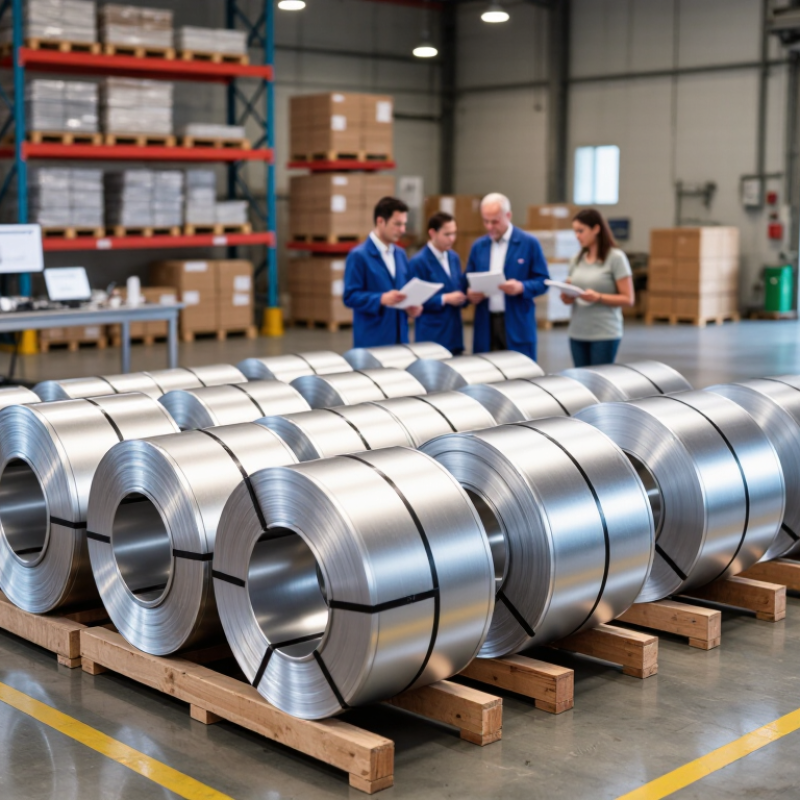
    China Top 10 Aluminium Coil Sheet Suppliers for Buyers

    China’s Aluminium Coil and Sheet Industry: An Overview

    China’s aluminium coil and sheet industry spans a broad production chain, from metal casting and rolling to surface finishing and slitting. Large mills supply high-volume material, while smaller processors may handle specific widths, tempers, or coated products. This range gives buyers options. It also makes supplier capabilities uneven.

    Products commonly include plain, painted, and embossed coil, along with sheet for construction, transport, packaging, and equipment. Alloy and temper affect strength, formability, and corrosion performance. Thickness alone is not enough. Buyers should confirm the alloy, temper, width, thickness tolerance, surface condition, and intended use. A sample can reveal scratches, waviness, or coating variation that a specification sheet may not show.

    Production schedules and quality controls differ between facilities, so a low quotation does not tell the whole story. Ask how batches are identified, what inspection records are available, and whether test results match the delivered material. Details vary. Even well-defined orders can encounter small inconsistencies, especially across separate batches; buyers should clarify acceptable limits before production. That step is easy to overlook. It can prevent avoidable rework.

    Common Product Types, Alloys, and Applications

    Aluminium coil and sheet are not interchangeable in every job. Coil is supplied in continuous rolls, making it practical for roll forming, roofing panels, gutters, and long production runs. Sheet comes in flat pieces and suits enclosures, signs, vehicle components, and parts cut to specific dimensions. A buyer should check thickness, width, temper, surface finish, and allowable tolerances before comparing quotations. Small differences can affect forming and fit.

    Common alloys serve different purposes. The 1xxx series offers high conductivity and corrosion resistance, but it is relatively soft. The 3xxx series, often selected for roofing and heat-transfer products, balances formability with useful strength. The 5xxx series contains magnesium and is often used in marine-facing components and transport equipment. The 6xxx series can provide a useful strength-to-formability balance for structural profiles and fabricated parts. These are broad patterns, not guarantees; temper and processing matter.

    Application details should guide selection. A painted exterior panel may need consistent surface quality and coating compatibility, while a formed duct may prioritize bend performance. Ask suppliers for alloy and temper documentation, inspection records, and sample material when the specification is critical. Check packaging too: damp or damaged wrapping can leave marks that only appear after storage. Details matter. Buyers sometimes focus heavily on alloy labels and overlook the actual forming conditions. That deserves a second look.

    China Top 10 Aluminium Coil Sheet Suppliers for Buyers — Common Product Types, Alloys, and Applications

    A buyer’s reference to selected aluminium sheet and coil alloys. The bars show the approximate midpoint of each alloy’s typical magnesium content range by weight—not supplier rankings or product performance scores.

    Typical applications: 1050—reflectors and general-purpose sheet; 3003—heat exchangers and cookware; 3004—beverage cans and roofing; 5052—marine and transport components; 5754—automotive panels and welded structures; 5083—marine structures and pressure vessels; 6061—structural components and machined parts. Composition limits can vary by applicable standard; confirm the required alloy, temper, and specification when purchasing.

    Key Criteria for Evaluating Aluminium Suppliers

    Choosing an aluminium coil or sheet supplier starts with matching the product to the job. Ask for alloy, temper, thickness, width, and tolerance details in writing. A coil for roll forming may need different flatness and surface control than sheet for enclosure panels. Small differences matter. Keep it practical.

    Review inspection records, mill test certificates, and batch traceability. A reliable supplier should explain how it checks thickness, coating, edges, and packaging, rather than simply promising quality. Request sample data and compare it with your own incoming checks. Paperwork alone cannot reveal every handling mark. That is easy to overlook.

    Capacity and delivery performance deserve equal attention. Confirm minimum order quantities, production lead times, packing methods, and how delays are communicated. For export orders, clarify moisture protection and request loading photos, especially when coils travel by sea. Price matters, but unusually low quotes deserve a closer look at alloy, tolerances, and service scope. Not every buyer needs the most polished checklist, but the criteria you can verify should be documented.

    China Top 10 Aluminium Coil Sheet Suppliers for Buyers - Key Criteria for Evaluating Aluminium Suppliers

    This comparison table is a buyer evaluation framework, not a supplier ranking. Requirements vary by application; confirm the applicable product specification, tolerances, and certification scope directly with each supplier.

    No. Evaluation Criterion What to Specify or Check Evidence to Request Why It Matters
    1 Alloy and temper range Confirm the exact alloy and temper required for the application. Common product families include 1xxx, 3xxx, 5xxx, and 6xxx series; suitability depends on the required properties and end use. Technical data sheet, material certificate, and a written confirmation of the requested alloy and temper. Alloy and temper affect properties such as formability, strength, corrosion performance, and suitability for fabrication.
    2 Applicable product standard Agree on the governing specification, such as ASTM B209 or the relevant EN 485 product standard, and identify any additional customer requirements. Quotation and purchase documents naming the standard and applicable product requirements. A clearly agreed standard makes product and inspection requirements easier to compare and verify.
    3 Dimensions and tolerances Specify thickness, width, coil inside and outside diameter, core requirements, and dimensional tolerances for the order. Dimensional specification, inspection records, and sample measurements for the agreed product. Dimensional fit affects processing, yield, equipment compatibility, and downstream production.
    4 Mechanical properties Define the required properties for the selected alloy and temper, using the applicable standard or agreed purchase specification. Test certificate showing results for the ordered material and the relevant test method or specification. Verified properties help assess whether the material is appropriate for forming, structural, or other intended uses.
    5 Surface and edge quality Describe acceptable limits for scratches, stains, dents, edge cracks, burrs, and other defects; clarify surface finish and protective film needs. Written quality criteria, inspection method, and representative samples or photographs agreed before production. Clear acceptance criteria reduce disputes and help protect appearance and performance in later processing.
    6 Quality management and traceability Check whether the supplier operates a documented quality system and can trace delivered material to its production and inspection records. Current quality-system certificate, certificate scope, lot or coil identification process, and sample traceability records. Traceability supports consistent purchasing, issue investigation, and control of nonconforming material.
    7 Inspection and testing plan Agree on inspection points, sampling, test requirements, document format, and how nonconforming material will be handled. Inspection and test plan, sample mill test certificate, and written corrective-action procedure. Defined controls make acceptance decisions clearer and align supplier checks with buyer requirements.
    8 Packaging and shipment protection Specify coil orientation, packaging method, moisture and corrosion protection, labeling, and handling requirements for the transport route. Packaging specification, packing-list example, and shipment photographs where available. Appropriate packaging and handling reduce the risk of transit damage and moisture-related problems.
    9 Delivery capability Confirm production lead time, order quantity, shipment schedule, export documentation, and the supplier’s process for communicating delays. Written lead-time confirmation, delivery schedule, and sample export or shipping documents relevant to the order. Reliable planning helps buyers coordinate inventory, production, and transportation.
    10 Compliance and application requirements Identify destination-market rules and any end-use requirements, such as restricted-substance declarations or food-contact documentation where applicable. Declarations, test reports, and certificates appropriate to the product, destination, and intended application. Compliance requirements depend on the market and use; confirming them early helps prevent documentation or clearance issues.

    China’s Top 10 Aluminium Coil and Sheet Suppliers

    China’s top ten aluminium coil and sheet suppliers are best compared by production consistency, not catalogue size. The USGS Mineral Commodity Summaries 2025 estimates China produced 43 million metric tons of primary aluminium in 2024, out of roughly 72 million worldwide. That scale supports a deep supply base, but it does not guarantee reliable sheet quality. Buyers should check alloy and temper availability, thickness tolerance, coil width, and documented inspection procedures. Small details matter. A rough edge or damp packaging can delay a production line.

    Ask for a recent mill test certificate and a sample cut from the actual production run. Compare measured thickness at several points, surface finish under direct light, and packaging suited to the shipping route. Also confirm minimum order quantities, lead times, and how claims are handled. The International Aluminium Institute’s production statistics provide useful market context, while factory audits and trial orders help assess a particular supplier. Even this screening is imperfect: sample quality may not match later batches. For a shortlist of ten suppliers, record each result against the same specifications, then revisit the ranking after delivery.

    Sourcing, Quality Verification, and Import Considerations

    China Top 10 Aluminium Coil Sheet Suppliers for Buyers: Sourcing, Quality Verification, and Import Considerations

    A useful supplier shortlist starts with product fit, not a low quotation. Confirm alloy, temper, thickness, width, and intended use in writing. The U.S. Geological Survey’s Mineral Commodity Summaries 2024 estimated global primary aluminium production at about 70 million metric tons in 2023. That scale makes supplier capacity worth checking, but production volume alone does not prove consistent quality. Ask for recent, lot-specific mill certificates and sample coils. Small gaps matter.

    Verify chemical composition and mechanical properties against the agreed specification. ASTM B209 and EN 485 provide widely used requirements for aluminium sheet and plate; confirm which standard and edition the supplier is applying. Check thickness and width tolerances, coil weight, edge condition, and surface finish. The International Aluminium Institute reports that recycled aluminium requires roughly 5% of the energy used for primary production, but recycled content should be documented rather than assumed. A clean certificate alone may still leave alloy identity unclear. No checklist catches everything.

    Before shipment, align the purchase contract with inspection terms, packaging, delivery responsibilities, and payment milestones. Request photos of moisture-resistant wrapping, secured coil eyes, and container loading. Keep it dry. For imports, verify the current tariff classification, declared origin, required certificates, and local customs procedures with a qualified broker; requirements vary by destination. Compare total landed cost, including freight, insurance, duties, and inland transport, rather than relying on the mill price alone.