
China Top Attenuating Exam Gloves Manufacturers for Buyers

    Choosing a supplier from China’s leading Attenuating Exam Gloves manufacturers takes more than comparing prices. Buyers need to understand how each factory controls materials, production, and quality checks. A glove may look suitable in a catalog yet feel different during a sample trial. Small details matter.

    Check the product’s intended use, material, thickness, sizing, and tactile feel. Ask for current test reports and relevant certifications, then confirm that the documents match the exact product and manufacturing site. Review quality-control procedures, batch traceability, packaging, and production capacity. A clear answer about lead times is useful; a vague promise is not. Request samples and test them with the tasks, dispensers, and storage conditions your team actually uses. That step can reveal fit or handling issues early.

    No supplier is perfect. A polished brochure is not proof. Buyers should compare written specifications with samples and factory records, and clarify how defects or specification changes are handled. Communication matters, too. Can the supplier explain a process change without hiding behind sales language? This is worth checking. The strongest shortlist balances verified product information, consistent production, responsive support, and a realistic price. “Top” should describe evidence, not marketing alone. One caution: requirements vary by destination market and application, so buyers should independently confirm applicable standards before placing an order.
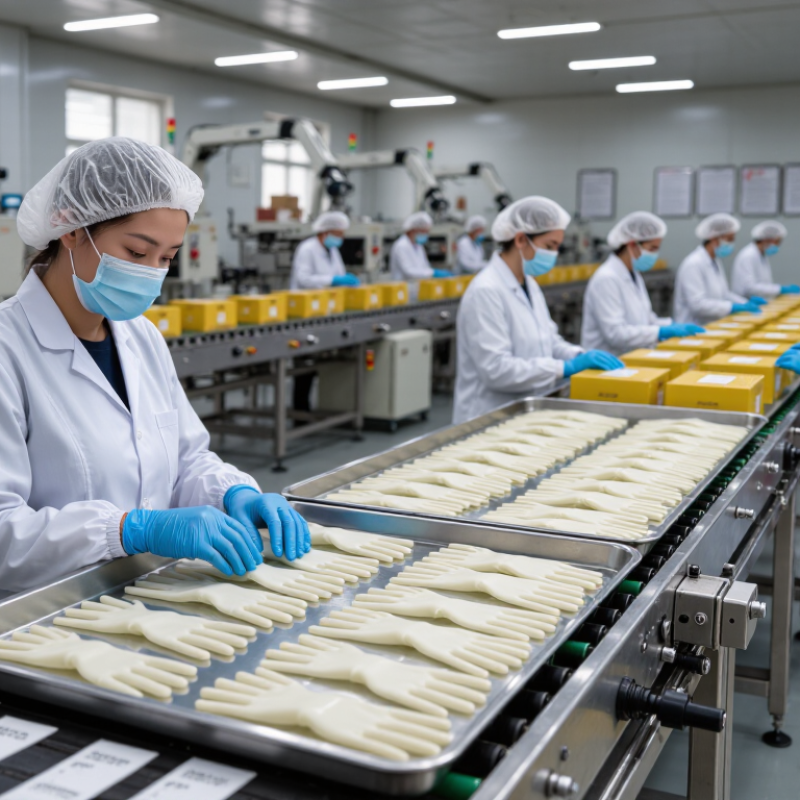
    China Top Attenuating Exam Gloves Manufacturers for Buyers

    Exam Glove Types and Materials: Nitrile, Latex, and Vinyl

    Nitrile, latex, and vinyl gloves can look similar in a carton, but they behave differently during an examination. Nitrile usually offers stronger puncture resistance and avoids natural rubber latex proteins, making it a common choice for varied clinical tasks. Latex is elastic and sensitive to touch, though some users may have latex allergies. Vinyl is often economical for brief, low-stress tasks, but its looser fit and lower resistance can limit use. Fit matters.

    The ASTM specifications help buyers compare products: D6319 covers nitrile examination gloves, D3578 covers rubber examination gloves, and D5250 covers PVC gloves. Grand View Research’s Medical Gloves Market report valued the global market at US$15.9 billion in 2023, reflecting broad demand but not proving that one material suits every clinic. Check intended use, thickness, sizing, and test documentation instead of relying on a “medical grade” label alone. A glove can pass a basic check and still feel awkward during delicate work; that detail is easy to overlook.

    Tips: Request samples in several sizes and test them with the actual tools used at work. Ask suppliers for current test reports and lot traceability. Don’t judge by appearance alone.

    China Top Attenuating Exam Gloves Manufacturers for Buyers - Exam Glove Types and Materials: Nitrile, Latex, and Vinyl

    Buyer reference: compare common examination-glove materials by their general characteristics. Actual performance depends on glove design, thickness, manufacturing quality, and the task.

    Material Material Basics Fit and Tactile Feel General Durability Allergy Considerations Typical Considerations for Use Buyer Checks
    Nitrile Synthetic rubber made from acrylonitrile and butadiene. Examination gloves are commonly available in powder-free versions. Flexible, close-fitting gloves are available. Fit and sensitivity vary with formulation, size, and thickness. Often selected for its puncture resistance compared with many gloves of similar thickness. Performance is product-specific. Does not contain natural rubber latex proteins. Some users may still react to glove additives or other materials. Commonly used in healthcare and examination settings. Chemical compatibility depends on the specific chemical and glove model. Check size range, cuff length, thickness, relevant test results, and chemical-compatibility data for the intended task.
    Natural Rubber Latex Made from natural rubber latex. Powder-free examination gloves are available. Generally elastic and conforming, which can support a close fit and good tactile feel. Offers good elasticity and tear resistance in many designs. Results vary by formulation and construction. Natural rubber latex proteins can cause allergic reactions in sensitized individuals. Powder can contribute to exposure. Used for examination tasks where a close fit is valued, subject to workplace allergy policies and user needs. Confirm whether the gloves are powder-free and check labeling, protein-related information, and applicable requirements.
    Vinyl (PVC) Made from polyvinyl chloride (PVC), typically with plasticizers to provide flexibility. Often looser-fitting and less elastic than latex or nitrile, which may reduce tactile sensitivity for some tasks. Generally less elastic and less resistant to stretching than many nitrile or latex designs. Barrier performance depends on the product and task. Does not contain natural rubber latex proteins. Reactions to other glove components are still possible. May suit selected short-duration, lower-risk tasks. Suitability for exposure to body fluids or chemicals should be assessed for the specific product and use. Review intended-use labeling, fit, barrier test results, and chemical-compatibility information; do not assume all PVC gloves perform alike.

    Standards note: ASTM D6319 is associated with nitrile examination gloves, ASTM D3578 with rubber examination gloves, and ASTM D5250 with PVC examination gloves. Verify the current standard edition and applicable market requirements; a standard reference alone does not confirm that a product is certified or suitable for a particular use.

    Quality Benchmarks for Nitrile Gloves: ASTM D6319, EN 455, and ISO 13485

    For buyers comparing exam glove manufacturers in China, standards are useful evidence, not a substitute for checking the actual product. ASTM D6319 sets requirements for nitrile examination gloves, including dimensions and physical properties. Request test reports that identify the glove type, size range, and tested sample. A certificate alone may not show whether the current production matches the sample.

    Check the EN 455 series by part. EN 455-1 addresses freedom from holes; EN 455-2 covers physical properties; EN 455-3 concerns biological evaluation; and EN 455-4 covers shelf-life determination. Ask for reports tied to the relevant glove and packaging, not just a general statement of compliance.

    Small details matter. A report for another thickness or size may not answer your question.

    ISO 13485 applies to a medical-device quality management system, rather than certifying each glove as a finished product. Review the certificate scope, issuing body, and current validity, then compare them with the manufacturing site. Ask how the supplier handles batch traceability, failed tests, and changes to materials or processes. Standards can narrow the field, but they cannot guarantee every shipment. That distinction is easy to overlook.

    Pinhole Inspection: How Buyers Interpret AQL 1.5 and AQL 2.5

    China Top Attenuating Exam Gloves Manufacturers for Buyers
    Pinhole Inspection: How Buyers Interpret AQL 1.5 and AQL 2.5

    For examination gloves, AQL is a sampling decision, not a promise that every glove is defect-free. ISO 2859-1:1999 sets out attribute-sampling plans, with sample size determined by factors such as lot size and inspection level. Under comparable plans, AQL 1.5 is stricter than AQL 2.5. The accepted defect count still depends on the selected plan. That distinction matters.

    Pinhole checks commonly use a water-leak method. ASTM D5151 describes testing medical gloves for holes; its procedure uses a 1,000 mL water fill and a timed visual inspection. Inspectors watch for leaks around fingertips, seams, and the cuff. A tiny bead may be easy to miss under poor lighting, so buyers should review the test method, inspection conditions, and sampling records—not just a certificate.

    When comparing Chinese suppliers, ask which AQL applies specifically to pinholes and request the lot’s sample size, acceptance number, and rejection number. AQL 1.5 can support tighter incoming quality decisions, while 2.5 may allow more defects in the inspected sample. Neither value guarantees the same result across different sampling plans. Sampling has limits. Defects can cluster, and a passing sample can still miss them; repeat testing and clear corrective-action records are worth checking.

    How to read this chart: AQL 1.5 and AQL 2.5 are sampling-plan index values, not guaranteed defect rates or permitted defect counts in every shipment. The acceptance number for pinhole defects depends on the applicable sampling standard, lot size, inspection level, and sample size. Buyers should confirm these details in the inspection plan.

    Verifying Chinese Manufacturers: FDA 510(k) Status, Audits, and Traceability

    China Top Attenuating Exam Gloves Manufacturers for Buyers

    A supplier’s claim of FDA 510(k) status deserves careful checking. Search the FDA database using the exact product name, applicant, and clearance number. Confirm that the record matches the glove type and intended use you plan to purchase. A 510(k) relates to a specific device; it is not a blanket endorsement of every product or factory. Small detail, big difference.

    Audits should reveal how the plant works, not just how its certificates look. Review the audit date, scope, findings, and corrective actions. Ask how inspectors sampled production areas and checked quality records. If possible, compare the report with a live video walkthrough of glove inspection, packaging, and storage. A polished report can still miss a recurring problem.

    Traceability matters when a shipment needs investigation. Request a sample lot record linking carton labels to production dates, raw-material batches, and inspection results. Check whether the factory can retrieve those records quickly and explain how it isolates affected lots. Try a mock trace exercise before placing a large order. The answer may be slower than expected. That is useful information, not a reason to ignore the gap. Buyers should document unresolved questions and verify corrective actions against later records, rather than relying on assurances alone.

    Comparing Suppliers by Production Capacity, MOQ, Lead Time, and Cost per 1,000 Gloves

    For buyers comparing China’s exam glove suppliers, a quoted factory capacity is only a starting point. Ask whether the figure reflects one production line, several lines, or peak output. Then compare it with recent monthly shipments and the glove specifications you need. A line producing several sizes may not deliver every size at the same pace. Details matter.

    Minimum order quantities can vary by material, size mix, packaging, and customization. Request a written MOQ for the exact order configuration, not a broad estimate. Lead time also needs a clear definition: production days are different from sample approval, packaging preparation, and shipping. Ask for a realistic schedule, plus an explanation of what could delay it. Small details, big difference.

    Compare cost per 1,000 gloves only when specifications match, including material, thickness, size, and packaging. Confirm whether freight, inspection, and other quoted charges are included. A lower unit price can look attractive, but inconsistent sizing or weak packaging may create extra work. Request samples and check them against your requirements before placing a large order. I would also compare recent batches, not just one sample. That takes time, and it can feel fussy, but the comparison is more useful.