Why Choose Pocket Filter Media for Air Quality Improvement?
Air quality is a critical concern in many environments. One effective solution for improving air quality is pocket filter media. This technology offers unique benefits in capturing airborne particles, enhancing overall indoor air standards.
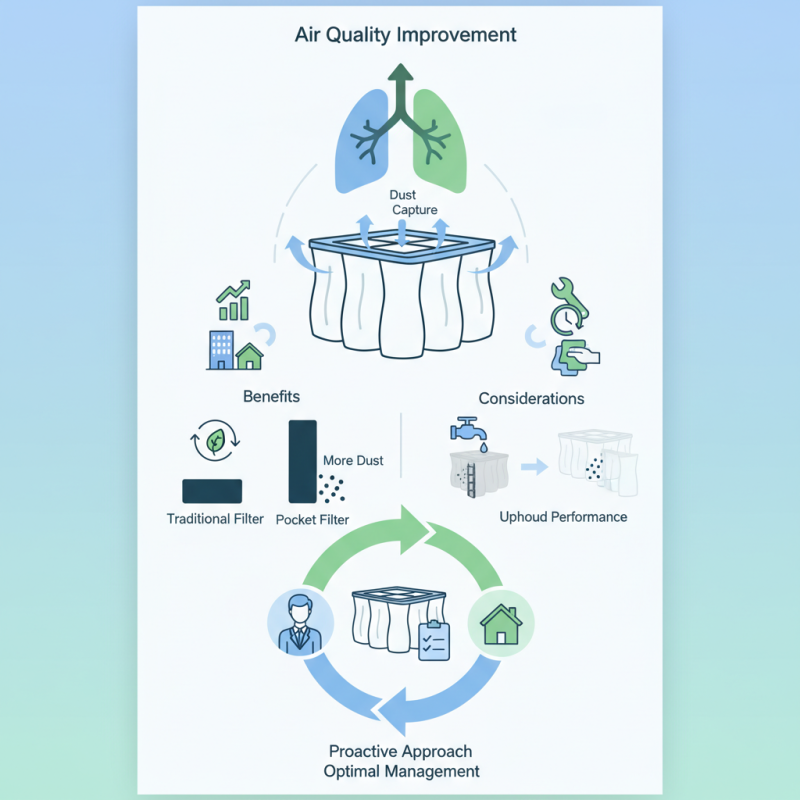
pocket filter media features a highly efficient design. Its structure allows for more dust capture than traditional filters. This design can significantly reduce pollutants in various settings, including offices and homes. However, while effective, there are limitations to consider. For instance, maintenance of these filters is essential to uphold their performance over time.
Choosing pocket filter media highlights a proactive approach to air quality. Businesses and homeowners alike can benefit from cleaner air. Yet, it is crucial to remain mindful of proper usage and upkeep. Understanding both its strengths and weaknesses ensures optimal air quality management.
Key Characteristics of Pocket Filter Media for Air Quality
Pocket filter media play a significant role in improving indoor air quality. These filters capture airborne particles, enhancing health and comfort. Data from the American Society of Heating, Refrigerating and Air-Conditioning Engineers (ASHRAE) indicates that poor air quality can lead to a 10-20% decrease in cognitive function. This is alarming considering we spend about 90% of our lives indoors.
One of the key characteristics of pocket filter media is their high dust-holding capacity. This means they can trap more particles before needing replacement. Studies show that high-efficiency filters can capture over 95% of particulate matter, including allergens and dust. Additionally, the compact design allows for efficient airflow. However, there are concerns about filter lifespan. Some may require frequent changes, increasing maintenance costs and impacting performance.
Another important aspect is resistance to airflow. While higher efficiency can yield better air quality, it sometimes leads to increased energy consumption. Balancing filtration efficiency with energy use remains a key challenge. Striking this balance is crucial for long-term sustainability and effectiveness in air pollution control.
Advantages of Pocket Filters Compared to Traditional Filtration Options
Pocket filter media are increasingly favored for enhancing air quality. Traditional filtration methods often struggle with efficiency and capacity. In contrast, pocket filters provide a larger filtration surface area that captures more pollutants. Studies have shown pocket filters can reduce particulate matter by up to 95%. This capability makes them ideal for environments needing high air quality standards.
The design of pocket filters allows for more airflow while maintaining low resistance. According to the U.S. Department of Energy, this can lead to energy savings of 20-30%. Such efficiency can reduce operational costs, which is crucial for businesses. However, users should remain aware that while pocket filters excel in capturing dust and allergens, they may sometimes require more frequent changes compared to traditional options.
Maintaining the right balance between filter performance and a clean environment is essential. Over time, even the best filters can become clogged. This can diminish their effectiveness. Regular monitoring and timely replacement remain vital. Users risk poorer air quality if they neglect this aspect. Making informed choices about filtration can foster both health and productivity in indoor spaces.
Application Areas: Where Pocket Filters Excel in Air Quality Management
Pocket filters are essential in various settings. They excel in hospitals, ensuring clean air for patients. In commercial buildings, they maintain comfort while reducing energy costs. Factories rely on them to filter harmful particles from the air, improving worker safety.
Tips: Regular maintenance is crucial. Change filters promptly. Dirty filters can cause more harm than good.
In residential areas, pocket filters help in managing indoor air quality. They capture allergens like pollen and dust mites. This is vital for families with asthma or allergies. Yet, not every filter is created equal. Consumers should research options extensively.
Tips: Always check MERV ratings. Higher numbers mean better filtration. But, don’t forget airflow! A balance is key for efficiency.
Why Choose Pocket Filter Media for Air Quality Improvement? - Application Areas: Where Pocket Filters Excel in Air Quality Management
| Application Area | Pocket Filter Benefits | Recommended Filter Type | Typical Efficiency (%) |
| Commercial Buildings | Enhanced air quality, energy efficiency | M5, F7 | 60-70 |
| Industrial Applications | High dust loading, long service intervals | F7, F9 | 90-95 |
| Healthcare Facilities | Critical air filtration, infection control | H13, H14 | 99.95-99.995 |
| HVAC Systems | Pre-filtration, energy savings | M6, F8 | 70-90 |
| Food Processing | Prevent contamination, improve hygiene | F8, H13 | 95-99.95 |
Maintenance and Lifespan of Pocket Filter Media in Air Systems
When considering air quality improvement, pocket filter media is a practical choice. These filters are designed for durability and effectiveness. The maintenance of pocket filter media is crucial to ensuring optimal air quality. Regular inspection and timely replacement can prevent airflow issues.
Studies suggest that pocket filters can last anywhere from six months to two years, depending on usage and environment. However, neglecting maintenance can lead to a decline in efficiency. A report indicates that air filtration systems can lose up to 30% of their effectiveness if not properly maintained.
Tips:
- Schedule routine checks.
- Monitor pressure drops in the system.
- Consider the air pollution levels in your area. If high, replace filters more frequently.
- Remember, dirty filters can compromise indoor air quality.
Reflections on maintenance practices can help identify areas for improvement in your air system's performance.
Future Trends in Pocket Filter Technology and Air Quality Solutions
The future of pocket filter technology is evolving rapidly. Air quality solutions are becoming more sophisticated. Recent studies suggest that high-efficiency pocket filters can capture 90% of particulate matter. This is a significant improvement for indoor environments. Air pollution remains a critical issue. According to the World Health Organization, 92% of the world’s population lives in areas with poor air quality. Innovations in filter media are necessary to combat this.
Advancements include materials that enhance filtration efficiency. New fabrics are emerging, reducing pressure drop and increasing airflow. These developments aim to make air cleaning more effective and energy-efficient. Furthermore, the integration of smart technology into filters is on the rise. Filters equipped with sensors will provide real-time data on air quality. This allows for better management of indoor environments. However, challenges remain. The initial cost of advanced pocket filters can be high. Not all facilities may prioritize upgrading.
Change is needed in the industry. Education on the long-term benefits of improved air quality is vital. Many organizations still use outdated models. This results in reduced efficiency and higher operational costs. There is room for growth and progress. The focus on innovative solutions signifies a positive trend toward healthier indoor atmospheres.
Air Quality Improvement through Pocket Filter Media
This bar chart illustrates the average concentrations of various air pollutants in urban areas, highlighting the necessity for air quality improvement solutions such as pocket filter media. Effective filtration can help reduce these harmful particles, leading to better air quality for communities.
 English
  Français