
How to Choose a Battery Powered Pruning Saw in 2026
Choosing a Battery Powered Pruning Saw in 2026 means balancing cutting ability, reach, weight, and battery life. The right model should handle your actual branches—not just impressive claims on a box. A saw that feels light in a store may tire your wrist after repeated overhead cuts. Small detail. Big difference.
Battery technology is changing quickly, but broad market growth does not guarantee better performance in every saw. The U.S. Department of Energy’s National Blueprint for Lithium Batteries projects global lithium-battery demand could grow five- to tenfold between 2020 and 2030. That projection describes the wider battery market, not pruning-saw performance. It does, however, make battery compatibility, replacement cost, and long-term support worth checking. A low-priced tool can become less appealing if its battery platform is limited.
This guide compares practical features: bar length, chain speed, tool weight, runtime, safety controls, and maintenance needs. It also considers who benefits from a compact one-handed model and who should choose a larger saw with better balance. For safety context, buyers should review the manufacturer’s instructions and applicable chainsaw standards, including ANSI/OPEI B175.1 where relevant. No single specification tells the whole story. Branch diameter, wood condition, and cutting position can change results considerably. That part is easy to overlook. The goal is a clear, evidence-conscious choice—not the biggest battery or longest bar by default.
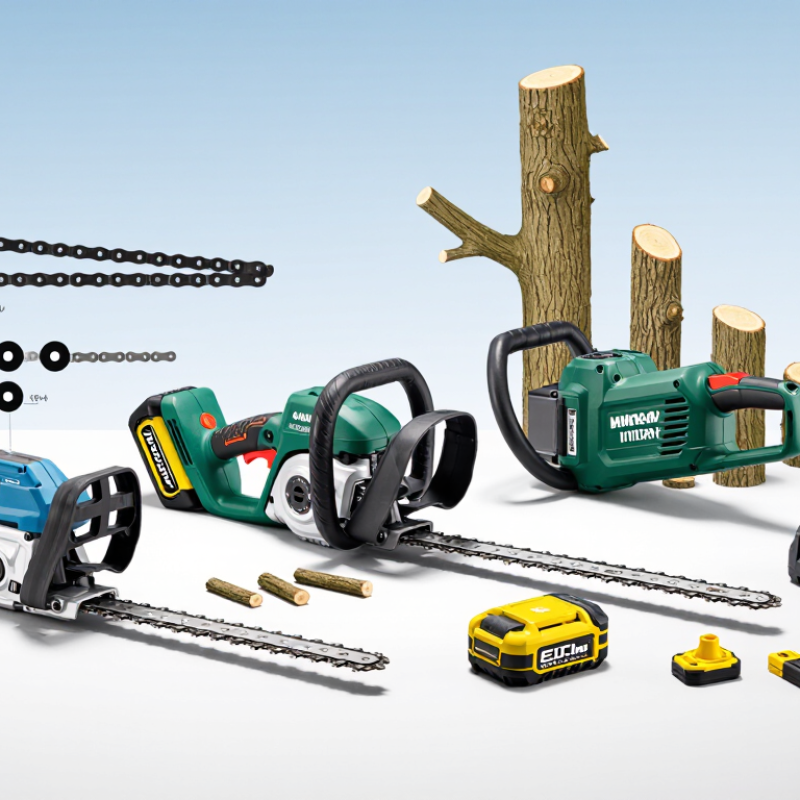
Identify the Pruning Tasks and Branch Sizes You Need to Handle
Before choosing a battery-powered pruning saw, list the actual jobs: seasonal fruit-tree thinning, storm-damaged limbs, or routine shrub work. Measure several branches, including the thickest you expect to cut. Measure twice. A 1-inch twig and a 3-inch limb need very different cutting effort, reach, and blade length.
Match the saw’s stated cutting capacity to your largest regular branch, not an occasional oversized limb. For repeated cuts around 1–2 inches, a compact saw may be easier to control among crowded stems. Larger limbs call for more capacity and a stable stance; cutting overhead or from a ladder adds risk and fatigue. The International Society of Arboriculture’s Best Management Practices for Tree Pruning emphasizes proper branch-collar cuts. That matters: a powerful saw cannot make a poor cut healthy.
Think about how many cuts the task involves. A few limbs near the ground place different demands on battery life than repeated pruning across a mature tree. University of Minnesota Extension advises removing no more than 25% of a tree’s live crown in one season, a useful planning limit when estimating the work. Small cuts first. Note branch access, too: a saw that fits between tight forks can be more useful than a larger model with greater capacity. My estimate may still miss a hidden limb; leave room for that.
How to Choose a Battery-Powered Pruning Saw in 2026
Identify the pruning tasks and branch sizes you need to handle.
These are approximate planning ranges, not universal tool limits. Check the saw’s rated cutting capacity, and consider branch access, wood condition, and how often you will use it before choosing.
Choose the Saw Type, Bar Length, and Cutting Capacity
How to Choose a Battery Powered Pruning Saw in 2026
Start with the saw type that fits the work. A compact handheld saw is easier to control for low branches and repeated cuts near the trunk. A pole saw reaches overhead limbs without a ladder, but its extended weight can tire your shoulders. Bar length matters, too. Short bars are lighter and easier to position in crowded growth; longer bars can reach through thicker limbs but may feel less nimble. Check the tool’s stated cutting capacity, not just its bar measurement.
Tips: Measure a few typical branches before shopping. Compare their diameter with the saw’s rated capacity, and leave some room for tougher wood. A branch that fits on paper may still cut slowly if it is dense, dry, or awkwardly placed. Keep both feet steady and avoid forcing the chain.
For routine garden pruning, a shorter bar may be enough, especially on fresh, manageable limbs. Larger limbs may call for a longer-bar model, but capacity varies by saw and wood condition. Battery size also affects balance and working time. Hold the saw in your usual cutting position, if possible; a comfortable grip can matter more than one extra inch of bar. It is easy to overestimate how often you will need maximum reach.
Compare Battery Runtime, Charging Time, and Tool Compatibility
How to Choose a Battery Powered Pruning Saw in 2026
Compare runtime using watt-hours, not amp-hours alone. Multiply pack voltage by amp-hours: an 18 V, 5 Ah battery stores 90 Wh nominally. That is a useful comparison, not a runtime promise. Cutting a dry, thick branch drains power faster than trimming thin, green growth. Chain sharpness and pauses matter, too. Check whether the manufacturer reports runtime under stated test conditions; without those details, minutes-per-charge figures are hard to compare. For charging, divide battery capacity by charger output current for a rough estimate. Real charging usually takes longer as the battery nears full. IEC 62841-4-1:2017 covers safety requirements for handheld chain saws, but it does not provide a common runtime test method.
Tips: Match the battery platform to tools you already own, but verify exact voltage and pack compatibility in the manuals. A shared platform can reduce spare-battery costs. Keep one charged pack nearby for a long pruning session. In cold weather, expect less usable energy. That part is easy to overlook. Check replacement-battery availability and charger specifications before buying, and compare warranties in writing. If possible, test the saw on a branch similar in size to the limbs you actually prune.
Assess Weight, Ergonomics, Safety Features, and Maintenance Needs
A battery-powered pruning saw should feel manageable before you judge its cutting speed. Check its weight with the battery installed, since that is how you will use it. Hold it at shoulder height for a few seconds; a nose-heavy tool can strain your wrist quickly. Try the grip with work gloves, and check whether the trigger remains easy to control. Small hands may find wide handles awkward.
Look for a hand guard, a secure trigger lock, and a chain brake if the model includes one. Read the instructions for kickback control. Protective eyewear and gloves still matter; built-in features reduce risk but do not remove it. A lanyard point may help when working from a stable platform, but it cannot replace secure footing. Worth checking.
Confirm that chain tension is easy to inspect and that the bar cover opens without a struggle. Clear debris after use, keep the chain sharp, and follow the manual for lubrication and battery storage. A dull chain cuts slowly and can tempt you to press harder. It is easy to overlook that detail. Check replacement-chain availability before buying, too. I would compare comfort with the safety guidance, not rely only on a brief store test.
| Assessment Area | What to Compare | Practical Buying Guidance | Why It Matters | Check Before Buying |
|---|---|---|---|---|
| Tool Weight | Operating weight with the battery installed, not tool-only weight. | For a compact pruning saw, use roughly 2.5–5 lb (1.1–2.3 kg) as a screening range, not a universal standard. Choose toward the lighter end for frequent overhead or extended work. | Battery weight can substantially change balance and fatigue. A heavier tool may be harder to control during repeated cuts. | Confirm the manufacturer’s stated weight and whether it includes the battery. If possible, hold the saw with the intended battery fitted. |
| Balance and Grip | Handle shape, grip texture, balance point, trigger reach, and access to controls. | The tool should feel stable in the intended cutting position, with a secure grip and controls that can be operated without shifting your hand. | Good balance and a comfortable grip help reduce hand and arm strain and support controlled cutting. | Try the saw with gloves on. Check that the grip suits your hand size and that the battery does not make the tool feel tail-heavy. |
| Bar Length and Cutting Work | Guide-bar length and the typical diameter of branches to be cut. | Compact pruning saws commonly use short bars, often around 4–8 in (10–20 cm). Match the bar and saw capacity to the work; do not force the bar through a cut it cannot handle safely. | A suitable bar length can make pruning more manageable. Larger or thicker limbs may require a different tool and cutting method. | Check the stated cutting capacity and recommended use. Follow the manual’s limits rather than judging capacity by bar length alone. |
| Safety Features | Trigger lockout, hand guard, chain brake if fitted, chain catcher, and safety instructions. | Look for a trigger lockout and a hand guard. Check which additional protective features are present; features vary by design and should not replace safe technique. | These features can help reduce the risk of accidental activation or injury, but a running chain remains hazardous. | Read the operating manual. Wear eye, hearing, hand, leg, and foot protection appropriate to the task, and keep bystanders clear. |
| Battery and Runtime | Battery capacity, included battery, charging time, and runtime information. | Runtime depends on battery capacity, wood type, branch size, chain sharpness, and cutting technique. Treat runtime claims as task-dependent rather than guaranteed working hours. | A spare compatible battery may be useful for longer sessions, while a larger battery can add weight. | Check whether a battery and charger are included, the battery’s stated capacity, and the manufacturer’s conditions for any runtime estimate. |
| Chain Tensioning | Whether tension adjustment is tool-free or requires a separate tool, and how tension is checked. | Choose a tensioning system you can understand and maintain. Follow the manual’s procedure; a chain should be neither excessively slack nor over-tightened. | Incorrect chain tension can contribute to poor cutting, increased wear, or chain derailment. | Confirm the adjustment method and learn how to check tension before first use. Disconnect the battery before maintenance. |
| Lubrication and Cleaning | Whether the saw requires chain oil, how oil is applied, and how easily the bar area can be cleaned. | Follow the specific model’s lubrication instructions. After use, clear sawdust and debris as directed and inspect the bar and chain. | Proper lubrication and debris removal help reduce friction and support reliable operation. | Check the manual for oil requirements, cleaning steps, and any restrictions on washing or using compressed air. |
| Chain Sharpening and Replacement | Availability of compatible replacement chains and the specified sharpening method. | Confirm that the correct chain specification is documented and that replacement parts are obtainable. Sharpen or replace a dull or damaged chain according to the manual. | A dull chain can cut slowly and encourage excessive force, making controlled work more difficult. | Record the required chain pitch, gauge, and drive-link count from the manual or bar markings before buying a replacement. |
| Storage and Service | Battery storage instructions, spare-part support, warranty terms, and service options. | Look for clear instructions on storing the saw and battery, plus access to the parts needed for routine maintenance. | Correct storage and maintainable parts can help keep the saw in service and reduce avoidable wear. | Review the warranty exclusions, battery storage guidance, and availability of chains, bars, and other service parts. |
Compare Warranty Coverage and Total Ownership Costs in 2026
In 2026, compare the warranty on the saw, battery, and charger separately. Check coverage length, exclusions, and whether normal wear or reduced battery capacity is excluded. Keep the receipt and register the tool if required. A long warranty sounds reassuring, but it may not cover the part most likely to need replacement. Read the terms.
For ownership costs, add the purchase price, replacement battery, charger, and expected maintenance. The U.S. Energy Information Administration reported an average residential electricity price of 16.48 cents per kilowatt-hour in 2024. At that rate, charging a nominal 18-volt, 2-amp-hour battery uses about 36 watt-hours, or roughly six-tenths of a cent before charging losses. Electricity is minor; replacement packs can matter more. The U.S. Department of Energy reported lithium-ion pack costs of about $139 per kilowatt-hour in 2023, down sharply from 2008. That is broad battery-industry data, not a retail price forecast for pruning-saw batteries. Compare actual replacement prices instead, and check whether the battery fits other tools you already own. I would still budget for one replacement. Real use is rarely as tidy as a spreadsheet.
English
Français 