
7 Tips for Choosing Chain Link Fence Mesh for Your Project

    A chain-link fence may seem straightforward, but mesh choices shape its strength, visibility, upkeep, and total cost. The wrong opening size can compromise containment. A thin wire may sag after repeated impacts. These details matter on a school boundary, a storage yard, or a sloped garden edge.

    Market context helps explain the range of available products. Grand View Research estimated the global fencing market at about US$31.8 billion in 2023, with projected growth through 2030. That estimate reflects varied needs, not a single best specification. For practical selection, the Chain Link Fence Manufacturers Institute’s product guidance and relevant ASTM standards offer useful reference points for fabric dimensions, coatings, and installation. Check the exact product data sheet, too. Labels alone can be vague.

    This guide presents seven tips for choosing chain link fence mesh with the site in mind. It covers wire gauge, aperture size, coating, height, post spacing, environmental exposure, and supplier documentation. A coastal property may need different corrosion protection from a dry inland site. A play area may require tighter openings than a broad perimeter. Measure the ground carefully. Small errors add up. Even a well-made mesh can disappoint if its posts, tension, or gate hardware are poorly matched. No specification fits every project; verify local site conditions and installation requirements before ordering.
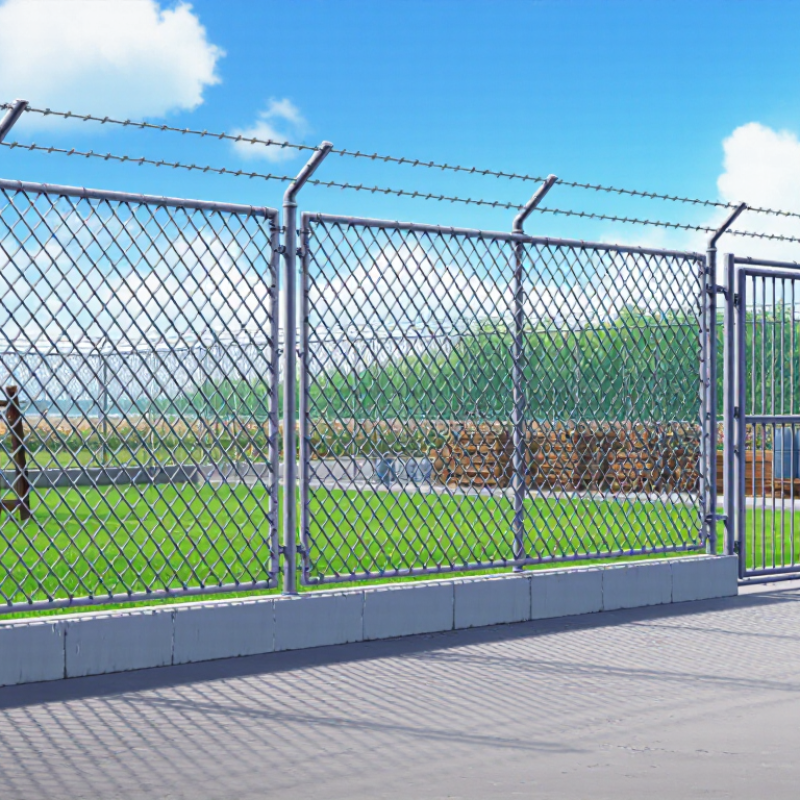
    7 Tips for Choosing Chain Link Fence Mesh for Your Project

    Understanding Chain Link Fence Mesh and Its Main Components

    7 Tips for Choosing chain link fence mesh for Your Project

    Understanding Chain Link Fence Mesh and Its Main Components

    Chain-link mesh is a woven fabric of steel wires, joined into repeating diamond-shaped openings. Its performance depends on more than appearance. Wire gauge affects stiffness, while the opening size influences visibility, airflow, and how easily small objects pass through. Coatings, such as zinc or a polymer layer, help the wire resist moisture and surface wear. The mesh edges also matter: knuckled edges fold wire ends over, while twisted edges leave sharper points. Details are easy to overlook.

    Tip: Match the opening size to what the fence must contain or screen. Check wire gauge and coating together, not separately. A heavy-looking mesh may still need suitable posts and tensioning to stay straight.

    Posts, rails, and tension bands support the mesh, but they are separate components. For a windy site, consider how the open weave reduces wind pressure compared with a solid barrier, while remembering that loose installation can still sag. Near salty air or frequent sprinklers, inspect coating specifications and maintenance needs. Ask for the mesh’s actual gauge and opening measurements; product descriptions can be vague. I would not choose by price alone, though I have to admit that comparing specifications takes patience. A small sample helps reveal coating feel and diamond shape before ordering.

    Assessing Your Project’s Purpose, Site, and Security Needs

    Define the fence’s job before choosing mesh. A garden boundary, dog enclosure, and equipment yard require different heights, openings, and wire gauges. Then assess the site: slope, drainage, salt exposure, and prevailing weather can affect installation and service life. NOAA’s 1991–2020 U.S. Climate Normals report local temperature and precipitation patterns. Check the nearest station; regional averages can miss a windy ridge or a persistently wet corner.

    Tips: Walk the proposed line after rain. Look for soft soil, standing water, rocks, and roots. Compare those observations with the USDA NRCS Web Soil Survey, which maps soil properties and drainage. Measure slopes and mark gates before ordering. A map helps, but it cannot replace a site visit.

    For security, consider who or what the fence must contain, and where visibility matters. Tighter mesh may reduce footholds, but it does not make a fence impossible to climb. CISA physical-security guidance treats barriers as one layer of protection, alongside access control and monitoring. Check ASTM A392 when comparing zinc-coated chain-link fabric; its specifications distinguish coating classes. Also verify local project requirements with the relevant authority. The detail people often overlook is the gate: a strong mesh panel is less useful if the latch or post is poorly matched.

    Choosing Chain Link Fence Mesh: What to Assess

    Illustrative planning scores from 1 (lower priority) to 5 (higher priority), not measured test results. Match mesh opening and wire gauge to the level of containment or deterrence needed, and consider fence height, site conditions, and coating exposure before choosing.

    Comparing Wire Materials, Coatings, and Corrosion Resistance

    Tip 1: Match the wire material to the site conditions. Galvanized steel is a practical choice for many yards and work areas. Its zinc coating helps slow rust, especially where rain is occasional and soil stays fairly dry. Near salt air or frequent irrigation, inspect samples for coating quality. A small label alone cannot tell you how well mesh will hold up.

    Tip 2: Compare coatings, not just appearance. Vinyl-coated mesh adds a protective layer and can soften the look of a fence. Check that the coating covers the wire evenly, including bends and cut ends. Scratches matter. I have seen a tiny damaged spot become the first place rust appears, though the surrounding mesh still looked sound. That detail is easy to miss.

    Tip 3: Think about maintenance and exposure together. Stainless steel may suit persistently damp or corrosive settings, but it usually costs more. For ordinary conditions, a well-coated galvanized option may be enough. Ask about wire gauge, coating type, and expected exposure, then compare written specifications. If the fence stands beside sprinklers, check it after the first wet season. Real sites can be messier than product descriptions.

    7 Tips for Choosing Chain Link Fence Mesh for Your Project — Comparing Wire Materials, Coatings, and Corrosion Resistance

    Tip Wire Material or Finish Corrosion Resistance Suitable Applications What to Check
    1. Match the mesh to the exposure Carbon-steel wire with a protective coating Depends on the coating, coating thickness, installation details, and local conditions. General residential, commercial, and recreational fencing Consider rainfall, humidity, salt exposure, pollutants, and contact with soil before selecting a finish.
    2. Consider zinc-coated wire for everyday use Galvanized steel, with zinc applied before or after the mesh is woven Zinc protects steel by acting as a barrier and corroding preferentially when the coating is damaged. Service life varies with coating amount and environment. Many inland projects with ordinary weather exposure Confirm the specified zinc-coating class or mass and whether the mesh is galvanized before or after weaving.
    3. Look at aluminum-coated wire for certain environments Steel wire with an aluminum-based coating The aluminum coating forms a protective oxide layer; performance depends on the exposure and product specification. Projects where an aluminum-coated finish is specified and compatible with site conditions Check the applicable product standard and verify suitability for coastal or industrial exposure rather than assuming all aluminum coatings perform alike.
    4. Choose a polymer finish for added surface protection Galvanized steel with a PVC or other polymer coating The polymer layer provides a barrier over the metal coating. Cuts, cracks, or poorly finished edges can expose the underlying wire. Residential areas, parks, and installations where color or a smoother surface is desired Inspect coating continuity, adhesion, cut ends, and the underlying metallic coating; compare the product's stated UV and weathering performance.
    5. Consider stainless steel for demanding conditions Stainless-steel wire, commonly specified by alloy grade Chromium in stainless steel supports formation of a passive surface film. Chlorides can still cause pitting or crevice corrosion; molybdenum-bearing grades generally improve resistance to chlorides compared with common 304-grade stainless. Specialized installations where corrosion resistance is a priority Specify the alloy grade based on actual exposure, and avoid assuming stainless steel is immune to corrosion.
    6. Compare mesh opening and wire gauge Any suitable material or finish Smaller openings or heavier wire do not by themselves guarantee better corrosion resistance; finish quality and exposure remain important. Applications ranging from boundary fencing to areas requiring smaller openings Check the opening size, wire diameter, height, and applicable project requirements together. Gauge systems can vary, so confirm the stated diameter.
    7. Check edges, fittings, and maintenance needs Mesh, posts, ties, fasteners, and fittings with compatible finishes Unprotected cuts, scratches, dissimilar-metal contact, and water traps can create local corrosion risks. All projects, especially wet, coastal, or chemically exposed sites Use compatible components, follow installation guidance for cut edges, keep drainage areas clear, and inspect periodically for coating damage or corrosion.

    Choosing Mesh Opening, Wire Gauge, and Fence Height

    Mesh opening controls what the fence can contain and how easily people can see through it. For small pets or loose materials, a tighter opening may reduce gaps, but it can collect leaves and make the fence feel less open. Check the actual opening dimensions, not just a product label; measurement conventions can vary. On uneven ground, a small gap beneath the mesh may matter more than a slightly smaller opening. Measure twice.

    Wire gauge affects rigidity and resistance to bending. In common gauge systems, a lower number usually means thicker wire, though specifications should confirm the actual diameter. A heavier wire can feel reassuring, but it is not automatically the best choice. Consider expected contact, span length, and the strength of the posts and fittings together. I have seen mesh selected by gauge alone, only for weak end posts to become the real problem.

    Choose fence height based on the barrier’s purpose and the site’s slope. A level installation can leave a noticeable gap on a changing grade, so check the ground at several points before ordering. Taller mesh may improve containment, but it also catches more wind and needs suitable support. The right dimensions are rarely perfect on paper; verify them against a measured site plan.

    Checking Standards, Durability, and Installation Requirements

    Before ordering chain link fence mesh, check the project specification and the standards that apply to its intended use. Requirements can differ for residential boundaries, sports areas, and industrial sites. Confirm mesh opening, wire diameter, coating type, and permitted tolerances against the plans. A small opening can improve containment, but it also adds weight and may need stronger supports. Check product documentation, too. It should identify materials and coating details clearly, not just say “weather resistant.”

    Durability depends on more than wire thickness. Galvanized or coated mesh can resist corrosion, but cut ends and scratched areas may still need attention. Look closely at the site: damp soil, salty air, and standing water can shorten service life. Installation matters just as much. Measure post spacing, allow for corners and gates, and check whether the ground rises or dips. A taut fence over uneven ground may leave gaps below. Don’t rush this part. I still think specifications can make installation seem simpler than it is; a sloped corner often changes the plan. Before work begins, confirm tensioning methods, required tools, and whether the posts can hold the selected mesh under expected loads.