
How to Choose Fitted Baseball Caps for Your Brand?

    Choosing Fitted Baseball Caps for a brand is a product decision, not just a logo decision. The right cap must fit comfortably, hold its shape, and represent the brand when viewed from across a room. A poor fit is hard to overlook.

    Grand View Research valued the global headwear market at approximately $26.5 billion in 2023 and forecast continued growth through 2030. That figure covers headwear broadly, not fitted baseball caps alone. Still, it signals a competitive category where thoughtful product choices matter. New Era Cap CEO Christopher Koch has described the company as a “100-year-old start-up.” His phrase captures a useful tension: heritage can build trust, but brands still need to keep adapting.

    For a first sample, look closely at crown profile, panel construction, brim curve, sweatband, and size grading. Then check embroidery placement under real lighting; thread that looks subtle on a screen may dominate on a finished cap. Test multiple sizes with the people who will actually wear them. Small details count.

    And some choices are subjective. A structured crown may feel premium to one customer and too stiff to another. A practical brief should specify intended use, target wearer, materials, finish, and acceptable fit variation. Compare samples before committing to a production run. Even then, a sample is not a promise of perfection. It is a chance to notice what the brief missed.
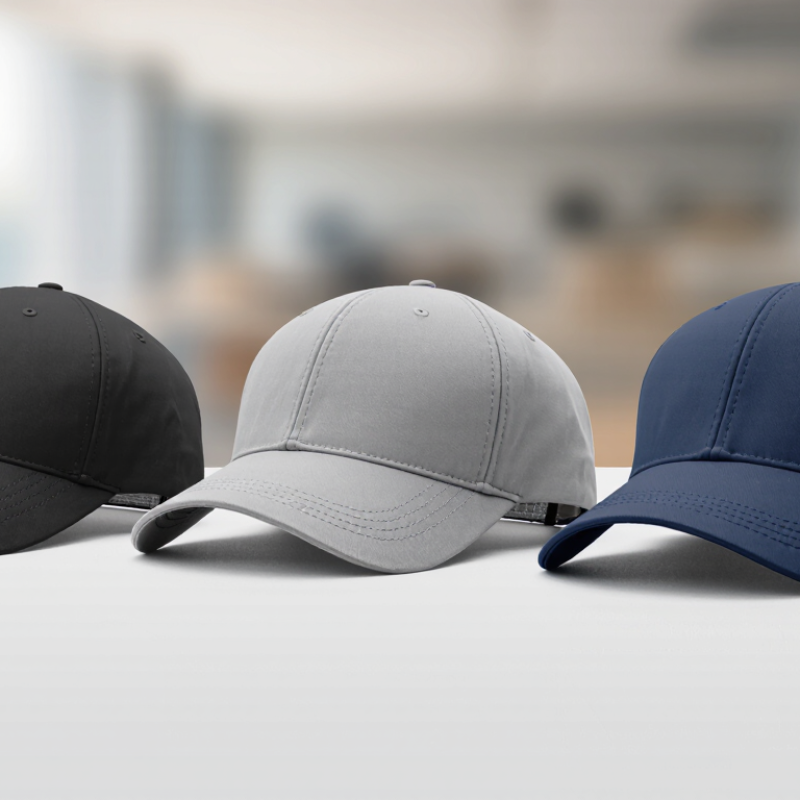
    How to Choose Fitted Baseball Caps for Your Brand?

    Define Your Brand’s Needs and Target Wearers

    Before choosing a fitted baseball cap, define what it needs to do for your brand and who will wear it. A cap for daily commuting may need a softer crown and breathable fabric, while one for outdoor events may benefit from a sturdier build. A fitted cap has no adjustable closure, so sizing accuracy matters. Record head circumference across your intended size range, then compare those measurements with a supplier’s sizing chart. Ask a sample group to try the caps on, including wearers with different hairstyles and preferences. Fit is personal. A size that feels secure to one person may press uncomfortably against another’s temples.

    Consider how the cap will be worn, not just how it looks on a product page. Will wearers use it for several hours, in warm weather, or over thick hair? These details can guide choices in fabric weight, lining, crown height, and brim shape. Colors and embroidery should also suit the intended audience and remain clear at a glance. It is easy to focus too much on appearance; I would still check comfort after a full afternoon of wear. Note where the cap feels tight, slips, or traps heat. Those small observations can reveal problems that a quick fitting misses.

    Understand Fitted Cap Sizing and Construction

    Fitted sizing starts with a tape measure around the widest part of the head, just above the ears and eyebrows. Record the measurement snugly, without compressing hair or skin. Match it to a size chart, then test the cap on people near both ends of that range. A small gap can matter.

    The U.S. Army’s ANSUR II anthropometric survey, documented by Gordon and colleagues in 2014, measured 4,082 men and 1,986 women. Its head measurements offer useful reference data, but military personnel do not represent every customer. ISO 8559-1:2017 also standardizes how body measurements are defined. Use these sources as guides, not substitutes for wearer trials. That distinction is easy to miss.

    Construction affects fit as much as circumference. A firm front panel holds its shape but may feel tighter across the forehead; a softer crown often adapts more readily. Check crown depth, seam bulk, sweatband tension, and fabric recovery after repeated wear. Measure finished samples, not just paper patterns. Then try them after a few hours, when pressure points become clearer. One honest caveat: even careful sampling can miss unusual head shapes.

    How to Choose Fitted Baseball Caps for Your Brand? - Understand Fitted Cap Sizing and Construction
    Category Typical Measurement or Construction What to Consider
    How to measure Measure around the head where the cap will sit, keeping the tape level and just above the ears. Record the circumference in inches or centimeters. Use a soft measuring tape and measure more than once. Compare the result with the supplier’s size chart, since sizing and fit can vary.
    Fitted size 6 7/8 Approximately 21 5/8 in (55 cm) A smaller adult size in many traditional fitted-cap size charts.
    Fitted size 7 Approximately 22 in (56 cm) Check the actual chart before production; a small difference in circumference can affect comfort.
    Fitted size 7 1/8 Approximately 22 3/8 in (57 cm) A common incremental size; confirm whether the cap is intended to fit snugly or with more room.
    Fitted size 7 1/4 Approximately 22 3/4 in (58 cm) Compare a sample against the intended wearer’s measurement, especially when ordering a range of sizes.
    Fitted size 7 3/8 Approximately 23 1/8 in (59 cm) Allow for the cap’s internal sweatband and lining when evaluating the finished fit.
    Fitted size 7 1/2 Approximately 23 1/2 in (60 cm) A frequently offered adult size. Verify grading between adjacent sizes with a production sample.
    Fitted size 7 5/8 Approximately 24 in (61 cm) A larger adult size in many size ranges; confirm availability with the manufacturer.
    Fitted size 7 3/4 Approximately 24 3/8 in (62 cm) Request measurements for the finished cap rather than relying only on a nominal size label.
    Fitted size 7 7/8 Approximately 24 3/4 in (63 cm) Include larger sizes in the size plan if the intended customer group needs them.
    Fitted size 8 Approximately 25 1/8 in (64 cm) Confirm that the requested size is part of the supplier’s standard range before finalizing quantities.
    Crown panels Many baseball caps use a six-panel crown, though panel layouts can vary. Panel seams affect the cap’s shape and provide placement points for embroidery or other decoration.
    Structured or unstructured crown A structured crown has reinforcing material in the front panels; an unstructured crown has a softer, more flexible front. Choose based on the intended silhouette and how much shape the cap should retain when not being worn.
    Crown profile Low, mid, and high profiles describe the crown’s height and overall shape. Request a physical sample: profile terms can differ between manufacturers, and head shape influences perceived fit.
    Visor The visor usually contains a stiffening insert and may be flat or pre-curved. Specify the preferred shape and finish; check that the visor curvature is consistent across samples.
    Sweatband A fabric band is sewn inside the lower crown and contacts the wearer’s forehead. Check its comfort, seam placement, and how it affects the interior circumference.
    Fabric and care Cotton, polyester, and blends are commonly used; fiber content and care instructions vary by fabric and finish. Confirm the exact material composition and care guidance for the selected cap, and test decoration on a sample.
    Pre-production fit check Review a sample in the intended construction and size range before approving a full order. Check circumference, crown depth, comfort, seam finish, visor shape, and decoration placement. Size conversions are approximate and may vary by manufacturer.

    Compare Materials, Crown Shapes, and Visor Styles

    Cotton twill gives a fitted cap a familiar, soft feel and works well for everyday wear. Polyester is usually lighter and can hold color through frequent use, though some people find it less breathable. Wool blends add body and warmth, but may feel heavy in hot weather. Compare fabric swatches under daylight; colors can look different indoors. Check the sweatband, too. Small details matter.

    Crown height changes both appearance and comfort. A low crown sits close to the head, while a high crown creates more room and a taller profile. Mid crowns offer a balanced option, but head shape and hair volume affect the fit. Structured fronts keep their shape; unstructured panels feel softer and more relaxed. Fit beats trend. Try a sample for several minutes, not just a quick mirror check.

    Visor style affects the cap’s overall character. A curved visor feels classic and can shade the eyes from different angles. A flat visor looks sharper, but may need careful shaping to sit comfortably. Compare visor length, edge binding, and stitch rows; dense stitching can make the brim feel firmer. A detail that looks clean on a screen may feel stiff in hand, so test the finished sample before choosing a final specification.

    Review Customization and Production Options

    Customization works best when it supports the cap’s fit, not just its appearance. Decide on crown height, panel construction, and closure-free sizing before choosing colors or artwork. Fitted caps rely on accurate measurements, so request a size range and compare it with your intended audience. A sample on a real wearer can reveal pressure points that a spec sheet misses.

    Small details matter. Embroidery adds texture, but dense stitching may feel stiff on a lightweight crown. Ask the factory to test your artwork at its actual size, especially around curved seams. Woven labels and underbrim prints offer alternatives when the front panel is already busy. Keep the design simple. Too many details can blur.

    Production options vary by material, order volume, and factory capacity. Confirm available fabrics, color-matching methods, minimum quantities, sample fees, and lead times in writing. Request a pre-production sample and check the seams, sweatband, embroidery, and fit before approving the full run. If one size feels tight, revise the measurement before bulk production; correcting it later can be costly. Timelines sometimes shift. Build in room for a second sample, because the first version may not sit quite right.

    How to Choose Fitted Baseball Caps for Your Brand

    Review the customization options and production details that shape a fitted cap order.

    How to read this chart: Bars count the common examples listed for each design area; they are not market statistics or supplier rankings. Options vary by manufacturer. Confirm available fabrics, fitted size runs, minimum order quantities, sample approval, and production lead times with your supplier before ordering.

    Test Samples and Choose a Manufacturing Partner

    Before placing a production order, test fitted cap samples on several head shapes. A size label alone cannot show how the cap feels after an hour. Check the inner circumference, crown depth, and how evenly the panels sit. Feel the crown. Note pressure near the temples, loose space above the ears, and whether the brim blocks too much of the view. Wear the sample indoors and outdoors; bright light can reveal stitching gaps or uneven panel shapes. Wash or gently clean it as instructed, then check for color changes, puckering, and a stretched sweatband.

    Use a written sample checklist and record measurements, materials, thread color, closure details, and approved tolerances. Photos help, but they do not replace a physical reference sample. I used to focus too much on appearance; fit problems were harder to fix later. Ask the manufacturer how it controls sizing between batches, inspects sewing, and handles defects. Request a revised sample when something misses the specification, and confirm that the final production run will follow the approved version. Check it again. Clear answers, realistic lead times, and willingness to document changes are useful signs of a dependable partner. If communication feels rushed, pause before approving a large order.