
What Is the Best Lead Glasses Supplier?
The question “What Is the Best Lead Glasses Supplier?” deserves more than a price comparison. People searching for Best Lead Glasses Supplier. should look beyond a polished catalogue. Lead glasses are protective equipment, so product details matter. Check the stated lead equivalence, lens coverage, frame options, and available sizes. Ask how specifications are documented and whether product information is available for review. Clear answers help buyers compare suppliers without relying on broad marketing claims. Fit matters. So does comfort. Glasses that sit poorly may be difficult to wear throughout a working day, even when their specifications look suitable on paper.
A dependable supplier should explain its product range, provide consistent technical information, and respond clearly to questions about ordering and support. Request current documentation, then compare it with your workplace needs and applicable guidance. If a product’s intended use is unclear, ask a qualified radiation-safety professional before choosing. Supplier experience can be useful, but claims alone are not proof. Look for concrete details, such as product measurements, lens choices, and documented quality processes. Price still counts. Yet the lowest quote may not reflect fit, service, or the information you need. No supplier is perfect, and a catalogue can leave important questions unanswered. A careful comparison helps identify a supplier whose products and support suit the people who will wear the glasses.
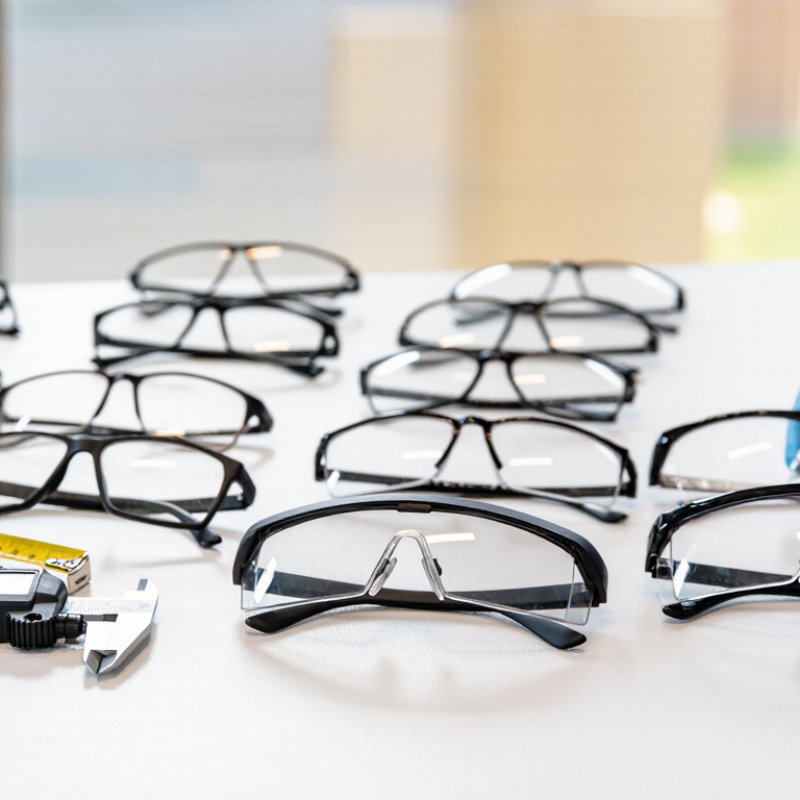
What Lead Glasses Are and How They Protect Against Radiation
Lead glasses are designed to reduce scatter radiation reaching the eyes, especially during fluoroscopy and other image-guided procedures. They do not replace distance, shielding, or careful positioning. The International Commission on Radiological Protection’s Publication 118 recommends an occupational lens-dose limit of 20 mSv per year, averaged over five years, with no single year exceeding 50 mSv. That is a ceiling, not a goal. Glasses work best when their lead equivalence, side coverage, and fit match the wearer’s work. Fit matters. Radiation can enter around open sides or a low frame.
When comparing suppliers, ask for documented attenuation or lead-equivalence test results, plus details on lens coverage and optical quality. A number alone is not enough; protection depends on how the glasses are worn and where scatter comes from. Side shields can help, but gaps still matter. Comfort is practical, too: heavy frames that slide down may expose the eye area. Check that lenses provide clear vision under procedure-room lighting, and confirm the supplier can support repairs or replacement. I would not assume that a higher lead-equivalence rating automatically means better protection in every setup. Local dose monitoring and a radiation-safety professional can help assess whether a model suits the task.
Which Industries and Users Need Lead Glasses
What Is the Best Lead Glasses Supplier?
Which Industries and Users Need Lead Glasses
Lead glasses are used mainly in healthcare settings where staff work near fluoroscopy or other sources of scattered X-rays. Interventional radiologists, cardiologists, surgeons, nurses, and imaging technologists may wear them during procedures. Dental professionals may also need eye protection when their work involves X-ray equipment and exposure assessments support its use. The need depends on the task, room layout, shielding, and time spent near the source—not simply a job title.
Fit matters. Glasses should sit securely without pressing against the nose or slipping during movement. Side shields can help reduce exposure from different angles, while prescription options may make long procedures more practical. Details count. A supplier should provide clear information about lens shielding specifications, testing, frame styles, and replacement options. Staff should also confirm that eyewear fits alongside other protective equipment and follows their facility’s radiation-safety procedures.
Comfort is easy to underestimate. Heavy frames or poor fit can discourage consistent use, even when the glasses meet technical requirements. There is no single frame for every face, and selecting the right pair can take a few fittings. A qualified radiation-safety professional can help assess workplace exposure and identify suitable protection.
What Is the Best Lead Glasses Supplier? - Which Industries and Users Need Lead Glasses
| Industry or setting | Potential users | Why protective eyewear may be needed | What to confirm when choosing a supplier |
|---|---|---|---|
| Interventional radiology and cardiology | Interventional physicians, nurses, and technologists working near the patient during fluoroscopy | Staff may receive scattered X-rays during image-guided procedures. Eyewear can provide additional protection for the eyes as part of a broader radiation-protection program. | Documented lead-equivalent rating at the stated test conditions, comfortable fit for long procedures, side coverage, and compatibility with prescription lenses if needed. |
| Diagnostic radiology and fluoroscopy | Radiologists and other staff who remain in the room for specific X-ray procedures | Depending on the procedure and staff position, scattered radiation may make protective eyewear appropriate under local radiation-safety guidance. | Clear specifications, optical quality, sturdy construction, and guidance on selecting eyewear for the intended procedure and exposure conditions. |
| Dental radiography and oral surgery | Dental professionals who may need to remain in the room during certain procedures | The need depends on the equipment, room layout, work practices, and local rules. Staff should follow dental radiation-protection guidance rather than assume eyewear is always required. | A suitable fit for the user, appropriate coverage, traceable product specifications, and clear cleaning and maintenance instructions. |
| Nuclear medicine | Staff handling radioactive materials or assisting with imaging procedures, where a radiation-safety assessment identifies a need | Protection requirements depend on the radionuclide, task, exposure pathway, and workplace assessment; lead glasses are not a universal solution for every radiation source. | Accurate product documentation and advice that distinguishes X-ray attenuation from protection needs for other types of radiation. |
| Veterinary imaging | Veterinarians, veterinary nurses, and radiography staff who may assist with imaging | When staff cannot leave the room, the employer’s radiation-protection assessment may identify protective eyewear as part of the required controls. | Durable, cleanable eyewear with a secure fit, clear care instructions, and specifications suited to the clinic’s X-ray procedures. |
| Research and laboratory X-ray facilities | Researchers and technicians working with X-ray imaging or diffraction equipment when authorized procedures require personal protective equipment | Protection needs depend on the equipment, shielding, access controls, and a site-specific radiation-risk assessment. | Product performance information, suitability for the equipment’s operating conditions, and support for inspection and replacement planning. |
| Industrial radiography | Radiographers and other personnel only where a qualified radiation-safety assessment identifies an appropriate role for eyewear | Industrial X-ray or gamma radiography requires strict controls. Protective glasses do not replace shielding, controlled areas, distance, time management, or required monitoring. | A supplier should provide precise limitations and documentation and should not claim that eyewear alone makes an unsafe task safe. |
| Supplier selection checklist: Choose a supplier that provides verifiable lead-equivalent and test-condition information, clear product and care documentation, suitable fit and side coverage, prescription options where available, and responsive support. Confirm eyewear requirements with the organization’s radiation-safety professional and applicable local regulations. Lead glasses are one possible protective measure, not a substitute for engineering controls, safe work practices, or other required personal protective equipment. | |||
What Safety Standards and Certifications a Supplier Should Meet
A dependable lead-glasses supplier should provide test evidence, not just a lead-equivalence number. Ask for reports referencing IEC 61331-1 and IEC 61331-3, which cover attenuation testing and protective eyewear for diagnostic X-rays. The report should identify the tested lens, measurement method, and beam quality. Lead equivalence can vary with X-ray energy. A single number without test conditions is incomplete.
NCRP Report No. 160 (2009) estimated that average annual effective dose from medical procedures in the United States rose from 0.53 mSv in 1980 to 3.0 mSv in 2006. This figure describes population exposure, not eye-lens dose, but it underlines why radiation protection deserves careful verification. Check that the supplier can provide current, traceable test documentation, clear care instructions, and product identification linking each pair to its test results. ISO/IEC 17025 accreditation can support confidence in a testing laboratory; it does not, by itself, certify the glasses. Details matter.
Tips: Request the full laboratory report, including test conditions and lead-equivalence results. Confirm that frames fit securely without blocking peripheral vision. Ask how lenses should be inspected for cracks or damage. I would not rely on a polished certificate alone; paperwork can look complete while leaving key test details unclear.
How to Compare Lens Options, Fit, and Customization
What Is the Best Lead Glasses Supplier?
How to Compare Lens Options, Fit, and Customization
Comparing lead glasses starts with the lens specifications, not the product photo. Check the stated lead equivalence and the testing documentation, then confirm that the protection suits the imaging work and equipment used. Ask whether the rating applies across the lens or only to a specific area. A clear answer matters. Lens weight, visible-light transmission, and distortion also affect daily use. If possible, view through a sample pair and check fine details on a screen or chart. A neat brochure is not enough.
Fit deserves the same attention as lens performance. Frames should sit steadily without pressing the nose, slipping during movement, or leaving large gaps near the temples. Side shields may be useful when the work setup calls for added coverage. Ask about bridge sizes, frame widths, prescription options, and replaceable parts before ordering. Small adjustments can make a long shift more comfortable. Some preferences are hard to judge online, and I would not assume a single frame suits everyone. Confirm the supplier can provide clear specifications and fitting support, and have a qualified radiation safety professional assess whether the selected protection is appropriate for your setting.
What Is the Best Lead Glasses Supplier?
Compare lens options, fit, and customization
These are commonly specified nominal lead-equivalence ratings, not actual lens thicknesses or a ranking of suppliers. Availability and shielding performance vary by product and X-ray energy. When comparing suppliers, confirm the tested equivalence, frame fit, side coverage, prescription options, and available customization.
How to Assess Supplier Support, Pricing, and Reliability
Choosing a lead-glasses supplier means checking support and evidence, not just the quoted price. Ask for lens-specific test reports, stated lead equivalence, and details about the testing method. NIST’s XCOM photon cross-section database provides attenuation data across photon energies from 1 keV to 100 GeV. That matters: a single lead-equivalence figure may not describe performance across every X-ray spectrum. Ask the supplier to explain which conditions its figures represent. Clear answers are a useful sign of technical support.
Compare the full cost, including prescription options, replacement lenses, shipping, and repair turnaround. Request written warranty terms and ask how damaged or poorly fitting frames are handled. A low initial price can become expensive if service is slow. Ask for proof. Check whether the supplier can provide traceable documentation for the exact model being quoted, rather than a generic product sheet. I would still request a trial pair; paperwork cannot reveal nose pressure after a full shift. Supplier reliability also shows in response times: send a practical question and note whether the reply is specific, prompt, and consistent. Some details may seem small, but unclear answers about fit or replacement availability deserve a second look.
English
Français 