 English
  Français
How to Choose the Best Paper Cup Raw Material?
Choosing the right Paper Cup Raw Material affects safety, performance, cost, and environmental claims. It is not simply a choice between “paper” and “plastic.” Cup stock must resist hot liquids, hold its shape, and run smoothly through printing and forming equipment. A poorly selected board may curl near the rim, leak at the seam, or absorb coating unevenly. Small defects become expensive at high production speeds.
Industry data shows why material selection deserves closer attention. CEPI’s European Paper Industry Annual Statistics reported an 82% paper recycling rate in Europe in 2022. However, recycling performance depends on fiber quality, collection systems, and coating design. Smithers’ research on sustainable paper-based packaging also highlights the growing importance of barrier performance and end-of-life compatibility. These reports support a practical view: renewable fiber alone does not guarantee a better cup. That assumption can fail.
A reliable evaluation should examine virgin or recycled fiber, basis weight, stiffness, moisture resistance, heat tolerance, and coating technology. FSC-certified fiber can strengthen responsible sourcing evidence, while supplier testing should confirm food-contact compliance in the target market. I would also request Cobb value, tensile strength, seal strength, and migration test results before approving a material. Numbers matter. So does factory behavior.
The best option may differ for coffee, juice, soup, or cold drinks. A thin board can reduce material use, but it may deform around a hot beverage. A thicker board may improve handling, yet increase cost and resource demand. This guide compares these trade-offs, using technical evidence and practical purchasing questions to support a more reliable decision. No material is perfect. Careful testing remains essential.
Understanding Paper Cup Raw Material Types and Structures
How to Choose the Best Paper Cup Raw Material?
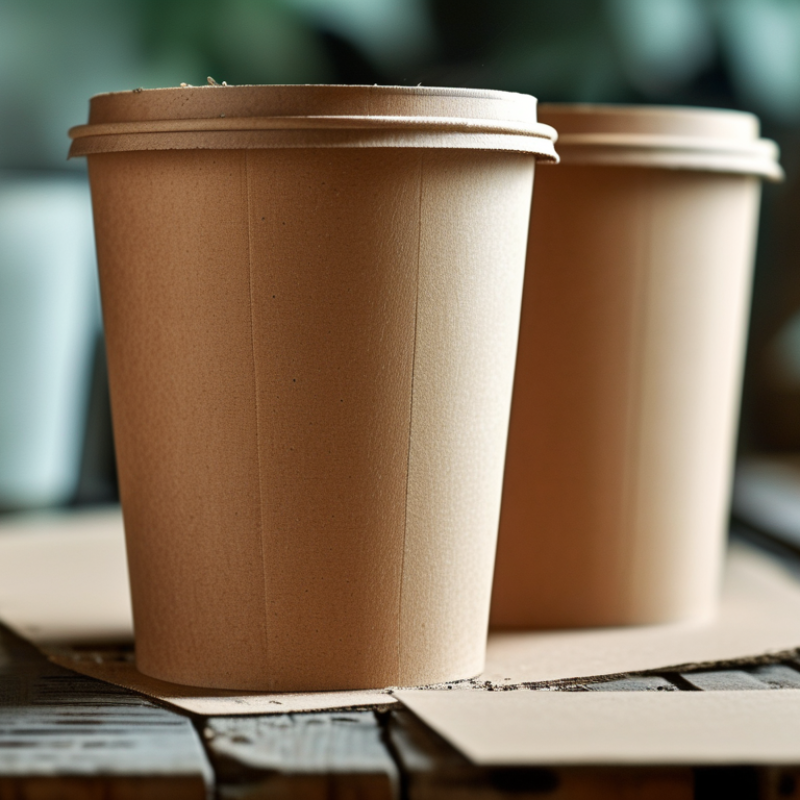
Understanding paper cup raw material types and structures starts with the cup’s intended use. Hot drinks need paperboard with strong heat resistance and dimensional stability. Cold beverages may require better moisture protection. The main structure usually includes paperboard, a barrier coating, printing ink, and a sealing layer. Paperboard provides stiffness. The coating prevents liquid from soaking into the fibers. Common options include polyethylene, water-based coatings, and plant-based polymer coatings. Each creates different recycling, composting, sealing, and performance considerations.
In production reviews, small structural details often cause large problems. A thin barrier may soften near the rim. Excessive coating can affect sealing or increase material use. Fiber quality also matters, especially when cups must remain rigid during filling and transport. Specifications should cover grammage, moisture resistance, coating weight, heat tolerance, and edge-seal strength. Food-contact suitability should be verified through reliable supplier documentation and independent testing. I would not choose a material from its coating name alone. Actual performance can vary between batches.
Tips: Test the complete cup, not only the raw sheet. Fill samples with the intended beverage and inspect them after several hours. Check leakage, rim comfort, odor, and stiffness. Ask for traceable technical data. A practical mistake is testing only at room temperature. Real conditions are less forgiving. Also, sustainability claims need careful review, because a recyclable structure may require suitable local collection and processing systems.
How to Choose the Best Paper Cup Raw Material? - Understanding Paper Cup Raw Material Types and Structures
| Raw Material or Structure | Typical Composition | Common Basis Weight Range | Barrier Performance | Recommended Applications | Main Advantages | Important Limitations | Selection Considerations |
|---|---|---|---|---|---|---|---|
| Virgin bleached paperboard | Food-contact-grade cellulose fibers produced from bleached virgin pulp, usually supplied with a smooth, printable surface. | Approximately 170–350 g/m² for many cup applications. | Requires an additional barrier coating or lining to resist water and liquid penetration. | Hot and cold beverage cups, especially applications requiring a clean white appearance and reliable forming. | Consistent strength, good printability, smooth appearance, and suitable hygiene performance when properly specified. | Usually has a higher virgin-fiber content and may require responsible forestry documentation or other sourcing verification. | Check stiffness, moisture resistance, food-contact compliance, print quality, and compatibility with the selected forming process. |
| Recycled-fiber paperboard | Paperboard containing recovered paper fibers, sometimes combined with virgin fibers to meet strength and food-contact requirements. | Approximately 180–350 g/m², depending on the product design and recycled-fiber ratio. | Needs a suitable coating or lining; fiber quality alone does not provide liquid resistance. | Selected cold-cup and food-service applications where recycled content is allowed by the applicable regulations and customer requirements. | Can reduce dependence on virgin fiber and support recycled-content targets. | Fiber variability, lower wet strength, possible odor or appearance variation, and restrictions for direct food contact in some markets. | Verify the legally permitted recycled content, deinking and cleanliness controls, migration results, and supply consistency. |
| PE-coated paperboard | Paperboard laminated with a thin layer of polyethylene on one or both sides. | Paperboard commonly around 170–350 g/m²; coating weight often approximately 10–25 g/m² per coated side. | Good resistance to water, aqueous beverages, and moderate heat; provides reliable sealing in conventional cup production. | Hot coffee cups, cold drink cups, milk-based beverages, and many standard disposable paper cups. | Strong moisture barrier, good heat-sealing performance, established processing technology, and stable shelf performance. | Paper and plastic are bonded together, so specialized recycling or separation infrastructure may be needed; it is not automatically compostable. | Confirm coating weight, sealing temperature, leakage resistance, odor, food-contact status, and end-of-life requirements. |
| Water-based dispersion-coated paperboard | Paperboard coated with an aqueous polymer dispersion designed to provide liquid resistance and heat-sealing capability. | Paperboard commonly around 170–350 g/m²; coating weight varies by formulation and performance target. | Good resistance to water and beverages when correctly applied; performance depends on coating chemistry, weight, and curing. | Hot and cold beverage cups where reduced plastic coating content or improved fiber-based recyclability is desired. | Can support repulpability objectives and may use less conventional plastic film than PE-laminated structures. | Not every dispersion coating is compostable or recyclable in every region; heat, grease, and storage performance must be validated. | Request repulpability, compostability, migration, heat-sealing, and leakage test data for the intended cup design. |
| PLA-coated paperboard | Paperboard coated with polylactic acid, a bio-based polyester commonly derived from fermented plant sugars. | Paperboard commonly around 170–350 g/m²; PLA coating weight depends on the required barrier and sealing performance. | Good resistance to cold liquids and suitable resistance for many warm beverages; prolonged high-temperature exposure requires validation. | Cold drinks and selected hot beverages marketed for industrial composting systems. | Bio-based coating option and compatible with certain industrial composting claims when the complete cup is certified. | Industrial compostability is not the same as home compostability or biodegradation in the natural environment; facilities may be limited. | Confirm the complete-product certification, maximum filling temperature, shelf life, sealing performance, and local disposal route. |
| Water-based or mineral barrier coating | Paperboard with a specialized coating containing water-based binders, mineral components, or other barrier-forming materials. | Paperboard commonly around 170–350 g/m²; coating weight is formulation-specific. | Can provide water, grease, and oxygen resistance, but the actual performance varies considerably by formulation. | Cold beverages, food-service cups, and applications where fiber recovery or reduced conventional plastic use is a priority. | Potentially improved repulpability and reduced reliance on traditional plastic films, subject to local mill capability. | Barrier, sealing, and high-temperature performance may be less standardized than conventional PE systems. | Use product-specific test results rather than relying only on generic coating descriptions or sustainability claims. |
| Single-wall cup structure | One formed layer of coated paperboard, usually selected according to beverage temperature, cup size, and required stiffness. | Often approximately 170–300 g/m², depending on cup dimensions and paperboard stiffness. | Depends primarily on the coating or lining and the quality of the bottom and side-wall seals. | Cold drinks and hot beverages served with a separate sleeve or moderate insulation requirements. | Lower material use, simpler construction, efficient storage, and generally lower production cost than multi-wall designs. | Limited thermal insulation; the outside wall can become hot with hot beverages or wet with condensation from cold drinks. | Evaluate hand comfort, cup stiffness, rim strength, stacking, leakage, and whether a sleeve is acceptable. |
| Double-wall cup structure | Two paperboard layers, commonly an inner liquid-holding wall and an outer insulating wall, with an air gap or bonded sections. | Combined paperboard weight often approximately 300–500 g/m², depending on the design. | Liquid resistance is provided by the inner coated layer; the outer layer mainly improves insulation and appearance. | Hot beverages requiring improved grip comfort without using a separate sleeve. | Better thermal insulation, greater stiffness, and improved protection against direct contact with the hot inner wall. | Uses more material, occupies more storage space, and may require more complex converting and quality control. | Balance insulation benefits against material consumption, shipping volume, nesting efficiency, and total cost. |
| Ripple-wall or corrugated-wall structure | A textured outer paper layer bonded to an inner cup wall, creating air pockets that improve insulation. | Combined paperboard weight often approximately 300–550 g/m², depending on flute or ripple design. | The inner coated wall provides the primary liquid barrier; the outer textured wall is mainly structural and insulating. | Takeaway hot coffee, tea, and other beverages requiring strong thermal protection and a distinctive tactile surface. | High insulation, good grip, strong visual texture, and reduced need for an additional sleeve. | Higher material use, more complex forming, larger cup dimensions, and potentially lower packing efficiency. | Check ripple height, bonding strength, rim comfort, nesting performance, and resistance to delamination. |
| High-barrier or multi-layer paper structure | Paperboard combined with two or more functional layers, such as a liquid barrier, heat-sealing layer, and oxygen or aroma barrier. | Often approximately 200–400 g/m² for the paperboard component, plus the weight of additional barrier layers. | Can provide enhanced resistance to liquid, grease, oxygen, aroma transfer, and demanding filling conditions. | Specialty beverages, extended holding times, high-fat formulations, or applications requiring stronger barrier protection. | Improved product protection and flexibility for demanding filling or storage conditions. | More complex material composition can increase cost and make recycling or material separation more challenging. | Specify the exact barrier targets, filling temperature, contact time, shelf life, sealing method, and end-of-life pathway. |
| Uncoated paperboard | Paperboard without a continuous liquid-resistant coating or lining. | Varies widely; commonly selected by stiffness and printing requirements rather than liquid containment. | Low resistance to liquid penetration and generally unsuitable as the sole material for a beverage-holding cup. | Dry-food packaging, sleeves, outer wraps, sample holders, or structural components used with a separate barrier. | Simple fiber-based structure, good printability, and easier fiber recovery when uncontaminated and accepted by local facilities. | Rapidly absorbs water and beverages, loses strength when wet, and can leak if used without an appropriate barrier. | Use only where the product is dry or where another verified barrier layer provides liquid containment. |
| Food-contact-grade cupstock | Paperboard and coating system manufactured and tested for the intended food or beverage contact conditions. | Selected according to cup size, stiffness, forming requirements, and filling conditions; commonly within 170–350 g/m² for the paperboard. | Must be evaluated as a complete structure, including paperboard, coating, inks, adhesives, and seals. | All beverage cups and food-contact applications where regulatory compliance and consumer safety are essential. | Supports documented compliance, controlled cleanliness, and predictable performance in production. | Food-contact suitability is market-specific and does not by itself guarantee recyclability, compostability, or low environmental impact. | Obtain declarations of compliance, migration testing, technical specifications, traceability information, and intended-use limitations. |