
How to Choose the Best Stainless Steel Meat Hooks?

    Choosing the right Stainless Steel Meat Hooks starts with the work they need to do. A hook for hanging small cuts may not suit a heavy carcass or a crowded cooler. Before comparing products, note the expected load, available hanging space, and the shape of the meat. These details make a real difference.

    Check the steel grade, wire thickness, hook opening, and finish. A smooth, well-formed surface is easier to inspect and clean than one with rough seams or sharp burrs. Look for clear load information from the manufacturer; appearance alone cannot tell you how much weight a hook can safely support. Match the hook’s capacity to the job, with a sensible margin. Better safe than sorry.

    Think about how the hooks will be handled each day. A closed hook may hold securely, while an open design can make loading faster. Neither is best in every setting. Compare the dimensions with your rails or racks, and consider whether the hooks are easy to grip when wet. Stainless steel can resist corrosion, but it still needs proper cleaning, drying, and inspection. Small scratches matter. Over time, residue can collect in places that are easy to miss. I would not choose solely by price or a product photo; specifications and finish tell a more useful story. The best choice is the one that fits your workflow, carries its intended load, and remains practical to maintain.
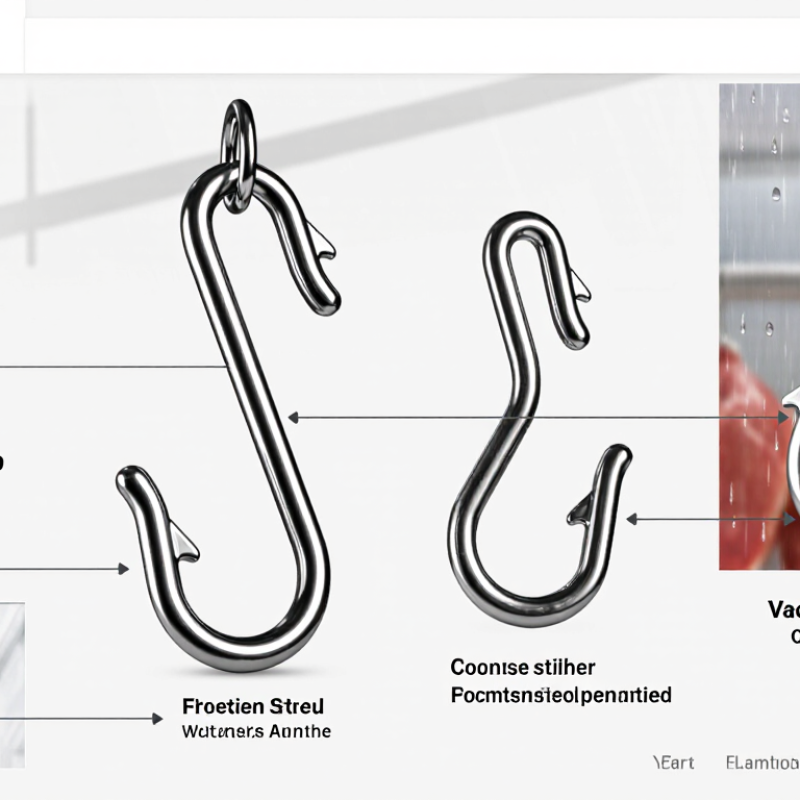
    How to Choose the Best Stainless Steel Meat Hooks?

    Determine the Intended Use and Required Load Capacity

    Choose a stainless steel meat hook for the actual task, not just its appearance. A hook used to hang a small cut needs a different capacity from one supporting a heavy carcass. Estimate the heaviest load, including any product that may shift or swing. Then check the hook’s stated working load, not merely its breaking strength. The support rail and connection matter too; the weakest part sets the practical limit. Small details count.

    Tips: Check the rating and intended orientation. Allow a margin above the expected load. Inspect the hook, welds, and attachment point before use.

    For routine handling, consider the hook shape and opening. A narrow point can grip securely but may be harder to place with gloves. A wider curve can suit thicker cuts, though it may let an unstable load move. Match the steel and finish to the cleaning routine and working environment. Stainless steel can resist corrosion, but it still needs proper cleaning and inspection. Don’t assume every hook marked “stainless” performs the same way. If the load is uncertain, pause and verify the full hanging setup rather than guessing.

    Compare Stainless Steel Grades and Corrosion Resistance

    For meat hooks, stainless steel grade matters most where salt, moisture, and cleaning meet. Grade 304 suits many kitchens and smokehouses, resisting everyday humidity and food acids. Grade 316 adds molybdenum, which improves resistance to chloride exposure. It is a sensible choice for hooks often exposed to brine or salty surfaces. The upgrade is not magic. Poor welds, scratches, and trapped residue can still lead to corrosion.

    Tips: Check the grade marking and inspect the hook’s welds and bends. Rinse off salt after use, then dry the hook fully. A smooth finish is easier to clean than a rough one.

    Grade 430 often costs less and can work in dry, low-corrosion settings, but it generally offers less protection than 304 or 316. A magnet test is not enough to identify a grade reliably; some stainless steels are magnetic, while processing can affect magnetism. Choose based on actual exposure, not price alone. I would also reconsider any hook that develops rust-colored spots, even if its grade sounds suitable. Corrosion may signal poor finishing or neglected cleaning, and the exact cause is not always obvious.

    Choose Hook Shape, Size, and Point Design

    A meat hook’s curve should match the cut and the way it will hang. A J-shaped hook suits many individual cuts, while a wider curve can give bulky pieces more room. Check that the hook clears the rail and does not press meat against nearby surfaces. Small details matter. For size, consider both the cut’s weight and its thickness. Follow the hook’s stated load rating, and leave a comfortable grip area for handling. Bigger is not always better; an oversized hook may swing or take up needless space. It is tempting to choose by appearance alone, but fit matters more.

    Point design affects how cleanly the hook enters and how securely it holds. A tapered point can pierce with less force, while a heavier point may suit tougher cuts. Look for a firm, even point and a smooth finish around the shank, without burrs or rough welds that can trap residue. A very sharp tip can be harder to handle safely, so use appropriate gloves and store hooks with points protected. I would not assume one point works for every cut. Test the fit. Also check the steel and finish information from the supplier; stainless grades vary in corrosion resistance, and careful cleaning is still necessary.

    Assess Construction, Food Safety, and Cleaning Needs

    When choosing stainless steel meat hooks, inspect the whole piece, not just its polished surface. The FDA Food Code 2022 says food-contact surfaces should be durable, corrosion-resistant, nonabsorbent, smooth, and easily cleanable. Look for a stated steel grade, secure welds, and rounded joints without pits or burrs. A hook that looks shiny can still trap residue around a rough weld. Ask for material documentation when the steel grade is unclear; appearance alone cannot verify it.

    Cleaning matters as much as construction. CDC estimates that 48 million people in the United States get sick from foodborne illness each year, reinforcing the value of dependable food-handling routines. Hooks should be easy to wash, rinse, and inspect, including at the bend and eye. Check whether the maker specifies compatible detergents, temperatures, and sanitizing methods; harsh chlorides can damage stainless steel. FDA guidance is useful, but it does not certify a particular hook. After washing, inspect for rust spots, residue, or loosened joints. Small flaws are easy to miss during a busy shift. I would not assume every stainless hook cleans equally well.

    How to Choose the Best Stainless Steel Meat Hooks? — Assess Construction, Food Safety, and Cleaning Needs
    Assessment Dimension What to Check Practical Guidance Why It Matters
    Stainless Steel Grade Look for a clearly stated grade, such as 304 or 316 stainless steel. Grade 304 is commonly used for food-processing equipment. Grade 316 offers improved resistance to chlorides and some more aggressive environments. Choose based on exposure and cleaning conditions. Different stainless grades vary in corrosion resistance; “stainless steel” alone does not identify the alloy.
    Construction and Joints Inspect bends, welds, joints, and the hook-to-handle connection for cracks, gaps, rough edges, or visible defects. Prefer a sturdy, well-finished design with smooth, accessible joints. Confirm that the hook is intended for the handling task rather than relying on appearance alone. Damaged or poorly finished areas can weaken a hook and make cleaning more difficult.
    Load Capacity Check the stated working-load limit and any instructions about load direction or use. Use the manufacturer’s specified rating; do not infer capacity from wire thickness or hook size. Avoid overloading, shock loading, or using a hook that is bent or damaged. Safe capacity depends on the design, material, manufacturing, and intended application.
    Surface Finish Check for a smooth, cleanable finish without burrs, flaking, deep scratches, or corrosion. Select a finish that can be inspected and cleaned effectively. Follow the supplier’s care instructions, especially after contact with salts or cleaning chemicals. Rough or damaged surfaces can retain soil and may be more vulnerable to corrosion.
    Hook Shape and Size Consider the point, throat opening, curve, and overall size in relation to the product being handled. Choose a shape that securely supports the intended cut or product without creating unnecessary puncture damage. Use a purpose-designed hook for the task. A suitable shape helps keep the load stable and reduces avoidable damage during handling.
    Food-Contact Suitability Review product documentation for the intended food-contact use and applicable local requirements. Ask for material and compliance information when needed. Requirements vary by jurisdiction and application; a stainless-steel grade by itself is not a complete compliance statement. Food-contact suitability depends on the material, finish, use conditions, and applicable regulations.
    Cleaning and Sanitizing Check whether all surfaces and joints are accessible for the facility’s cleaning procedure. Follow the equipment supplier’s cleaning instructions and the facility’s validated sanitation procedures. Rinse and dry as directed, and avoid chemicals that are incompatible with the alloy. Effective cleaning depends on both the hook’s design and the cleaning process used.
    Inspection and Storage Look for deformation, cracks, loose parts, corrosion, or damaged surfaces before use. Remove defective hooks from service. Store cleaned hooks in a designated area where they can dry and are protected from contamination. Routine inspection helps identify damage, while suitable storage helps maintain hygiene and condition.

    Verify Quality Standards and Supplier Reliability

    When choosing stainless steel meat hooks, check the evidence behind the material claim. Ask for a mill test certificate that identifies the steel grade and links it to the supplied batch. Grade 304 may suit many processing areas, while harsher, salty environments may call for a more corrosion-resistant grade. Confirm the choice against your cleaning routine and operating conditions. A polished surface alone proves little. Inspect the hook for smooth bends, clean welds, and burr-free points that are easy to wash. Ask whether load ratings have been tested, and request the test method, not just a number. Paper is not proof.

    Supplier reliability matters just as much as the hook itself. Request food-contact documentation relevant to your market, plus records for surface treatment or passivation when applicable. Check that certificates match the actual product and lot; generic documents can leave gaps. Ask how the supplier handles dimensional checks, defects, and replacement claims. A clear answer is useful. A prompt, specific answer is better. If possible, order a small sample and inspect it after repeated washing, since a new hook can hide weak finishing. I would not rely on a single sample to predict every shipment, though. Ask about batch consistency and traceability, and keep those details with your purchasing records.

    How to Choose the Best Stainless Steel Meat Hooks

    Compare the minimum chromium content specified for common stainless steel grades (weight percent).

    How to use this chart: These minimum chromium values reflect typical ASTM A240 composition limits. When evaluating hooks, confirm the stated grade against the applicable material specification and request a traceable material test certificate. Chromium content alone does not establish corrosion resistance, load capacity, or overall suitability.