
China Best Timer Switch for Lights How to Choose?

    When comparing timer switches for lights sold in China, begin with the room, lamp type, and control routine. A dependable Timer Switch For Lights should match the supply voltage, connected load, and switching method listed by its manufacturer. For home use, check whether it supports LED lamps, countdown or weekly scheduling, and manual override. That matters. Check the enclosure rating before placing a switch near dust, moisture, or changing temperatures. Small details count: a clear display, readable buttons, and settings that recover after a power interruption can make daily use easier.

    “China best” does not point to one universal model; products differ in design, support, and intended installation. There is no perfect choice. A low price can be appealing, but it should not replace checking the product label, warranty terms, and seller documentation. This guide explains how to compare timer types, load ratings, scheduling features, and installation requirements without treating marketing claims as proof. It also suggests questions to ask suppliers, such as whether a model is designed for wall mounting or plug-in use. If wiring is involved, follow the product instructions and consult a qualified electrician when compatibility or safe installation is uncertain. A timer can simplify a routine, but incorrect ratings may cause unreliable operation or damage connected equipment. I would give clear specifications and practical support more weight than a long feature list; that is easy to overlook. The right choice is the one that fits the actual lamp, location, and daily schedule.
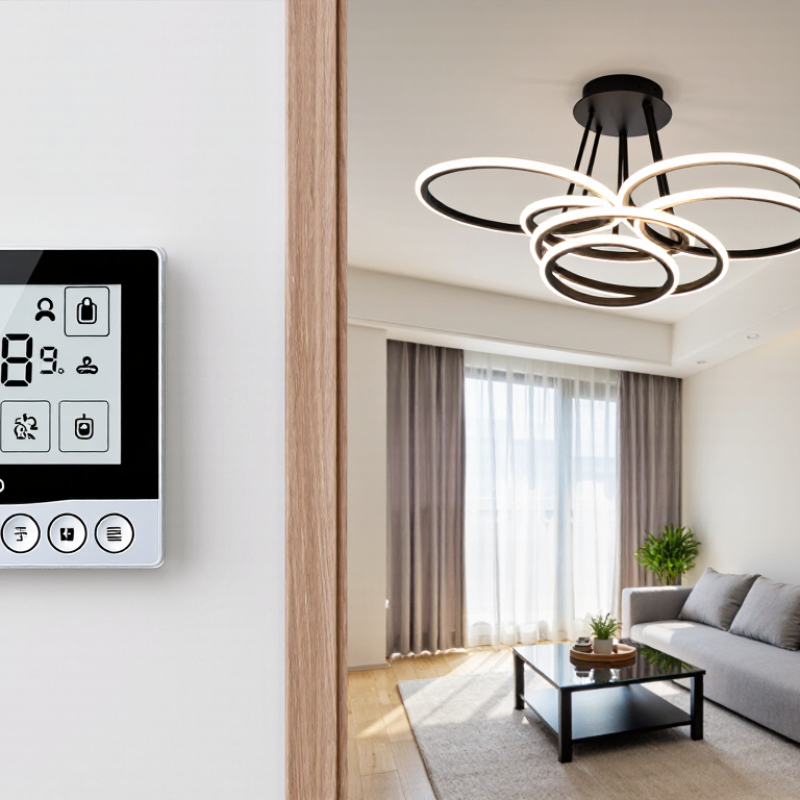
    China Best Timer Switch for Lights How to Choose?

    Identify Timer-Switch Types: Mechanical, Digital, Astronomical, and Smart

    Mechanical, digital, astronomical, and smart switches solve different timing problems. A mechanical timer uses a rotating dial and small pins; it suits a lamp that follows the same daily schedule. Digital models allow weekday-specific settings and often keep time through brief outages with backup batteries. Check the actual backup specification, though. Not every model includes one.

    Astronomical timers use your location to adjust switching times around sunrise and sunset. They are useful for outdoor lights that should track changing daylight without monthly resets. Smart switches add app control, remote changes, and sometimes sensor-based automation. That convenience depends on a stable connection, and setup can be fiddly. Small detail: confirm voltage, load rating, and LED compatibility before buying.

    The U.S. Department of Energy’s Energy Saver guidance reports that LED bulbs use at least 75% less energy than incandescent bulbs. A timer cannot guarantee that saving; it helps only when lights would otherwise stay on unnecessarily. The IEA’s Energy Efficiency 2023 report estimates buildings use about 30% of global final energy, making practical controls worth considering alongside efficient bulbs. For a hallway light, a simple digital schedule may be enough. For a garden lamp, seasonal adjustment matters more. I would still check the timer’s minimum switching interval: a schedule that looks precise on paper may not fit how people actually use a room.

    Match Load Ratings: Compare 10 A or 16 A at 250 V AC with LED Inrush

    A timer switch rated 10 A or 16 A at 250 V AC may look suitable for a lighting circuit, but the printed rating alone is not enough. Check whether it applies to resistive loads or specifically covers LED lighting. LED drivers can draw a brief inrush current when switched on, even when their steady operating current is low. That first pulse matters.

    For example, several ceiling fixtures may each use only a few watts, yet their driver capacitors can create a sharp combined surge. Compare the switch’s stated LED load limit, maximum inrush current, and switching endurance with the actual lamps or fixtures. A 16 A rating does not automatically mean better LED compatibility. Ratings describe different conditions. Read the datasheet carefully.

    Also consider how often the timer will operate. A hallway light that switches several times each day may wear contacts faster than a porch light used once nightly. Keep the lamp count and model details handy when checking specifications. It is easy to overlook inrush. I would not guess from wattage alone; if the product documentation is unclear, ask a qualified electrician to verify the match and installation.

    Compare Scheduling Data: 24-Hour, 7-Day, and Dusk-to-Dawn Functions

    For a light timer switch, compare the schedule it can actually keep with your daily routine. A 24-hour model repeats the same on-and-off times every day. It suits a porch lamp that should turn on at 6 p.m. and off at 11 p.m. year-round, but seasonal sunset changes may make that schedule less useful.

    A 7-day timer lets you set different hours for weekdays and weekends. That can help when a hallway light is needed earlier on workdays, while a weekend schedule runs later. Check how many on/off periods it supports each day; some routines need more than one cycle. Dusk-to-dawn models use a light sensor instead of fixed clock times. They adapt as daylight shifts, though nearby lamps, deep shade, or a covered sensor can affect readings. Placement matters. Test it after installation.

    Tips: Write down your desired times for a typical week before buying. Confirm the switch works with your wiring and the light’s load, and check whether it needs a neutral wire. For dusk-to-dawn control, keep the sensor exposed to natural light. A short test period can reveal schedule gaps; settings that look perfect on paper may need adjustment.

    Check Safety Standards: IEC 60669-2-3 and Applicable Chinese GB Requirements

    When choosing a timer switch for lights, check the exact safety standard listed for its design. IEC 60669-2-3 covers time-delay switches for household and similar fixed electrical installations. A label alone is not proof of compliance. Ask for a test report that identifies the model, rated voltage, load type, and applicable standard.

    For use in China, confirm which current GB requirements apply to the product’s construction and intended installation. The relevant standard can depend on whether the switch is mechanical or electronic, and how it is mounted. Check that the documentation matches the product in your hand, not just a similar model. Small details matter. A timer tested with one load type may not suit every LED lamp, especially where inrush current is high.

    Tips: Before buying, compare the switch’s rated load with your lights, inspect terminal markings, and check whether the instructions specify neutral wiring. Request verifiable compliance documents from the seller. If the paperwork is unclear, pause and ask a qualified electrician; I would not guess from the casing or packaging alone.

    China Best Timer Switch for Lights: How to Choose? — Check Safety Standards: IEC 60669-2-3 and Applicable Chinese GB Requirements

    Selection Dimension What to Check Practical Buying Guidance Evidence to Request
    Product type and intended use Confirm that the device is a time-delay switch (TDS) intended for fixed household or similar electrical installations. Choose a fixed-installation timer for permanently wired lighting. A plug-in timer or smart controller may fall under different product standards and certification scopes. Product specification identifying the intended installation method and applicable product category.
    International product standard IEC 60669-2-3 covers particular requirements for time-delay switches, and is used together with the relevant general requirements in IEC 60669-1. Check that the test report or declaration identifies the exact standard edition and the switch model or model family covered. A reference to the standard alone does not prove that a product was tested. Test report from a competent laboratory, with product identification, standard edition, test results, and any limitations.
    Applicable Chinese GB requirements For a time-delay switch within its scope, check GB/T 16915.4 (Part 2-3: Particular requirements for time-delay switches) together with the applicable general requirements of the GB/T 16915 series. Confirm the current edition, effective status, and applicable national adoption for the product and intended market using official Chinese standards information or the relevant certification scheme. Chinese-language test documentation or conformity documents citing the applicable GB/T standard numbers and editions.
    CCC scope in China Whether CCC certification is required depends on the product’s construction, ratings, intended use, and the current mandatory product catalogue and implementation rules. Do not assume every timer switch is either covered or exempt. Verify the exact product category and scope before import, sale, or installation in China. Where applicable, a valid CCC certificate and matching certification information for the product; otherwise, a documented scope assessment.
    Rated voltage and frequency Read the marked rated voltage and frequency and compare them with the installation supply. Many mainland China lighting installations use nominal 220 V, 50 Hz supply. Check the product’s stated operating range and installation instructions rather than relying on a general description such as “universal voltage.” Rating label, datasheet, and instructions showing voltage, frequency, and connection details.
    Load type and switching capacity Check the permitted load type and rated switching capacity. LED drivers, fluorescent lighting, and other electronic loads can have different switching and inrush characteristics from resistive loads. Use the manufacturer’s stated limits for the specific load type. Do not treat a resistive-load rating as an equivalent LED or driver rating unless the documentation expressly supports it. Load table or technical specification covering the intended lamps or drivers, including any load restrictions.
    Timing function and operation Confirm the delay or timing range, how the timer is activated and reset, and its behavior after a power interruption. Match the operating sequence to the application, such as corridor lighting or a timed light circuit. Check whether settings are retained or reset as specified in the instructions. Operating instructions and functional test results for the stated timing modes.
    Installation and wiring Check terminal identification, conductor requirements, mounting method, enclosure suitability, and any neutral-wire requirement. Confirm compatibility with the existing wiring and installation location. Installation should follow the product instructions and local electrical rules. Wiring diagram, installation manual, terminal details, and applicable environmental or enclosure ratings.
    Safety and traceability Check required markings, manufacturer or responsible-party information, model identification, ratings, and warnings appropriate to the market. Ensure the supplied product, packaging, instructions, and test documents refer to the same model and configuration. A logo or claim by itself is not proof of conformity. Clear product markings, traceable documentation, and reports that can be verified with the issuing organization.

    Note: Standards and certification obligations depend on the product design, ratings, intended use, and the editions in force. Verify the current requirements for the exact model before purchase or sale; this table is a selection aid, not a substitute for a conformity assessment or qualified electrical advice.

    Evaluate China Suppliers: Test Reports, Warranty Terms, and Installation Support

    China Best Timer Switch for Lights: How to Choose?

    When evaluating Chinese suppliers, ask for test reports tied to the exact model, not a similar product family. Check the report’s date, sample identification, test conditions, and issuing laboratory. Confirm that ratings cover your intended load, such as LED lighting, and request switching-cycle and temperature results. IEA’s Energy Efficiency 2023 report estimated global energy-intensity improvement at 1.3% in 2023, below the roughly 2% average annual pace of the previous decade. That is useful context, not proof that a timer switch will deliver specific savings.

    Check the warranty in writing. It should state the coverage period, exclusions, replacement process, and who pays shipping for failed units. Ask how the supplier handles faults found after installation. A polished PDF is not enough; reports should be verifiable with the issuing laboratory, and production units should match the tested sample. Small detail. Keep a dated copy.

    Installation support matters too. Request a wiring diagram, terminal labels, load limits, and guidance for setting schedules after a power cut. Ask whether support staff can answer technical questions in clear English and provide a response-time expectation. I would still be cautious: good documents cannot guarantee every batch is identical. For a first order, test samples with the actual lamps and enclosure before buying at scale.