How to Choose an Automated Parking Machine?

    Choosing an Automated Parking Machine is not simply a matter of comparing prices or counting parking spaces. The right system must match the building, traffic pattern, vehicle types, climate, and daily operating demands. A compact residential site may need a simple puzzle system, while a busy hotel may require faster robotic handling and clearer user guidance.

    Parking expert Donald Shoup wrote, “Parking is the largest single land use in most American cities.” His observation explains why machine selection deserves careful planning. Every square meter matters. A poorly selected system can create queues, difficult maintenance, or uncomfortable vehicle retrieval. These problems often appear after installation, when changes become expensive.

    Look closely at measurable details. How many cars must arrive during the busiest fifteen minutes? How long should retrieval take? Can the platform support heavier electric vehicles? Are sensors, emergency controls, drainage, ventilation, and backup power properly designed? Ask the supplier for tested performance data, maintenance records, warranty terms, and references from comparable projects. A live demonstration can reveal noise, screen clarity, and operator response better than a brochure.

    Safety remains central. Choose equipment with reliable detection, controlled movement, physical barriers, and clear user instructions. Local building and accessibility requirements also deserve professional review. No checklist is perfect. Even experienced teams can underestimate peak demand or user confusion. That is why a careful site assessment, realistic simulation, and independent technical inspection should guide the final decision. The best Automated Parking Machine is not always the most advanced one. It is the system that performs safely, consistently, and sensibly in its actual environment.
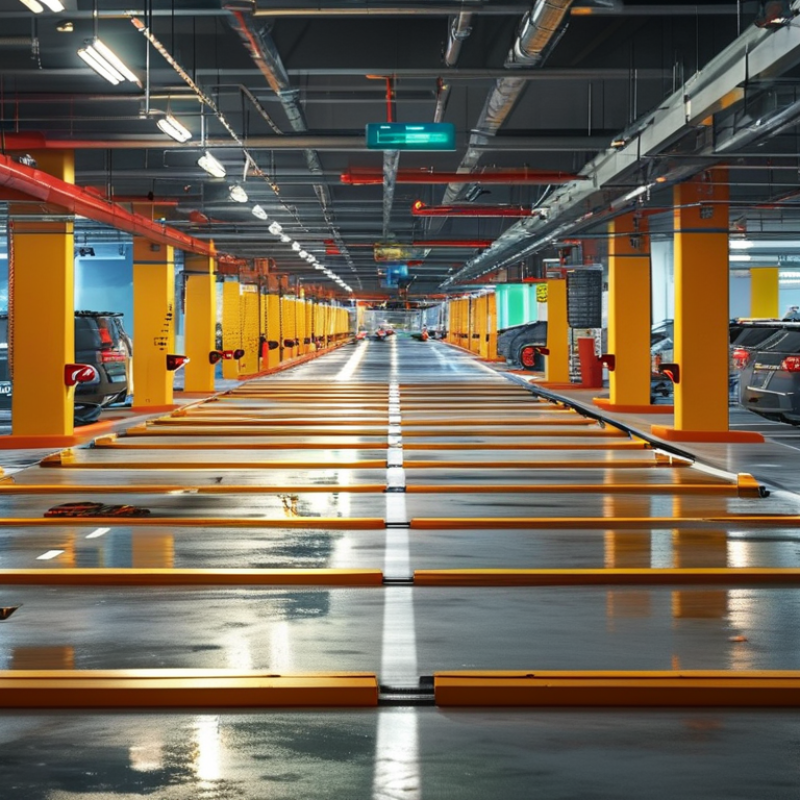
    How to Choose an Automated Parking Machine?

    Define Your Parking Capacity and Site Requirements

    How to Choose an Automated Parking Machine?

    Define Your Parking Capacity and Site Requirements

    Choosing an automated parking machine starts with a clear capacity target. Count the vehicles needed during normal and peak periods. Peak demand matters. A building with 80 daily users may need fewer spaces than a busy hotel with short-term arrivals. Record vehicle types, arrival patterns, parking duration, and expected growth. These details prevent an attractive but undersized design.

    Measure the site carefully before requesting equipment proposals. Document the entrance width, ceiling height, column positions, slope, drainage, and available floor depth. Check turning paths for larger vehicles, including SUVs and accessible vehicles. Leave space for queuing at the entrance. A machine may hold 40 cars, but the site could support only 28 usable spaces after circulation and safety clearances. Measure twice.

    Site conditions also affect system selection. Underground areas may require stronger ventilation and moisture protection. Older buildings can have limited floor loading capacity or uneven slabs. A structural engineer should verify these conditions. Local authorities may also require specific fire access, emergency exits, accessibility features, and electrical standards. Confirm them early.

    Do not rely only on the maximum capacity shown in a brochure. Ask for the effective capacity during busy hours, retrieval times, maintenance access, and recovery procedures after a power interruption. Early estimates are often optimistic. A qualified installer should provide drawings, load data, operating assumptions, and a realistic traffic simulation. That evidence makes comparison more reliable and exposes hidden limitations before construction begins.

    Compare Automated Parking System Types and Operating Methods

    Choosing an automated parking machine starts with the site, not the brochure. A narrow urban lot may suit a tower system, which lifts vehicles vertically and uses compact floor space. Drivers leave the car in an entry bay. Sensors check dimensions, wheel position, and clearance. The system then stores the vehicle on an assigned platform. Tower systems offer fast retrieval when traffic is predictable, but peak-hour queues can grow.

    Puzzle systems move platforms horizontally and vertically, creating a dense grid. They work well in irregular basements or small plots. Their operating method is simple: empty spaces shift toward the access point. Retrieval may require several platforms to move first. That delay is easy to underestimate. Shuttle-based systems use lifts, rails, and robotic carriers. They can handle larger facilities and multiple entry points, but demand stronger maintenance planning. A failed sensor, blocked rail, or software fault can interrupt several parking positions.

    Compare systems through real operating data, not capacity claims. Ask for retrieval times during morning arrivals, evening departures, and power interruptions. Review emergency release procedures, manual recovery, drainage, ventilation, and service access. Check whether local technicians can inspect brakes, sensors, doors, and lifting chains. I have found that fewer spaces can sometimes perform better when controls are clear. Staff training matters. So does driver behavior. A hurried driver can stop the process. Trial runs with different vehicle sizes reveal weaknesses that drawings hide. No choice is perfect. Leave room for maintenance and human error.

    Evaluate Safety Features, Access Speed, and User Experience

    Choosing an automated parking machine should begin with safety, not a glossy interface. NHTSA’s 2022 Traffic Safety Facts recorded 7,522 pedestrian deaths in the United States. That figure reinforces the need for reliable detection around entry lanes, platforms, and vehicle doors. Look for presence sensors, emergency stops, anti-crush protection, load monitoring, and clear audible warnings. Safety systems should also fail safely during power loss. Ask for maintenance records and documented inspection procedures. Marketing claims are not evidence.

    Access speed shapes the entire user experience. A machine that parks quickly but creates confusing queues still performs poorly. Test the complete cycle, including payment, identity verification, retrieval, and error recovery. Measure performance during peak arrival periods, not only in demonstrations. A practical field target is a predictable retrieval process within three minutes, although site size and traffic design can change that result. The 2023 International Parking & Mobility Institute technology research highlights operational efficiency and user convenience as major priorities for modern parking facilities. Small delays matter. PwC’s Global Consumer Insights research found that 32% of consumers may stop using a business after one poor experience. Use readable instructions, visible status updates, accessible controls, and multiple payment options. Staff support remains important when technology fails. I would not trust a system that hides its limitations; real-world testing often reveals awkward steps that specifications miss.

    How to Choose an Automated Parking Machine? - Evaluate Safety Features, Access Speed, and User Experience

    Evaluation Dimension Puzzle-Type System Rotary-Type System Tower-Type System Shuttle-Type System Why It Matters
    Typical parking capacity 6–100 vehicles 6–20 vehicles 8–60 vehicles 50–1,000+ vehicles Capacity should match land availability, demand peaks, and future expansion plans.
    Space efficiency High; uses vertical and horizontal stacking High; compact footprint Very high; primarily vertical use of space Very high for large sites, but requires equipment lanes Compare total floor area, circulation space, ramps, and required clearances—not only the equipment footprint.
    Typical vehicle retrieval time 90–180 seconds 60–120 seconds 90–180 seconds 90–240 seconds Actual time depends on vehicle location, queue length, travel height, system configuration, and loading accuracy.
    Peak throughput Approximately 15–30 vehicles/hour per access point Approximately 20–40 vehicles/hour per unit Approximately 15–35 vehicles/hour per access point Approximately 30–120 vehicles/hour, depending on layout Use measured peak-hour demand rather than average daily traffic when sizing the system.
    Vehicle positioning control Photoelectric sensors, wheel stops, and positioning sensors Entry sensors, platform alignment controls, and limit switches Laser or photoelectric detection, platform sensors, and height checks Barcode, RFID, camera, or platform-position feedback systems Reliable positioning reduces collision risk, failed cycles, and retrieval delays.
    Core safety features Interlocked doors, emergency stops, overload protection, and obstruction detection Safety gates, anti-fall devices, emergency stops, and motion interlocks Access interlocks, anti-fall protection, overspeed monitoring, and emergency stops Zone monitoring, collision avoidance, emergency stops, and controlled access Request documented safety functions, inspection records, and local regulatory compliance.
    Pedestrian protection Pedestrian exclusion from the transfer area during operation Controlled entry zone with door and platform interlocks Restricted access to lift and storage areas Segregated pedestrian areas and monitored vehicle transfer zones A safe design prevents people from entering moving-equipment areas during automatic cycles.
    Maximum vehicle size control Usually controlled by width, height, length, and weight sensors Usually controlled by platform dimensions and entry sensors Strict height, width, length, and weight limits Defined vehicle envelope verified at entry and during transfer Confirm compatibility with SUVs, electric vehicles, roof racks, mirrors, and wheel dimensions.
    User interaction Ticket, card, keypad, QR code, or mobile interface Simple entry controls and ticket or digital identification Touchscreen, ticket, QR code, card, or mobile interface Advanced digital identification and guided kiosks are commonly used The interface should be intuitive, multilingual where needed, and usable by first-time visitors.
    Accessibility considerations Requires accessible kiosk height, clear instructions, and level transfer area Requires accessible controls and adequate boarding space Requires accessible payment, communication, and waiting areas Requires accessible pedestrian routes and clearly separated loading zones Check local accessibility requirements for reach range, signage, communication, and circulation.
    Power outage response Manual recovery procedure or backup power for controlled evacuation Manual release or backup power, depending on configuration Emergency lowering or controlled recovery procedure System recovery controls and manual operating procedures Ask how vehicles are recovered safely and how long restoration normally takes.
    Maintenance access Moderate; multiple moving platforms require scheduled inspection Moderate; rotating mechanisms and bearings require inspection Moderate to high; lift, drive, and guide components require planned service High system complexity; software, vehicles, sensors, and conveyors require coordination Review preventive-maintenance intervals, spare parts, service response, and technician access.
    Best-fit application Urban buildings with irregular layouts and moderate demand Small sites requiring compact, simple automated parking Land-constrained sites with strong vertical clearance Large facilities, high demand, and projects requiring scalable throughput Select the system according to site geometry, traffic profile, staffing, and operating hours.
    Overall selection priority Safety: High
    Access speed: Medium
    User experience: High
    Safety: High
    Access speed: High
    User experience: Medium
    Safety: Very high
    Access speed: Medium
    User experience: High
    Safety: Very high
    Access speed: High
    User experience: High
    Prioritize safe operation first, then verify throughput and ease of use through site-specific testing.
    Data note: The figures are indicative ranges based on commonly used automated parking configurations. Actual performance varies with vehicle dimensions, site layout, access-point quantity, queue length, control software, local codes, and maintenance conditions. Request a documented traffic simulation and a full safety compliance review before purchase.

    Assess Installation Costs, Maintenance Needs, and Energy Use

    How to Choose an Automated Parking Machine

    Choosing an automated parking machine requires more than comparing purchase prices. Installation costs often decide whether the project remains financially practical. Measure ceiling height, access lanes, floor strength, drainage, and available power before requesting quotes. A basement may need structural reinforcement, ventilation changes, or fire-safety modifications. These hidden tasks can exceed the equipment cost. I once underestimated cable routing in a tight garage. That estimate was wrong.

    Ask for a detailed installation schedule and a line-by-line cost breakdown. Include permits, lifting equipment, commissioning, staff training, and software setup. Experienced installers should explain the installation sequence and testing process. Request documented load ratings and emergency procedures. These details support safer decisions and make supplier claims easier to verify. Low upfront pricing can conceal expensive site preparation. Read the exclusions carefully.

    Maintenance needs affect availability and long-term energy use. Check lubrication intervals, sensor replacement costs, inspection requirements, and remote diagnostic options. A system moving heavy platforms frequently may consume more electricity during peak periods. Ask for standby power, monthly energy estimates, and recovery features during lowering cycles. Track actual consumption after commissioning, because estimates can miss local traffic patterns. I would also budget for spare sensors and technician visits. Still, this may be excessive for a small facility; usage data should decide.

    Verify Compliance, Supplier Reliability, and Future Expandability

    How to Choose an Automated Parking Machine?

    An automated parking machine should fit your site, not only your parking target. Verify compliance before comparing prices. Request documented testing for structural loads, electrical safety, fire protection, accessibility, and emergency release procedures. Requirements vary by location, so have a qualified local engineer review the design. A polished certificate is not enough.

    Supplier reliability appears in small details. Ask for installation records, maintenance response times, spare-parts availability, and technician training. Visit an operating site if possible. Listen for unusual motor noise. Check whether vehicles move smoothly during peak periods. Speak with the facility manager, not only the sales team. A low purchase price may hide expensive downtime.

    Plan beyond today’s vehicle count. Confirm whether the system can accept additional parking spaces, charging equipment, new software, or altered traffic patterns. Ask about open interfaces and data ownership. Review the foundation, power supply, drainage, and ceiling height before expansion becomes difficult. Leave service access around moving equipment. It matters.

    I once underestimated future delivery traffic during a site review. The machine worked, but circulation became awkward. That mistake changed my checklist. Forecast seasonal demand, larger vehicle sizes, and maintenance access. No plan is perfect. A supplier willing to discuss weak points is usually more dependable than one promising effortless operation.