How to Choose a Heavy Steel Casting Manufacturer
Choosing a Heavy Steel Casting Manufacturer is a technical decision, not merely a purchasing exercise. The wrong partner may produce a visually acceptable casting with hidden porosity, weak sections, or unstable dimensions. Those defects can appear later, under load, heat, or vibration.
The World Steel Association reported approximately 1.88 billion tonnes of crude steel production in 2023. This figure shows the scale of the steel industry, but it does not prove manufacturing capability. A serious evaluation must examine melting equipment, furnace control, simulation software, heat treatment, testing laboratories, and traceability systems. MarketsandMarkets identifies quality requirements, infrastructure investment, and industrial demand as major factors shaping the steel casting market. However, market forecasts vary between research firms. That uncertainty deserves attention.
John Campbell, a respected casting researcher and author of Castings, stated, “The most important thing in casting is to avoid turbulence.” His observation remains practical on a factory floor. Ask potential suppliers how they control filling speed, slag inclusion, shrinkage, and internal quality. Request inspection records, not attractive photographs. Review ultrasonic testing procedures, dimensional reports, chemical certificates, and corrective-action histories. A supplier that cannot explain one failed casting honestly may create larger problems later. Experience matters.
The best Heavy Steel Casting Manufacturer should match your alloy, casting weight, tolerances, annual volume, and service conditions. Visit the foundry if possible. Watch the furnace charge, mold preparation, and final inspection. Cost still matters, but the cheapest quotation can become expensive through rework, delayed installation, and field failure. Choose evidence over confident promises. There is no perfect supplier; there is only a better-tested decision.
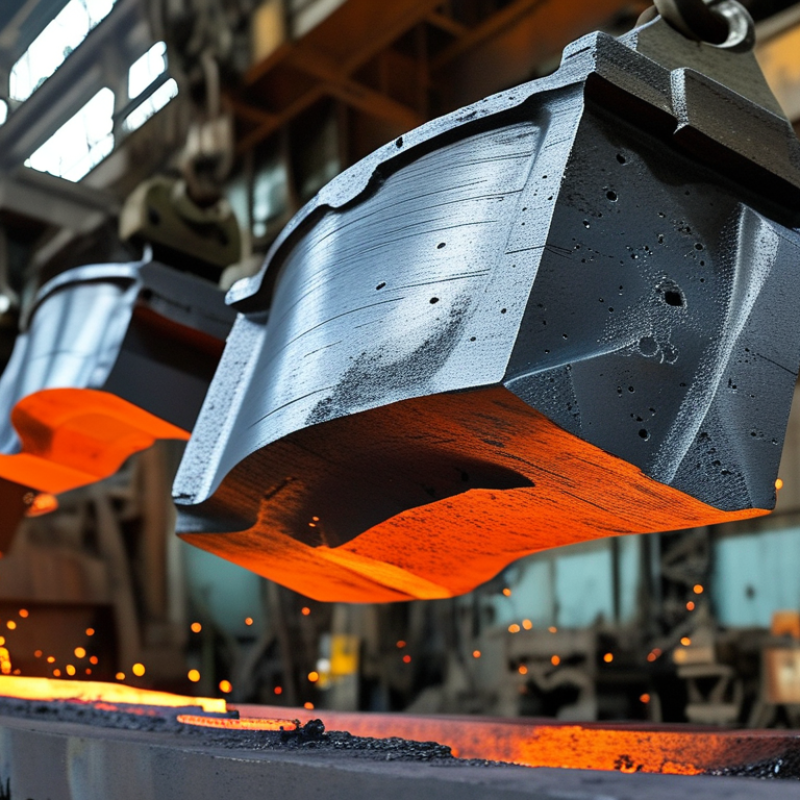
Define the Project’s Steel Casting Requirements
Before comparing heavy steel casting manufacturers, define the casting’s real working conditions. Record the maximum load, impact frequency, operating temperature, corrosion exposure, and expected service life. A 20-ton housing for a mining machine needs different steel than a low-temperature pressure vessel. Weight alone is not enough.
Translate these conditions into measurable requirements. Specify the alloy grade, chemical limits, mechanical properties, casting dimensions, machining allowance, and acceptable defect levels. Include ultrasonic, magnetic-particle, radiographic, or visual inspection requirements where applicable. The World Steel Association reported 1,892.1 million tonnes of crude steel production in 2023. This scale shows how broad the supply market is, but it does not guarantee casting quality. Your specification must narrow the field.
Ask for a traceable process plan. It should identify melting records, heat-treatment cycles, mold design, sampling locations, and non-destructive testing procedures. Request sample inspection reports, not only certificates. A clean certificate can still hide weak sampling. I would also define delivery quantity and tolerance early, because prototype work and repeat production require different controls. ISO 6892-1 tensile testing may support mechanical verification, while project standards should define acceptance criteria. Recheck every requirement with the design and maintenance teams. One overlooked temperature cycle can change the entire material decision.
Assess the Manufacturer’s Technical Capabilities
Assessing a heavy steel casting manufacturer starts with verifiable technical evidence, not impressive machinery photographs. Ask about furnace capacity, maximum pouring weight, alloy range, and dimensional limits. A 30-ton casting needs different controls from a small valve body. The World Foundry Organization’s 2023 World Casting Census reported 183.8 million tonnes of castings produced globally in 2022. That scale shows competition, but it does not prove individual capability.
Review the manufacturer’s engineering workflow closely. Can its team perform solidification simulation, riser design, and mold filling analysis before production? Request sample reports showing chemical analysis, tensile testing, hardness results, and heat-treatment curves. For critical sections, verify ultrasonic, magnetic-particle, or radiographic inspection procedures. Equipment calibration dates should be visible. Traceability should connect each test result to a heat number, operator, and production record.
Look beyond certificates. The ISO Survey 2022 recorded more than 1.2 million ISO 9001 certificates worldwide, yet certification alone cannot confirm heavy-casting expertise. Visit the plant if possible. Watch how operators handle ladle preheating, temperature measurement, and surface repair. Ask to inspect a rejected casting and its corrective-action record. That answer may reveal more than a polished presentation. I would not rely only on claimed annual capacity; some figures include subcontracted work. A supplier should explain its real in-house limits, even when the answer is uncomfortable. Candor matters.
Verify Quality Systems, Certifications, and Testing
Choosing a heavy steel casting manufacturer requires more than comparing prices. Quality systems reveal how consistently a shop controls risk. Ask for its current quality certification, scope, issuing body, and expiration date. Verify the certificate directly with the certification body. A scanned document is not enough.
During a factory visit, inspect material identification tags, heat numbers, and traveler records. These details should follow each casting from melting through machining. Review procedures for pattern control, furnace calibration, welding repairs, and nonconforming products. I have found that small gaps in recordkeeping often signal larger process weaknesses. The workshop may look impressive. The paperwork tells more.
Testing capability must match the casting’s service demands. Request sample inspection reports for chemical analysis, tensile tests, impact tests, and dimensional checks. Confirm whether ultrasonic, magnetic particle, or radiographic testing is performed by qualified personnel. Ask how inspectors manage indications and retesting. Independent laboratory results can strengthen confidence, especially for critical components. Still, no system is flawless. Even experienced teams miss details, and suppliers should explain past failures honestly. A defensive answer deserves closer examination. Reliable manufacturers welcome traceability, witnessed inspections, and practical questions before production begins.
Compare Production Capacity, Costs, and Delivery Terms
Choosing a heavy steel casting manufacturer requires more than comparing hourly rates. Compare production capacity, costs, and delivery terms using verifiable records. Ask for monthly melt capacity, furnace sizes, maximum casting weights, and current utilization. Request examples of similar castings, including dimensions, steel grades, and inspection results. A factory tour can reveal practical details, such as crane access, mold storage, and finishing space. These details often expose limits that brochures omit.
Cost comparison needs more than the price per ton. A reliable quotation should separate tooling, pattern work, melting, heat treatment, nondestructive testing, machining, packaging, and freight. Confirm the steel specification and expected casting yield. Ask how scrap, repairs, and design changes are charged. The lowest quote may hide testing fees or exclude final machining. That happens. Keep a contingency budget for rework, especially with complex shapes. Payment milestones, quotation validity, currency, and tax responsibility should be written clearly.
Delivery terms should define every production milestone. Confirm drawing approval, pattern completion, first pour, inspection, machining, and dispatch dates. Ask for a realistic lead time based on current workload, not an ideal schedule. Weekly progress reports and photo evidence can improve visibility. Clarify who books transport, prepares export documents, and carries damage risk. A firm promise without capacity evidence is weak. Even experienced manufacturers can face furnace maintenance, rejected test results, or delayed materials, so include a reasonable buffer and written remedies for missed dates.
Evaluate Communication, Support, and Long-Term Reliability
Choosing a heavy steel casting manufacturer requires more than comparing prices. Communication often reveals operational maturity. Ask how quickly engineers answer drawing questions, confirm tolerances, and report defects. Request a sample communication log, not polished promises. World Steel Association data lists 1,892.6 million tonnes of crude steel production in 2023, showing the scale and complexity of this supply chain. A vague reply can become a costly delay when production schedules tighten.
Support should remain visible after the purchase order. Request a named technical contact, inspection checkpoints, and written corrective-action reports. Ask whether the supplier can share heat numbers, dimensional records, and nonconformance evidence. The ISO Survey 2022 recorded 1,265,216 ISO 9001 certificates worldwide, but certification alone proves little about daily support. Visit the facility if possible. Watch how workers handle drawings, gauges, and rejected castings.
Long-term reliability depends on honest capacity discussions. Ask about furnace availability, pattern storage, maintenance planning, and backup processes. A supplier should explain what happens during equipment failure or material shortages. Test this before signing. Send one difficult specification and measure the response. That test can mislead. A strong engineer may still work inside a weak management system. Review delivery records, repeat-order performance, and unresolved complaints over twelve months. Keep communication evidence in your supplier file. Procurement teams often overlook this simple discipline. Forecast changes, holiday closures, and approval delays should be discussed openly, with responsibilities recorded in writing.
How to Choose a Heavy Steel Casting Manufacturer - Evaluate Communication, Support, and Long-Term Reliability
| Evaluation Category | Criterion | Weight | Suggested Benchmark | Evidence to Request | Risk Signal | Score (0-5) |
|---|---|---|---|---|---|---|
| Communication | Initial response and quotation clarity | 5% | Acknowledge technical inquiries within 1 business day and provide a complete quotation with assumptions, exclusions, lead time, and payment terms. | Sample quotation, response-time commitment, and list of commercial and technical contacts. | Unclear scope, repeated unanswered questions, or pricing that changes without documented reasons. | — |
| Technical communication | 5% | Provide structured feedback on casting geometry, wall thickness, risers, gating, machining allowances, and inspection requirements before order confirmation. | Design-for-manufacturing review, marked-up drawings, simulation summary, and technical meeting records. | Accepts drawings without review or identifies manufacturability issues only after production begins. | — | |
| Document and change control | 5% | Use revision-controlled drawings and obtain written approval for changes to material, process, dimensions, inspection method, or delivery schedule. | Document-control procedure, sample change request, revision history, and approval workflow. | Verbal changes, obsolete drawings on the shop floor, or inconsistent revision references. | — | |
| Escalation and reporting | 5% | Name an accountable project owner and define escalation contacts, meeting frequency, progress reporting, and response targets for urgent issues. | Project organization chart, communication matrix, sample progress report, and escalation procedure. | No single accountable contact or delayed notification of quality and schedule problems. | — | |
| Customer Support | Design-for-manufacturing support | 5% | Review casting design before tooling or pattern work and identify opportunities to reduce shrinkage, distortion, defects, and unnecessary machining. | Pre-production design review, casting simulation results, and corrective design recommendations. | Tooling is started before design risks are reviewed or technical recommendations lack measurable justification. | — |
| Quality documentation | 5% | Supply material certificates, heat-treatment records, dimensional reports, NDT results, and final inspection records in an agreed format. | Redacted inspection package, sample certificate, inspection and test plan, and document-submission schedule. | Incomplete records, late documentation, or certificates that cannot be linked to the casting heat or serial number. | — | |
| Nonconformance and corrective action | 5% | Contain a reported nonconformance promptly and provide root-cause analysis and corrective-action response within approximately 5 business days for routine issues. | Sample 8D or CAPA report, nonconformance procedure, containment plan, and closure records. | Repeated defects, temporary fixes without root-cause analysis, or corrective actions that are not verified. | — | |
| Inspection and testing flexibility | 5% | Accommodate agreed dimensional inspection, ultrasonic testing, magnetic-particle testing, radiography, hardness testing, and mechanical testing when specified by the purchase order. | Qualified personnel list, equipment register, procedure samples, calibration records, and subcontractor controls. | Testing capability is unavailable, subcontractors are undisclosed, or calibration status cannot be demonstrated. | — | |
| Logistics and delivery support | 5% | Provide a documented production schedule, packaging plan, shipping milestones, and early warning for any risk to the confirmed delivery date. | Manufacturing schedule, packaging specification, logistics responsibility matrix, and sample shipment update. | Delivery updates begin only after a delay occurs or responsibilities for freight and export documents are unclear. | — | |
| Post-delivery service | 5% | Maintain a defined process for field feedback, replacement parts, warranty review, technical support, and retention of production records. | Warranty terms, service-response targets, retention policy, and examples of post-delivery support. | No written warranty process or inability to retrieve records for previously supplied castings. | — | |
| Long-Term Reliability | Process capability and production controls | 10% | Control steel chemistry, melting, pouring, heat treatment, cleaning, repair welding, machining, and final inspection through documented procedures and process records. | Process flow chart, control plan, furnace records, heat-treatment charts, welding qualifications, and internal audit results. | Reliance on final inspection alone or inability to show records for critical process stages. | — |
| Traceability | 8% | Trace each casting to its material heat, mold or pattern, production batch, heat treatment, inspection results, and approved repair history. | Traceability map, sample traveler, heat-number records, identification method, and document-retention period. | Mixed heats, handwritten records without verification, or missing links between parts and test results. | — | |
| Delivery performance history | 8% | Demonstrate stable delivery performance using at least 12 months of order data, with delays categorized by cause and supported by corrective actions. | On-time-in-full trend, anonymized delivery dashboard, backlog visibility, and recovery plans for late orders. | Only single-order references, no performance trend, or repeated delays attributed entirely to customers. | — | |
| Capacity and continuity planning | 8% | Maintain realistic capacity plans for melting, molding, heat treatment, machining, inspection, and outsourced operations, including contingency arrangements. | Capacity statement, bottleneck analysis, maintenance plan, backup equipment or subcontractor controls, and business-continuity plan. | Capacity is based only on theoretical equipment size or critical operations depend on one unavailable resource. | — | |
| Quality-system maturity | 8% | Operate a documented quality management system with internal audits, management review, calibration control, supplier control, and measurable improvement targets. | Quality manual, audit summary, calibration list, supplier-evaluation procedure, and recent improvement actions. | Expired certificates, unresolved audit findings, or quality procedures that are not implemented on the shop floor. | — | |
| Commercial and relationship stability | 8% | Offer transparent contract terms, stable ownership and management contacts, clear tooling ownership, defined warranty obligations, and a practical plan for long-term supply. | Draft supply agreement, tooling-ownership terms, warranty conditions, payment structure, and continuity references without brand or company disclosure. | Unclear ownership of tooling, one-sided liability terms, pressure for undocumented changes, or unstable commercial conditions. | — |
English
Français