Top High Speed Diaper Packing Machines for Global Buyers
Global demand for baby diapers continues to support investment in faster, cleaner, and more flexible packaging lines. Grand View Research estimated the global baby diapers market at approximately USD 83.7 billion in 2022. Its report also projected continued growth through 2030. Smithers’ nonwovens market analysis highlights hygiene products as a major application for advanced production materials. These figures matter to buyers. More diapers require dependable packaging, not merely impressive machine speed.
A High-speed diaper packing machine can process sealed diaper bundles, insert bags, and prepare cartons for distribution. However, rated speed is only one purchasing factor. Buyers should examine actual output, changeover time, sealing consistency, film waste, and reject rates. PMMI packaging guidance consistently emphasizes automation, equipment integration, operator safety, and data visibility. Those priorities become practical on the factory floor. A stable line should maintain accurate counting while sensors detect missing products, open seals, or misaligned film. Operators also need clear controls, accessible cleaning points, and spare parts support.
This guide compares leading diaper packing machines for global buyers. It considers performance, configuration, maintenance, compliance documentation, and supplier reliability. The best choice depends on product size, bundle format, packaging material, and local service capacity. No machine is perfect. A model achieving high speed in a demonstration may perform differently during long production shifts. That gap deserves attention. Buyers should request factory trials, verified production records, and references from comparable plants. They should also question unclear claims. Reliable decisions come from measurable evidence, practical experience, and total operating cost rather than a single headline specification.
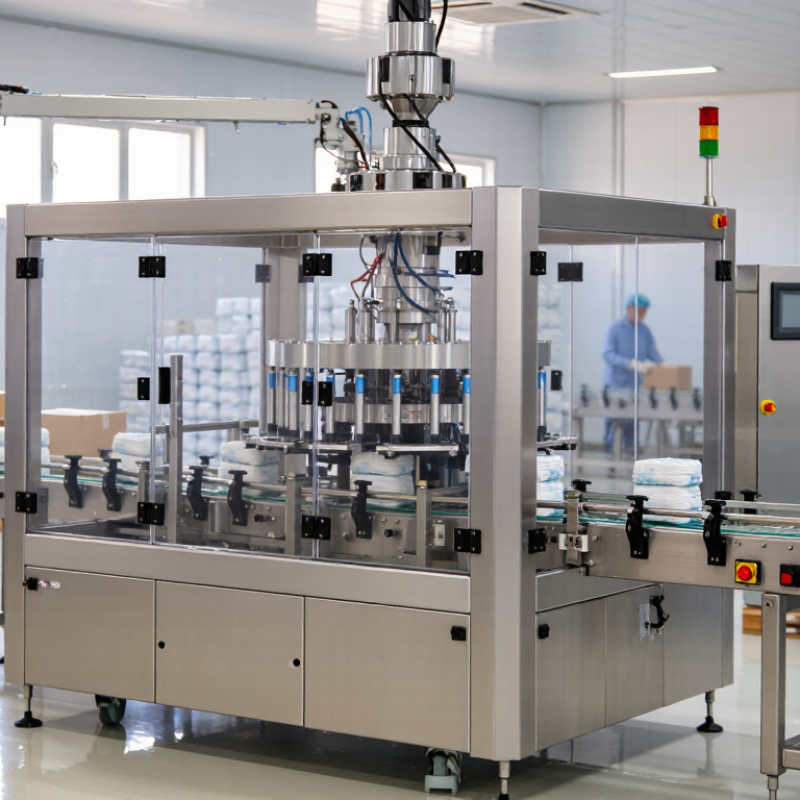
Global Diaper Packing Demand: Over 140 Billion Units Annually
Top High Speed Diaper Packing Machines for Global Buyers
Global diaper demand exceeds 140 billion units annually, according to widely cited industry estimates. That volume changes how buyers evaluate packing equipment. Speed matters, but stable output matters more. A line producing 500 packs per minute can still fail commercially if seals wrinkle or film waste increases. In real factories, operators watch the discharge conveyor, not only the machine display.
High-speed packing machines should combine servo-controlled feeding, accurate counting, and automatic film tracking. These systems help maintain pack consistency across different diaper sizes. Quick changeover is also essential for plants serving several markets. A practical target is a changeover completed within minutes, not hours. Buyers should request recorded test results using comparable products and packaging materials.
Details matter.
Reliable equipment includes guarding, emergency stops, sensor diagnostics, and clear maintenance access. Hygienic design reduces dust accumulation around feeding and sealing areas. Remote support can help, but trained local technicians remain valuable. I have seen impressive speed claims lose meaning when spare parts arrive slowly. That risk deserves honest attention. Energy use, rejected packs, noise, and operator fatigue should be measured during a full production trial. No machine is perfect. A careful buyer leaves room for adjustment, because diaper absorbency, compression, and film behavior vary between suppliers. The best choice is not always the fastest machine. It is the system that delivers repeatable packs, safe operation, and dependable performance at the factory’s actual workload.
High-Speed Machine Types: 400–1,200 Bags per Minute
Top High Speed Diaper Packing Machines for Global Buyers
High-Speed Machine Types: 400–1,200 Bags per Minute
Diaper packing lines usually operate between 400 and 1,200 bags per minute. Continuous-motion systems suit stable, high-volume production. Intermittent-motion machines offer gentler handling and easier size changes. Varying pack counts can reduce real output.
According to Grand View Research, the global baby diapers market was valued at about USD 83 billion in 2023. Its forecast indicates continued growth through 2030. This demand encourages faster packaging, but speed alone is not enough. At 1,200 bags per minute, poor film tracking or weak seals can create expensive waste. Servo drives, automatic film centering, vision inspection, and synchronized bag stacking help maintain reliable performance. The most practical machine depends on diaper thickness, pack size, film material, and required changeover time.
Tips: Ask suppliers for a factory acceptance test using your actual diaper sizes and film. Measure good bags per minute, not only machine speed. Check seal strength, reject rates, noise, and cleaning access. PMMI’s 2024 packaging machinery industry report identifies labor availability and automation as major investment drivers. Still, fully automated lines need trained technicians. That part is often underestimated.
A 1,200-bag target may look impressive. It may also be the wrong target. A 700-bag line with stable uptime can outperform a faster machine with frequent stoppages. Record five production shifts before approving final capacity. Examine every pause. Small delays often reveal the real limitation.
Core Technologies: Servo Drives, Vision Inspection, and Auto-Changeover
Top High Speed Diaper Packing Machines for Global Buyers
Modern diaper packing machines depend on three core technologies: servo drives, vision inspection, and auto-changeover. Servo drives coordinate film feeding, folding, sealing, and cutting with precise timing. This reduces product damage and keeps pack dimensions consistent during high-speed operation. Small timing errors can still appear after long production runs. Regular calibration remains essential.
Vision inspection checks package position, print quality, seal condition, and missing products. Cameras can identify tilted stacks or uneven edges before shipment. Reliable systems should provide clear alarms and stored images for quality review. Auto-changeover allows operators to switch sizes with fewer manual adjustments. Recipe-based settings can shorten downtime, but incorrect data entry may create new faults. Operators still need practical training and careful verification.
Tips: Test servo accuracy during a full shift, not only during startup. Clean camera lenses daily. Confirm each recipe before production. Keep change parts labeled and within easy reach. Record rejected packs and investigate repeated patterns. No system is perfect. A short delay during changeover may protect quality better than rushing the process. Global buyers should compare measurable results, including changeover time, inspection accuracy, energy use, and operator workload. These details reveal whether a machine performs reliably beyond a sales demonstration.
Selection Metrics: OEE Above 85%, Film Waste Below 3%, and Uptime
Top High Speed Diaper Packing Machines for Global Buyers
For high-speed diaper packing machines, OEE above 85% should be a purchasing threshold, not a brochure claim. The OEE Foundation identifies 85% as a world-class benchmark, while many plants operate near 60%. Buyers should request machine-level data from at least 30 production days. Check availability, performance, and quality separately. A fast machine with frequent film jams can still deliver weak OEE.
Film waste below 3% requires precise measurement. Record issued film, sealed packs, setup scrap, trim, and rejected packages by shift. PMMI packaging automation reports repeatedly highlight material efficiency, changeover speed, and unplanned downtime as key investment drivers. A practical acceptance test should run multiple diaper sizes and film structures. Measure waste by kilograms, not visual estimates. Small errors become expensive at high output.
Uptime needs a clear definition. Separate planned cleaning from unplanned stops, then verify alarms through the machine historian. ISO 22400 provides a useful framework for manufacturing performance indicators, including availability and quality-related measures. Ask for spare-parts response times and recovery records. Reality is less tidy. Operators may record a five-minute stop as “minor,” hiding repeated faults. A better trial captures every stop, even the embarrassing ones, and compares shift reports with automatic data.
Top High-Speed Diaper Packing Machines for Global Buyers
Selection benchmarks: OEE above 85%, film waste below 3%, and uptime above 90%.
The chart compares representative high-speed production configurations by nominal packing speed. The strongest candidates maintain OEE above 85%, film waste below 3%, and uptime above 90%. OEE combines availability, performance, and quality; uptime measures scheduled production time without unplanned stoppages.
Global Compliance: CE, ISO 9001, and Electrical Safety Requirements
Top High Speed Diaper Packing Machines for Global Buyers
Global buyers should treat compliance as a design requirement, not a final paperwork task. A high-speed diaper packing machine needs a clear CE marking process, including risk assessment, technical documentation, and an EU Declaration of Conformity when applicable. ISO 9001 supports controlled production, traceability, and corrective actions, but it does not replace machine safety verification. Check the scope and validity of every certificate.
Electrical safety requires close attention. Inspectors may examine grounding, insulation, control cabinets, emergency stops, guards, and cable identification. Voltage and frequency must match the destination site. A machine prepared for 400 V, 50 Hz may require changes for another market. Local rules can also demand specific plugs, protection devices, or inspection records. Ask for wiring diagrams, test reports, manuals, and component specifications before shipment.
Details matter.
During factory acceptance testing, buyers should observe guarding, restart behavior, alarm functions, and emergency-stop response. Keep test results with the machine file. A polished certificate folder is not enough. In practice, documents can be complete while labels remain unclear or manuals lack local language instructions. That weakness deserves attention. Suppliers should provide version-controlled records and realistic training for operators and maintenance teams. Compliance should remain verifiable after installation, not only during a sales presentation.
Top High Speed Diaper Packing Machines for Global Buyers - Global Compliance: CE, ISO 9001, and Electrical Safety Requirements
| Machine Category | Typical Rated Speed | Product Format | Bag Output | Packaging Materials | Electrical Supply | Typical Installed Power | Global Compliance Considerations | Recommended Buyer Checks |
|---|---|---|---|---|---|---|---|---|
| Entry-Level Automatic Bag Packer | Up to 60 bags/min | Small and medium diaper packs; approximately 10–30 diapers per bag | Approximately 600–1,800 diapers/min, depending on pack count | PE film, printed polyethylene film, or laminated flexible film | Three-phase, commonly 380–415 V, 50 Hz; confirm local voltage | Approximately 25–45 kW | CE technical file where applicable; risk assessment to ISO 12100; machinery electrical equipment designed to EN 60204-1; EMC and low-voltage requirements assessed for the destination market | Verify film compatibility, sealing temperature range, guarding, emergency stops, and actual sustained speed during a production trial |
| High-Speed Pillow-Pack Machine | Approximately 80–120 bags/min | Medium and large diaper packs; approximately 20–50 diapers per bag | Approximately 1,600–6,000 diapers/min, depending on pack count | PE, co-extruded PE, laminated film, and pre-printed packaging film | Three-phase, commonly 380–415 V, 50 Hz; 60 Hz versions may require configuration changes | Approximately 45–75 kW | CE marking should be supported by a Declaration of Conformity, safety validation, and applicable standards; ISO 9001 refers to the manufacturer’s quality-management system, not machine safety certification | Request documentation for safety circuits, servo drives, guarding interlocks, noise levels, spare parts, and operator training |
| Servo-Controlled Multi-Size Packer | Approximately 70–110 bags/min | Newborn through toddler diaper sizes; multiple bag dimensions | Approximately 1,400–5,500 diapers/min, depending on format and pack count | PE film, laminated film, recycled-content film where validated, and printed film with registration marks | Three-phase, commonly 380–415 V, 50/60 Hz | Approximately 50–85 kW | Assess CE requirements under the applicable EU machinery framework; consider ISO 13849-1 or IEC 62061 for safety-related control systems and EN 60204-1 for electrical equipment | Confirm recipe changeover time, servo synchronization, barcode or vision options, film tracking accuracy, and validation of safety performance level |
| Handle-Bag Diaper Packing Line | Approximately 50–90 bags/min | Large family packs with integrated or separately applied carrying handles | Approximately 1,500–5,400 diapers/min, depending on pack count | PE or laminated film; handle material may include reinforced plastic film or adhesive handle components | Three-phase, commonly 380–415 V, 50 Hz | Approximately 45–80 kW | Include machinery risk assessment, electrical safety testing, EMC assessment, protective bonding verification, and documentation in the importing country’s language where required | Test handle strength, seal integrity, film tear resistance, ergonomic access, and the effect of handle application on line speed |
| Integrated Counting and Case-Packing System | Approximately 40–80 bags/min | Retail bags automatically grouped into transport cases or cartons | Approximately 800–4,000 diapers/min, depending on bag and case configuration | Flexible plastic film for bags; corrugated board or solid board for cases | Three-phase, commonly 380–415 V, 50 Hz; compressed air may be required | Approximately 60–110 kW for the complete line, excluding upstream diaper production equipment | The complete line may require coordinated CE documentation for interconnected equipment, electrical schematics, safety validation, and conformity assessment of ancillary modules | Check line integration responsibility, case dimensions, compressed-air quality, communication protocols, total footprint, and acceptance-test criteria |
| Export-Oriented Modular Packing Line | Approximately 60–100 bags/min | Configurable pack sizes for different regional retail requirements | Approximately 1,200–5,000 diapers/min, depending on pack size and product mix | PE, laminated flexible packaging, recyclable mono-material film where technically suitable | Configurable for 380–415 V, 50/60 Hz; local electrical code review is required | Approximately 40–90 kW, depending on modules and automation level | For EU shipments, review Machinery Regulation transition requirements, EMC, low-voltage, RoHS where applicable, and harmonized safety standards; request ISO 9001 evidence separately from CE documentation | Confirm destination-country requirements, electrical frequency, language of manuals, declaration scope, import documentation, warranty terms, and remote-service capability |
Note: Performance figures are representative industry specification ranges for automatic diaper packing equipment. Actual speed, power consumption, pack count, dimensions, and compliance obligations vary by machine design, diaper format, packaging film, line configuration, and destination country. Buyers should obtain a project-specific technical file, Declaration of Conformity where applicable, electrical test records, risk assessment, and factory acceptance-test results before purchase.
English
Français