10 Tips for Choosing the Right Ring Main Switch
Choosing the right Ring Main Switch is a practical decision, not a catalogue exercise. A compact unit may look suitable on paper, yet fail under heat, moisture, fault current, or poor maintenance access. The enclosure sits in a real network, often beside a busy road, inside a basement, or within a metal kiosk exposed to dust.
The IEA’s Electricity 2024 report projects global electricity demand will grow by an average of 3.2% annually from 2024 to 2026. It also highlights the urgent need for stronger distribution infrastructure. CIGRE technical publications repeatedly stress dependable switching, clear protection coordination, and disciplined asset management. IEC 62271-200 provides an important reference for medium-voltage metal-enclosed switchgear, including internal-arc classification and service conditions. These documents cannot choose the equipment for you. They create the baseline.
Human factors matter too. Safety expert James Reason wrote, “We cannot change the human condition, but we can change the conditions under which humans work.” That principle belongs in every Ring Main Switch specification. Handle position, interlocks, labeling, cable access, and visible indication can prevent a rushed mistake. Small details matter.
This guide presents ten practical tips for evaluating ratings, insulation, fault withstand, automation, environmental protection, maintenance, lifecycle cost, and supplier competence. It also asks uncomfortable questions. Is a lower purchase price hiding expensive servicing? Is a familiar brand genuinely suitable for this site? I may sound cautious, but medium-voltage equipment rewards careful doubt. A switch that performs quietly for decades is rarely chosen casually.
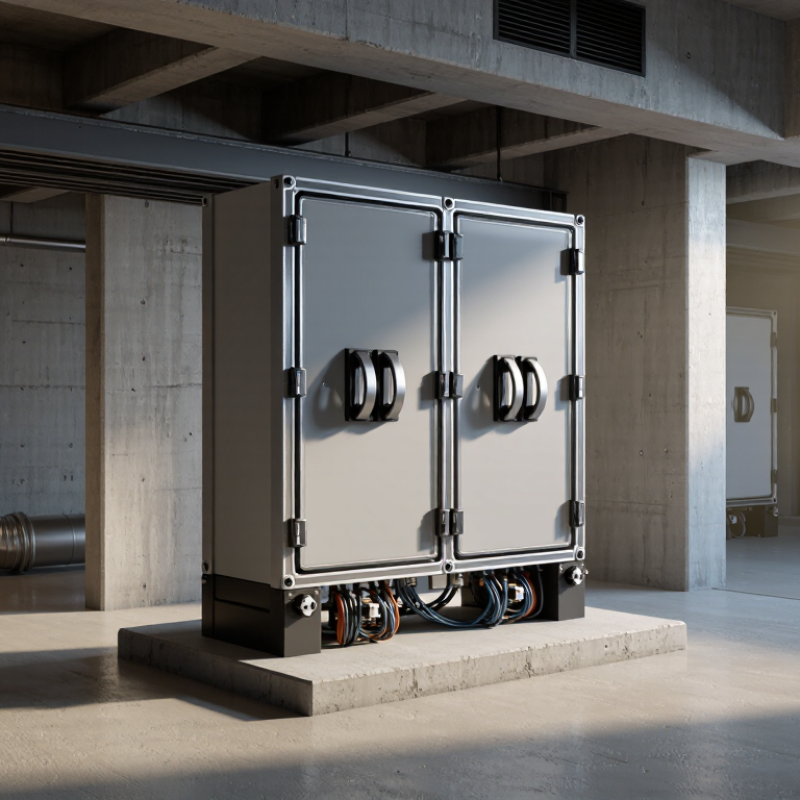
Define the Ring Main Switch and Its Role in Electrical Systems
10 Tips for Choosing the Right Ring Main Switch
Define the Ring Main Switch and Its Role in Electrical Systems
A ring main switch is a medium-voltage switching device used in distribution networks. It connects incoming and outgoing feeder cables in a loop. This arrangement allows power to reach a load from two directions. If one cable section fails, operators can isolate it and restore supply through the other route.
The switch usually includes a load-break mechanism, cable terminations, and an earthing function. Some units also include fuses or circuit-breaker protection for transformers. Its role is not merely to turn power on or off. It helps control fault sections, support maintenance, and reduce unnecessary outages. Clear position indicators matter. A small error can energize the wrong cable.
In field work, technicians check voltage indicators before operating the switch. They also verify cable labels, interlocks, and the earthing sequence. These details are easy to overlook. The term “ring main switch” is not perfectly consistent across regions. Some people use it for a complete ring main unit, while others mean only the switching mechanism. Buyers should confirm the rated voltage, continuous current, short-circuit withstand, insulation level, and installation environment.
A suitable switch must match the network design, not just the cabinet size. Indoor and outdoor conditions create different sealing and corrosion demands. Maintenance access is important too. A compact design may save space, but it can make inspection awkward. That trade-off deserves honest review before selection.
Compare Switch Types, Ratings, and Protection Features
10 Tips for Choosing the Right Ring Main Switch
Compare switch types before comparing prices. A load-break switch suits routine switching, while a circuit breaker handles fault interruption. A switch-fuse combination can control costs, but fuse coordination needs careful verification.
Tip one: identify the load.
Tip two: calculate normal and emergency current.
Tip three: confirm the short-circuit rating.
The IEC 62271-200:2021 standard covers metal-enclosed switchgear above 1 kV and up to 52 kV. Its requirements help engineers compare enclosure, insulation, and internal-arc performance.
Tip four: match the rated voltage to system conditions.
Tip five: check continuous current, not only the nameplate load.
Tip six: compare insulation levels and lightning impulse withstand.
Tip seven: specify earthing-switch making capacity.
Tip eight: review internal-arc classification and access zones.
Tip nine: confirm mechanical and electrical interlocks.
Tip ten: examine protection settings, relay accuracy, and backup coordination.
Short-circuit duty matters most.
The IEA Electricity 2024 report projects global electricity demand will grow by about 4% annually through 2026. Growing demand can expose weak protection margins.
In practice, I inspect cable routes, transformer ratings, and maintenance access together. A technically correct switch may still fail operationally. I would not pretend every site calculation is perfect. Field records are often incomplete. Verify them with measured load data and updated fault studies.
Choose sealed compartments where dust, moisture, or salt pollution is severe. Specify surge protection when exposure and system design justify it.
Reliable selection is less about one impressive rating and more about coordinated protection.
Evaluate Installation Conditions, Safety Standards, and Maintenance Needs
10 Tips for Choosing the Right Ring Main Switch
Tip 1: Inspect the installation site before selecting equipment. Record ambient temperature, humidity, altitude, dust, and available space. Tip 2: Check the system voltage, fault level, load current, and earthing arrangement. A compact switch may not suit heavy fault conditions. Tip 3: Confirm enclosure protection for the location. Outdoor cabinets may need stronger resistance against rain, dust, and accidental impact.
Safety comes first. Tip 4: Verify compliance with applicable electrical standards and local inspection requirements. Ask for test reports, ratings, and clear technical documentation. Tip 5: Examine mechanical and electrical interlocks. They should prevent unsafe switching sequences. Tip 6: Check cable entry space and termination access. Tight bends often create avoidable installation problems. Tip 7: Confirm that operating handles, indicators, and emergency controls remain visible and reachable.
Think beyond commissioning. Tip 8: Review the maintenance schedule, including insulation checks, contact inspection, cleaning, and functional testing. Tip 9: Choose a design with accessible compartments and commonly available service parts. Tip 10: Keep accurate records of inspections, faults, and switching operations. This supports safer decisions later. A neat installation can still hide weak connections. In field reviews, small labeling errors have caused unnecessary delays. I would also question assumptions about “maintenance-free” equipment. Conditions change, and dust eventually finds a way inside. Have a qualified engineer verify the final selection before energization.
 English
  Français