
China Top 10 Remote Control Actuator Manufacturers
Choosing a Remote Control Actuator manufacturer involves more than comparing catalog prices. Buyers need to match actuator performance to the actual equipment, operating environment, and control system. A unit that looks suitable on paper may fall short when exposed to repeated cycles, side loads, moisture, or limited installation space. Small details matter.
This guide introduces ten manufacturers in China and offers a practical starting point for evaluating them. It considers product range, stated force and stroke, speed, duty cycle, control options, customization, and available technical support. Where possible, compare published specifications with test reports, sample performance, and clear answers from the supplier. Ask how force is measured, what conditions apply to rated duty cycles, and whether protection ratings cover the intended installation. Those answers can reveal gaps that a polished brochure may not show.
Look closely at more than the product page. Review factory and quality-control information, communication quality, lead times, spare-part availability, and the supplier’s experience with similar applications. Request drawings and confirm mounting dimensions before ordering samples. Measure twice. A ranking can guide research, but it cannot replace application-specific checks or independent verification. Company capabilities and product details may change, and this overview should not be treated as a certification of every claim. That caveat is useful, if less convenient. The right partner is the one whose documented performance, support, and delivery fit your requirements—not simply the one with the lowest quoted price.
Understanding Remote Control Actuators and Their Core Functions
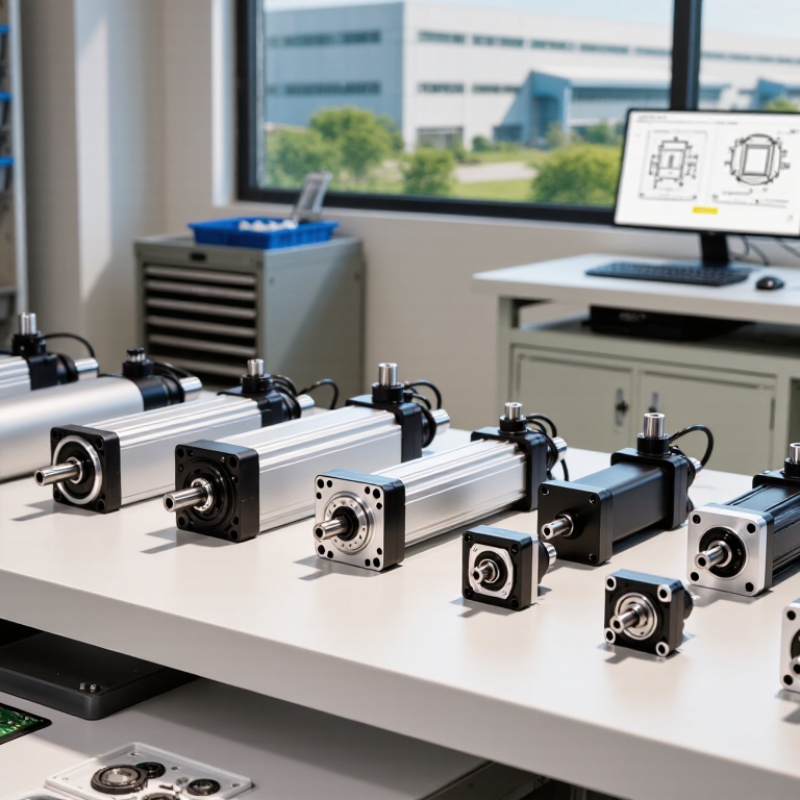
Remote control actuators convert an electrical command into physical movement. A receiver reads the signal, and a motor or linear drive moves a gate, valve, panel, or machine part. The movement may be a straight push or a rotation. Core functions include opening, closing, positioning, and holding a load. In a sliding access panel, for example, the actuator must move the panel smoothly and stop at its travel limits. That visible motion is only part of the job. Control accuracy, load capacity, and response time also matter.
Some systems use limit switches or position sensors to prevent over-travel. Others rely on timed operation, which may be less precise as parts wear. A mismatch between actuator force and load can cause slow movement, excess heat, or early failure. No setup is perfectly quiet or maintenance-free. It is worth checking real operating conditions rather than relying only on a catalog rating.
Tips: Check the load, stroke length, supply voltage, and duty cycle before selection. Test the actuator with the actual mechanism. Listen for unusual noise, and inspect mounting points periodically.
China Top 10 Remote Control Actuator Manufacturers - Understanding Remote Control Actuators and Their Core Functions
Technical overview of ten common actuator types and control approaches. This table describes product categories and functions; it is not a company ranking.
| No. | Actuator Type | Primary Motion | Typical Control Method | Core Function | Common Applications |
|---|---|---|---|---|---|
| 1 | Electric Linear Actuator | Linear extension and retraction | Wired switch, relay, or remote receiver | Converts motor rotation into straight-line movement for positioning, pushing, or pulling. | Adjustable furniture, access panels, vents, and equipment positioning |
| 2 | Electric Rotary Actuator | Angular rotation | On/off or modulating electrical control | Turns a shaft or mechanism through a set angle or continuous rotation, depending on design. | Dampers, rotating platforms, and automated machinery |
| 3 | Quarter-Turn Valve Actuator | Typically a 90-degree turn | Electrical command with open/close or position control | Rotates a compatible valve stem to open, close, or regulate flow. | Ball valves and butterfly valves in fluid systems |
| 4 | Multi-Turn Valve Actuator | Multiple shaft rotations | Electrical control, often with limit and torque protection | Provides the repeated turns needed to operate rising-stem or other multi-turn valves. | Gate valves and globe valves in industrial piping |
| 5 | Electrohydraulic Actuator | Linear or rotary motion | Electrical signals control a hydraulic power unit or valve | Uses hydraulic pressure to produce force or movement; suitable designs can deliver high force in a compact system. | Mobile equipment, industrial machinery, and heavy-duty positioning |
| 6 | Pneumatic Actuator | Linear or rotary motion | Air pressure controlled by an electrically operated valve | Converts compressed-air pressure into mechanical movement. | Factory automation, process valves, and packaging equipment |
| 7 | Servo Actuator | Controlled angular or linear movement | Closed-loop control using a command signal and position feedback | Adjusts movement based on feedback to achieve more precise position or speed control. | Robotics, automation, and precision positioning systems |
| 8 | Stepper-Motor Actuator | Incremental rotary or linear movement | Electronic driver sends timed electrical pulses | Moves in discrete steps; position can be controlled by pulse count, although missed steps may occur without feedback. | Instrument mechanisms, small positioning systems, and automation equipment |
| 9 | DC Gearmotor Actuator | Rotary movement, often reduced in speed by gearing | DC motor driver, relay, or remote-control receiver | Uses a gearbox to trade rotational speed for increased output torque; direction can be changed by reversing motor polarity with suitable control electronics. | Small mechanisms, powered access systems, and light-duty automation |
| 10 | Wireless-Controlled Actuator System | Depends on the connected actuator | Radio-frequency, Bluetooth, Wi-Fi, or another compatible wireless link | Transmits commands to a receiver that operates the actuator; wireless control is an interface and does not itself define the actuator's motion or force. | Remote operation of compatible valves, linear actuators, and equipment |
Key Actuator Types and Manufacturing Technologies
Remote-controlled actuators convert electrical, pneumatic, or hydraulic input into motion. Electric linear actuators extend or retract a rod; rotary units turn valves, dampers, or machine joints. Pneumatic models respond quickly, while hydraulic designs deliver high force in demanding applications. Electric actuators often simplify remote positioning and feedback. The trade-off is real.
Manufacturing choices shape accuracy and service life. Precision-cut gears reduce backlash, while sealed housings help keep dust and moisture away from bearings. Assembly lines may include motor winding, gear alignment, encoder installation, and load testing. Calibration matters. A poorly set limit switch can leave a valve short of its intended position, even when the motor works correctly. Remote-control systems also need checks for signal loss and safe return behavior.
The International Federation of Robotics reported 541,302 industrial robot installations worldwide in 2023 in World Robotics 2024, reflecting strong demand for automated motion systems. The U.S. Department of Energy’s Improving Motor and Drive System Performance sourcebook estimates motor-driven systems use about 69% of U.S. manufacturing electricity. That figure covers more than actuators, but it underscores why motor efficiency, gearing, and control tuning deserve attention. Buyers comparing manufacturers should ask for force, duty-cycle, ingress-protection, and endurance-test data, not just advertised positioning accuracy. One test rarely tells the whole story.
China Top 10 Remote Control Actuator Manufacturers – Key Actuator Types and Manufacturing Technologies
Typical supply-pressure ranges for pneumatic and hydraulic actuator systems. Values are representative industry ranges, not manufacturer-specific ratings; actual requirements vary by application and equipment.
Criteria for Evaluating Chinese Actuator Manufacturers
When comparing remote control actuator manufacturers in China, look beyond advertised force and travel. Ask for rated load, stroke length, speed, duty cycle, and operating voltage under clearly stated conditions. A unit that lifts smoothly on a showroom bench may behave differently after repeated cycles or side loading. Request test records that identify the sample, measurement method, and acceptance limits. Specific evidence matters.
Check how the actuator communicates with its controller. Confirm the supported input method, response time, position feedback, and behavior after signal loss. Ask whether cables, connectors, and control units are tested together, not only separately. For outdoor use, review the stated ingress protection and temperature range, then match them to your actual installation. Small details count. Also assess production consistency: sample inspection, traceable component records, and a clear process for handling failures are useful signs. I would not treat a polished brochure as proof. Nor should the lowest quote decide the shortlist. Compare written specifications, sample results, delivery estimates, and warranty terms side by side. Some suppliers may answer technical questions unevenly; that is worth noting and following up before placing an order.
Profiles of China’s Top 10 Remote Control Actuator Manufacturers
Profiles of China’s top ten remote control actuator manufacturers should compare engineering capability, not just catalogue size. Useful profiles examine actuator type, rated force, stroke length, speed, control interface, and feedback options. They also ask how products perform under dust, moisture, vibration, and repeated cycling. Details matter. For a gate, valve, or adjustable platform, the wrong stroke or load rating can cause poor movement even when the motor runs smoothly.
The International Federation of Robotics reported 276,288 industrial robot installations in China in 2023, representing 51% of global installations that year. This figure comes from World Robotics 2024 and describes industrial robots, not remote control actuators. Still, it offers context for the scale of China’s automation supply chain. Profiles can therefore assess whether each manufacturer supports automation customers with documented test data, stable component sourcing, and practical integration guidance. A clear wiring diagram can be as valuable as a long feature list.
For buyers, compare operating voltage, duty cycle, noise, manual override, and protection ratings across the ten profiles. Check whether quoted performance reflects a real test condition or an ideal laboratory setup. Ask for load curves and cycle-life results where available. Test the whole chain. Wireless control range, interference, and response delay may vary at the installation site. One limitation remains: public information is uneven, so a polished profile does not replace sample testing or technical review.
Industrial Applications and Market Trends in China’s Actuator Sector
China’s remote-control actuator demand is closely tied to factory automation, although public statistics rarely separate actuators from complete machines. The International Federation of Robotics’ World Robotics 2024 report recorded 276,288 industrial robot installations in China during 2023, about 51% of global installations. China’s operating robot stock reached roughly 1.8 million units. These figures are useful demand indicators, not direct actuator sales data.
Applications are concrete. Electric actuators position valves in process plants, adjust machine fixtures, and move gates or conveyor diverters. In automated workshops, compact units must deliver repeatable motion despite dust, vibration, and frequent start-stop cycles.
Remote commands increasingly connect through controllers and sensors, allowing operators to monitor position and detect abnormal movement. Small delays matter.
The trend is toward easier integration, lower maintenance, and feedback that supports condition monitoring. Yet not every site needs networked control; a simple local actuator can be more dependable where connectivity is poor. IFR’s figures describe robot adoption, so they cannot prove actuator-market growth on their own. Buyers should also compare load, travel, duty cycle, and environmental protection against actual operating conditions.
English
Français 