
Top 10 Laser Cleaning Equipment Manufacturers Worldwide?
Choosing a laser cleaning system is less about finding the most impressive headline and more about matching a machine to real work. A workshop removing rust from steel fixtures has different needs from a maintenance team cleaning delicate molds or large structural parts. This guide to the Top 10 Laser Cleaning Equipment Manufacturers Worldwide introduces companies serving these varied applications. It considers product range, technical documentation, customization, support, and the clarity of published specifications.
The details matter. A handheld unit’s weight, cable length, cooling method, and control settings can affect a full shift more than a dramatic power claim. Buyers should also ask about training, spare parts, service response, and sample cleaning tests on their own materials. A brochure is not a performance trial. Rankings can be useful, but they are never universal: local support, budget, and workload may change the best choice. That is where comparisons get messy.
The manufacturers featured here are presented as a starting point, not a guaranteed endorsement. Their product lines and service coverage can change, so confirm current details directly before making a purchase. When comparing Laser Cleaning Equipment, look for evidence that reflects your material, contamination, and production pace. A short demonstration on a real part may reveal more than a long feature list. And sometimes, the right answer is less obvious than expected.
What Laser Cleaning Equipment Is and How the Process Works
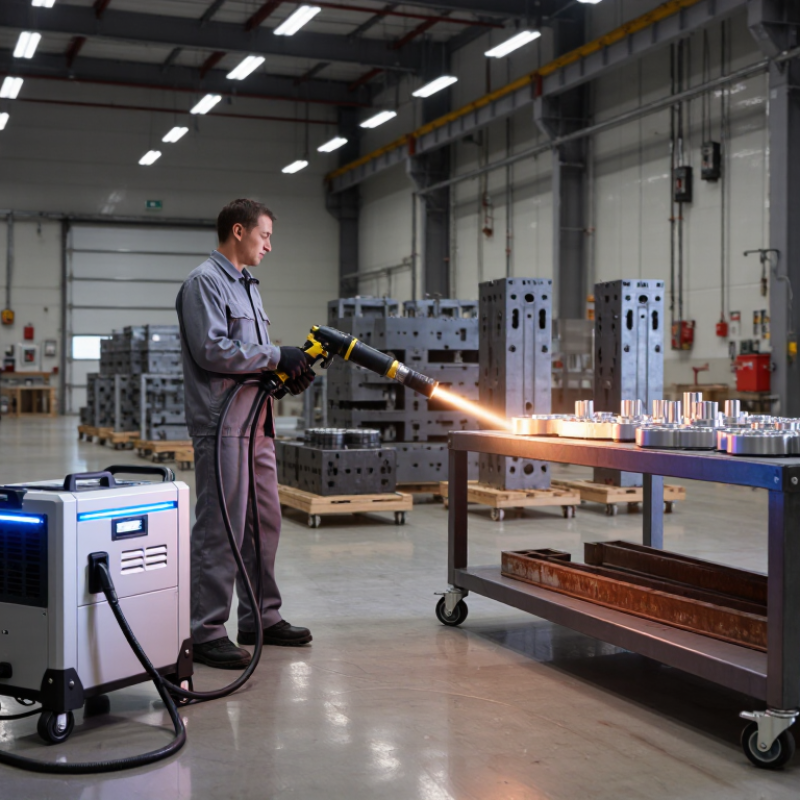
Laser cleaning equipment uses a focused beam to remove rust, paint, oxide, or other surface residue. The process is often called laser ablation. The beam heats a thin layer of unwanted material, which breaks away or vaporizes. The underlying surface can remain intact when operators choose suitable settings. Not magic. Surface tests matter. A pulsed laser delivers short bursts, while a continuous beam supplies energy steadily. The right choice depends on the material, coating, and cleaning speed required.
Tips: Test a small, hidden area first. Check the surface under good lighting. Use suitable eye protection and fume extraction. Keep people outside the controlled work area.
In practice, an operator adjusts power, pulse frequency, and scanning speed. A handheld head may move across a metal part, removing a narrow strip at a time. Too much energy can discolor or damage the base material. Too little may leave residue behind. Results also vary with coating thickness and surface shape. Deep corners can be easy to miss. Careful inspection and a second pass may be needed. Before choosing equipment, compare its working range, controls, and service support with the materials you actually clean.
Criteria for Assessing Manufacturers Around the World
A credible laser-cleaning manufacturer should prove performance on the material and contamination you actually use. Ask for test records showing removal rate, surface condition, and heat effects, not just peak power. A clean steel coupon is useful. It is not enough. The Fraunhofer Institute for Laser Technology describes laser ablation as a controllable process, but results depend on material, coating, and process settings. Compare demonstrations using your own representative parts.
Safety and integration deserve equal weight. IEC 60825-1 addresses laser-product safety, while ISO 11553-1 covers safety requirements for laser-processing machinery. Check enclosure design, interlocks, extraction provisions, and operator training documentation. The International Federation of Robotics’ World Robotics 2024 report recorded 541,302 industrial robot installations in 2023, with 4.28 million operating worldwide. That scale makes automation compatibility a practical purchasing criterion. Ask whether controls, fixtures, and service support fit your production line. A polished demonstration can still hide downtime risks. I would also examine spare-parts lead times and warranty terms; these are easy to overlook, and published specifications rarely tell the whole story.
Profiles of Ten Laser Cleaning Equipment Manufacturers
Profiles of ten laser cleaning equipment manufacturers reveal a market shaped by different workshop needs, not one universal machine. One specializes in portable pulsed units for weld seams; another builds continuous-wave systems for faster, broad-area stripping. A third focuses on robotic cells, while a fourth designs precision tools for delicate components. A fifth targets heavy equipment and thick corrosion. A sixth supplies compact machines for maintenance crews. A seventh develops laser-source modules for equipment makers. An eighth integrates fume extraction and process monitoring. A ninth emphasizes adjustable settings for mixed materials. A tenth offers application trials and operator training. The distinctions matter: a clean-looking test patch does not guarantee consistent results on a full production line.
MarketsandMarkets’ Industrial Laser Market report estimated growth from US$6.6 billion in 2022 to US$9.2 billion by 2027. That figure covers industrial lasers broadly, not cleaning equipment alone. Still, it signals a wider investment in laser-based manufacturing. Buyers comparing these ten profiles should ask for measured cleaning speed, substrate temperature, and surface results—not just peak power. Request a trial on the actual part, including corners and oily areas. Ask how consumables, extraction, and service affect operating costs. These details are easy to miss. I would also treat published performance figures cautiously; test conditions often differ from a real, dusty shop floor.
Representative Laser Wavelengths Used in Cleaning Applications
The chart compares common laser-source wavelengths: ultraviolet (355 nm), green (532 nm), and near-infrared (1064 nm). These are representative technical values, not manufacturer rankings; the appropriate wavelength depends on the material and contamination being removed.
Common Technologies and Applications in Laser Cleaning
Laser cleaning removes rust, paint, oil, and oxide layers by directing controlled light onto a surface. The contaminant absorbs energy and separates from the underlying material through rapid heating or ablation. Done well, the process limits contact and avoids abrasive media. Not always.
Pulsed lasers release energy in short bursts, helping reduce heat transfer to sensitive surfaces when settings are properly matched. Continuous-wave systems deliver a steady beam and can suit faster cleaning of robust parts. The choice depends on the material, contaminant thickness, and desired finish. A setting that removes rust from steel may discolor a thin sheet or damage a coated surface. There is no universal recipe, and that is easy to underestimate.
Common applications include removing corrosion from machine parts, cleaning molds, preparing metal before welding, and stripping coatings during equipment maintenance. In conservation work, operators may use carefully controlled pulses on stone or metal, but each surface needs assessment. A small test area can reveal unwanted color changes or texture loss. Operators should also manage fumes, reflected light, and beam access with suitable enclosures and extraction. Laser cleaning can leave a surface looking pristine, yet microscopic residue may remain; inspection matters.
Factors to Consider When Choosing a Manufacturer
Choosing among the top laser cleaning equipment manufacturers worldwide requires more than comparing headline power or price. Match the system to the actual job: rust on a steel bracket, paint on a panel, or residue near a heat-sensitive surface. Ask for a live sample test using your material and contamination. Check the cleaning width, pulse settings, extraction options, and repeatability. A smooth demonstration is useful, but production results matter more.
Allied Market Research’s Laser Cleaning Market report valued the market at $625.1 million in 2020. It projected $1.4 billion by 2030, an annual growth rate of 8.8%. This is a market forecast, not proof that any machine performs well. Review the manufacturer’s test method and request before-and-after samples. Confirm operator training, warranty terms, spare-part availability, and response times. Ask how the supplier manages laser safety and supports equipment integration. A polished brochure still proves little. I would also verify claims with a trial at realistic speed; that step is easy to skip.
Tips: Bring your own workpiece. Record cleaning time, surface condition, and any residue. Compare written results, not just sales promises. Short tests can reveal a lot.
Top 10 Laser Cleaning Equipment Manufacturers Worldwide? - Factors to Consider When Choosing a Manufacturer
| No. | Selection Factor | What to Check | Useful Evidence or Measurement | Why It Matters |
|---|---|---|---|---|
| 1 | Application fit | Confirm the system is suitable for the substrate, contaminant, coating, and required surface finish. | A sample-cleaning trial using representative parts and documented acceptance criteria. | Cleaning results depend on both the material and the layer being removed; a successful trial helps establish process suitability. |
| 2 | Laser type and operating mode | Ask whether the equipment uses pulsed or continuous-wave output and why that mode suits the application. | Technical datasheet stating operating mode, wavelength, and intended process range. | Different operating modes deliver energy differently and can produce different process results and thermal effects. |
| 3 | Power and pulse specifications | For pulsed systems, distinguish average power, pulse energy, pulse duration, and repetition rate. | Published specifications for each parameter, rather than a power rating alone. | These measurements describe different aspects of laser output and cannot be treated as interchangeable. |
| 4 | Cleaning speed and consistency | Evaluate throughput on the actual part geometry, including edges, recesses, and repeat production runs. | Trial results showing area cleaned per unit time and consistent inspection results across samples. | A nominal speed claim may not reflect real production conditions or the required finish. |
| 5 | Safety provisions | Check the laser classification, guarding, interlocks, emergency stop, operating instructions, and required protective equipment. | Risk assessment and safety documentation for the delivered configuration and intended installation. | Class 4 laser products can present hazardous direct and reflected beam exposure; appropriate controls depend on the installation and use. |
| 6 | Fume and particle management | Determine what the cleaning process releases and whether local exhaust ventilation or filtration is needed. | Process-specific fume assessment and compatible extraction-system recommendations. | Removing coatings or contaminants can generate airborne particles or fumes that require suitable control measures. |
| 7 | Optics and maintenance | Review protective-window replacement, lens cleaning, calibration, and routine service requirements. | Maintenance schedule, consumables list, and availability of replacement parts. | Contamination or wear in the optical path can affect operation and may increase maintenance downtime. |
| 8 | Controls and integration | Check the user interface, parameter control, remote operation options, and compatibility with production workflows. | Demonstration of the actual control system and written integration requirements. | Suitable controls can support repeatable processes and integration into manual or automated work cells. |
| 9 | Service, training, and warranty | Clarify response arrangements, training scope, warranty exclusions, and who performs repairs. | Written warranty terms, service contact details, training plan, and parts lead-time information. | Clear support terms help buyers plan operator onboarding, maintenance, and potential downtime. |
| 10 | Documentation and compliance | Verify that manuals, declarations, and applicable conformity documents match the exact model and target market. | Model-specific technical file and documentation relevant to the country of installation. | Requirements vary by jurisdiction and configuration; verify applicable obligations rather than relying on a generic claim. |
Note: This table compares manufacturer-selection criteria, not named companies or a verified ranking of manufacturers.
English
Français 