Top 10 Bobcat Excavator Seat Types for Global Buyers

    Choosing the right Bobcat Excavator Seat is not a cosmetic decision. It affects posture, vibration exposure, visibility, and operator endurance during long shifts. Global buyers must compare more than cushion thickness. They should examine suspension travel, lumbar support, adjustable armrests, seat width, weather resistance, and mounting compatibility.

    The International Organization for Standardization identifies ISO 7096 as a key reference for evaluating vibration protection in earth-moving machinery seats. ISO 2631-1 also explains how whole-body vibration relates to frequency, acceleration, and exposure duration. These standards provide a stronger basis than supplier photos. Market research from Grand View Research and Off-Highway Research continues to show expanding demand for construction equipment and replacement components worldwide. That growth increases the need for dependable seat specifications, not vague claims.

    Dr. Michael J. Griffin, a recognized whole-body vibration researcher, states, “The severity of vibration depends on its frequency, magnitude, and duration.” His point is practical. A soft seat may feel comfortable for ten minutes, then lose support after hours of digging. A rigid seat may improve control, yet transmit harsh shocks through the operator’s body. There is no perfect choice for every machine, terrain, or operator.

    This guide compares ten common Bobcat Excavator Seat types for international buyers. It considers suspension seats, mechanical seats, air-suspension designs, heated seats, and heavy-duty replacement models. Compatibility still requires careful checking. Even experienced buyers sometimes overlook rail spacing or electrical connections. That small mistake can delay installation, increase costs, and weaken operator confidence.
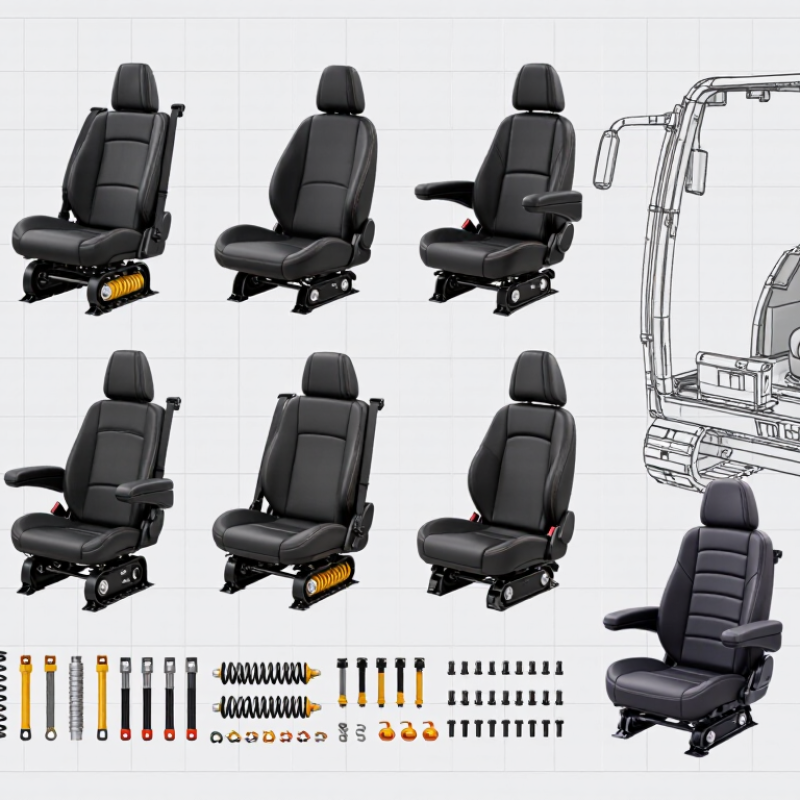
    Top 10 Bobcat Excavator Seat Types for Global Buyers

    Map Bobcat Excavator Seat Demand by Machine Class and Operating Weight

    Top 10 Excavator Seat Types for Global Buyers

    Seat demand changes sharply with machine class and operating weight. Compact excavators under 3 tonnes usually need narrow, lightweight seats with mechanical suspension, washable covers, and simple adjustment rails. Their operators often work in gardens, utilities, or crowded urban sites. Seat width and pedal clearance matter more than luxury features.

    Machines from 3 to 10 tonnes create the broadest demand. Buyers commonly select seats with adjustable lumbar support, reclining backs, armrests, sliding rails, and stronger suspension. Mechanical, low-profile air, swivel, heated, and weight-adjustable designs are popular options. On rough construction sites, a seat with vibration isolation can reduce fatigue during long trenching shifts. Measure mounting points carefully. A comfortable seat is useless if the control levers become unreachable.

    Excavators above 10 tonnes require heavy-duty frames, wider cushions, reinforced suspension, and durable vinyl or fabric surfaces. Air suspension, rotating bases, climate-control features, and multi-directional armrests become more practical. Fleet managers should compare seat demand with daily hours, ground conditions, operator body sizes, and replacement intervals. Field experience suggests that dust and moisture often damage adjustment mechanisms before the cushion fails. That finding is easy to overlook. Weight ranges are also imperfect guides, because two machines with similar mass may use different cab layouts. Verify bolt patterns, seat height, belt mounting, and supplier documentation before ordering globally. Local service capacity remains important.

    Classify the Top 10 Seat Types by Suspension, Backrest, and Weight Range

    Top 10 Compact Excavator Seat Types for Global Buyers

    Classify the Top 10 Seat Types by Suspension, Backrest, and Weight Range

    Seat selection should match machine vibration, operator size, and working hours. The ten practical types include fixed low-back seats for under-2-ton machines; fixed high-back seats for 2–5 tons; mechanical-suspension low-back seats for light duty; mechanical-suspension high-back seats for medium duty; air-suspension high-back seats for 5–10 tons; narrow shock-isolated seats for confined cabs; contoured seats with adjustable lumbar support; swivel seats for frequent rear-view work; heated suspension seats for cold regions; and heavy-duty air seats for machines above 10 tons. These weight ranges are useful guides, not universal rules.

    Suspension matters most on uneven ground. ISO 7096 testing evaluates whole-body vibration performance through seat transmissibility, giving buyers a more reliable comparison than foam thickness alone. EU-OSHA’s ESENER-2019 findings identify tiring or painful positions as a widespread workplace risk. That supports adjustable lumbar areas, taller backrests, and stable hip cushions during long shifts. A seat can feel soft in a showroom and still transmit harsh impacts outdoors.

    Backrest height should protect the shoulders without blocking rear visibility. For operators under 70 kilograms, excessive spring preload may reduce suspension travel. Heavier operators may need reinforced frames and wider cushions. A 2023 off-highway equipment market analysis also links compact-machine demand with greater operator comfort expectations. That trend is real, but seat labels remain inconsistent. I would test the seat inside the actual cab, wearing work boots, before approving a global purchase.

    Top 10 Excavator Seat Types for Global Buyers

    Classification by suspension system, backrest design, and typical excavator operating-weight range.

    ■ Mechanical suspension ■ Air suspension ■ Fixed or low-profile base

    The chart uses common excavator operating-weight segments from compact machines to large mining-class equipment. The ten configurations represent widely used seat designs rather than a sales ranking. Weight ranges describe the typical machine application, while suspension and backrest categories describe the seat configuration.

    Compare Seat Vibration Performance Using ISO 7096 Test Criteria

    For global buyers comparing the top 10 excavator seat types, ISO 7096 offers a practical vibration benchmark. The standard evaluates vertical whole-body vibration transmission under controlled operating conditions. Lower SEAT values generally indicate better isolation. However, ISO 7096 does not measure every comfort factor.

    The ten common designs include mechanical suspension, low-profile mechanical, air suspension, low-frequency air, weight-adjusting, fore-aft isolating, swivel, heated, high-back, and heavy-duty seats. Air and low-frequency systems often perform better on uneven ground, but only when pressure, damping, and operator weight are correctly adjusted. Small details matter. Check the seat base, mounting bolts, travel range, and visible wear before purchasing.

    European Commission data under Directive 2002/44/EC sets a whole-body vibration action value of 0.5 m/s² A(8) and a limit value of 1.15 m/s² A(8). These figures help buyers assess workplace exposure, while ISO 7096 helps compare seat transmission during standardized tests. Field conditions remain harsher. Mud, trench edges, rigid tracks, and poor maintenance can change results significantly. HSE guidance also stresses that daily vibration exposure depends on both vibration magnitude and operating time. A seat passing a laboratory test may still feel rough after eight hours. That is the uncomfortable part. Procurement teams should request the ISO 7096 test class, measured transmissibility data, adjustment instructions, and service records before making a final decision.

    Verify Seat Belts and Restraints Against ISO 6683 and EN 474

    Top 10 Bobcat Excavator Seat Types for Global Buyers

    Verify Seat Belts and Restraints Against ISO 6683 and EN 474

    Global buyers often compare fixed, mechanical-suspension, air-suspension, heated, and low-profile excavator seats. Comfort matters, but restraint performance deserves greater attention. A soft cushion cannot protect an operator during a sudden stop or machine rollover.

    In practical inspections, check the belt webbing, buckle release, retractor action, and anchor points. ISO 6683 provides requirements for seat belts and their anchorages on earth-moving machinery. EN 474 adds broader safety expectations for excavator design and operation. Verify the applicable section and current edition before approving a seat. Standards may also be adopted differently in local markets.

    The belt should lie flat across the pelvis, not the stomach. It must lock quickly when pulled sharply. Inspectors should examine stitching, corrosion, loose bolts, and damaged plastic covers. A restraint that looks clean may still hide internal wear. Ask suppliers for test reports, installation instructions, and traceable component data.

    Seat travel can affect belt geometry. Confirm that the belt remains effective at every adjustment position. Check whether the mounting frame matches the excavator structure. Some replacement seats fit the holes but weaken the restraint angle. That mistake is easy to miss. Photographs help, but physical testing remains more reliable. Recheck the assembly after installation and after the first working shift.

    Top 10 Bobcat Excavator Seat Types for Global Buyers - Verify Seat Belts and Restraints Against ISO 6683 and EN 474
    No. Generic Seat Type Suspension & Main Features Typical Adjustment Range Typical Belt / Restraint Arrangement ISO 6683 Verification Points EN 474 Verification Points Typical Seat Width Typical Operator Weight
    1 Fixed Mechanical Seat Non-suspended pan with padded backrest; simple and space-efficient for compact excavator cabs. Fore/aft slide: approximately 120–180 mm; backrest angle: approximately 10–20°. Usually a two-point lap belt; some installations use a retractable belt if approved by the seat and cab design. Check belt webbing, buckle release, anchorage strength, belt routing, retractor function, and interference with seat movement. Confirm the restraint is appropriate for the excavator risk assessment and does not reduce safe access, visibility, or control operation. 400–450 mm 50–120 kg
    2 Low-Profile Compact Seat Reduced cushion height and narrow side bolsters for limited cab space and improved entry clearance. Fore/aft slide: approximately 100–160 mm; limited backrest adjustment. Two-point lap belt is common; belt length must suit the compact cushion and operator range. Verify the belt lies low across the pelvis, locks correctly, releases quickly, and remains accessible in the confined cab. Check that the seat, belt, pedals, levers, and emergency exits maintain required ergonomic and safety clearances. 380–430 mm 45–105 kg
    3 Mechanical Suspension Seat Scissor or linkage suspension with adjustable spring preload to reduce vibration transmitted through the seat. Suspension setting: approximately 50–120 kg; fore/aft slide: 120–180 mm. Integrated two-point belt or approved retractable belt mounted to the seat or cab structure. Test the complete seat-and-belt installation through the full suspension travel; confirm no belt loading or snagging occurs. Verify vibration isolation does not compromise operator retention, control reach, or stable seating during machine movement. 420–480 mm 50–130 kg
    4 Air Suspension Seat Pneumatic suspension with compressor or external air supply; suitable for operators needing finer weight adjustment. Air adjustment commonly covers approximately 50–130 kg; fore/aft slide: 120–180 mm. Two-point or three-point belt, depending on the approved seat design and cab restraint layout. Check air-system integrity, suspension travel, belt anchorage, buckle operation, and compatibility between seat and restraint components. Confirm the air system cannot create an unsafe seat position and that all controls remain reachable at the lowest and highest settings. 440–500 mm 55–140 kg
    5 High-Back Operator Seat Extended backrest with lumbar support and shoulder-area coverage for longer operating periods. Backrest angle: approximately 10–25°; lumbar adjustment: approximately 20–50 mm where provided. Two-point lap belt is typical; a three-point restraint requires dedicated upper anchorage and clearance. Ensure the backrest, belt webbing, buckle, upper guide, and anchorage are compatible and do not obstruct torso movement. Check rearward clearance, emergency egress, visibility, and the operator’s ability to maintain a normal operating posture. 440–500 mm 55–140 kg
    6 Seat with Adjustable Armrests Height-, width-, or angle-adjustable armrests designed to support control-intensive excavator operation. Armrest height: approximately 40–80 mm; fore/aft adjustment: approximately 30–70 mm. Usually a two-point lap belt; the buckle must remain reachable with both armrests lowered. Verify belt access, buckle release, belt routing, and absence of contact between the belt and adjustable armrest hardware. Check that armrests do not restrict emergency release, control movement, entry, or exit from the operator station. 430–490 mm 50–135 kg
    7 Seat with Integrated Joystick Console Seat-mounted or closely coupled control console that moves with the operator’s seating position. Console or armrest adjustment: approximately 40–100 mm; seat slide: approximately 100–160 mm. Two-point belt is common; the restraint must not foul joysticks, wiring, or console movement. Inspect belt routing throughout console adjustment and seat travel; confirm buckle release remains unobstructed. Verify controls remain within safe reach, unintended activation is prevented, and the restraint does not interfere with machine operation. 430–500 mm 50–135 kg
    8 Swivel Seat Limited-angle rotating base that can assist with rearward observation or reduced-twist working positions. Typical swivel range: approximately 10–30°; fore/aft slide: approximately 100–160 mm. Two-point belt is typical; belt and buckle must remain secure and accessible in every permitted swivel position. Verify anchorage orientation, belt locking, buckle access, webbing twist, and restraint performance across the complete swivel range. Confirm the swivel cannot create an unsafe operating orientation or reduce visibility, control access, or emergency egress. 420–480 mm 50–130 kg
    9 Heated Suspension Seat Mechanical or air suspension combined with an electrically heated cushion and/or backrest for cold climates. Suspension setting: approximately 50–130 kg; heating typically has low/high settings. Two-point or three-point belt according to the approved installation; wiring must be protected from belt hardware. Check restraint components separately from electrical heating; inspect cable routing, buckle release, webbing, and anchorage integrity. Verify electrical components do not impair restraint operation, emergency exit, or safe use in the intended environmental conditions. 440–500 mm 55–140 kg
    10 Heavy-Duty Suspension Seat Reinforced frame, durable upholstery, and robust suspension for demanding cycles, rough ground, and extended service. Suspension setting: approximately 60–150 kg; fore/aft slide: approximately 120–200 mm. Two-point or three-point restraint only when the complete seat, belt, and cab anchorage arrangement is approved together. Verify rated load, belt anchorage, buckle durability, retractor operation, suspension travel, and compatibility of replacement parts. Confirm the complete operator protective system remains suitable for the excavator application, access arrangement, visibility, and foreseeable movement hazards. 450–520 mm 60–150 kg
    Buyer verification note: The dimensions, adjustment ranges, and weight ranges shown are typical market-design values, not universal requirements. ISO 6683 and EN 474 compliance must be verified for the complete seat, belt, anchorage, cab, and excavator installation. Confirm the applicable edition, national implementation, manufacturer installation instructions, test records, and risk assessment before purchase or retrofit.

    Rank Global Choices by Dimensions, Climate, Durability, and Cost Data

    Top 10 Bobcat Excavator Seat Types for Global Buyers

    Rank Global Choices by Dimensions, Climate, Durability, and Cost Data

    A useful global ranking starts with seat dimensions, not appearance. Compact suspension seats suit narrow excavator cabs, while high-back designs need more rear clearance. Across ten common configurations, adjustable air-suspension seats rank highest for daily comfort. Mechanical suspension seats follow closely and usually cost 20–35% less. Fixed vinyl seats remain practical for short shifts and rental fleets. Fabric-covered seats offer better breathability, but absorb moisture faster.

    Climate changes the ranking. Heated suspension seats perform well in cold northern regions, especially below 5°C. Ventilated seats feel better in hot, humid areas, though their fans add maintenance points. Waterproof vinyl is easier to clean after muddy work. In dry, dusty sites, sealed controls and simple adjustment rails often matter more than extra padding. Small details count.

    Durability testing should include vibration, operator weight, dust, and repeated entry. Reinforced frames can last 4,000–6,000 working hours in demanding use, but field results vary. Cost data also needs careful reading. A premium seat may cost twice as much initially, yet reduce fatigue and replacement downtime. That benefit is difficult to measure precisely. My ranking would place ergonomic suspension seats first, sealed vinyl seats second, and basic fixed seats near the bottom. However, this order is imperfect. A low-cost seat with easily available parts may outperform a superior design in remote regions. Local repair access deserves more weight than many buyer charts give it.