
Top 10 Canned Motor Pump Manufacturers for Global Buyers
Choosing a Canned Motor Pump is not a catalog exercise. Buyers must match pump design to fluid properties, operating temperature, pressure, and site conditions. A clear comparison also considers materials, efficiency, maintenance access, delivery capability, and technical support. One detail can change the choice: a corrosive liquid may require different wetted materials, while a tight installation can make service access difficult.
This guide compares ten manufacturers serving global buyers. It examines their product focus, application experience, engineering capabilities, and international support. A shortlist should reflect the actual duty point, not just a familiar brand name. Ask for documented performance data, material recommendations, and clear answers about commissioning and spare parts. Small questions matter.
Canned motor pumps are often selected for applications where containing the pumped fluid is important. But “seal-less” does not mean risk-free, maintenance-free, or suitable for every process. Buyers still need to review temperature limits, motor cooling, fluid compatibility, and operating conditions. That review is sometimes rushed; it should not be.
A named expert quotation cannot be verified from the material provided, so this introduction avoids assigning invented words to an industry specialist. Instead, its practical principle is simple: compare evidence, not promises. The right supplier is the one that can explain how its pump fits your process—and where its limits begin.
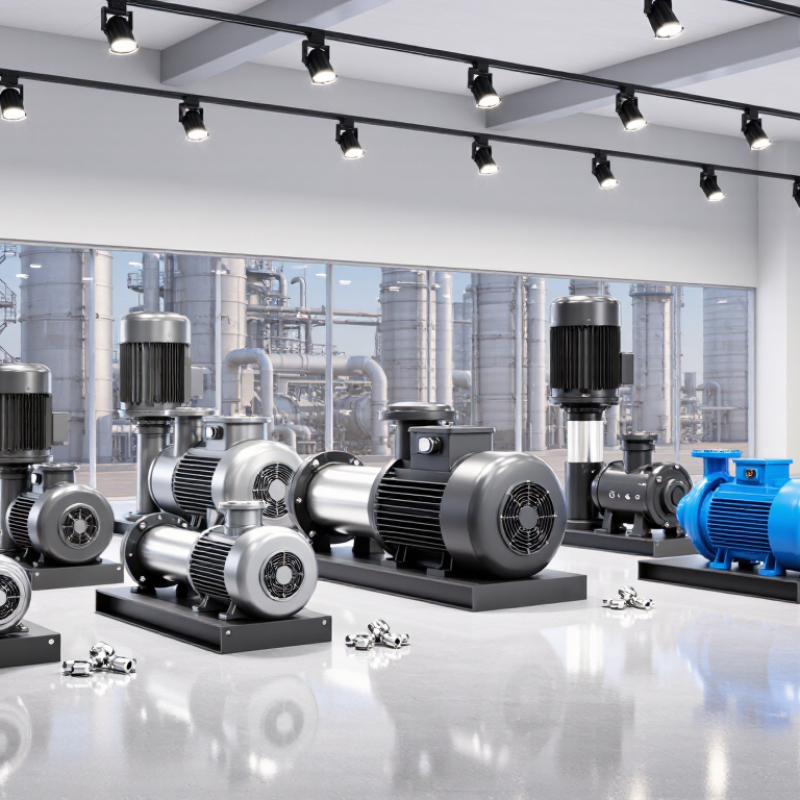
Canned Motor Pumps Defined: Sealless Design and API 685
A canned motor pump removes the conventional shaft seal. Its impeller and motor rotor sit inside a pressure-containing casing, so process liquid cannot escape through a rotating shaft opening. The liquid usually circulates through the motor cavity to cool and lubricate internal parts. That makes fluid compatibility, temperature, and minimum flow practical design checks—not fine print.
No shaft seal. But containment still depends on sound materials, manufacturing, and maintenance.
API 685 sets requirements for sealless centrifugal pumps used in petroleum, petrochemical, and gas services, including design and testing provisions. It is a useful procurement baseline, not proof that a pump suits every duty.
The IEA’s 2011 report, Energy-Efficiency Policy Opportunities for Electric Motor-Driven Systems, estimates these systems consume about 45% of global electricity. That wider energy figure underlines why motor efficiency and operating conditions deserve attention, even for a single pump.
Buyers should compare rated duty with actual flow, fluid properties, and start-up conditions. A mismatch can mean excess heat or unstable operation.
One detail is easy to miss: sealless design reduces a common leak path, but it does not eliminate every failure mode.
How They Work: Rotor, Stator, and 50/60 Hz Power Supply
For global buyers comparing canned motor pump manufacturers, the rotor, stator, and power supply deserve close attention. The rotor turns inside the pumped liquid, while a thin containment shell separates it from the stator. This sealed arrangement removes the conventional shaft seal, but it makes fluid compatibility and internal cooling especially important. During operation, the liquid usually helps cool and lubricate the rotor bearings. Dry running can cause rapid damage. Not every pump handles every fluid or temperature, so check the operating limits carefully.
Tips: Confirm frequency, voltage, and motor speed on the nameplate. A 50 Hz model may not be a direct replacement for a 60 Hz unit. Ask for the pump curve at your actual supply conditions.
Frequency affects motor speed and can change flow, head, and power demand. A 60 Hz supply typically produces higher synchronous speed than a 50 Hz supply with the same pole count. Actual performance also depends on the motor design and system resistance. I would not select a pump by frequency alone; that shortcut is tempting, but incomplete. Compare certified performance data, materials, and cooling requirements, then verify them against the installation. Even a small mismatch can alter delivery at a valve or narrow pipe.
Buyer Specifications: Flow, Head, NPSH, Materials, and API 685
When comparing canned motor pump manufacturers, define the duty point before reviewing quotations. State required flow and total head, including normal, minimum, and maximum operating conditions. Ask for the pump curve and confirm the duty point sits within the recommended operating range. A unit sized only for peak demand may run poorly during routine operation. Check the stated liquid temperature, density, viscosity, and vapor pressure; these details affect performance and motor cooling.
NPSH deserves careful review. Compare available NPSH at the pump suction with the manufacturer’s required NPSH across the operating range, not only at one point. Include suction-line losses and the lowest expected tank level. Request the assumptions behind the calculation. Materials should match the actual fluid and temperature: confirm casing, impeller, containment shell, and gasket materials rather than relying on a general “corrosion-resistant” description. API 685 can provide a useful specification basis for sealless centrifugal pumps, but confirm the applicable edition, project requirements, and documented compliance. Paperwork alone is not proof of suitability.
Tips: Send vendors the same duty data and request comparable curves, material lists, and NPSH calculations. Check references for similar service. I would still question a perfect-looking selection if its operating assumptions are missing.
Top 10 Canned Motor Pump Manufacturers for Global Buyers
Buyer specifications: flow, head, NPSH, materials, and API 685
Illustrative duty points show how flow and head can differ across pumping services; they are examples, not manufacturer ratings or universal operating limits. For each application, confirm required flow and differential head, check available NPSH against the pump’s NPSH requirement with an appropriate margin, specify compatible wetted materials, and confirm the applicable API 685 requirements.
Top 10 Global Manufacturers: HERMETIC, NIKKISO, TEIKOKU, KSB, and More
Global buyers comparing the leading canned motor pump manufacturers should look beyond name recognition. Established suppliers in Japan and Europe often serve demanding chemical, energy, and industrial applications, while regional producers may offer shorter lead times or more flexible service. A strong shortlist includes manufacturers with documented experience in the buyer’s fluid, operating pressure, temperature, and site conditions. Ask for performance curves, materials data, and references for similar duties. Small details matter: a pump handling hot, low-lubricity liquid needs different checks from one moving clean water. Rankings can be misleading. Product fit varies.
Tips: Share the fluid’s composition, temperature range, flow rate, and required head before requesting a quotation. Confirm whether the supplier can support installation, commissioning, and spare parts near your facility. Get the expected service interval in writing.
For a fair comparison, review efficiency across the normal operating range, not only at the design point. Check motor protection, monitoring options, and maintenance procedures. A sealed design can reduce leakage risk, but it does not remove the need for sound system design. Verify local service coverage and clarify response times. Ask how the proposed model behaves during startup and low-flow operation. A polished brochure is useful, but test data and practical support matter more.
Applications and Reliability: Seal-Free Containment, Heat, and Monitoring
Canned motor pumps are used where leakage control matters, including chemical transfer, hot-water circulation, and selected process duties. Their motor and pump share a sealed housing, so there is no conventional rotating shaft seal. That removes one common leak path, but it does not make the assembly failure-proof. Internal bearings often depend on the pumped liquid for lubrication and cooling. That detail matters. Low flow, dry running, or unsuitable fluid properties can quickly raise bearing and winding temperatures.
Heat needs deliberate management. Buyers should check the pump’s operating range against actual fluid temperature, viscosity, and flow conditions, not just the nameplate rating. Cooling jackets or auxiliary circuits may be needed for demanding services. Even then, blocked passages or poor installation can undermine the design. A small temperature rise may be an early warning, though sensor placement and alarm limits require care. There is no universal setting.
Useful monitoring can include winding temperature, bearing temperature, motor current, and flow or pressure readings. Trends often tell more than one isolated alarm. During commissioning, recording normal values at several operating points gives maintenance teams a practical reference. Ask manufacturers how they test containment, manage heat, and support diagnostics across different installations. Also ask what the monitoring system cannot detect. That answer may be less polished, but it is useful.
Top 10 Canned Motor Pump Manufacturers for Global Buyers - Applications and Reliability: Seal-Free Containment, Heat, and Monitoring
| Application | Typical service | Seal-free containment consideration | Heat and operating considerations | Useful monitoring and buyer checks |
|---|---|---|---|---|
| Petrochemical processing | Hydrocarbons, solvents, and process liquids; exact fluid properties depend on the process. | The motor and pump are contained within a pressure boundary, avoiding a conventional shaft seal as a potential leak path. | Check liquid temperature, vapor pressure, viscosity, and the pump’s minimum-flow requirements against the proposed operating range. | Review bearing and winding temperature protection, motor current, minimum-flow provisions, and materials compatibility. |
| Heat-transfer systems | Thermal oils and other circulating heat-transfer fluids. | Contained construction can be useful where leakage of hot process liquid presents an operational or safety concern. | Confirm the fluid’s temperature and viscosity at start-up as well as at normal operation; thermal expansion and heat removal require design review. | Check temperature sensors, flow protection, cooling arrangements, and the specified operating limits of the motor and bearings. |
| Refrigeration and cooling | Refrigerants and other volatile liquids in suitable closed-loop systems. | Eliminating a dynamic shaft seal can reduce one potential fugitive-emission path; the full pressure boundary still requires appropriate design and testing. | Assess suction conditions, vapor formation risk, refrigerant properties, and the temperature range required for the duty. | Verify pressure and temperature ratings, motor protection, flow conditions, and compliance with applicable system requirements. |
| Ammonia service | Liquid ammonia in refrigeration or process applications designed for ammonia service. | A sealless configuration can help limit leakage at the shaft, but connections, casing, and other pressure-retaining parts remain relevant. | Account for ammonia properties, operating pressure, temperature, and the potential for flashing or inadequate liquid supply. | Confirm material suitability, pressure-boundary documentation, temperature protection, and the supplier’s stated service limitations. |
| Cryogenic liquid transfer | Low-temperature fluids such as liquefied gases, where the pump design is specifically qualified for cryogenic duty. | Contained construction may reduce shaft-seal leakage paths, but does not remove the need to assess all joints and containment boundaries. | Thermal contraction, cold-start conditions, insulation, and heat ingress can affect clearances and operating performance. | Ask for the qualified minimum temperature, cold-start procedure, insulation details, and temperature-monitoring arrangement. |
| Corrosive chemical transfer | Selected acids, alkalis, and other corrosive liquids, subject to material compatibility. | Seal-free containment can be advantageous when external leakage is undesirable; wetted materials must still resist the specific chemical. | Corrosion behavior and fluid properties can change with concentration and temperature, so evaluate the full operating envelope. | Request compatibility data for the exact concentration and temperature, plus inspection and condition-monitoring recommendations. |
| Toxic or hazardous fluids | Process liquids for which release control is important, subject to the site’s hazard assessment and applicable regulations. | The design removes the conventional shaft-seal interface, but total-system containment depends on casing, joints, piping, and installation. | Check heat generation, cooling path, permitted operating range, and the consequences of loss of flow. | Review leakage detection where required, temperature and motor protection, alarm settings, and emergency response provisions. |
| High-purity process service | Clean process liquids in applications where contamination control and cleanability requirements are defined. | A sealless arrangement avoids a shaft seal contacting the process boundary; it does not by itself guarantee cleanliness or purity. | Confirm allowable temperature, fluid cleanliness, and whether the process requires special flushing, cleaning, or validation procedures. | Check wetted-material certificates, surface-finish or cleanliness requirements, monitoring options, and documentation scope. |
| Boiler-feed and condensate systems | Water and condensate duties where pressure, temperature, and system configuration suit the selected pump. | Contained construction may be considered where seal maintenance or leakage control is a priority. | Evaluate suction pressure, liquid temperature, cavitation margin, and the pump’s required minimum flow. | Verify operating-point coverage, temperature protection, bearing monitoring, and provisions for low-flow or dry-running conditions. |
| General industrial circulation | Closed-loop circulation of compatible process liquids in chemical, energy, and manufacturing facilities. | Seal-free containment can reduce routine shaft-seal leakage concerns, while overall reliability still depends on correct selection and operation. | Check continuous and intermittent duty, ambient conditions, heat dissipation, fluid viscosity, and start-up requirements. | Compare available temperature, current, vibration, and flow monitoring with the plant’s alarm, maintenance, and control systems. |
Operating limits, materials, monitoring options, and suitability vary by pump design and process conditions. Confirm the applicable datasheet, system requirements, and supplier recommendations before selection.
English
Français 