
Top 10 Filament Suppliers for Global Buyers

    Choosing a Filament supplier is not just a price comparison. A spool may look perfect on a product page, yet print unevenly when humidity, diameter variation, or winding quality enters the picture. Global buyers need evidence: material specifications, batch traceability, test data, and responsive technical support.

    The market context is growing. Wohlers Report 2024, published by Wohlers Associates, estimated that the global additive manufacturing industry reached $21.9 billion in 2023, an 11.1% increase over 2022. This figure covers the wider industry, not filament alone. Still, it signals a larger production ecosystem—and more choices for buyers to assess. Industry analyst Terry Wohlers has repeatedly highlighted the shift from prototyping toward production. A practical takeaway from that work is simple: supplier claims matter less than repeatable results.

    That is the test. A filament that feeds cleanly through a desktop printer may behave differently on a high-throughput line. Color matching, moisture control, and reliable lead times can matter as much as a broad catalog. Not every supplier publishes comparable data, either. Buyers should ask for it.

    This guide compares ten suppliers through a global buyer’s lens: product range, quality controls, customization, logistics, and support. The ranking is a starting point, not a substitute for sample testing. One honest caveat: no list can predict how every material will perform in every printer.
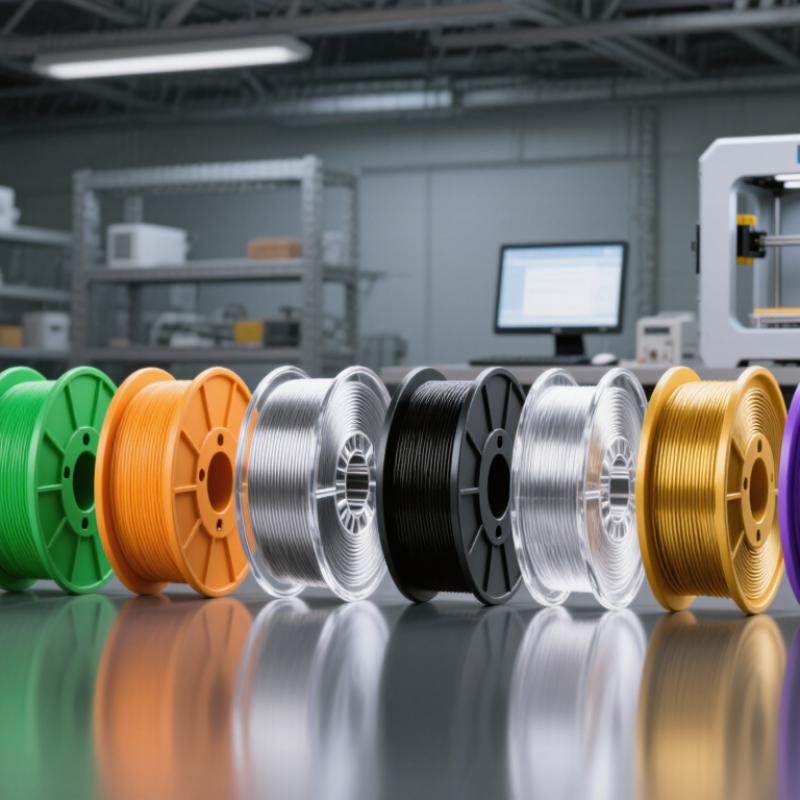
    Top 10 Filament Suppliers for Global Buyers

    What Filament Covers and Which Industries Depend on It

    Here, filament mainly means thermoplastic feedstock for fused-filament 3D printing. It is sold on spools, with common options including PLA, ABS, PETG, nylon, and flexible TPU. Each behaves differently under heat, moisture, and mechanical stress. A damp spool may crackle in the nozzle and leave rough, weak layers.

    The material choice depends on the part. PLA is often used for classroom models and visual prototypes because it prints relatively easily. PETG can suit fixtures and housings that need more toughness. Nylon is useful for selected wear-resistant components, but absorbs moisture and often needs careful drying.

    There is no universal “best” filament. Terminology and performance claims are not always consistent across suppliers, so buyers should check technical data sheets and test samples on their own machines.

    Industries use printed filament parts in different ways.

    Manufacturers make jigs, assembly guides, and replacement prototypes; automotive and aerospace teams may use printed models or non-critical tooling. Schools and design studios use it to turn sketches into tangible forms. In healthcare, applications can include models for planning, subject to material and workflow requirements.

    Small details matter: nozzle temperature, layer direction, storage, and tolerances can change the result. A neatly printed part can still fail under load.

    That deserves a second look.

    How Global Buyers Can Assess Filament Suppliers

    Top 10 Filament Suppliers for Global Buyers

    How Global Buyers Can Assess Filament Suppliers

    Assess suppliers against the needs of your actual process, not a polished catalog. Request a sample and check diameter consistency, surface finish, tensile performance, and break frequency on your own equipment. Ask how each property is measured and whether results apply to the quoted production lot. A neat sample is useful, but it proves little about repeatability.

    Review lot records, packaging details, and the supplier’s process for handling defects. Compare stated lead times with recent delivery records, and ask how production changes are communicated. For colored filament, inspect several spools under the same light; small shade shifts can matter in visible products. Requirements vary by application. I would not treat one test sheet as a guarantee, and it is easy to overlook that.

    Tips: Put key specifications and acceptable tolerances in writing. Keep a retained sample from the approved lot, then compare it with later shipments. Ask direct questions about moisture protection and storage. If answers remain vague, pause before placing a large order. Short trials can still miss problems, so record the settings and results.

    Top 10 Filament Suppliers for Global Buyers - How Global Buyers Can Assess Filament Suppliers

    A practical, brand-neutral assessment framework. Compare suppliers using batch-specific records and agreed requirements rather than assuming any supplier meets a particular specification.

    No. Assessment dimension Data to compare Evidence or verification
    1 Material identity and grade Polymer family, grade designation, additives, fillers, and declared intended use. Technical data sheet and a batch-specific certificate of analysis; check that the documents identify the same grade.
    2 Filament diameter and consistency Declared nominal diameter, permitted tolerance, measurement method, and recorded variation along the spool. Request the supplier’s inspection procedure and sample measurement records. Compare results against the tolerance agreed for the purchase.
    3 Tensile properties Reported tensile strength, elongation, and test-specimen conditions for the offered material. Ask for test reports stating specimen preparation and method, such as ISO 527 or ASTM D638. Results depend on test conditions.
    4 Melt flow and processing behavior Melt mass-flow rate, including the test temperature and applied load. Request a test report using ISO 1133-1 or ASTM D1238 and compare only results measured under matching conditions.
    5 Thermal characteristics Reported glass-transition, melting, or crystallization behavior where relevant to the polymer grade. Request differential scanning calorimetry (DSC) results and the method and test conditions, such as ISO 11357 or ASTM D3418.
    6 Moisture management Moisture limit at packing, measurement method, packaging barrier, and storage guidance. Request batch moisture records and packaging specifications. Confirm that the stated test method suits the material and moisture level.
    7 Color and appearance control Color reference, measurement conditions, batch-to-batch limits, and visible defect criteria. Ask for retained samples and the color measurement procedure. CIEDE2000 is defined in CIE 11664-6; agree the acceptable limit before ordering.
    8 Quality system and traceability Lot identification, production records, complaint handling, and the scope and validity of any quality-system certification. Check sample labels against documentation. Verify any ISO 9001 certificate with its issuer and confirm that its scope covers the relevant operations.
    9 Regulatory documentation Declarations and test evidence relevant to the destination market, product use, and applicable material requirements. For applicable products and markets, review documentation addressing EU RoHS Directive 2011/65/EU and REACH Regulation (EC) No 1907/2006. Confirm scope and document date.
    10 Export readiness and delivery reliability Quoted lead time, order minimum, available shipping terms, packaging details, and historical on-time delivery data. Compare written quotations and shipment records; confirm the delivery term, named place, and responsibilities in the purchase contract.

    Ten Filament Suppliers Serving International Markets

    The ten filament suppliers serving international markets differ less by their catalogs than by how reliably they handle everyday buying details. Some focus on recycled polyester, while others specialize in nylon, rayon, polypropylene, or high-tenacity industrial yarns. Several serve sewing and embroidery factories; others make technical filaments for demanding applications. A broad product list looks useful, but it does not prove consistent production.

    For global buyers, ask for a current specification sheet, sample cones, and clear details on denier, tensile strength, elongation, and color consistency. Check how each supplier packs goods for humid routes and long warehouse stays. A damp carton can affect filament performance before it reaches the production floor. Request realistic lead times, minimum order quantities, and shipment documents before placing a large order. Small trial orders help reveal whether quoted quality matches delivered material.

    Communication matters too. A responsive export team can clarify tolerances and flag production delays early. That saves trouble. Still, a polished sales reply is not proof of dependable output. Compare test results across batches, and keep written records of agreed specifications. I would not rank suppliers by price alone; I have seen low quotes hide costly variation. One detail is easy to miss: buyers should confirm whether samples come from regular production, not a specially prepared lot.

    How Supplier Capabilities Differ Across Materials and Regions

    Supplier capability is easier to assess by material than by catalogue size. With PLA, buyers should check diameter consistency, winding quality, and how the supplier protects spools from moisture. PETG may need closer checks for repeatable flow and clear drying guidance. Nylon is more demanding: sealed packaging and specific drying instructions can make a visible difference during printing. Small details matter.

    Regional strengths often reflect production experience, local infrastructure, and shipping routes, not simply geography. A nearby supplier may offer shorter replenishment times, while a distant producer may provide broader material testing or larger batch capacity. Ask for recent sample spools, stated diameter tolerances, batch traceability, and packaging specifications. Compare those records under the same printer settings; otherwise, differences may come from handling rather than the filament itself. Climate also matters. A spool exposed to humid storage or a long transit can behave differently from a fresh test sample. Even a polished data sheet can leave practical questions unanswered, so buyers should verify claims with a small trial order before committing to regular volumes.

    Key Factors in Comparing Quotes, Quality, and Delivery Terms

    When comparing filament quotes, match the specification before comparing the unit price. Check polymer type, diameter tolerance, spool weight, moisture-barrier packaging, and color consistency. A lower price may exclude freight, duties, or replacement material for out-of-spec batches. Ask for a current technical data sheet and a sample from the production lot. Small details matter. A spool that arrives damp can cause bubbling, rough surfaces, and wasted machine time.

    Quality claims need measurable evidence. Request batch traceability, diameter test methods, and documented limits for ovality and moisture. The Wohlers Report 2024 estimated that the additive manufacturing industry reached $21.9 billion in 2023, growing 9.1% year over year. That expanding market makes consistent material records more useful, not less. Still, a polished certificate cannot prove every spool performs identically; verify critical grades on your own equipment.

    Delivery terms deserve the same scrutiny as material specs. Compare quoted lead time with production time, dispatch time, and transit time—not just the date on an invoice. The World Bank’s 2023 Logistics Performance Index evaluates factors including customs, infrastructure, and shipment timeliness, useful context for assessing cross-border delivery risk. Ask suppliers how they handle partial shipments, delays, and damaged packaging. One awkward question helps: who pays when a shipment misses the agreed window?