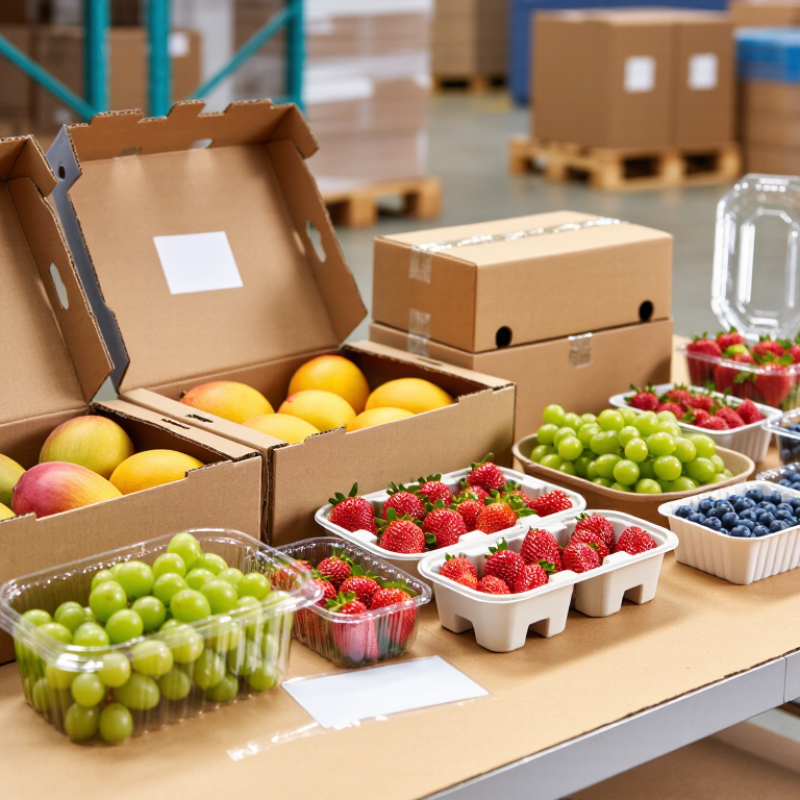
Top 10 Fresh Fruit Export Packaging Solutions for Buyers?

    Fresh fruit export packaging is not merely a protective outer layer. It is a controlled environment between harvest, transport, customs handling, and the buyer’s display shelf. The right design can reduce bruising, moisture loss, condensation, and premature ripening. Poor choices can quietly erase an entire shipment’s value.

    Dr. Adel A. Kader, a respected postharvest physiologist, stated, “The overall objective of postharvest handling is to maintain quality of fruits and vegetables after harvest.” This principle guides effective Fresh Fruit Export Packaging Solutions. Buyers should examine more than carton appearance. Vent placement, stacking strength, cushioning, cooling compatibility, pallet stability, and traceability all matter. A mango carton may need different airflow from a grape punnet. A delicate berry requires another level of protection.

    Details matter.

    This guide presents ten practical packaging solutions for export buyers. It considers corrugated cartons, reusable plastic crates, molded pulp inserts, breathable films, absorbent pads, and temperature-monitoring labels. Each option involves trade-offs involving cost, durability, sustainability, and product presentation. Packaging should also match the fruit, route length, climate, handling system, and destination requirements.

    No carton solves every route. Some recommendations may need adjustment after trial shipments. That is not a weakness; it is responsible packaging development. A package that performs well in a refrigerated truck may fail during a warm warehouse delay. Buyers should request compression tests, vibration testing, humidity checks, and real-world pilot shipments before approving large volumes. Good packaging protects fruit. Better packaging protects quality, reputation, and commercial trust.

    Top 10 Fresh Fruit Export Packaging Solutions for Buyers?

    Fresh Fruit Export Packaging: Purpose, Requirements, and Buyer Priorities

    Top 10 Fresh Fruit Export Packaging Solutions for Buyers

    Fresh fruit export packaging must protect quality from packing house to final inspection. Its purpose is simple: reduce bruising, moisture loss, contamination, and temperature damage. Strong packaging also supports efficient stacking, handling, and customs checks.

    Common solutions include ventilated cartons, molded pulp trays, cushioning pads, absorbent liners, reusable crates, pallet covers, and humidity-control materials. Small vents matter. They help cold air circulate around grapes, berries, and stone fruit. However, excessive ventilation can increase dehydration during long transit. A buyer should review fruit type, route length, expected temperature, and handling conditions before selecting a format.

    Buyer priorities often begin with product protection and stable delivery performance. Packaging should resist compression without adding unnecessary weight. Food-contact materials need suitable documentation, clean manufacturing conditions, and clear traceability. Labels should show lot details, pack dates, handling instructions, and destination information.

    Recyclability is valuable, but it should not replace real performance testing. A recyclable box that collapses under high humidity creates more waste, not less. I would also question designs that look efficient but require difficult manual packing. Labor time, pallet utilization, storage space, and disposal costs can change the final price.

    No package solves every risk. Trial shipments, drop tests, compression tests, and temperature monitoring reveal weaknesses before larger orders.

    Top Packaging Solutions for Protecting Different Fresh Fruit Types

    Top 10 Fresh Fruit Export Packaging Solutions for Buyers

    Fresh fruit needs packaging designed around its biology, not only its appearance. FAO’s The State of Food and Agriculture 2019 estimated that 14% of food is lost between harvest and retail. Packaging cannot prevent every loss, but it can reduce bruising, dehydration, and contamination risks.

    For berries, use shallow, vented punnets with firm internal support. Their soft skin needs airflow and minimal stacking pressure.

    Apples and pears benefit from molded trays, corner protection, and strong corrugated cartons.

    Citrus requires ventilated cartons that limit moisture buildup.

    Bananas need cushioning, airflow, and temperature-aware liners because chilling injury can appear before delivery.

    Stone fruit needs flexible separators, since rigid contact points may accelerate bruising.

    Leafy fruit, such as avocados, needs compression-resistant cartons and careful void control.

    Tips: Ask suppliers for compression, vibration, and temperature test results. Check whether vent openings align across stacked cartons. A strong carton can still fail when wet. The UNEP Food Waste Index Report 2024 recorded 1.05 billion tonnes of food waste in 2022, showing why small handling decisions matter. Reusable crates may improve protection, but cleaning systems and return logistics require inspection. No packaging format is perfect. Buyers should test one shipment under real humidity, stacking, and transport conditions before scaling orders.

    Materials, Ventilation, Moisture Control, and Temperature Management

    For fresh-fruit buyers, packaging is a performance system, not decoration. The FAO reported that 13.2% of food was lost between harvest and retail in 2021. That figure makes material choice commercially important.

    Ten practical solutions include recyclable corrugated fiberboard, molded-pulp inserts, reusable crates, breathable films, perforated liners, moisture pads, absorbent trays, corner protection, insulated shippers, and temperature indicators. Lightweight fiberboard reduces freight weight, but weak edges can collapse under humid pallets. Reusable crates protect fruit better, although cleaning and return logistics require planning. No design wins everywhere.

    Ventilation must match respiration. Too few openings trap heat. Too many accelerate dehydration. Buyers should request airflow tests using packed pallets, not empty cartons. Moisture control also needs balance. A dry liner can protect berries from condensation, while excessive absorbency may pull moisture from delicate skins. Inspect the bottom layer after simulated transport.

    Temperature management begins before loading. Pre-cool fruit, record pulp temperature, and avoid placing warm cartons inside chilled vehicles. The cold-chain principle is simple, but execution is not. Temperature indicators provide evidence, yet they do not replace calibrated data loggers. The UNEP Food Waste Index Report 2024 estimated 1.05 billion tonnes of food waste across retail, food service, and households in 2022. Better packaging cannot solve every loss, but it can expose weak handling points. Buyers should compare damage rates, condensation, shelf life, and packaging recovery costs across several shipments. One successful trial proves very little.

    Top 10 Fresh Fruit Export Packaging Solutions for Buyers? – Materials, Ventilation, Moisture Control, and Temperature Management
    A practical comparison of export packaging formats for common fresh-fruit supply chains
    Rank Packaging Solution Typical Materials Ventilation Design Moisture Control Temperature Management Suitable Fruit and Use Case Buyer Considerations
    1 Ventilated Corrugated Fiberboard Carton Multi-layer corrugated fiberboard, water-resistant coating or treated outer liner, paper or molded-fiber inserts. Aligned side and end vents create airflow channels for forced-air cooling. Open-area design must not significantly weaken stacking strength. Moisture-resistant liners and wax-free coatings help reduce softening. Absorbent pads can capture condensation and juice leakage. Designed for rapid pre-cooling and refrigerated transport. Carton vents should align with pallet and cold-room airflow. Berries, stone fruit, citrus, apples, pears, and table grapes. Lightweight, recyclable, printable, and efficient for one-way export. Performance declines if exposed to prolonged high humidity.
    2 Reusable Plastic Export Crate Rigid, food-contact-grade polypropylene or high-density polyethylene with reinforced walls and stackable feet. Large perforated sidewalls and base openings support high airflow and quick cooling. Open construction prevents water accumulation. Smooth, washable surfaces reduce contamination and retained moisture. Good compatibility with hydro-cooling, forced-air cooling, and refrigerated distribution. Crates should not block cold-air circulation. Stone fruit, citrus, melons, avocados, mangoes, and vegetables packed in mixed loads. Durable and reusable, but requires reverse logistics, washing, inspection, and standardized crate dimensions.
    3 Molded-Fiber Pulp Tray and Carton System Formed recycled paper pulp or virgin fiber, sometimes combined with a moisture-resistant barrier and corrugated outer carton. Perforated trays and vented cartons allow air movement while separating individual fruit. Fiber absorbs limited surface moisture and cushions fruit. A barrier coating may be required for high-humidity routes. Supports pre-cooled pallet shipments when tray openings and carton vents remain unobstructed. Apples, pears, stone fruit, citrus, and delicate fruit requiring separation. Renewable and often recyclable or compostable depending on coatings and local facilities. Must be tested for compression strength when wet.
    4 Ventilated Plastic Clamshell Food-contact PET, recycled PET, polypropylene, or compostable polymer alternatives where suitable. Small distributed vents balance oxygen exchange with protection from crushing and excessive dehydration. Perforation and absorbent pads help manage condensation. Anti-fog features may improve visibility for retail packs. Suitable for cold-chain storage when the pack design allows cooling around the fruit rather than sealing in warm air. Strawberries, blueberries, raspberries, cherries, and small premium fruit. Strong retail presentation and product protection. Material selection affects recyclability and packaging recovery options.
    5 Modified-Atmosphere Fresh-Fruit Pack Gas-permeable polymer film, microperforated film, lidding film, tray, and a rigid or semi-rigid container. Precisely controlled microperforations regulate oxygen and carbon dioxide exchange; the design must match fruit respiration. Film permeability and anti-fog treatment reduce condensation. Excess humidity must be controlled to limit mold growth. Extends quality only when the fruit is cooled promptly and the temperature remains stable. It is not a substitute for refrigeration. Berries, cherries, grapes, and other high-value fruit with suitable respiration characteristics. Requires validated film specifications, pack volume, commodity maturity, and cold-chain conditions. Incorrect gas balance can accelerate deterioration.
    6 Perforated Polyethylene Liner in Export Carton Low-density polyethylene or similar food-contact film used inside a corrugated carton, often with a vented or microperforated pattern. Perforations allow controlled airflow and gas exchange while reducing direct exposure to dry refrigerated air. Helps maintain local humidity and reduce weight loss. Perforation is necessary to avoid excessive condensation. Useful for refrigerated transport of fruit that is sensitive to dehydration, provided the liner does not obstruct carton vents. Grapes, cherries, berries, leafy produce, and selected citrus formats. Low material cost and flexible format. Film thickness, perforation size, and sealing method should be validated for the route.
    7 Palletized Export Carton with Vent Alignment High-strength corrugated board, corner posts or edge protectors, pallet, stretch film, and strapping. Carton vents are aligned vertically through the pallet load to create continuous airflow channels. Moisture-resistant board and top sheets protect against humid storage and condensation. Stretch film should not seal all vents. Supports forced-air cooling and refrigerated container circulation when pallet patterns, vent positions, and load height are controlled. Large-volume citrus, apples, pears, grapes, and mixed commercial shipments. Efficient for container loading and stacking. Poor vent alignment can create warm zones and uneven cooling inside the pallet.
    8 Insulated Shipper with Gel or Phase-Change Packs Expanded or extruded polymer insulation, molded fiber insulation, corrugated insulation, gel packs, or phase-change materials. Ventilation is limited to protect the thermal profile; small vents may be used when the commodity requires gas exchange. Condensation liners, absorbent pads, and sealed secondary packaging help protect fruit and reduce free water. Buffers short-term temperature fluctuations during air freight or last-mile delivery. Coolants must be conditioned to the target temperature range. Premium berries, cherries, specialty fruit, and short-duration temperature-sensitive shipments. Higher cost and packaging weight. Thermal qualification should consider transit duration, ambient extremes, payload, and coolant quantity.
    9 Humidity-Controlled Absorbent Pad System Cellulose, tissue, nonwoven fiber, superabsorbent polymer, and perforated food-contact cover material. Usually used inside a vented tray, clamshell, or carton; the pad should not cover major airflow openings. Captures condensation, juice, and free moisture while helping keep the fruit surface drier. It cannot replace correct ventilation. Works across the normal refrigerated chain when the fruit is pre-cooled and held within its recommended temperature range. Berries, cherries, grapes, stone fruit, and fruit susceptible to surface moisture or leakage. Simple to add to existing packs. Pad capacity, food-contact compliance, disposal method, and odor neutrality should be checked.
    10 Returnable Insulated Produce Container Reusable insulated plastic or composite shell, closed-cell foam or molded insulation, vent panels, and washable interior components. Adjustable or fixed vents provide airflow while the insulated walls reduce external heat gain. Washable surfaces, removable liners, and drainage features help manage condensation and sanitation between cycles. Provides thermal buffering during loading, cross-docking, and short interruptions in refrigeration; it does not replace active cold storage. Premium berries, grapes, cherries, mangoes, and high-value export programs with established return logistics. Reduces repeated single-use packaging but requires tracking, cleaning, storage, and a reliable return network.
    Technical note: Actual packaging performance depends on fruit variety, maturity, respiration rate, pre-cooling method, loading density, transit duration, relative humidity, and the temperature range required by the commodity. Packaging trials should verify compression strength, airflow, condensation, shelf life, and food-contact compliance before commercial export.

    Export Compliance, Sustainability, Labeling, and Supply Chain Handling

    Top 10 Fresh Fruit Export Packaging Solutions for Buyers

    For fresh-fruit buyers, packaging is a compliance system, not a decorative shell. Export-ready options include ventilated corrugated cartons, reusable plastic crates, molded-fiber trays, pulp dividers, breathable films, absorbent pads, pallet shrouds, temperature indicators, insulated liners, and certified wood pallets. Each option must match fruit respiration, stacking pressure, humidity, and transit duration.

    FAO reports that 14% of food is lost between harvest and retail. Airflow and impact control deserve serious attention.

    Do not overpack. This list is not universally optimal.

    Buyers should request material specifications, food-contact declarations, recyclability details, and traceable lot codes. Wood pallets require ISPM 15 treatment and marking. Destination authorities may also require phytosanitary documents.

    Labels should show the product name, country of origin, packer or exporter identity, net weight, lot number, handling instructions, and temperature requirements. These details depend on destination rules. Use plain, durable labels. A barcode cannot prove cold-chain integrity.

    Sustainability needs evidence, not green language. The OECD Global Plastics Outlook reports that packaging represented 40% of plastic waste in 2019.

    Prefer right-sized packs, permitted recycled content, and designs that separate easily. Reusable crates can reduce waste, but washing water, reverse logistics, and contamination risks need measurement.

    Use calibrated temperature loggers at loading and arrival. Compare bruising, rejected cartons, energy use, and return rates across routes. Some assumptions will fail in humid ports. Re-test them.

    How Buyers Can Compare Costs, Performance, and Packaging Suppliers

    Fresh fruit packaging decisions should balance cost, protection, and supplier reliability. Ten useful options include vented corrugated cartons, reusable plastic crates, molded-pulp trays, clamshells, net bags, modified-atmosphere films, absorbent pads, moisture-resistant liners, pallet covers, and insulated boxes. Each option solves a different problem. Vents support cooling, while pads limit juice damage. Insulation protects temperature-sensitive fruit during short transport.

    Buyers should compare total cost per saleable kilogram, not package price alone. Include packing labor, pallet space, return freight, disposal, and damaged fruit. FAO’s The State of Food and Agriculture 2019 reported that 14% of food is lost between harvest and wholesale. Better packaging may therefore cost more but reduce commercial waste. Performance testing should cover compression, vibration, drop impact, humidity, ventilation, and cooling speed. Ask for measured results, not attractive claims.

    Supplier evaluation also needs practical checks. Review food-contact documentation, material traceability, production capacity, lead times, quality controls, and backup manufacturing sites. UNEP’s Food Waste Index Report 2024 estimated 1.05 billion tonnes of food waste in 2022. Packaging cannot solve every loss. Still, it can protect value when handling is disciplined. A cheaper design may fail after one wet pallet. No scorecard is perfect. Buyers should test two or three formats during real shipments, then compare rejection rates, usable shelf life, and customer feedback before signing a long contract.

    Top 10 Fresh Fruit Export Packaging Solutions for Buyers

    Buyers can compare packaging options by indicative cost per 10 kg export unit and estimated reuse potential. Costs exclude fruit, freight, taxes, tooling, and return logistics; actual quotations vary by specification, order volume, destination, and supplier location.

    Corrugated cartons and mesh-bag systems generally offer the lowest initial cost, while reusable plastic crates require higher upfront investment but can reduce packaging cost over repeated export cycles. Supplier comparisons should also include ventilation, compression strength, moisture resistance, food-contact compliance, minimum order quantity, and delivery reliability.

    Article Source: