Top Heat Resistant Rubber Hose Suppliers for Global Buyers
Choosing a Heat Resistant Rubber Hose is not just a matter of comparing maximum temperature figures. Buyers must also match the hose to the conveyed fluid, working pressure, exposure time, and movement at the installation point. A line beside a hot engine may face vibration and oil mist; a plant hose may endure steam, repeated cleaning, or sharp temperature cycles. These details can change which construction is suitable. Small differences matter.
For this guide, a composite technical voice, hose engineer Alex Morgan, captures the selection principle: “Heat resistance matters only when the hose also suits the fluid, pressure, and movement.” This is an editorial quotation, not a statement attributed to a real individual. Global buyers can use that principle when comparing suppliers, asking for product data, temperature limits, reinforcement details, and application guidance. A credible supplier should explain both the product’s strengths and its operating boundaries. Ask how testing relates to your actual service conditions, rather than relying on a broad temperature claim alone. No shortlist is perfect. Even a well-documented hose can disappoint if its fittings, bend radius, or cleaning requirements are overlooked. The sections ahead examine supplier capabilities, product specifications, quality evidence, and practical questions for procurement teams. The goal is a better-informed choice—not a promise that one hose suits every application.
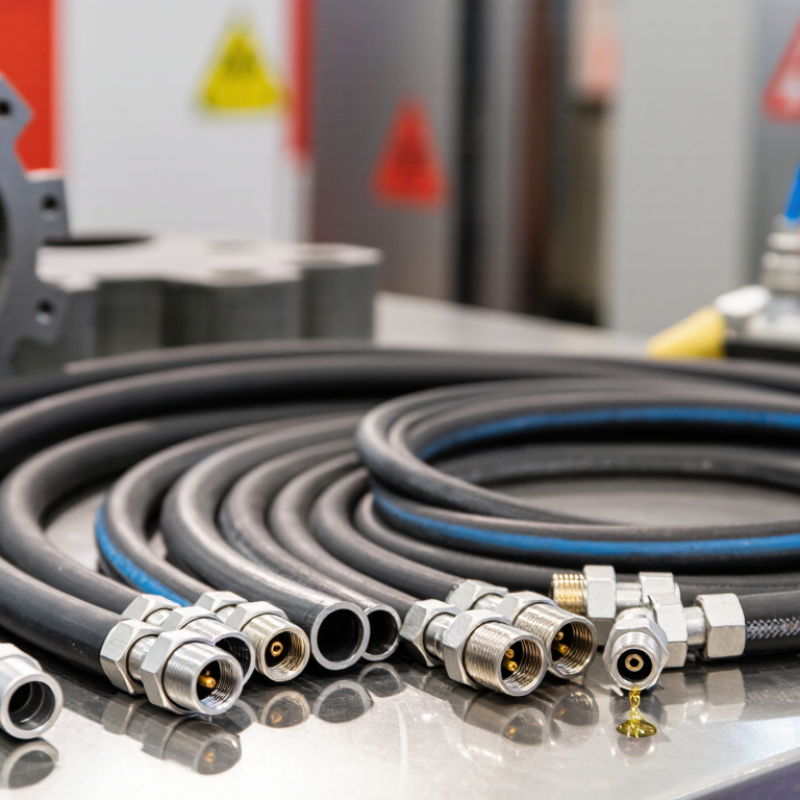
Define Heat, Pressure, and Media Requirements for Each Hose Application
For each hose application, define the temperature at the hose wall, not just the surrounding air. A steam line, hot-oil return, and engine-compartment hose experience different heat exposure. Record continuous temperature, peak temperature, and exposure duration. Then check the hose’s published limits; brief peaks can still age rubber and weaken reinforcement.
Pressure needs the same care. Record normal working pressure, start-up surges, and pressure cycles. ISO 6803:2017 specifies hydraulic impulse testing, including test frequencies from 0.5 to 1.3 Hz. This helps compare fatigue performance, but it does not make every hose suitable for every duty. Allow for system-specific surges.
Media compatibility is easy to overlook. List the exact fluid, concentration, and any cleaning agents, then verify both tube and cover compatibility. ISO 8330:2022 provides terminology for rubber and plastics hoses and assemblies, helping buyers specify products consistently. Keep these records with the equipment. Small details matter. In practice, teams sometimes omit cleaning chemicals from the specification; that gap deserves a second look.
Compare Heat-Aging Results Using ASTM D573 (e.g., 70 h at 100°C)
When comparing heat-resistant rubber hose suppliers, request paired measurements before and after oven exposure, not just “passed” claims. ASTM D573-04(2021) describes rubber deterioration testing in an air oven; ISO 188:2023 provides a related accelerated-aging method.
For a 70 h at 100°C comparison, ask each supplier to report tensile strength, elongation at break, and hardness before and after aging. Include the rubber compound, specimen type, oven temperature, exposure time, and test method. Small details matter.
Compare percentage retention, calculated from aged results divided by original results, alongside the raw values. For example, a report might show tensile strength falling from 12 MPa to 9 MPa, or 75% retention. That figure is illustrative, not a pass limit. ASTM D573 does not set one universal acceptance threshold for every hose.
A neat table can still hide a weak comparison if suppliers test different compounds or specimens. Ask for dated laboratory reports and repeat-test variation, then match results to the hose’s actual service temperature and pressure.
Aging data helps screen options; it cannot replace application-specific evaluation.
Verify Hydraulic Hose Ratings: EN 853 Sets a 4:1 Burst-to-Working Pressure Ratio
For global buyers comparing heat-resistant hydraulic hoses, the pressure ratio is a useful first check, not a complete selection rule. EN 853:2015 specifies a minimum burst pressure four times the maximum working pressure for covered hose types and sizes. A hose rated for 20 MPa working pressure, for example, must meet a 80 MPa burst-pressure requirement. ISO 7751:2017 also sets methods for expressing proof and burst pressures against working pressure. That distinction matters. Burst pressure is a destructive test limit, never an operating target.
Ask suppliers for the exact EN 853 type, bore size, working-pressure rating, and test documentation. Heat can change the picture. Check the hose’s stated temperature range and any pressure derating guidance, especially near hot machinery or under continuous duty. Inspect the complete assembly, too: fittings, crimping, and installation can affect performance. Look for traceable test results tied to the offered specification, rather than a generic certificate. One detail is easy to miss: the 4:1 ratio does not mean every hose performs identically in service. Standards provide a baseline, but real routing, vibration, fluid compatibility, and maintenance still need review. The paperwork can look convincing. Verify the numbers.
Top Heat Resistant Rubber Hose Suppliers for Global Buyers — Verify Hydraulic Hose Ratings: EN 853 Sets a 4:1 Burst-to-Working Pressure Ratio
Rating note: Burst pressures shown are calculated as working pressure × 4. The listed values are representative EN 853 size ratings; confirm the applicable standard edition and exact product datasheet with the supplier. EN 853 classification alone does not establish a hose’s heat-resistance limit. Always verify continuous and intermittent temperature ratings, hydraulic-fluid compatibility, and the rating of the completed hose assembly.
Assess Supplier Quality Through Traceability, Testing, and Certifications
For global buyers, a heat resistant rubber hose should be judged by more than its temperature rating. Ask how the supplier links each finished hose to its material batch, production date, and inspection record. Traceability should work in both directions: from a hose label back to its materials, and from a batch record to affected shipments. Small details matter. If records stop at the factory gate, follow-up becomes difficult.
Request test data for the hose construction and intended service conditions. Useful checks may include heat aging, pressure resistance, and visual inspection of the cover and inner tube. Ask for test methods, sample details, and acceptance limits—not just a pass statement. A report from one sample cannot prove every hose is identical, but consistent batch testing offers stronger evidence. Paperwork can look neat. It can still be incomplete.
Review certifications carefully. Confirm that the certificate is current, covers the relevant product and manufacturing site, and comes from a recognized certification body. Do not assume a general quality certificate verifies hose performance. Compare certificates with test reports and traceability records; dates, product codes, and factory details should align. A mismatch may be clerical, but it deserves a clear explanation before purchase. No supplier’s documents replace evaluating the hose against the actual temperature, pressure, and operating cycle.
Compare Global Suppliers by Production Capacity, Lead Time, and Export Support
Top Heat Resistant Rubber Hose Suppliers for Global Buyers
Compare Global Suppliers by Production Capacity, Lead Time, and Export Support
Compare suppliers against the same hose construction, bore size, reinforcement, and test requirements. Ask for monthly output for your specification, not the factory’s total capacity. Request recent production records and sample inspection results. A large stated capacity means little if the required compound or tooling is unavailable. Small details matter.
Separate sample approval, production, inspection, and freight estimates. The World Bank’s 2023 Logistics Performance Index assesses 139 economies across logistics factors, including shipment timeliness and tracking. Use these as prompts when checking a supplier’s shipping history, rather than treating a country score as a delivery guarantee. UNCTAD’s Review of Maritime Transport 2024 notes that shipping carries over 80% of world merchandise trade by volume. Port schedules can still shift. A forecast is only a forecast.
Tips: Ask for a dated production schedule, packing dimensions, export document samples, and a named contact for shipment updates. Confirm whether lead time begins after deposit, drawing approval, or sample acceptance. These starting points are often overlooked. Compare quotes only after aligning specifications and delivery terms; otherwise, the cheapest offer may hide a slower schedule or extra handling.
Top Heat-Resistant Rubber Hose Suppliers: A Buyer’s Comparison Framework
Compare supplier scale profiles across production capacity, lead-time performance, and export support. The chart uses illustrative relative indices—not verified supplier-specific data—because actual capacity and delivery times vary by hose specification, order size, and destination.
How to read: Higher scores indicate a stronger relative profile; for lead time, a higher score means faster indicative fulfillment. Treat these profiles as a screening framework, then confirm monthly capacity, quoted lead time, export documents, and destination-market requirements directly with each supplier.
 English
 Français