Top M8 Pico Connector Types for Global Buyers
M8 Pico Connector choices look small on a catalog page. In a machine, they decide whether a sensor stays connected through vibration, washdown, and repeated service. Global buyers must compare more than thread size. Pin count, coding, cable material, mounting style, and ingress protection all shape the fit.
A useful expert-style reminder, voiced here by fictional composite connector specialist Daniel Reed, is: “Choose the connection for the signal, the environment, and the technician who must service it.” Treat that as guidance, not a sourced quotation. A-coded M8 Pico Connector versions commonly serve sensor and actuator links; other codings support different signal needs. Straight and right-angle bodies can also change routing around crowded brackets.
Small differences matter.
This guide compares common types, including molded cable assemblies, field-wireable plugs, and panel-mount receptacles. It also considers pin configurations and practical selection checks. A four-pin unit may suit one sensor, while another application needs more contacts or a different coding. Buyers should verify the mating interface, cable length, operating conditions, and supplier documentation before ordering. Product naming can vary between manufacturers, so catalog labels alone may not settle compatibility. That detail is easy to overlook. The right choice is rarely the smallest or cheapest option; it is the one that fits the equipment and can be replaced reliably.
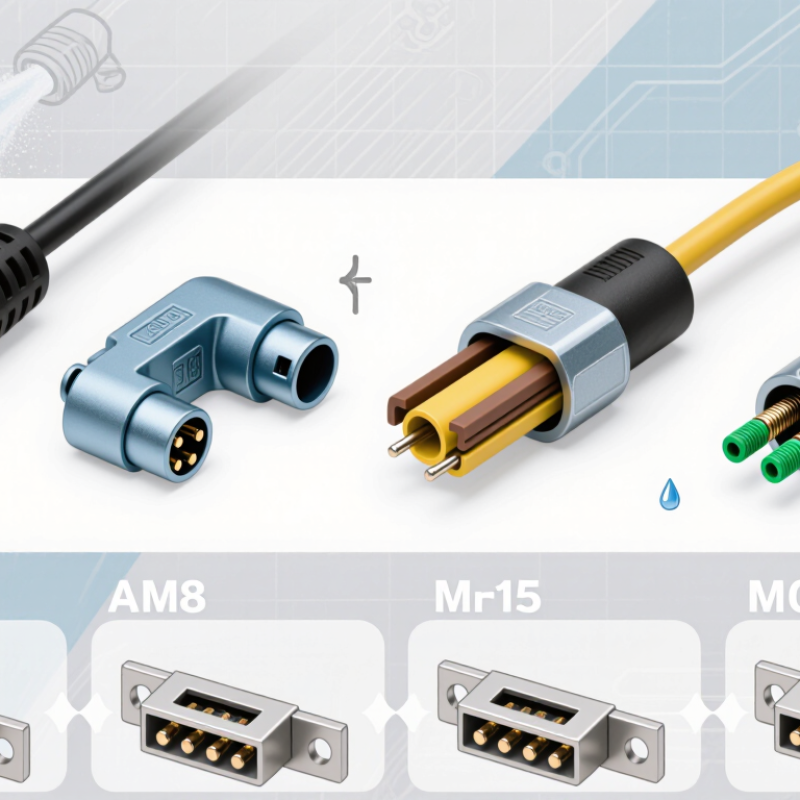
M8 Pico Connector Basics and Common Industrial Uses
M8 Pico connectors use an 8 mm threaded coupling for compact sensor and actuator connections. The IEC 61076-2-104 standard describes key dimensions and interface requirements for M8 circular connectors. Common configurations include three- and four-pin versions, though pin assignments and coding vary. Check the wiring diagram, not just the connector shape.
Their small footprint suits photoelectric sensors, proximity switches, compact valves, and machine modules where larger connectors crowd the panel. They are often used on conveyors, packaging equipment, and robotic tooling. The International Federation of Robotics reported 541,302 industrial robot installations worldwide in 2023 in World Robotics 2024. More automated equipment means more field connections to specify and maintain, although that figure does not measure M8 use directly.
Small, but not trivial. In a washdown area, inspect the sealing surface, cable entry, and mating condition; a tight coupling alone does not guarantee protection. Confirm the required ingress rating, voltage, current, temperature range, and pinout against the equipment documentation. Also consider vibration and available cable bend space. Field layouts can be messier than drawings, and that is where connector choice gets tested.
Main M8 Pico Connector Types by Pin Count and Shape
M8 Pico connectors are commonly selected by pin count and body shape. Three-pin versions often carry power, ground, and one signal for a simple sensor. Four-pin models add a contact for a second signal or function. Five-pin options can support extra switching or measurement lines. More pins do not automatically mean better performance. Check the device wiring diagram and current rating before choosing.
For denser connections, six- and eight-pin versions can carry multiple signals in a compact circular housing. They are useful where cable space is limited, but each contact must match the application. Small details matter. Confirm the pin layout, gender, and coding; similar-looking connectors may not share the same assignment. A pin count alone is not enough.
Shape affects installation. Straight connectors suit open cable routes, while right-angle bodies can fit beneath panels or beside machine frames. Measure the clearance around the socket, including room to turn the coupling nut. A right-angle connector may ease a tight bend, though its fixed exit direction can be awkward. Product drawings help, but real assemblies sometimes leave less space than expected.
Connector Coding Systems and Signal Compatibility
Top M8 Pico Connector Types for Global Buyers
Connector Coding Systems and Signal Compatibility
An M8 connector’s small shell does not guarantee signal compatibility. A-coding is common for sensors and actuators, while D-coded versions support Ethernet connections. IEC 61076-2-104 specifies key dimensions and interfaces for M8 connectors; it does not make every pinout interchangeable. Check the coding, pin count, wiring diagram, and device specification before ordering. Small shell, real stakes.
For Ethernet applications, confirm the supported protocol, cable construction, and transmission rate—not just the connector shape. The 2024 Industrial Network Market Shares report estimated Industrial Ethernet at 71% of newly installed industrial network nodes. That figure signals a shift, not a reason to fit Ethernet connectors everywhere. A sensor’s output type and the controller’s input must still match. One pin mismatch can stop a line.
On a workbench, compare the connector’s pin assignment with the equipment manual, then verify voltage, current, and shielding requirements. In exposed installations, assess ingress protection and cable strain relief as well. M8 options vary by coding and pin configuration, so a familiar-looking plug may carry a different signal. This is easy to overlook. Even careful buyers can miss a suffix or wiring detail; that small uncertainty deserves a final check before shipment.
Materials, Protection Ratings, and Regional Standards
M8 pico connectors may share a thread size, but their materials and sealing details are not interchangeable. Bishop & Associates’ 2024 connector-industry review valued global connector sales at about US$84 billion in 2023, reflecting a broad market with varied applications and specifications. Nickel-plated brass shells suit many general industrial installations; stainless steel can be preferable around washdown chemicals, though it adds cost. Check the cable jacket and seal material too. A metal shell alone does not prevent moisture damage.
Protection ratings need careful reading. Under IEC 60529, IP6X means dust-tight, while IPX7 covers temporary immersion under defined test conditions, commonly up to one metre for 30 minutes. It is not a guarantee of long-term submersion or resistance to every cleaning agent. Small detail. For North American projects, compare the required NEMA enclosure type and test conditions with the IEC rating; the designations are not direct equivalents.
Regional requirements can affect documentation as well as hardware. Confirm applicable connector standards, test reports, temperature range, and cable assembly approvals for the destination market. Ask suppliers for the exact test configuration, including whether the rating applies when mated. That point is easy to overlook. A connector tested with a protective cap may perform differently once installed, and procurement teams should verify the intended use rather than rely on a rating alone.
How Global Buyers Can Compare and Select M8 Pico Connectors
When comparing M8 Pico connectors, start with the equipment interface, not the product photo. Confirm the coding, pin count, and male or female contact arrangement against the device drawing. A-coded versions are common for sensors and actuators, but coding alone does not confirm compatibility. Count the contacts and check their positions.
Next, match the connector’s shape and installation to the available space. A straight plug may suit an open cable run, while an angled one can reduce bending near a machine frame. Compare cable length, conductor size, and jacket material with the temperature, oil, and movement expected on site. Check the stated ingress rating for the fully mated connection, too. The rating can change when parts are left unmated.
Small details matter. It is tempting to choose by price and pin count alone; that can lead to a connector that fits but does not perform as expected. Request a drawing and verify dimensions, wiring, and coding before ordering. If the application is exposed to vibration or frequent cleaning, test a sample under those conditions. One detail buyers sometimes overlook is clearance for the locking nut. It is easy to miss on a screen. Compare suppliers using the same specifications, and record any assumptions that still need confirmation.
Top M8 Pico Connector Types for Global Buyers: How to Compare and Select
Compare common M8 connector configurations by contact count, construction and application. Specifications can vary by product; confirm the pin assignment, coding, environmental rating and installation requirements on the individual datasheet.
Buyer checklist: M8 commonly refers to an 8 mm threaded coupling, often with an M8 × 1 thread. Confirm the product drawing and mating interface rather than relying on thread size alone. Check coding, contact count, male/female orientation, cable or mounting style, current and voltage ratings, temperature range, and the stated IP rating. An IP rating such as IP67 applies only under the conditions specified by the manufacturer; mating, sealing and installation details matter.
 English
 Français
