Top 10 Mini Final Drive Suppliers for Global Buyers?
Choosing the right Mini Final Drive supplier can affect machine uptime, operating costs, and long-term maintenance. For global buyers, the decision involves more than comparing prices. A compact excavator may require a drive that matches its hydraulic flow, pressure range, mounting pattern, and torque demand. Small differences can create serious installation problems.
This guide introduces ten notable Mini Final Drive suppliers serving international equipment markets. It considers product range, manufacturing experience, technical documentation, quality control, customization, warranty terms, and after-sales support. Supplier reliability also depends on practical details, such as response times, spare-part availability, packaging quality, and realistic delivery schedules. A supplier may offer attractive specifications, yet provide limited support after shipment. That risk deserves attention.
Field experience matters.
The evaluation also recognizes that no ranking is perfect. Supplier performance can vary by region, product series, distributor, and production period. Buyers should verify current certifications, testing records, sealing quality, and compatibility before placing an order. Technical drawings and hydraulic data should be reviewed by qualified personnel, especially when replacing an existing travel motor. This article is intended as a research starting point, not a substitute for engineering validation.
Clear evidence builds confidence. Invoices, inspection reports, sample testing, and customer references can reveal more than polished brochures. The best supplier is not always the largest or cheapest. It is the partner that delivers a suitable Mini Final Drive, communicates clearly, and supports the machine throughout its working life. That standard is demanding. It should be.
What Mini Final Drives Are and Where They Are Used
Mini final drives are compact power-transmission units built for machines that need strong torque in limited space. A hydraulic motor turns a planetary gearbox, which reduces speed and increases wheel or track force. The unit normally sits inside a track sprocket or wheel hub.
They are common in mini excavators, compact loaders, skid-steer machines, trenchers, agricultural equipment, and access platforms. Their sealed housing helps protect gears from mud, dust, and water. Their small footprint also gives designers more ground clearance. According to KHL’s 2024 Yellow Table, the world’s leading construction-equipment manufacturers generated about USD 281 billion in sales during 2023. That scale reflects continuing demand for compact machines, especially in urban construction and rental fleets. However, the report covers complete equipment, not mini final drives alone. This distinction matters.
Tips: Match torque, displacement, reduction ratio, mounting dimensions, and brake requirements before purchasing. Check the machine’s working weight and hydraulic pressure, not only motor size. In field repairs, contaminated oil is a frequent failure cause. I have seen a visually clean drive fail early because flushing was incomplete. That was a useful, slightly uncomfortable reminder: catalog compatibility is not installation compatibility.
The Global Off-Highway Vehicle Market Report by Off-Highway Research also identifies compact equipment as an important segment shaped by infrastructure renewal, rental use, and tighter workspaces. Buyers should request load charts, efficiency data, seal specifications, and service guidance. A cheaper drive can become expensive when downtime, freight, and repeated fitting are included.
Top 10 Mini Final Drive Suppliers for Global Buyers? – What Mini Final Drives Are and Where They Are Used
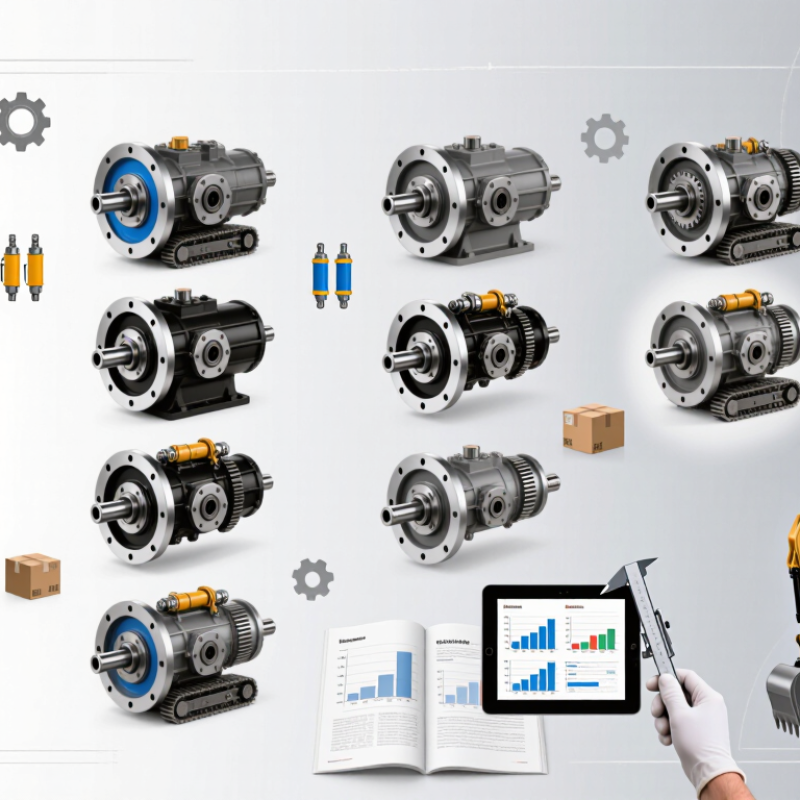
Mini final drives are compact hydraulic travel-drive units that combine a hydraulic motor, planetary reduction gearbox, bearings, seals, and a sprocket or output flange. The comparison below uses anonymous supplier profiles and typical market specifications so buyers can evaluate product fit without relying on company or brand names.
How to Evaluate Mini Final Drive Suppliers Worldwide
Selecting mini final drive suppliers requires more than comparing catalog prices. Buyers should verify torque, displacement, planetary strength, hydraulic efficiency, and expected service life. According to the ISO Survey 2023, 1,265,216 ISO 9001 certificates were reported worldwide. Certification helps, but it does not prove reliable field performance. Request test records, material specifications, dimensional drawings, and traceability documents. A serious supplier should explain how its drive handles shock loads, muddy sites, cold starts, and continuous operation.
Independent market research also shows steady demand for compact construction equipment. Grand View Research estimates the global construction equipment market will grow at about 4.8% annually from 2024 to 2030. This growth increases supplier choices, but quality differences can remain hidden. Compare warranty terms, spare-part availability, lead times, and technical support in your region. Ask for references from machines with similar operating weights. A perfect datasheet is not enough. Field evidence matters more.
Tips: Test one sample before placing a large order. Measure case temperature, noise, leakage, and travel speed after repeated cycles. Check whether the supplier can provide replacement seals and bearings quickly. Do not choose only by the lowest quotation. I have seen low-cost units create higher downtime costs. Some comparisons are also imperfect because duty cycles differ between countries. Record your actual working conditions, then evaluate suppliers against the same test criteria.
Profiles of the Top 10 Mini Final Drive Suppliers
The leading mini final drive suppliers serve different operating needs. A German precision manufacturer focuses on compact planetary drives for tracked excavators. Its engineers document tooth profiles, heat treatment, and backlash limits. An Italian specialist develops sealed units for agricultural machines. Field feedback often guides its seal revisions. A Japanese supplier is known for quiet hydraulic motors and strict vibration testing. Its test reports are detailed, though delivery can be less flexible. A South Korean producer offers high-volume assemblies for compact construction equipment. It balances automated production with custom mounting patterns.
A Chinese export-focused supplier provides competitive pricing and many ratio options. Buyers should verify material certificates and sample performance carefully. A Turkish manufacturer builds rugged drives for quarry and municipal equipment. Its housings are practical, but finish consistency deserves close inspection. A North American engineering house supports retrofit projects with technical drawings and adapter plates. It is valuable when an old machine lacks standard dimensions. A Dutch supplier emphasizes energy efficiency and low-temperature operation. Its compact designs suit northern climates, although product availability may vary. A Spanish manufacturer specializes in agricultural final drives with reinforced bearings. It understands muddy fields and frequent cleaning cycles. An Indian producer combines local machining with imported hydraulic components. Its support quality depends heavily on the assigned project team.
Across these ten profiles, reliable suppliers share clear inspection records, responsive engineers, and realistic load ratings. Buyers should compare torque, speed, mounting dimensions, warranty terms, and spare-part access. A polished brochure is not enough. Requesting a tested sample remains wise. Even experienced purchasers sometimes overlook oil temperature during continuous operation. That small mistake can shorten a drive’s working life.
How Global Buyers Can Select the Right Supplier
Selecting a mini final drive supplier requires more than comparing online prices. The right partner must match machine weight, travel speed, torque demand, and operating environment. Ask for load charts, gear ratios, hydraulic pressure ranges, and dimensional drawings before discussing volume. A reliable supplier explains limits clearly. That matters.
Look for evidence from real applications. Request anonymized installation photos, test records, and references from similar excavators, tracked carriers, or compact drilling machines. Check whether the supplier controls machining, heat treatment, sealing, and final inspection. Outsourced steps are not automatically weak, but unclear responsibility creates risk. I have seen projects delayed because a “standard” unit needed a different flange pattern.
Compare ten qualified suppliers using the same checklist. Review rated torque, peak torque, reduction ratio, brake design, protection level, noise, warranty terms, and spare-parts support. Ask how they verify backlash and oil leakage. A factory visit, video audit, or sample inspection can reveal more than polished brochures. Measure the delivered unit yourself: mounting holes, shaft dimensions, rotation direction, and port positions. Communication deserves equal weight. Can the engineering team answer technical questions without vague promises? Confirm drawings, labeling, packaging, lead times, and change-control procedures in writing. My checklist is not perfect, so field feedback should adjust it. Test one sample under realistic duty cycles before placing a large order. That costs more upfront. It may prevent expensive downtime.
Top 10 Mini Final Drive Suppliers for Global Buyers
How global buyers can select the right supplier through a 100-point procurement evaluation scorecard
The scorecard prioritizes total procurement value: cost competitiveness and product quality receive the highest weights, followed by delivery reliability, engineering capability, compliance, and after-sales support. Buyers can adjust these weights according to application, region, and project risk.
 English
 Français