
2026 Top Mud Pump Liner Types for Global Buyers

    Mud Pump Liner selection is a practical decision shaped by pressure, fluid chemistry, solids, and maintenance windows. For global buyers, the right choice is rarely just the lowest-priced part. A liner must fit the pump model and withstand the conditions recorded in the drilling program. Small mismatches can mean faster wear, leakage, or unplanned downtime.

    The International Energy Agency’s World Energy Investment 2024 estimated that upstream oil and gas investment would reach about $570 billion in 2024, a 7% rise in real terms. This figure describes industry-wide investment, not liner demand. Still, it points to continued spending on equipment and field operations. The American Petroleum Institute’s API Specification 7K provides recognized requirements for drilling and well-servicing equipment, including relevant mud-pump components. Buyers should confirm the current specification and pump-manufacturer requirements before comparing liner materials or dimensions.

    Common options include ceramic, chrome-plated steel, and other hardened-metal liners. Their performance depends on more than the material name. Abrasive mud, fluid additives, operating pressure, and available cooling can all change service life. Check bore size, liner length, sealing arrangement, and documented compatibility against the pump’s manual. Ask suppliers for traceable material and inspection records, then compare those claims with maintenance logs from similar duty.

    There is no universal winner. Reports rarely capture each rig’s actual wear pattern, and published life estimates may not transfer cleanly between sites. That matters. This guide compares major liner types and the evidence buyers can request before purchase. A careful selection can reduce avoidable changes, though it cannot eliminate wear.
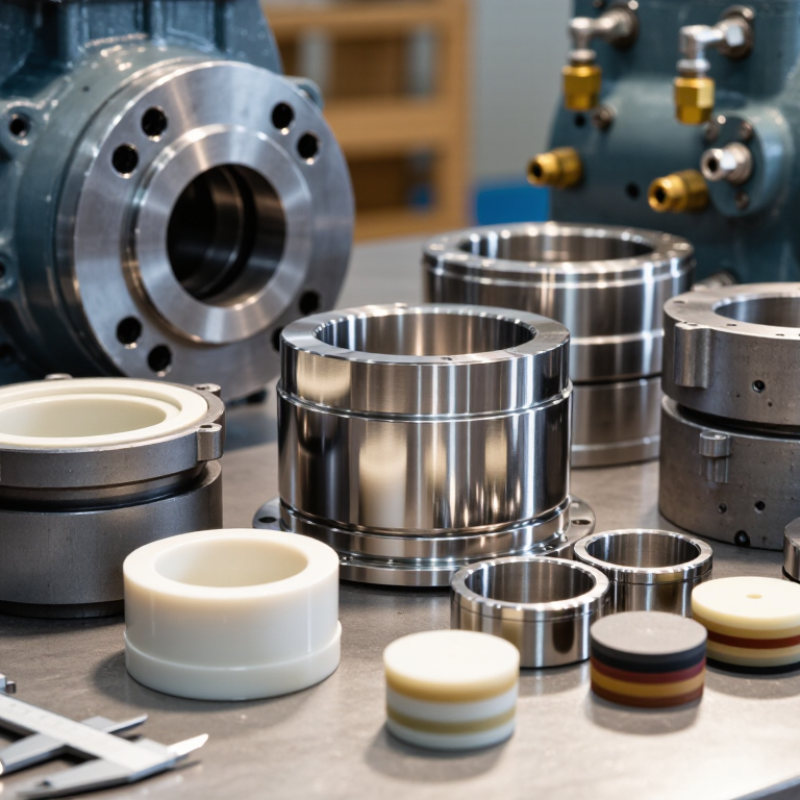
    2026 Top Mud Pump Liner Types for Global Buyers

    What Mud Pump Liners Are and How They Function

    A mud pump liner is a replaceable cylinder fitted inside the pump’s fluid end. It provides a smooth, pressure-resistant surface for the piston to move against. The liner works with the piston, seals, and valves; it does not pump fluid on its own.

    During the suction stroke, the piston moves back and pressure inside the chamber drops. The inlet valve opens, allowing drilling fluid to enter. On the forward stroke, the inlet valve closes and the discharge valve opens, pushing fluid into the circulation system. Simple in principle. Demanding in practice. Abrasive solids, pressure cycles, and poor flushing can wear the liner’s inner surface or damage seals.

    A worn liner may contribute to leakage, heat, or reduced pumping performance, but these symptoms can have other causes. Inspection should include the liner bore, piston fit, and seal condition. Look for scoring, uneven wear, and fluid bypass. Material choice and service life depend on the fluid, operating pressure, and maintenance routine. There is no single liner type that suits every well. The less tidy part is that field conditions rarely match a neat specification sheet, so inspection records matter.

    2026 Top Mud Pump Liner Types for Global Buyers — What Mud Pump Liners Are and How They Function

    Mud pump liners are replaceable sleeves inside the fluid-end cylinders. They provide a wear-resistant surface for the piston and help contain drilling fluid under pressure. Common designs include bi-metallic liners, which pair a steel outer shell with a hardened inner sleeve, and ceramic liners, which use a ceramic bore for abrasion resistance.

    The chart shows commonly encountered nominal liner bore sizes and the piston face area calculated from each diameter (A = πd²/4). Larger bores provide more piston area; actual pump output also depends on stroke length, speed, and volumetric efficiency. Available sizes vary by pump model and supplier.

    Main Mud Pump Liner Types Available in 2026

    Main Mud Pump Liner Types Available in 2026

    Mud pump liners generally fall into three groups: bimetallic steel, high-chrome alloy, and ceramic. Bimetallic designs pair a tough outer steel shell with a wear-resistant inner sleeve. They suit many routine drilling programs and are familiar to maintenance crews. High-chrome liners offer another metal option where abrasion and corrosion need close attention. Exact performance depends on the fluid, pressure, and operating practices.

    Ceramic liners use a ceramic bore, commonly alumina or zirconia, to resist wear and corrosion. Their smooth surface can support longer service intervals in suitable conditions. But ceramics are less forgiving of impact and poor installation. A dropped liner or uneven seating can turn a long-life component into an expensive replacement. Not a small detail. Buyers should compare expected service life, spare-part availability, and repair needs—not just purchase price.

    The International Energy Agency’s Global Energy Review 2025 reports that global oil demand rose 0.8% in 2024. That figure provides market context, not a direct forecast for liner sales or drilling workloads. Actual selection should follow pump specifications and field data, including fluid solids, pressure, and observed wear. I would also question any claimed service-life comparison that omits operating conditions. The numbers may look precise; the test conditions may not be comparable.

    Materials, Designs, and Performance Characteristics

    Mud Pump Liner Materials, Designs, and Performance

    A mud pump liner must handle pressure, abrasive solids, and repeated piston movement. Material choice shapes its wear life and maintenance needs. Bimetallic liners pair a steel shell with a hard, high-chromium inner sleeve. They offer a practical balance of impact resistance and abrasion protection in many drilling conditions. Ceramic liners resist abrasion well, but sudden impacts or poor installation can damage them. Strong on wear. Less forgiving.

    Design matters too. A close, consistent fit helps the piston seal properly and reduces uneven wear. Surface finish, liner dimensions, and cooling arrangements all affect operation. A liner that looks suitable on paper may perform poorly if its tolerances do not match the pump or the local mud system. This is easy to overlook.

    For global buyers, compare the expected solids content, operating pressure, temperature, and available maintenance support. Fine sand and coarse cuttings do not wear a liner in the same way. Corrosive fluids may also change the material requirements. No single type suits every rig. Even sound selection has limits; field conditions can shift faster than a specification sheet suggests. Check actual wear patterns and fit before choosing a replacement.

    2026 Top Mud Pump Liner Types for Global Buyers - Materials, Designs, and Performance Characteristics

    Liner Type Typical Materials Construction and Design Performance Characteristics Common Applications Buyer Considerations
    Bimetallic liner High-strength steel outer shell with a hard, wear-resistant alloy inner sleeve, commonly chromium-bearing iron alloy. A replaceable hardened sleeve is fitted or bonded inside a structural steel body. Available in sizes matched to specific pump models. Combines a tough supporting shell with a hard bore. Offers good resistance to abrasive wear and is widely used for demanding drilling service. The bore can wear or corrode depending on fluid chemistry and operating conditions. General drilling operations, including many water-based and oil-based mud applications where solids loading and operating conditions are within the liner specification. Check pump compatibility, bore finish, sleeve fit, fluid chemistry, and availability of replacement liners. Verify suitability for the expected solids and pressure duty.
    Ceramic liner Ceramic working surface, commonly alumina or zirconia-based, supported by a steel body or metal carrier. A precision-ground ceramic sleeve or insert forms the fluid-contact bore. Design details vary by manufacturer and pump configuration. High hardness and strong abrasion resistance can support long bore life in suitable service. Ceramic surfaces are generally corrosion-resistant, but the material is more brittle than steel and may be vulnerable to impact, mishandling, or rapid thermal change. Abrasive mud service and applications where reduced liner wear is a priority, provided pressure, temperature, fluid, and handling conditions are within the product limits. Confirm ceramic composition, backing design, temperature limits, installation procedure, and suitability for shock or pressure cycling. Handle and store carefully to prevent damage.
    Monometallic alloy liner Single-piece alloy steel or cast alloy selected for wear and strength; surface treatment may vary by design. The liner body and bore are made from the same metal alloy rather than a separate hard sleeve and outer shell. Provides a robust metal construction and can tolerate mechanical handling better than brittle ceramic designs. Wear resistance and corrosion behavior depend on alloy composition, heat treatment, surface finish, and mud conditions. Operations prioritizing a metal liner construction, including service conditions where impact resistance and straightforward handling are important. Request material and heat-treatment details, hardness information, corrosion guidance, and dimensional compatibility. Do not assume all alloy liners have the same wear performance.
    Hard-faced or surface-treated liner Steel or alloy base with a hardened, plated, or otherwise engineered bore surface, depending on the design. A treatment or coating is applied to the fluid-contact surface to improve selected surface properties; the underlying liner body carries the structural load. Can improve surface hardness or wear behavior for the intended duty. Performance depends on coating quality, thickness, adhesion, substrate preparation, and compatibility with the pumped fluid. Selected drilling services where a treated metal bore is preferred and the treatment is specified for the expected abrasion and fluid environment. Ask for treatment type, inspection criteria, repair options, and limits for abrasive or corrosive service. Compare lifecycle cost rather than purchase price alone.
    Replaceable-sleeve liner design Structural steel housing paired with a replaceable metal or ceramic sleeve. The working bore is supplied as a separate sleeve or insert, allowing the wear component to be replaced while retaining the housing where the design permits. Can simplify renewal of the wear surface and reduce replacement of larger components. Fit, sealing, sleeve retention, and the condition of the housing are critical to reliable operation. Maintenance programs seeking replaceable wear components, subject to pump design and the availability of correctly matched sleeves. Confirm whether the pump accepts this configuration, which parts are reusable, and the required inspection and installation procedures.
    Selection note: Liner life and performance depend on pump model, liner size, pressure and speed, mud chemistry, solids concentration and particle characteristics, lubrication, installation, and maintenance. Confirm dimensional interchangeability and operating limits with the pump documentation and liner supplier before purchase.

    How to Match a Liner Type to Drilling Conditions

    When matching a mud pump liner, begin with the drilling fluid and operating cycle, not the purchase price. Record solids content, particle hardness, flow rate, pressure, and expected hours between maintenance stops. These details often reveal more than a broad label such as abrasive mud. For demanding, solids-rich service, a bimetal liner can offer a tough steel body and a wear-resistant inner sleeve. It generally tolerates rough handling better than ceramic options, though sleeve wear still needs monitoring. For cleaner fluids and long, steady runs, ceramic liners can reduce friction and resist abrasion. They are less forgiving of impact, poor installation, or sudden pressure changes. No choice is perfect.

    Before ordering, verify bore diameter, liner length, sealing arrangement, and rated pressure against the pump documentation. A mismatch can cause leakage, uneven piston wear, or an avoidable shutdown. Also consider how quickly replacement parts can reach the rig; remote logistics can outweigh a small efficiency gain. Track operating hours, leakage, and surface scoring during routine inspections, then compare records across wells. If wear appears unusually early, check fluid solids and flushing practices before blaming the liner material. The data may be imperfect, especially when crews change shifts, but even a simple log can improve the next selection.

    Global Buying Factors: Standards, Compatibility, and Supply

    2026 Top Mud Pump Liner Types for Global Buyers

    Global Buying Factors: Standards, Compatibility, and Supply

    For global buyers, a liner’s nominal bore is only the start. Confirm pump model, liner length, sealing arrangement, and fluid-end drawings before ordering. API Spec 7K covers drilling and well-servicing equipment, but a standards reference alone cannot confirm fit. Match the supplier’s dimensional drawing to the pump documentation, and record the applicable specification edition. IEA’s Oil 2025 report forecasts global oil-demand growth of about 1.03 million barrels per day in 2025. That outlook makes dependable replacement planning useful, though demand forecasts cannot guarantee local availability.

    Compatibility also depends on the job. Abrasive fluids, operating pressure, and temperature affect material and service-life choices. Ask for documented material properties, inspection records, and batch traceability. Check whether the supplier can provide matching seals and repair parts, plus realistic lead times and shipping details. A polished data sheet may still omit a small but critical seal detail. Verify it.

    Tips: Send the pump model and measured liner dimensions with your inquiry. Request a drawing, inspection documents, and written confirmation of fit before purchase. Keep a spare only after checking storage conditions and shelf-life limits for accompanying seals.

    Sources: API Spec 7K; International Energy Agency, Oil 2025.