
What Are the Top Shipping Tarp Manufacturers in China?
Choosing a reliable Shipping Tarp manufacturer in China takes more than comparing prices or product photos. The real test is how consistently a supplier builds tarps for the conditions your cargo will face. A tarp may look strong on a showroom floor, yet fail where its seams meet, its grommets pull, or its coating meets sharp sunlight and rain.
This guide compares Chinese manufacturers through practical indicators: material specifications, stitching and edge reinforcement, customization options, quality-control evidence, communication, and export experience. Look for clear answers about fabric weight, coating, dimensions, and testing. Ask to inspect a sample. Run your fingers along the hem; check whether the stitching stays even around the corners. Small details matter.
W. Edwards Deming, a quality expert—not a Shipping Tarp specialist—is widely associated with the principle, “Quality is everyone’s responsibility.” It offers a useful lens for evaluating a manufacturer’s process, but it is not a tarp-specific endorsement. No independently verified quotation from a named Shipping Tarp industry expert was available for this introduction, so none is invented. That distinction matters. Supplier claims can be persuasive, and even a careful comparison has limits: factory capabilities change, and a strong sample cannot guarantee every production run. The following overview aims to help buyers ask sharper questions and compare manufacturers with evidence, not assumptions.
Understanding Shipping Tarps and Their Uses
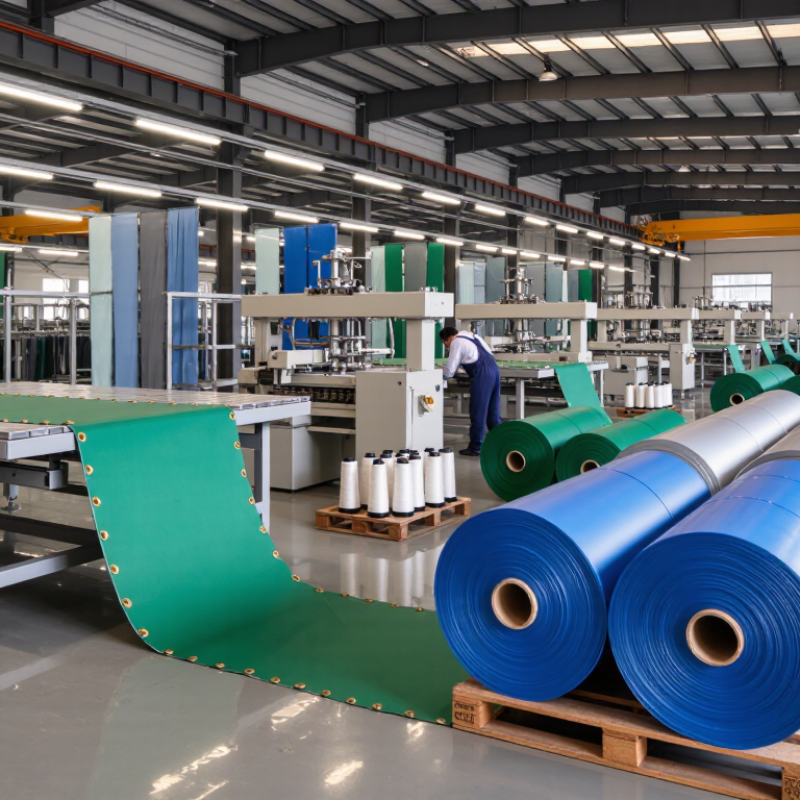
Shipping tarps help shield cargo from rain, road spray, dust, and sunlight during storage or transport. They are commonly made from woven fabrics coated with polyethylene or vinyl, though material and construction vary. A tarp should fit the load without leaving loose corners that flap in the wind. Small details matter. Reinforced hems, sturdy grommets, and well-placed tie-down points can make covering and securing cargo easier.
Choose a tarp based on the cargo, travel conditions, and expected exposure. A waterproof cover may suit a load facing steady rain, while a breathable option can help reduce trapped moisture around some goods. Check the fabric weight, seam quality, dimensions, and fastening layout before use. Then inspect the cover for worn edges or torn holes. A tarp is not a substitute for proper cargo restraint, and even a durable one can fail if it is poorly fitted or exposed to sharp corners. It is easy to assume heavier means better, but extra weight can complicate handling. The right choice depends on the load and how it will be moved.
Criteria for Evaluating Chinese Shipping Tarp Manufacturers
Choosing a Chinese shipping-tarp manufacturer means checking more than price and catalog photos. UNCTAD’s Review of Maritime Transport 2024 reports that global maritime trade grew 2.4% in 2023, keeping cargo protection relevant across busy routes. That figure does not prove tarp demand, but it highlights the scale of goods moving by sea. Ask suppliers for fabric specifications, including weight, coating type, UV resistance, and tear strength. Small details matter.
Request recent, third-party test reports and confirm that results match the tarp material you plan to buy. Check seam construction, reinforced corners, eyelet spacing, and dimensions against your cargo and securing method. A sample should be inspected for coating consistency, clean welds or stitching, and edge finish. Ask how batches are traced and how defects are handled. Also compare production capacity, lead times, and inspection procedures, not just quoted prices. A polished sample may not represent every shipment, so independent pre-shipment checks can add useful assurance.
Tips: Send the same written specification to each shortlisted factory. Request a production sample and clarify who pays for testing. No checklist catches everything; document any unanswered questions before placing an order.
Leading Shipping Tarp Manufacturers in China
China’s leading shipping tarp manufacturers are judged by more than production capacity. Strong suppliers ask about cargo size, exposure, tie-down points, and how often the tarp will be reused. These details shape fabric weight, coating, edge reinforcement, and grommet spacing. A tarp for a covered route may need different protection from one exposed to rain and road spray.
Look for clear material specifications and consistent quality checks. Ask how seams are sealed, how corners are reinforced, and whether finished tarps are inspected for coating gaps or weak stitching. Request samples and compare their weight, flexibility, and finish in person. A tidy sample helps, but it cannot prove every production run will match. That deserves a closer check.
Reliable manufacturers explain limitations as well as options. They should confirm dimensions, tolerances, packaging, and lead times in writing, then provide practical updates during production. Experience matters. So does a willingness to question an unsuitable specification. No single factory fits every shipment, and buyers can still overlook small details, such as a tie-down pattern that clashes with the load. Clear questions early on can prevent costly adjustments later.
Comparing Product Range, Materials, and Production Capabilities
China’s shipping tarp manufacturers differ in more than price. Their product ranges may include laminated woven polyethylene covers, PVC-coated polyester tarps, mesh covers, and custom-cut sizes. Check fabric weight, coating thickness, and finished dimensions separately; similar labels do not guarantee similar performance. Some details get overlooked.
Material choice should match the load and route. A tarp exposed to rain and road spray needs well-sealed seams, reinforced hems, and securely set grommets. For outdoor storage, ask how UV exposure may affect strength and color. Cold-weather flexibility can matter too. Request a sample and inspect its edges, stitching, and finish under ordinary handling. Samples matter.
Production capability is not just factory size. Ask whether cutting, heat welding or sewing, edge reinforcement, and final inspection are controlled in-house. Consistent measurements across a trial batch can reveal more than a polished sample. Request a written specification and sample inspection records, then compare them with delivered goods. One limitation: a factory’s stated capacity may not reflect every production run. That uncertainty deserves a clear question.
How to Choose and Verify a Chinese Shipping Tarp Supplier
What Are the Top Shipping Tarp Manufacturers in China?
How to Choose and Verify a Chinese Shipping Tarp Supplier
Choosing a supplier starts with the tarp’s actual job. Share the cargo type, dimensions, expected weather, and how the cover will be secured. Ask for fabric weight, coating details, UV-resistance information, and a clear description of seam construction. A tarp can look sturdy in a photo and still have weak corners. Request a sample and inspect the stitching, grommets, and reinforced edges yourself.
Verify the supplier, not just the product. Check its business details and ask for a live factory tour or recent production footage. Request quality-control records and test reports that match the exact material and thickness being quoted. Confirm who performs testing and whether reports can be independently checked. Compare written specifications, lead times, packaging, and replacement terms across suppliers. I would not rely on polished photos alone; even a careful review can miss problems in a large order.
Tips: Measure a sample, pull gently around each grommet, and check that coating covers the fabric evenly. Keep the approved sample and specifications as your reference. Small differences matter. Ask how defects are recorded and handled before placing a bulk order.
English
Français 