Top 10 Types of Tarpaulin Sheets for Global Buyers?
Tarpaulin Sheets protect cargo, machinery, crops, vehicles, and outdoor workspaces from rain, sunlight, dust, and abrasion. Yet “tarpaulin” describes many constructions, not one universal product. Polyethylene, PVC-coated fabric, canvas, mesh, fire-retardant, and insulated sheets each serve different operating conditions. A blue woven cover may suit short-term storage, while a heavy PVC sheet performs better beside a busy loading dock.
Market reports indicate sustained demand for protective textiles and coated fabrics across construction, agriculture, transport, and logistics. Grand View Research has identified construction and industrial applications as important growth areas within technical textiles. Allied Market Research has also reported expanding demand for protective and coated fabric solutions. However, published market figures vary because researchers define tarpaulins differently. That uncertainty deserves attention.
This guide compares the top 10 types of Tarpaulin Sheets for global buyers. It focuses on practical selection, not attractive catalog language. Key factors include fabric weight, coating thickness, tensile strength, tear resistance, UV stability, waterproof performance, temperature tolerance, and eyelet durability. Product specifications should be verified through test reports, sampling, and documented quality controls. A waterproof claim alone is not enough. Neither is a high GSM figure.
Small details matter. A reinforced corner can prevent failure during strong winds. Correct eyelet spacing can reduce stress around tied edges. Factory experience also reveals weaknesses that laboratory figures may miss, especially during folding, transport, and repeated installation. No product is perfect. Buyers should balance service life, budget, climate, and intended use before choosing a sheet. That is where informed comparison becomes valuable.
Tarpaulin Sheets: Definition, Structure, and Core Functions
A tarpaulin sheet is a flexible, coated, or laminated textile designed to resist water, sunlight, dust, and abrasion. Common constructions use woven polyethylene, polypropylene, PVC-coated polyester, or canvas. The base fabric provides tensile strength, while the coating limits moisture penetration.
That distinction matters. A thick sheet may still fail if its seams, eyelets, or edges are weak.
Industry reports estimate the global tarpaulin market at several billion U.S. dollars annually, although figures differ by product scope and regional coverage. One 2024 market analysis projects continued growth through 2030, supported by construction, agriculture, transport, and emergency shelter demand. These figures are useful, but not perfect. Some reports include temporary structures, while others count only finished sheets.
In practical use, structure determines performance. A tightly woven fabric suits repeated folding and cargo covering. A laminated polyethylene sheet offers low weight and economical weather protection. PVC-coated polyester usually provides stronger tear resistance and longer outdoor service.
Look for denier, fabric weight, coating thickness, seam method, UV treatment, and reinforced corner patches. A sheet covering a truck bed needs different engineering from one protecting harvested grain.
Field experience also exposes a common mistake: buyers compare grams per square meter, then overlook stitch quality and grommet spacing. That decision can fail in wind.
The Top Ten Tarpaulin Types and Their Distinctive Features
Top 10 Types of Tarpaulin Sheets for Global Buyers
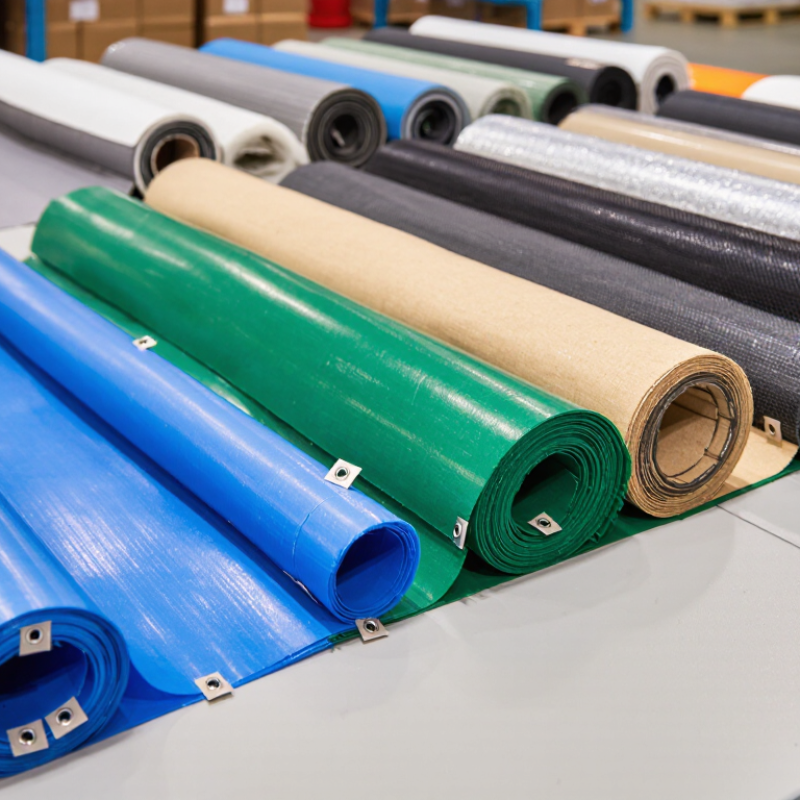
The ten main types differ by fabric, coating, strength, and intended exposure. Woven polyethylene tarpaulins are lightweight, waterproof, and economical for temporary covers. PVC-coated polyester offers higher tear resistance and longer outdoor service. Canvas tarpaulins breathe better, reducing trapped moisture around stored goods. Mesh tarpaulins allow airflow and lower wind pressure. Laminated polyethylene sheets provide smooth surfaces and easy cleaning. High-density polyethylene versions deliver strong tensile performance with relatively low weight. Low-density polyethylene sheets remain flexible in cooler conditions. UV-stabilized tarpaulins resist sunlight degradation. Fire-retardant tarpaulins require tested performance, not vague sales claims. Insulated tarpaulins help moderate heat transfer during transport or site storage.
Market evidence supports careful material selection. Grand View Research’s 2024 market assessment expects the global tarpaulin sheets market to grow at roughly 5% annually through 2030. PlasticsEurope reported 413.8 million tonnes of global plastics production in 2023, highlighting the scale of polymer-based materials. Still, market growth does not guarantee quality. Buyers should check GSM, denier, seam construction, eyelet spacing, UV test results, and temperature limits. A waterproof sheet may fail at poorly sealed seams. A heavy sheet may be difficult to handle. The categories also overlap. A UV-resistant product can be PVC, PE, or canvas. That naming is imperfect. For fire-retardant applications, request documented testing against the destination market’s recognized standard, such as EN 13501-1 or NFPA 701.
How to Match Tarpaulin Materials with Different Applications
Top 10 Types of Tarpaulin Sheets for Global Buyers
Matching tarpaulin material to its application prevents early damage and unnecessary replacement. Woven polyethylene sheets suit construction covers, truck loads, and temporary outdoor storage. They resist water and remain relatively lightweight. PVC-coated tarpaulins provide stronger abrasion resistance for long-term shelters, industrial curtains, and heavy transport covers. Canvas offers breathability, making it useful for furniture, agricultural equipment, and controlled storage. However, it may absorb moisture without proper treatment.
Mesh tarpaulins reduce wind pressure around fences, scaffolding, and outdoor event areas. Clear PVC sheets allow light into temporary workspaces and storage structures. Flame-resistant materials can support specific workplace requirements, but buyers must verify test certificates and local regulations.
Insulated tarps help protect temperature-sensitive cargo, although they cannot replace qualified cold-chain equipment. Silage sheets serve agricultural storage, while reinforced ground covers handle rough surfaces. No material wins every test.
Tips: Check fabric weight, coating thickness, seam quality, eyelet spacing, and temperature range. Ask for sample testing under rain, tension, and repeated folding. A thicker sheet is not always better; it may become difficult to install and transport. I have seen buyers focus on color and price, then overlook edge reinforcement. That mistake is easy to repeat. Specify the application, exposure time, loading method, and expected service life before comparing quotations. Reliable suppliers should provide measurable specifications, inspection records, and clear care instructions.
Key Performance Standards for Global Buyers to Compare
Global buyers often compare ten tarpaulin types, including PE, PVC, canvas, mesh, truck, silage, insulated, fire-retardant, lumber, and waterproof sheets. The material is only the starting point. A practical comparison should record GSM, coating thickness, tensile strength, tear resistance, and seam strength. Ask for test methods, not only attractive numbers.
Water resistance needs measurable evidence. Hydrostatic pressure, water leakage, and seam performance reveal more than the word “waterproof.” For outdoor use, request UV-aging data and temperature limits. A sheet may remain flexible at 0°C but crack below that point. Flame-retardant grades also require documented test standards and clear limitations. Local regulations may differ.
Check the details.
In field inspections, I usually examine eyelet spacing, reinforced corners, folded hems, and stitching consistency. These small areas often fail before the fabric does. A higher GSM is not automatically better; excessive weight can increase handling costs and stress support frames. Color fading also matters, especially for long-term storage. Compare samples after folding, stretching, and wetting them. One weakness remains easy to miss: laboratory results may not represent every production batch. Buyers should request recent reports, inspect random samples, and confirm tolerances in the purchase specification.
The 1–5 scores represent typical market performance ranges derived from common material construction, coating systems, and end-use specifications. They are comparison benchmarks rather than product certifications; buyers should verify hydrostatic pressure, tensile strength, tear strength, UV exposure, and applicable ISO/EN/ASTM test results for each shipment.
Practical Buying Factors: Size, Customization, Compliance, and Cost
Top 10 Types of Tarpaulin Sheets for Global Buyers
Choosing tarpaulin sheets requires more than comparing prices. Start with the load, weather exposure, and expected service life. A truck cover may need waterproof PVC-coated fabric, while garden protection can use lighter polyethylene. Size matters. Measure the covered area, add folding space, and confirm eyelet positions before ordering.
Customization should match real working conditions. Buyers may request reinforced corners, heat-sealed seams, printed markings, rope edges, or special colors. Ask for material thickness, fabric weight, tensile strength, tear resistance, and UV performance. Samples reveal details that product photos often hide. Check whether stitching is even and whether water passes through folded seams.
Compliance can affect every shipment. Confirm the destination’s rules for chemical content, labeling, fire performance, and packaging. Request recent test reports from an independent laboratory when required. Do not accept vague claims such as “international quality.” Cost calculations should include tooling, sample fees, freight, import charges, and expected replacement frequency. A low unit price may become expensive after one harsh season. In practical sourcing work, I have seen buyers overlook edge reinforcement and regret it later. I still consider unit price too early when the application is unclear. Ask better questions first.
English
Français