Top 10 Types of Water Drilling Rigs for Global Buyers
Choosing among the top 10 types of water drilling rigs starts with the ground, the water target, and the worksite. A compact truck-mounted rig may reach a rural property quickly, while a crawler rig can handle rough, uneven terrain. Rotary, cable-tool, and direct-push systems each suit different formations and project needs. There is no universal winner. Even a capable machine can struggle when the site conditions are misunderstood.
Water-well engineer Alex Morgan offers a useful field principle: “Match the rig to the formation, not just the depth on the drawing.” The choice also depends on access roads, available water, drilling method, expected borehole diameter, and the crew’s experience. A narrow gate or soft shoulder can matter as much as the planned depth. Buyers should compare specifications carefully and ask suppliers about maintenance, tooling, operator training, and support in the intended region. A low purchase price can hide costly delays. Details matter.
This guide examines ten common water drilling rig types for global buyers, from truck-mounted and trailer-mounted units to crawler, truck-mounted rotary, and specialized rigs. It outlines where each type can be useful, what trade-offs to consider, and which questions to ask before purchasing. The categories are a starting point, not a substitute for local geological assessment. Real sites are messy. Soil layers can change within a short distance, and published performance figures may not reflect a buyer’s actual conditions. A careful shortlist—and a frank conversation with experienced drillers—can help buyers choose equipment that fits the job rather than the brochure.
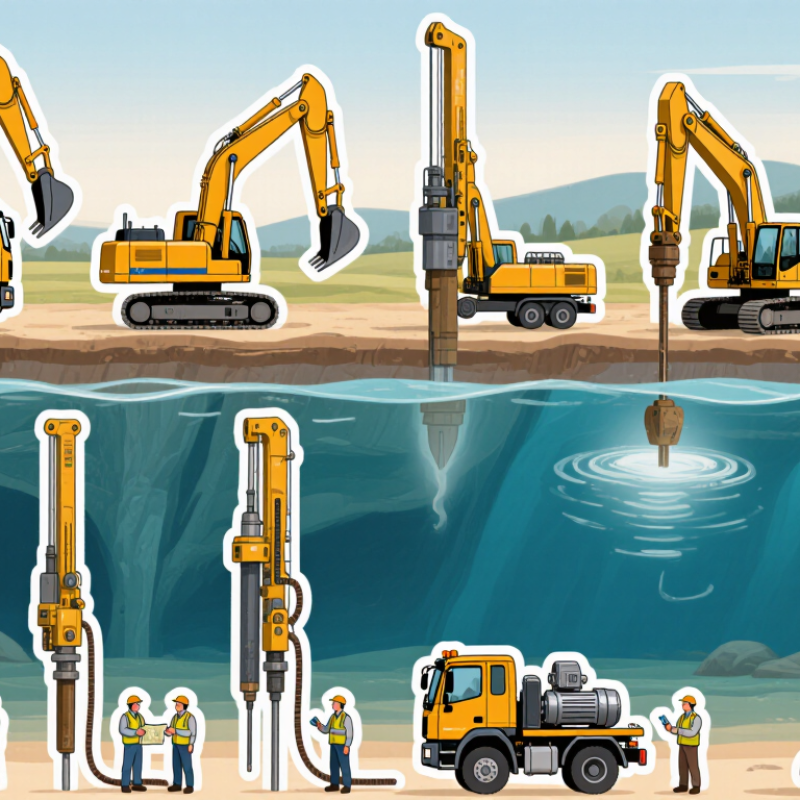
Classify 10 Water-Well Rig Types by Rotary, Percussion, Auger, and Hybrid Methods
Water-well rigs can be grouped by how they break ground and remove cuttings. Conventional direct-rotary rigs turn a drill bit while circulating fluid down the drill string. Reverse-circulation rigs carry cuttings upward through the pipe’s center, which can help with large-diameter holes. Mud-rotary rigs use drilling fluid to cool the bit and support unstable walls. Air-rotary rigs use compressed air to lift debris, often in firmer formations. The categories overlap in practice.
Cable-tool percussion rigs repeatedly raise and drop a heavy bit. They are mechanically simple, but drilling can be slow. Auger rigs turn a helical blade to bring soil upward. Bucket-auger rigs collect loose material in a rotating bucket; continuous-flight augers lift cuttings along the flights. Hollow-stem augers leave a central passage for sampling or installing well components. Soil conditions matter.
Hybrid methods combine actions. Down-the-hole hammer rigs rotate a drill string while a pneumatic hammer strikes near the bit, making them useful in hard rock. Sonic rigs add rapid vibration to rotary motion, helping advance through varied layers, though heat and equipment demands deserve attention. These ten labels are practical, not universal: local geology, water depth, hole diameter, and cuttings disposal can change the best choice. A clean site plan matters.
Compare Rated Depth, Borehole Diameter, Torque, and Pullback Capacity
Top 10 Types of Water Drilling Rigs for Global Buyers
Rated depth is a useful starting point, but it is not a promise of field performance. A rig’s published depth may assume a particular rod size, formation, and drilling method. Compare those conditions before treating two ratings as equivalent. That matters. A 300-meter rating in stable ground may not translate to the same depth in fractured rock.
Rotary, mud rotary, and down-the-hole rigs suit different formations and drilling fluids. Auger rigs generally serve shallower work in softer soils, while crawler and truck-mounted designs differ in mobility and setup needs. Borehole diameter also affects the comparison: a rig may reach its maximum depth only with a narrower bit. Check the rated diameter at the target depth, not just the largest listed hole. Torque helps turn the drill string through resistant layers; pullback capacity supports extraction and handling. They are not interchangeable figures.
For a practical comparison, record rated depth, hole diameter, torque, and pullback in one table, alongside the test conditions. Ask how ratings change with rod length and tooling. Not always. A clean specification sheet can still hide trade-offs. I would also leave room for uncertainty: ground conditions vary across a site, and the highest number is not automatically the safest or most productive choice. A modest capacity margin can be more useful than a headline rating.
Top 10 Types of Water Drilling Rigs for Global Buyers — Compare Rated Depth, Borehole Diameter, Torque, and Pullback Capacity
Note: These are indicative ranges for representative rig configurations, not guaranteed specifications. Actual rated depth, borehole diameter, torque, and pullback or hoist capacity vary by model, drill string, tooling, operating method, and ground conditions. Confirm manufacturer specifications and site requirements before selecting equipment.
Match Mud Rotary, DTH, and Cable-Tool Rigs to Soil and Rock Conditions
Mud rotary rigs suit loose sand, silt, and clay, where circulating drilling fluid supports the borehole walls. They can reach water-bearing layers efficiently, but muddy returns may obscure fine formation changes. DTH rigs use compressed air to drive a hammer near the bit. They are often effective in competent granite or other hard rock, where percussion helps maintain penetration. Fractured ground can complicate air circulation and water control. Cable-tool rigs work by repeatedly lifting and dropping a heavy bit. They drill slowly, yet can advance casing through unstable layers and provide clear samples. No method wins everywhere.
The USGS report Estimated Use of Water in the United States in 2020 estimated groundwater withdrawals at 82.3 billion gallons per day. That scale makes sound borehole planning consequential, but it does not identify one best rig for every site. Ground conditions, target depth, water-table behavior, access, and cuttings disposal all matter. Field logs and a geologic assessment should guide the final choice; early estimates can still be wrong.
Tip: Match the rig to the hardest or least stable layer, not just the surface soil. In mixed ground, ask the driller how casing, fluid, or air will be managed at each transition. A site-specific test may prevent costly surprises.
Top 10 Water Drilling Rig Types: Suitability by Ground Condition
How to read this chart: Ratings are qualitative: 2 = commonly suited, 1 = conditionally suited, and 0 = generally not preferred. Actual performance depends on geology, borehole design, tooling, and operating conditions; use site investigation to select a rig.
Assess DTH Rigs Using Typical 10–35 bar Compressed-Air Requirements
For global buyers comparing water drilling rigs, a DTH rig’s compressed-air requirement deserves close attention. Typical operating pressures may range from 10 to 35 bar, but this is not a universal setting. The hammer, bit size, drilling depth, and ground conditions all affect the required pressure. Check the hammer manufacturer’s specifications before treating a catalog figure as a target.
Pressure is only half. The compressor must also supply enough air volume for the selected hammer, continuously. A gauge near the compressor can show adequate pressure while long hoses, narrow fittings, or leaks reduce pressure at the tool. Measure at the rig when possible. On a dusty site, inspect filters and connections regularly; small restrictions can slow drilling and increase wear. Altitude and heat may also reduce compressor output, so confirm performance under expected site conditions.
Ask suppliers for the pressure and airflow needed at the hammer, not just the compressor’s maximum rating. Compare those figures with the rig’s compressor capacity and hose layout. A 10-bar setup may suit one application, while another may need pressure near the upper end of the 10–35-bar range. More pressure is not automatically better. I would still allow a practical margin, but avoid oversizing on paper alone: fuel use, maintenance, and actual ground response matter too.
Compare Mobility, Power Systems, and Water-Well Completion Needs
Site conditions vary. A compact truck-mounted rig can reach farm tracks and narrow urban plots, while a crawler rig handles rough ground but needs careful transport planning. Check mast clearance, turning space, and soil bearing capacity before mobilization. A rig that fits on paper may still struggle beside a fence or beneath overhead lines.
Power choice changes daily output. Diesel systems suit remote sites, but fuel logistics, noise, and exhaust need attention. Electric or hybrid systems can be practical near buildings, provided the power supply is reliable. That assumption can fail on isolated sites. Compare available power with the rig’s duty cycle, pump demand, and expected drilling hours, rather than looking at engine rating alone.
Well completion needs should shape the choice from the start. Rotary rigs work across many formations, while down-the-hole hammer systems are often effective in hard rock; actual results depend on geology and bore stability. Completion needs matter early. Confirm the planned casing diameter, screen length, and gravel-pack method, then check that the rig can handle the required components. A common blind spot is treating casing as a later purchase: changing its diameter can affect the rig, pump, and handling tools. Test-hole findings may also force adjustments, so leave room in the plan for revised ground conditions.
 English
 Français