What Is a 3 Phase Socket and How Does It Work?
What Is a 3 Phase Socket and How Does It Work?
A 3 Phase Socket connects industrial or commercial equipment to a three-phase electrical supply. Unlike a standard single-phase outlet, it carries three alternating currents. These currents are separated by 120 electrical degrees. Together, they provide smoother power for motors, compressors, pumps, welders, and heavy machinery.
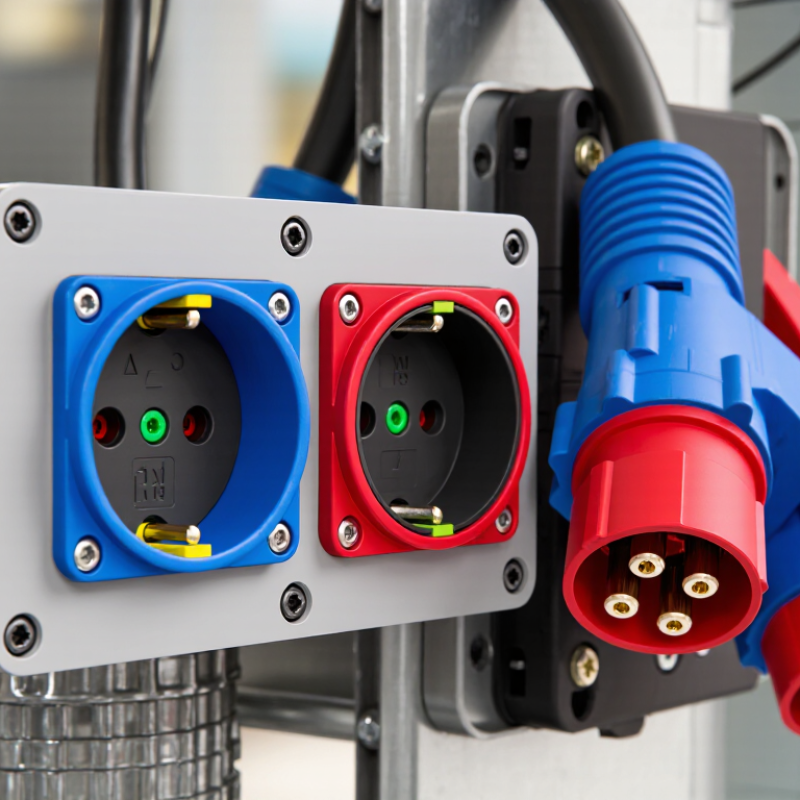
The socket usually includes several contacts. These may include three phase conductors, a protective earth, and sometimes a neutral conductor. The exact arrangement depends on the regional standard, voltage rating, current capacity, and connector design. Some models use colored housings, locking mechanisms, or weather-resistant seals. A blue or red connector can indicate a particular application, but color alone should never confirm compatibility.
Electrical educator Mike Holt offers a useful safety reminder: “Electricity doesn’t care how much you know; it only cares what you do.” That warning fits every 3 Phase Socket installation. A qualified electrician must check phase sequence, earthing, insulation, load demand, and enclosure protection. Small details matter. A loose terminal can create heat, noise, or equipment failure.
The basic principle is clear. Three synchronized supplies deliver power efficiently. Still, the explanation is not complete without acknowledging real-world variation. Standards differ between countries and industries. A socket that fits physically may still have the wrong voltage or phase arrangement. This guide will examine socket types, internal connections, operating principles, safety features, and practical selection points. It will also challenge a common assumption: bigger connectors are not automatically safer or better.
What Is a Three-Phase Socket?
What Is a Three-Phase Socket?
A three-phase socket is an electrical outlet designed to supply power through three alternating current conductors. These conductors are commonly called L1, L2, and L3. Their voltage cycles are offset from one another, creating a smoother and more continuous flow of energy than a single-phase outlet. This design supports equipment with high and steady power demands, such as workshop machinery, commercial ovens, pumps, and large ventilation systems.
A typical three-phase socket may also include a neutral connection and a protective earth contact. The exact arrangement depends on the electrical system, socket design, and local requirements. Some equipment uses three phases and earth only, while other equipment needs neutral for control circuits or lighting. The socket and plug must match in current rating, voltage, number of pins, and keying. A mismatch is not a minor inconvenience.
In practical use, the three live phases enter the equipment and power its motor or heating elements. For a motor, the phase sequence can affect its rotation direction. If the sequence is wrong, the motor may spin backward, which can damage connected machinery. I have seen this detail overlooked during installations. Testing with suitable instruments helps confirm voltage, phase order, grounding, and insulation condition. Only a qualified electrician should install or alter this connection, because exposed terminals and incorrect wiring can cause severe electric shock or fire.
How Three-Phase Power Is Delivered
A three-phase socket receives power through three alternating live conductors, called phases. Each phase reaches its peak at a different time, separated by 120 degrees. This timing keeps power delivery smooth and consistent. A neutral conductor may also be present, depending on the system design. Protective earth provides a safe path during a fault.
Inside the socket, each contact connects to a specific conductor. The connected equipment uses the voltage between phases, or between a phase and neutral. Three-phase motors use this sequence to create a rotating magnetic field. The motor then starts smoothly and produces steady torque. Industrial heaters and larger machinery also benefit from balanced current flow. It feels continuous.
In practical installations, the socket rating must match the cable, breaker, and equipment load. A loose terminal can create heat, discoloration, or a sharp burnt smell. That small detail matters. Electricians verify phase order, insulation condition, earthing, and voltage with suitable test instruments. Phase order is easy to overlook, yet reversing it can make some motors rotate incorrectly. The simple diagram can mislead because voltage values differ between regions and connection types. Work should follow local electrical rules and the equipment’s technical data. Never judge a three-phase socket by its shape alone. Two similar-looking sockets may have different current ratings, contact arrangements, or locking systems.
What Is a 3-Phase Socket and How Does It Work?
Three-phase power uses three alternating voltages separated by 120°. In a typical 400 V, 50 Hz system, each phase measures approximately 230 V RMS to neutral, while the voltage between any two phases is approximately 400 V RMS.
This chart shows one 50 Hz electrical cycle. The waveforms represent the instantaneous phase-to-neutral voltages, with a peak value of about 325 V (230 V RMS × √2). The 120° phase separation enables smooth power delivery to motors and other high-power equipment.
Main Components of a Three-Phase Socket
A three-phase socket distributes electrical power through separate live conductors, usually called L1, L2, and L3. Its main components must work together precisely. The outer housing protects the internal parts from impact, dust, and accidental contact. A durable insulating material is common because it reduces the chance of exposed conductive surfaces becoming energized.
Inside, metal contacts connect the socket to the matching plug. These contacts carry the three phase lines and may also include neutral and protective earth terminals. The earth contact is usually designed to connect reliably before the live contacts. Small differences matter. A loose contact can create heat, discoloration, or intermittent power. That problem may remain hidden during a quick visual check.
The terminal block holds each conductor in its correct position. A cable gland grips the incoming cable and prevents pulling force from reaching the terminals. Many sockets also include shutters, a locking ring, or an interlock mechanism. These features help prevent access while the circuit is energized. The enclosure’s ingress rating indicates how well it resists moisture and solid particles, but that rating depends on correct installation. In practical inspections, installers check contact tightness, cable damage, earth continuity, and signs of overheating. A socket can look clean and still fail electrically. That is why testing matters. An incorrectly connected phase sequence can also affect connected motors, even when voltage appears normal. Qualified personnel should verify the circuit with suitable instruments before use.
How a Three-Phase Socket Works
A three-phase socket delivers electrical power through three live conductors, commonly called L1, L2, and L3. Each phase reaches its peak 120 degrees apart. This timing creates a smoother power flow than single-phase supply. A neutral conductor may be included for equipment needing a lower voltage. Protective earth remains essential.
Inside the socket, the contacts connect each phase to the equipment’s matching terminals. The motor then receives three alternating currents and produces a rotating magnetic field. That field turns the rotor without the starting capacitor used by many single-phase motors. For example, a 400-volt, 16-ampere three-phase circuit can provide about 11.1 kVA before power-factor losses. The real output may be lower. Small details matter.
IEC 60309 specifies common industrial socket configurations, including voltage, current, pin arrangement, and protection features. The International Energy Agency’s Electricity 2024 report expects global electricity demand to grow by about 3.4% annually through 2026. That growth makes dependable distribution increasingly important, especially for workshops and charging equipment. However, a socket does not create three-phase power. It only transfers an existing supply. Incorrect phase order can reverse motor rotation, while loose terminals can create heat and arcing. In practice, wiring diagrams often look cleaner than real installations. A qualified electrician should verify phase sequence, insulation, earthing, and residual-current protection before energizing the circuit.
Common Uses and Safety Requirements
A three-phase socket delivers alternating current through three live phases, usually separated by 120 degrees. In many systems, it provides about 400 volts between phases and 230 volts between one phase and neutral. Values vary by region and installation design. Unlike a household outlet, it can power large motors, compressors, heating equipment, commercial kitchens, workshop machinery, and some charging systems. It may include a neutral conductor, but not always. That detail matters.
Safety requirements begin with correct ratings. The socket, plug, cable, and protective device must match the equipment’s voltage, current, frequency, and environmental conditions. Industrial socket standards commonly address pin configuration, mechanical protection, and ingress resistance. A qualified electrician should verify earthing, phase sequence, insulation condition, and overload protection before energizing the circuit. Residual-current protection is also important where moisture, outdoor work, or portable equipment increases shock risk. The U.S. Bureau of Labor Statistics recorded 126 workplace electrical fatalities in 2020, according to its Census of Fatal Occupational Injuries. The number is not merely statistical.
Never force a mismatched plug. Never rely on color alone. Lockout and tagout procedures should control maintenance work, while visual checks should look for cracked housings, heat marks, loose terminals, and damaged seals. A socket can appear normal yet contain a reversed phase or weak earth connection. That is why testing, documentation, and periodic inspection remain necessary, even when the equipment has worked safely for years. Mistakes happen. Good practice assumes they can.
 English
  Français