Why Choose Custom Plasma Cutting for Global Buyers?

    Why Choose Custom Plasma Cutting for Global Buyers?

    Global buyers rarely need identical metal parts. A food-processing line may require stainless steel brackets, while a construction project needs thick carbon-steel plates. Custom Plasma Cutting responds to these differences with tailored drawings, material settings, cut paths, and finishing requirements. It can produce clean profiles, repeatable holes, and complex shapes without forcing every project into a standard template.

    Dick Couch, co-founder of Hypertherm and a respected plasma-cutting industry leader, expressed a practical customer-first principle: “We want to make it easy for customers to do business with us.” That idea matters in international sourcing. A capable supplier should review CAD files, confirm tolerances, explain material limits, and provide measurable inspection records. Clear communication also reduces misunderstandings across languages, time zones, and technical standards.

    Yet custom work is not automatically better. A detailed drawing can still contain an overlooked bend allowance or an unrealistic corner radius. I have seen small design assumptions become costly production delays. That is why experienced buyers should ask about kerf compensation, heat-affected zones, surface condition, packaging, and dimensional verification. Photos help, but inspection data is stronger. Samples are useful, although they cannot represent every production challenge.

    Reliable Custom Plasma Cutting combines practical experience with controlled process management. It supports prototypes, replacement parts, and repeat orders with greater flexibility. The strongest suppliers do not simply cut metal. They question unclear requirements, document decisions, and admit where a design needs improvement. That honesty may feel slower at the beginning. It often saves time later.
    Why Choose Custom Plasma Cutting for Global Buyers?

    What Is Custom Plasma Cutting and How Does It Work?

    Custom plasma cutting uses a computer-controlled plasma arc to create parts from conductive metals. It suits steel, stainless steel, and aluminum. A buyer supplies a drawing, dimensions, material grade, and quantity. The fabricator converts that information into a CAD file and cutting path. According to Grand View Research’s 2024 market analysis, the global plasma cutting machine market was valued at over USD 1 billion in 2023. Demand follows construction, fabrication, and transport growth.

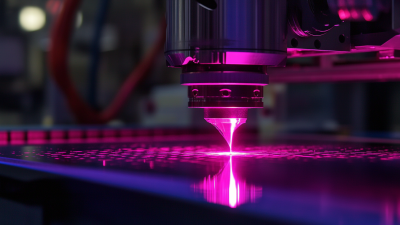
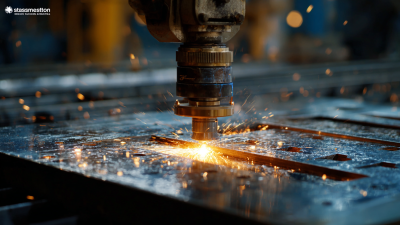
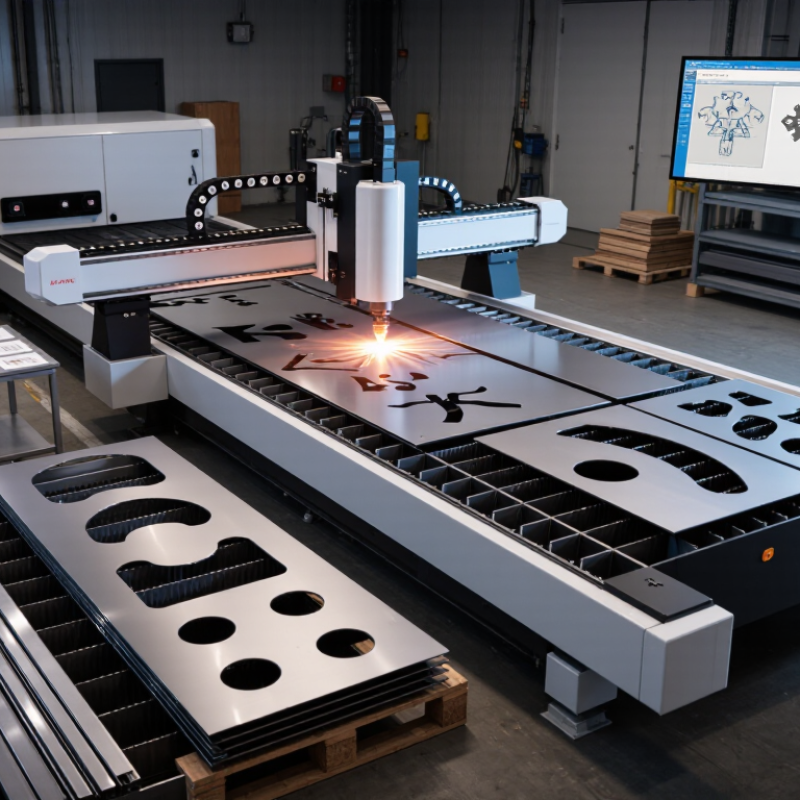
    The process begins with electrical energy and compressed gas. The gas passes through a narrow torch nozzle and becomes ionized. This creates a focused plasma jet, often exceeding 20,000°C. The jet melts the metal, while the gas removes molten material from the cut. Software controls torch height, speed, and movement. Nesting reduces unused sheet area. Small details matter. A slight height error can create a rough edge or unwanted bevel.

    Custom work also requires inspection. ISO 9013:2017 provides quality classifications for thermally cut surfaces and dimensional tolerances. Buyers should request material certificates, first-piece measurements, and photographs of finished edges. The World Steel Association reported 1.89 billion tonnes of crude steel production in 2023, showing the scale of metal demand behind these services. Plasma is fast, but it is not always the cheapest choice for thin precision parts. A rushed drawing still produces a precise mistake. Clear specifications usually save more money than aggressive price negotiation.

    Which Materials and Applications Suit Custom Plasma Cutting?

    Why Choose Custom Plasma Cutting for Global Buyers?

    Custom plasma cutting suits buyers who need accurate profiles without expensive hard tooling. It works well with mild steel, stainless steel, aluminum, copper, and galvanized sheet. Typical thickness ranges from thin sheet to heavy plate, depending on the power source and required edge quality. The World Steel Association’s October 2024 Short Range Outlook forecasts global steel demand at approximately 1.77 billion tonnes in 2025. That scale supports demand for flexible cutting in construction, machinery, transport, agricultural equipment, HVAC systems, and structural fabrication. Custom programming also helps produce brackets, flanges, frames, panels, and replacement parts from digital drawings.

    Material choice still matters. Mild steel usually offers the fastest production and cleanest economics. Stainless steel and aluminum require tighter control of heat, speed, and gas selection. Plasma is useful for medium and large components, but it may leave more heat-affected edges than laser cutting. It is not ideal for every edge. A perfect cut is not always the right target either; fit, strength, and finishing requirements should guide the process.

    Tips: Send a dimensioned CAD file, material grade, thickness, quantity, and tolerance requirements. Ask for a sample cut before approving volume production. Leave realistic allowance for kerf and secondary grinding. The International Organization for Standardization’s ISO 9013 standard can help buyers define thermal-cutting quality levels. Real workshops are messier. Recheck drawings, especially hole diameters and corner details, before fabrication.

    How Does Custom Plasma Cutting Improve Design Flexibility?

    Custom plasma cutting gives global buyers more room to shape practical ideas. Digital drawings can become steel panels, brackets, guards, or detailed signage. Designers can adjust holes, curves, and edge profiles without building expensive hard tooling. This matters when product dimensions change across markets. A compact enclosure may need different vents for humid coastal regions. A mounting plate may require new hole spacing after field testing.

    The process handles many conductive metals and varied thicknesses with controlled heat and cutting speed. Skilled operators review the drawing before production. They check kerf width, tolerances, corner behavior, and material distortion. Small interior slots can remain sharp and usable. Large rounded openings can be repeated consistently. A prototype often reaches the workshop as a file, not a finished sample. That shortens the path from an engineer’s screen to a testable part.

    Still, flexibility is not automatic. Very tight tolerances may require secondary machining. Thin sheets can warp if the cutting sequence is poorly planned. I have seen a beautiful design lose value because its tabs were too narrow for assembly. That mistake taught us to test fit early. Buyers should request material certificates, inspection records, and sample measurements. Clear drawings and realistic tolerances build trust across language and distance. Custom cutting works best when design freedom meets disciplined review.

    What Quality, Speed, and Cost Benefits Can Global Buyers Expect?

    Custom plasma cutting gives global buyers a practical balance of quality, speed, and cost. Experienced workshops match amperage, gas flow, and cutting speed to each material. This helps produce cleaner edges on carbon steel, stainless steel, and aluminum. A properly prepared DXF file also reduces design errors before production begins.

    Quality becomes easier to verify when suppliers provide dimensional reports, material certificates, and photos of finished parts. Buyers can request checks for hole diameter, plate thickness, edge angle, and visible dross. For example, a 12 mm steel bracket may need consistent holes and a smooth mounting edge. Small deviations can create costly assembly problems. That matters.

    Speed improves through digital nesting and repeatable cutting programs. Several parts can be arranged on one sheet, reducing handling time and material waste. A supplier with clear production tracking can also give more reliable updates across time zones. However, urgent delivery is not always realistic. Complex drawings, material shortages, or export documentation may extend the schedule. Delays hurt.

    Cost savings come from better sheet utilization, fewer secondary operations, and reduced rework. Custom cutting can also support smaller batches, which limits unnecessary inventory. Still, the lowest quotation may hide packaging, inspection, or shipping costs. Global buyers should compare the complete delivered price, not only the cutting fee. In my experience, a clear drawing, agreed tolerances, and sample approval prevent more disputes than aggressive price negotiation. Mistakes still happen, so a dependable process should show how they are detected and corrected.

    How Should Global Buyers Select a Reliable Plasma Cutting Partner?

    Why Choose Custom Plasma Cutting for Global Buyers?

    How Should Global Buyers Select a Reliable Plasma Cutting Partner?

    Choosing a plasma cutting partner requires more than comparing hourly prices. Ask for sample parts made from your exact material grade and thickness. Review kerf width, edge bevel, hole quality, and dimensional records. A capable supplier should explain its cutting parameters clearly. Numbers can mislead. A polished sample may hide inconsistent production.

    Check the quality system and its practical use. The ISO Survey 2023 recorded 1,265,216 valid ISO 9001 certificates worldwide. Certification helps, but it does not guarantee accurate cuts. Request inspection plans, calibration records, nonconformance procedures, and traceability from plate to shipment. Confirm whether operators record consumable changes and machine maintenance. Small omissions often become expensive rework.

    Global buyers should also examine capacity and communication. The International Federation of Robotics reported 541,302 industrial robots installed worldwide in 2023. Automation can improve repeatability, yet skilled supervision remains essential. Ask about machine uptime, backup equipment, export packaging, and response times across time zones. Confirm tolerances in writing, not through vague phrases like “high precision.” Request a pilot order before committing to volume. It may feel slower. It is usually safer. Also review delivery data from comparable projects, because promised lead times can ignore port delays, customs checks, or material shortages. A reliable partner admits these risks and offers workable alternatives.